
Uncategorized
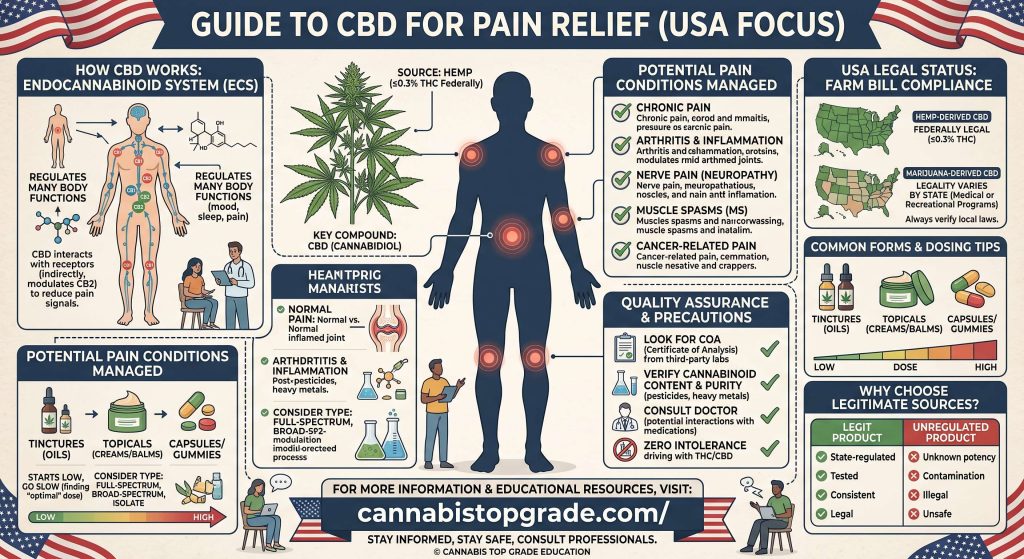
CBD for Pain Relief
Sep
CBD for pain relief has become one of the most common reasons people research cannabidiol in the United States.
CBD now appears in:
- oils;
- tinctures;
- creams;
- gummies;
- capsules;
- topical products;
- combination cannabinoid products.
At the same time, people researching CBD frequently encounter related cannabis searches such as:
- order weed delivery;
- THC syrup;
- cannabutter;
- dispensaries that deliver near me;
- Weedmaps;
- weed deals;
- dispensary delivery near me.
These terms refer to very different products and legal categories.
CBD is not the same thing as THC.
A CBD topical is not equivalent to THC syrup.
Cannabutter is different from a CBD oil.
A state-licensed marijuana delivery service is also different from a general online hemp retailer.
Understanding these distinctions is essential when evaluating cannabis products for pain or general wellness.
For additional U.S.-focused cannabinoid and cannabis education, explore Cannabistopgrade.com.
What Is CBD?
CBD stands for cannabidiol.
It is a naturally occurring cannabinoid found in cannabis.
CBD differs from THC because it does not produce the characteristic intoxicating “high” associated with delta-9 THC.
CBD can come from:
- hemp;
- marijuana-type cannabis.
Under federal law, hemp is generally defined by its low delta-9 THC concentration, but cannabis and CBD regulation remains more complex than that simple definition suggests.
State rules can also differ.
CBD at a Glance
| Feature | CBD |
|---|---|
| Full name | Cannabidiol |
| Intoxicating like THC? | No |
| Found in cannabis? | Yes |
| Found in hemp? | Yes |
| Marketed for pain? | Commonly |
| FDA-approved for general pain? | No |
| Prescription CBD medicine exists? | Yes, for specific seizure disorders |
| Clinical pain evidence | Promising but limited/mixed |
| Possible drug interactions | Yes |
| Possible liver effects | Yes |
Does CBD Relieve Pain?
Possibly for some people and some types of pain, but the evidence is not strong enough to say CBD reliably relieves all pain.
Clinical studies have examined CBD in relation to:
- chronic pain;
- arthritis;
- neuropathic pain;
- musculoskeletal pain;
- inflammatory pain.
Some studies report improvement.
Others find little or no meaningful benefit.
Differences between studies include:
- CBD dose;
- formulation;
- duration;
- pain condition;
- whether THC was also present;
- study quality.
This makes universal conclusions difficult.
What Does Current Research Say?
A systematic review published in 2024 examined clinical and preclinical research on CBD used without THC for pain.
The review found encouraging evidence, particularly around chronic and osteoarthritis-related pain.
However, the authors also emphasized that clinical evidence remains limited and more high-quality studies using isolated CBD are needed.
Another systematic review of chronic pain studies found that some participants reported reduced pain with CBD or CBD-containing products, while other studies found no significant improvement.
The research therefore remains promising rather than definitive.
CDC Position on Cannabis and Pain
The CDC states that evidence remains limited for cannabis in most types of acute or chronic pain.
Some studies suggest possible benefits for certain neuropathic pain conditions.
However, more research is needed to determine how cannabis compares with other pain-management options.
This is important because general cannabis evidence should not automatically be converted into stronger claims specifically about CBD.
Is CBD FDA-Approved for Pain?
No.
The FDA has not approved ordinary CBD oils, gummies, creams or tinctures as general pain treatments.
The FDA has approved one prescription CBD medication for specific seizure disorders.
That approval should not be interpreted as evidence that over-the-counter CBD products are approved treatments for:
- back pain;
- arthritis;
- neuropathy;
- headaches;
- muscle pain.
CBD Marketing vs. Medical Evidence
CBD advertising frequently uses phrases such as:
- pain relief;
- recovery;
- inflammation support;
- muscle comfort;
- joint wellness.
Marketing language is not the same as clinical evidence.
A commercial product claiming to “eliminate arthritis pain” or “cure neuropathy” deserves skepticism.
CBD for Chronic Pain
Chronic pain generally refers to pain that persists for an extended period.
It can have many causes, including:
- arthritis;
- nerve damage;
- injuries;
- spinal conditions;
- inflammatory disorders.
CBD research has explored some of these areas.
Results remain mixed.
A person’s pain diagnosis matters because different kinds of pain can respond differently to treatments.
CBD for Neuropathic Pain
Neuropathic pain occurs when nerves are damaged or dysfunctional.
It may involve sensations such as:
- burning;
- tingling;
- shooting pain;
- numbness.
Cannabis-based medicines have been studied for neuropathic pain, but that does not mean ordinary retail CBD has been proven to treat every form of nerve pain.
Persistent neuropathic symptoms deserve medical evaluation because conditions such as diabetes, nerve compression and other disorders may require treatment.
CBD for Arthritis Pain
CBD is often marketed to people with arthritis.
Laboratory and animal research has generated interest in CBD’s effects on inflammatory pathways.
Human evidence remains more limited.
Canabinoids should therefore not be presented as a proven replacement for established arthritis treatments.
CBD Topicals for Pain
CBD creams and balms are popular for localized discomfort.
Topical products may contain:
- CBD;
- menthol;
- camphor;
- essential oils;
- other ingredients.
If a person experiences temporary relief, it may be difficult to determine which ingredient caused it.
Canabinoids topicals should not automatically be treated as clinically proven pain medicines.
CBD Oil for Pain
CBD oil is another common product category.
Products can vary dramatically in:
- CBD concentration;
- THC content;
- carrier oil;
- purity;
- labeling accuracy.
Two bottles labeled “CBD oil” may therefore be very different products.
Full-Spectrum CBD
Full-spectrum products can contain several cannabis compounds, potentially including small amounts of THC.
This means full-spectrum CBD is not chemically identical to isolated CBD.
People concerned about:
- intoxication;
- drug testing;
- medication interactions
should read cannabinoid labels carefully.
Broad-Spectrum CBD
Broad-spectrum products are usually marketed as containing multiple cannabis compounds while removing or minimizing THC.
However, manufacturing quality varies.
Label claims should not be treated as guarantees without reliable testing.
CBD Isolate
CBD isolate is intended to contain primarily isolated cannabidiol.
This format can be particularly useful in research because it helps separate CBD effects from THC and other cannabinoids.
Commercial CBD isolate still requires careful attention to quality and testing.
CBD Side Effects
CBD is often described as harmless because it does not produce the same high as THC.
That is misleading.
Possible concerns include:
- drowsiness;
- gastrointestinal effects;
- appetite changes;
- medication interactions;
- liver effects.
Risk can depend on dose and individual health.
CBD and the Liver
FDA information warns that CBD can affect liver function.
This concern is particularly important with higher exposure or certain medication combinations.
People with liver disease or those taking medicines processed by the liver should discuss cannabinoid use with a healthcare professional.
CBD and Medication Interactions
CBD can change how the body processes certain medications.
Potential interaction concerns can involve medicines used for:
- seizures;
- blood thinning;
- anxiety;
- sleep;
- heart conditions;
- other medical problems.
A pharmacist can often provide useful interaction information.
CBD and Alcohol
CBD may contribute to drowsiness in some people.
Combining it with alcohol or other sedating substances may increase impairment.
CBD During Pregnancy
Cannabis and CBD products are not considered established safe options during pregnancy or breastfeeding.
FDA advises caution because major safety questions remain unanswered.
CBD vs. THC for Pain
CBD and THC should not be treated as the same thing.
| Feature | CBD | THC |
|---|---|---|
| Characteristic cannabis high | No | Yes |
| Impairment | Generally not intoxicating | Can impair |
| Pain research | Emerging | Also studied |
| FDA-approved general pain treatment | No | No |
| Drug-testing concern | Possible depending on product | Significant |
| Driving concern | Product-dependent | Do not drive impaired |
Some research examines combinations of CBD and THC, which makes it difficult to determine what CBD alone contributed.
THC Syrup
THC syrup is a cannabis product containing tetrahydrocannabinol in a liquid formulation.
It should not be confused with CBD oil or ordinary cough syrup.
THC syrups can vary greatly in:
- THC concentration;
- serving size;
- other cannabinoids;
- flavoring;
- ingredients.
Because THC is intoxicating, these products can impair:
- judgment;
- coordination;
- reaction time;
- attention.
THC Syrup Is Not CBD
Someone searching for CBD pain relief may encounter THC syrup online or at a dispensary.
These products are chemically and functionally different.
CBD does not produce THC’s characteristic intoxicating effect.
THC syrup may produce substantial intoxication depending on its potency.
Liquid Cannabis and Delayed Effects
When THC is swallowed, the effects can take longer to appear than inhaled cannabis.
This makes oral THC products different from smoking or vaping.
Delayed effects can increase the risk of accidental overconsumption when people mistakenly assume a product is not working.
Cannabutter
Cannabutter is butter that contains cannabis-derived compounds.
It is commonly associated with cannabis edibles.
Commercial or homemade cannabutter can contain varying amounts of THC.
That means its potency may be difficult to predict unless it has been produced and tested in a regulated manufacturing environment.
Cannabutter vs. CBD
Cannabutter does not automatically mean CBD.
It may contain significant THC depending on the cannabis used.
Someone seeking non-intoxicating CBD should therefore not treat cannabutter as an equivalent product.
Edibles and Pain
People sometimes use cannabis edibles because the effects can last longer than inhaled cannabis.
However, longer duration does not mean the product has been clinically proven to treat pain.
Edibles also carry risks involving:
- delayed onset;
- accidental overconsumption;
- prolonged impairment;
- unintended child exposure.
Keep Cannabis Edibles Secure
Cannabutter, gummies and THC syrups can resemble ordinary foods or beverages.
They should be stored securely away from:
- children;
- pets;
- unsuspecting adults.
Order Weed Delivery
The phrase order weed delivery should be interpreted within state law.
Some U.S. states permit licensed marijuana delivery.
Others restrict it or do not permit adult-use marijuana delivery at all.
A cannabis website offering delivery does not automatically have legal authorization.
Dispensaries That Deliver Near Me
When searching for dispensaries that deliver near me, start by identifying the state regulator responsible for cannabis licensing.
Then verify:
- retailer license;
- delivery authorization where applicable;
- service area;
- customer eligibility;
- current operating status.
This is more reliable than choosing a seller based only on advertising.
Dispensary Delivery Near Me
A dispensary delivery near me search is highly location-dependent.
Legal delivery may differ according to:
- state;
- city;
- county;
- medical vs. adult-use status;
- retailer license.
Local authorization does not create nationwide authorization.
Marijuana Delivery Is Not Nationwide Shipping
A licensed cannabis retailer operating legally in one state does not automatically have permission to send marijuana to customers in another state.
Consumers should be skeptical of websites claiming unrestricted nationwide marijuana shipping.
Weedmaps
The keyword “weedmaos” is most likely a misspelling of Weedmaps.
Weedmaps is widely known as a cannabis marketplace and directory that can display cannabis businesses, menus and delivery-related information.
However, a directory listing should not replace official state license verification.
The legal status of a retailer should still be checked against the applicable regulator when possible.
Cannabis Directories vs. State Regulators
Cannabis directories can be convenient for discovering businesses.
State regulator databases are more authoritative for determining whether a business holds the required license.
A good workflow is:
directory or map → business name → state license verification
Weed Deals
People searching for weed deals may encounter:
- flower specials;
- pre-roll discounts;
- vape promotions;
- edible specials;
- loyalty programs;
- seasonal offers.
The cheapest product is not automatically the best option.
Consumers should also compare:
- package size;
- freshness;
- cannabinoid concentration;
- testing;
- final price.
CBD Deals vs. Marijuana Deals
CBD products and marijuana products can operate in different legal markets.
A CBD promotion at a hemp store should not automatically be compared with a marijuana dispensary promotion.
Regulatory requirements can differ considerably.
Price Does Not Establish Quality
A more expensive CBD product is not automatically more effective.
Likewise, a cheaper product is not automatically unsafe.
Important considerations include:
- accurate labeling;
- cannabinoid content;
- contaminants;
- batch testing;
- manufacturer identity.
Third-Party Testing
Consumers often encounter certificates of analysis, commonly called COAs.
A useful laboratory report may contain information about:
- CBD;
- THC;
- other cannabinoids;
- contaminants.
Testing quality and regulatory requirements vary.
CBD Product Labels
A CBD product label should ideally make it easy to identify:
- CBD amount;
- THC amount;
- serving size;
- ingredients;
- batch information.
Beware of products that hide cannabinoid amounts behind vague phrases such as “proprietary hemp blend.”
Drug Testing
CBD itself may not be the primary target of common workplace cannabis tests.
However, some CBD products can contain THC.
Repeated exposure to THC-containing products can create drug-testing concerns.
A “CBD” label does not guarantee THC absence.
CBD and Driving
CBD is not typically intoxicating like THC.
However, CBD can sometimes cause drowsiness or interact with medications.
Products combining CBD with THC can clearly create additional impairment.
Do not drive when impaired or significantly drowsy.
Cannabis Use Disorder
CBD itself should not be equated with high-THC marijuana.
However, people using THC-containing products should know that cannabis use disorder can occur.
Warning signs may include:
- craving;
- increasing tolerance;
- difficulty reducing use;
- continued use despite problems.
Pain Can Have an Underlying Cause
Persistent pain should not automatically be self-treated with cannabinoid products.
Pain can reflect conditions involving:
- joints;
- nerves;
- muscles;
- internal organs;
- infections;
- injuries.
Medical assessment can sometimes identify treatable causes.
When Pain Needs Urgent Medical Attention
Certain pain symptoms can require prompt evaluation, particularly when accompanied by:
- severe weakness;
- loss of consciousness;
- chest pain;
- difficulty breathing;
- sudden neurological changes;
- severe injury.
CBD should not delay emergency medical care.
Cannabis Laws Change
Cannabis policy continues to evolve across the United States.
The National Conference of State Legislatures maintains a cannabis policy database covering areas such as:
- adult-use regulation;
- medical cannabis;
- licensing;
- product regulation;
- taxes;
- local control;
- public health.
Its database was updated August 31, 2026.
This is why local delivery and dispensary rules should always be checked using current sources.
Educational Resources
For additional cannabinoid, marijuana-law and cannabis public-health education, explore Cannabistopgrade.com.
For a peer-reviewed review of CBD specifically in pain research, see PubMed: Cannabidiol (CBD): A Systematic Review of Clinical and Preclinical Evidence in the Treatment of Pain.
Regarding federal information about CBD safety, medical claims and regulation, consult the U.S. Food and Drug Administration CBD Consumer Update.
For current state cannabis legislation, licensing and product regulation, consult the NCSL State Cannabis Policy Enactment Database.
Readers can continue exploring CBD, THC, cannabinoids, dispensary terminology and U.S. cannabis laws through Cannabistopgrade.com.
Frequently Asked Questions
1. Does CBD work for pain relief?
Research suggests CBD may help some types of pain, but evidence remains limited and inconsistent. CBD has not been FDA-approved as a general treatment for chronic or acute pain.
2. Is CBD better than THC for pain?
There is no universal answer. CBD and THC have different effects, and studies use different formulations. THC can cause intoxication and impairment, while CBD generally does not produce the same high.
3. What is THC syrup?
THC syrup is a liquid cannabis product containing tetrahydrocannabinol. It can be intoxicating and should not be confused with CBD oil.
4. What is cannabutter?
Cannabutter is butter infused with cannabis compounds, commonly used in edible products. Its THC concentration can vary significantly, particularly when it has not been commercially standardized.
5. How can I find dispensaries that deliver near me?
Where marijuana delivery is legal, use the applicable state cannabis regulator to identify licensed retailers and confirm that the business is authorized to provide delivery in your area.
6. Is Weedmaps the same as a state cannabis regulator?
No. Weedmaps is a cannabis marketplace and directory. It can help users discover cannabis businesses, but official state licensing databases are better sources for verifying legal authorization.
