Microdose Shrooms For Sale: Psilocybin Microdosing, Research, Safety and U.S. Laws
The search phrase “microdose shrooms for sale” has become increasingly visible as public interest in psychedelic mushrooms and psilocybin research grows in the United States.
But online availability and scientific evidence are two different things.
Products marketed as:
- microdose shrooms;
- magic mushroom microdoses;
- psilocybin capsules;
- mushroom gummies;
- mushroom chocolates;
- psychedelic mushroom products
should not automatically be assumed legal, accurately labeled, standardized or clinically proven.
Psilocybin remains controlled under U.S. federal law, while certain states and municipalities have adopted different approaches involving supervised services, regulated programs or local decriminalization.
Those changes do not create a nationwide legal retail market for psilocybin mushrooms.
For additional educational material about mushrooms, cannabis and emerging psychoactive-substance research, explore Cannabistopgrade.com.
What Are Microdose Shrooms?
“Microdose shrooms” generally refers to small quantities of mushrooms containing psychedelic compounds such as:
- psilocybin;
- psilocin.
The intention commonly associated with microdosing is to use an amount below the level expected to cause a conventional psychedelic experience.
However, there is no universally standardized consumer definition of a mushroom “microdose.”
That distinction matters.
Whole mushrooms can vary considerably in chemical composition, so visually similar pieces do not necessarily contain identical quantities of active compounds.
What Is Psilocybin?
Psilocybin is a naturally occurring psychedelic compound found in certain mushroom species.
After ingestion, the body converts psilocybin into psilocin.
Psilocin interacts strongly with serotonin signaling, particularly the 5-HT2A receptor.
These interactions contribute to changes involving:
- perception;
- mood;
- cognition;
- sensory processing;
- sense of time.
At larger exposures, effects can become strongly psychedelic.
Microdosing vs. a Psychedelic Experience
| Feature | Microdosing Concept | Conventional Psychedelic Exposure |
|---|---|---|
| Intended intensity | Sub-perceptual or subtle | Clearly perceptible |
| Hallucinations intended? | Generally no | Can occur |
| Mood changes | Possible | Can be substantial |
| Perception changes | Intended to be minimal | Often noticeable |
| Clinical standardization | Limited outside research | Controlled in trials |
| Risk-free? | No | No |
The fact that a quantity is described as a microdose does not make it medically harmless.
Why Are People Interested in Microdosing?
People commonly report interest in microdosing for reasons involving:
- mood;
- creativity;
- concentration;
- productivity;
- emotional well-being;
- anxiety;
- depression.
These claims have contributed to significant internet interest.
However, personal testimonials are not equivalent to controlled clinical evidence.
Does Psilocybin Microdosing Work?
Research remains developing.
Observational studies sometimes report improvements in mood or well-being among people who microdose.
However, observational studies can be influenced by:
- expectations;
- placebo effects;
- participant selection;
- lifestyle differences;
- reporting bias.
Controlled research is therefore particularly important.
The Placebo Question
Expectations can have substantial effects in psychedelic research.
If someone strongly believes that a microdose will improve creativity or mood, expectations themselves may influence how that person evaluates the experience.
Blinded and placebo-controlled studies help researchers distinguish pharmacological effects from expectation.
Results so far do not justify presenting microdosing as a universally proven wellness intervention.
Microdosing and Depression
Psilocybin has attracted serious scientific attention in depression research.
However, an important distinction is often lost online:
Clinical psilocybin research is not necessarily microdosing research.
Many clinical studies investigating depression use carefully controlled psychedelic sessions rather than repeated consumer microdoses.
Research can involve:
- participant screening;
- standardized psilocybin;
- professional supervision;
- psychological support;
- follow-up.
Therefore, promising clinical research should not be used to claim that an unverified online mushroom microdose is an established depression treatment.
Microdosing and Anxiety
People sometimes report using microdoses for anxiety.
Evidence remains insufficient to treat microdosing as a proven general anxiety therapy.
Psychedelic substances can themselves produce anxiety in some circumstances.
Responses vary substantially among individuals.
Microdosing for Focus
Another common claim is that microdosing improves concentration or productivity.
Current evidence does not establish psilocybin microdosing as a standard treatment for:
- ADHD;
- concentration problems;
- poor productivity.
People experiencing persistent attention problems should not assume psychedelics address the underlying cause.
Microdosing and Creativity
Anecdotal reports frequently connect psychedelics with creativity.
Scientific research is more complicated.
Creativity involves multiple cognitive processes, and feeling more creative does not necessarily mean objective performance has improved.
Microdose Mushroom Potency
Whole psychedelic mushrooms are not standardized pharmaceutical tablets.
Potency can differ according to:
- species;
- individual specimen;
- genetics;
- environmental conditions;
- storage;
- age of material.
This variability complicates the idea of a universally standardized mushroom microdose.
Different Psilocybin Mushroom Species
Several fungal species can contain psilocybin.
They should not automatically be treated as chemically equivalent.
Species can differ in:
- appearance;
- habitat;
- active-compound concentration.
Species identification is also a serious safety issue because poisonous mushrooms can resemble psychoactive or edible species.
Wild Mushroom Risks
Attempting to identify psychoactive mushrooms in the wild can be dangerous.
Some poisonous species can cause:
- vomiting;
- neurological toxicity;
- kidney injury;
- liver failure;
- death.
Images from social media or identification apps should not be treated as guaranteed confirmation that an unknown wild mushroom is safe to consume.
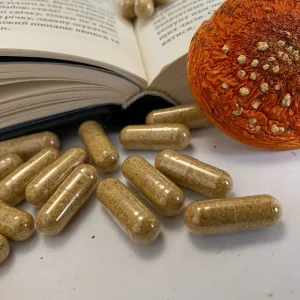
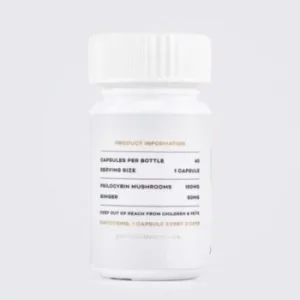
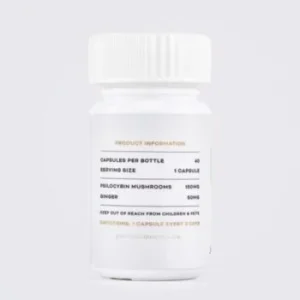
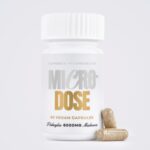
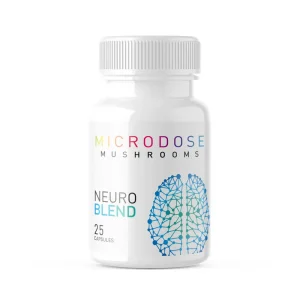
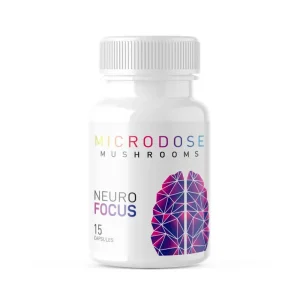
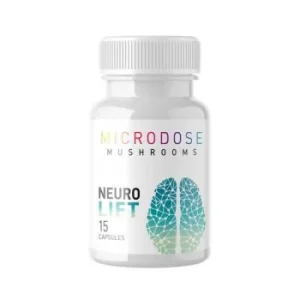
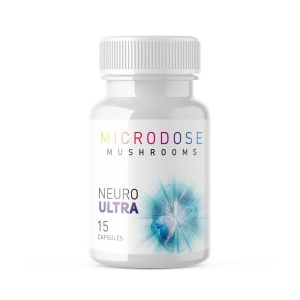
Microdose Mushroom Capsules
Products marketed as mushroom microdose capsules can appear more standardized than whole mushrooms.
Appearance does not establish contents.
Without reliable testing, consumers may not know:
- which mushroom species is present;
- whether psilocybin is present;
- what concentration is present;
- whether another psychoactive compound is present;
- whether contaminants are present.
Mushroom Gummies
“Mushroom gummies” is an extremely broad product category.
A gummy may contain:
- lion’s mane;
- reishi;
- cordyceps;
- Amanita-derived ingredients;
- other botanical ingredients;
- undisclosed compounds.
A mushroom image on the package does not establish that a gummy contains psilocybin.
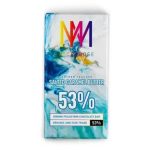
Mushroom Chocolate Bars
The same principle applies to mushroom chocolates.
Packaging using psychedelic imagery or phrases such as:
- magic;
- trip;
- microdose;
- shroom
does not independently verify the chemical contents.
Branding is not laboratory analysis.
Psilocybin vs. Amanita
This distinction is particularly important.
Psilocybin mushrooms and Amanita muscaria are chemically different.
Psilocybin mushrooms primarily attract attention because of psilocybin and psilocin.
Amanita muscaria is associated with compounds such as:
- muscimol;
- ibotenic acid.
These substances have different pharmacology and risk profiles.
They should not be grouped together merely because both products may be marketed using mushroom imagery.
Functional Mushrooms Are Different Too
Functional mushrooms such as:
- lion’s mane;
- reishi;
- cordyceps;
- turkey tail
are also different from psilocybin mushrooms.
A “10 mushroom blend” sold as a dietary supplement should not automatically be interpreted as a psychedelic product.
Microdose Shrooms For Sale Online
Search results for microdose shrooms for sale may contain websites claiming to sell psychedelic mushrooms or psilocybin products.
Online visibility does not establish legality.
A website can exist even when its advertised transaction conflicts with federal, state or local law.
For that reason, this guide does not provide vendors or instructions for purchasing controlled psilocybin products.
Can You Legally Buy Psilocybin Online?
There is no general U.S. federal authorization allowing consumers to purchase psilocybin mushrooms from ordinary websites and have them shipped nationwide.
Local psychedelic reforms should not be confused with nationwide legalization.
Claims such as:
“legal psilocybin shipping to all 50 states”
deserve particular scrutiny.
U.S. Federal Psilocybin Law
Psilocybin and psilocin remain controlled substances under federal law.
That federal status exists alongside evolving state and local policies.
The result is a complicated legal landscape.
Oregon and Psilocybin Services
Oregon created a regulated psilocybin-services framework.
The model is significantly different from ordinary recreational marijuana retail.
Regulated services involve licensed components and supervised administration under the state’s framework.
The existence of regulated psilocybin services should not be interpreted as permission for unrestricted retail mushroom sales or nationwide shipping.
Colorado and Psychedelic Policy
Colorado has also changed its approach to certain natural medicines.
Its framework differs from both federal law and Oregon’s system.
The details matter because terms such as:
- decriminalized;
- regulated;
- legal;
- licensed;
- approved
do not mean the same thing.
Decriminalization Is Not Commercial Legalization
This distinction is essential for anyone searching microdose shrooms for sale.
Decriminalization can reduce or change enforcement consequences for specified conduct.
It does not automatically authorize:
- commercial stores;
- online sales;
- nationwide shipping;
- interstate distribution.
FDA and Psychedelic Research
The U.S. Food and Drug Administration has acknowledged growing psychedelic-drug development and issued guidance addressing clinical investigations involving psychedelic drugs.
That demonstrates legitimate scientific interest.
It does not mean FDA has approved ordinary retail psilocybin mushrooms as treatments for depression or other disorders.
Potential Psychological Risks
Even small psychedelic exposures are not guaranteed to produce positive effects.
Potential unwanted reactions can include:
- anxiety;
- agitation;
- confusion;
- mood changes;
- uncomfortable thoughts.
Individual responses vary.
Psychiatric Vulnerability
People with certain psychiatric histories may face additional concerns with psychedelic substances.
Clinical trials often use careful participant screening partly for this reason.
This is another important difference between formal psychedelic research and uncontrolled consumer use.
Medication Interactions
Psilocybin affects serotonin signaling.
People taking psychiatric or other medications should not assume there are no interaction concerns.
Research into interactions remains incomplete for many combinations.
Microdosing During Pregnancy
There is insufficient evidence to establish psilocybin microdosing as safe during pregnancy or breastfeeding.
Absence of evidence of harm is not evidence of safety.
Microdosing and Driving
Even if someone expects a quantity to be “sub-perceptual,” individual sensitivity and product potency can vary.
Driving or operating dangerous machinery while perceptually or cognitively impaired creates obvious safety concerns.
Drug Testing
Standard workplace drug panels do not necessarily test for every psychedelic substance.
However, testing practices vary.
The possibility that a compound is not included in a routine test does not change its legal or health risks.
Psilocybin Research vs. Retail Products
One of the most important distinctions in psychedelic education is:
clinical psilocybin ≠ unknown mushroom product
Research-grade materials may be carefully characterized.
Unregulated retail products can have uncertainties involving:
- identity;
- potency;
- contaminants;
- labeling.
This makes direct comparisons inappropriate.
Microdosing Is Not FDA-Approved Therapy
No ordinary mushroom microdose product should be presented as an FDA-approved treatment for:
- depression;
- anxiety;
- PTSD;
- ADHD;
- addiction;
- chronic pain.
Research into psychedelics is scientifically important, but medical claims should reflect the actual evidence and regulatory status.
What Consumers Should Understand About “For Sale” Searches
A search engine can index content from many jurisdictions.
Therefore, seeing:
- “shrooms for sale”;
- “buy microdose mushrooms”;
- “psilocybin delivery”
does not prove that the advertised transaction is legal where the searcher lives.
Search visibility and legal authorization are entirely different things.
Educational Resources
For additional educational information involving mushrooms, cannabis and emerging psychoactive-substance research, explore Cannabistopgrade.com.
For peer-reviewed studies concerning microdosing and psilocybin, explore PubMed’s psilocybin microdosing research.
Concerning federal information concerning psychedelic-drug clinical research, consult the U.S. Food and Drug Administration.
Regarding information about federally controlled substances and scheduling, consult the U.S. Drug Enforcement Administration.
Readers can continue exploring mushrooms, psychedelics, cannabinoids and U.S. drug-policy education through Cannabistopgrade.com.
Frequently Asked Questions
1. What are microdose shrooms?
Microdose shrooms generally refers to small quantities of psilocybin-containing mushrooms intended to produce subtle rather than conventional psychedelic effects. There is no universally standardized consumer mushroom microdose.
2. Does psilocybin microdosing improve depression?
Research is developing, but microdosing should not be presented as a proven treatment for depression. Some promising psilocybin depression research involves supervised psychedelic sessions rather than consumer microdosing.
3. Are mushroom gummies the same as psilocybin mushrooms?
No. Mushroom gummies can contain functional mushrooms, Amanita-related ingredients or other compounds. Packaging alone cannot establish that a product contains psilocybin.
4. Can microdose shrooms legally be shipped throughout the United States?
There is no general federal authorization for ordinary retailers to ship psilocybin mushrooms nationwide. State and local psychedelic reforms do not create unrestricted interstate commercial legality.
5. Is microdosing completely safe because the amount is small?
No. A smaller intended exposure does not eliminate risks involving psychological reactions, product variability, medication interactions or inaccurate labeling.
6. Is psilocybin the same as Amanita muscaria?
No. Psilocybin mushrooms contain compounds such as psilocybin and psilocin, while Amanita muscaria is associated with compounds such as muscimol and ibotenic acid. Their pharmacology is substantially different.
Bulk Mushrooms
Bulk Mushrooms
Bulk Mushrooms
Bulk Mushrooms
Bulk Mushrooms
Bulk Mushrooms
Bulk Mushrooms
Bulk Mushrooms
Bulk Mushrooms
Bulk Mushrooms