
Uncategorized
Tinctures and Cannabis Extracts
Sep
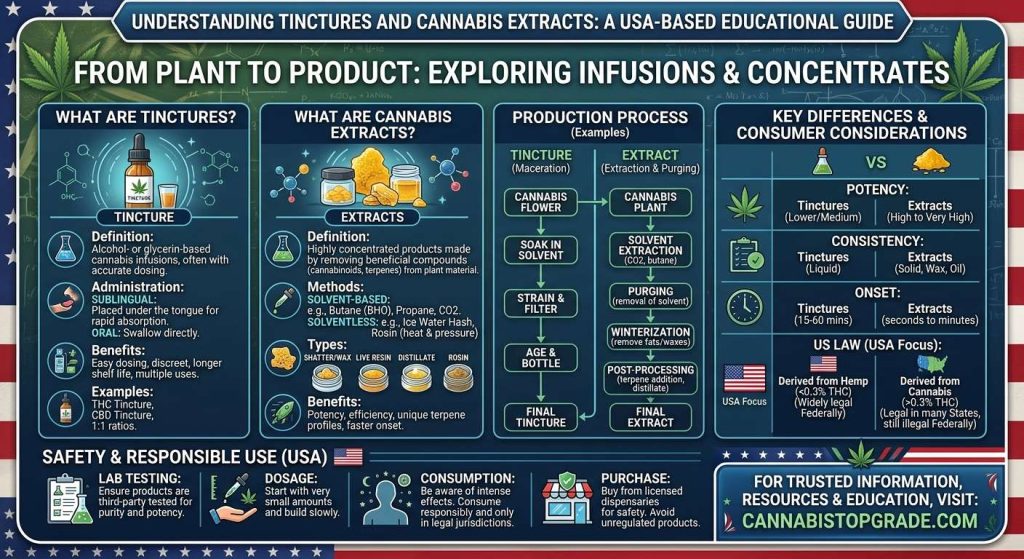
Tinctures and Cannabis Extracts represent a broad family of cannabis products made by separating cannabinoids, terpenes, and other compounds from cannabis plant material or suspending those compounds in a carrier liquid.
The category can include:
- THC tinctures;
- CBD tinctures;
- live resin;
- rosin;
- fresh press rosin;
- hash rosin;
- crystalline;
- THCA isolate;
- wax;
- budder;
- shatter;
- sauce;
- distillate.
These products can differ dramatically in:
- THC concentration;
- CBD concentration;
- terpene content;
- consistency;
- manufacturing method;
- intended use.
This distinction matters for search phrases such as live resin crystalline for sale, solventless concentrates for sale, fresh press hash rosin for sale, butter THC for sale, Club W, and fresh press rosin for sale.
Where adult-use marijuana is legal, cannabis concentrates should be obtained only through appropriately licensed state-regulated businesses.
A search phrase containing “for sale” does not establish that a retailer is licensed or that a product can legally be purchased in every U.S. state.
For more cannabis product education, visit Cannabistopgrade.com.
Tinctures and Cannabis Extracts Quick Guide
| Product | General Description |
|---|---|
| Cannabis tincture | Cannabinoids suspended in liquid |
| Live resin | Extract designed to retain fresh-plant aromatic compounds |
| Rosin | Solventless concentrate made using heat and pressure |
| Hash rosin | Rosin produced from hash rather than directly from flower |
| Fresh press rosin | Rosin collected soon after pressing |
| Crystalline | Highly refined cannabinoid crystals or isolate |
| THCA isolate | Highly concentrated THCA product |
| Budder | Soft, whipped concentrate consistency |
| Wax | Broad term for soft cannabis concentrates |
| Distillate | Highly refined cannabinoid concentrate |
| Solventless concentrate | Concentrate produced without hydrocarbon extraction solvents |
| Club W | Licensed/recreational dispensary listing in Modesto, California |
What Are Cannabis Tinctures?
A cannabis tincture is a liquid preparation containing cannabinoids.
Tinctures may contain:
- THC;
- CBD;
- CBG;
- CBN;
- combinations of cannabinoids.
The liquid carrier can vary by manufacturer.
Some products are alcohol-based, while others use oils such as:
- MCT oil;
- coconut-derived carriers;
- other food-grade oils.
Cannabis Tincture vs. Cannabis Oil
The terms are often used loosely.
A traditional tincture generally refers to cannabinoids dissolved or suspended in a liquid formulation.
Cannabis oil can refer to many different products, including:
- oral oil;
- vape oil;
- concentrated extract;
- carrier-oil formulation.
Therefore, the product label matters.
THC Tinctures
A THC tincture contains measurable tetrahydrocannabinol.
A regulated label may report THC as:
- milligrams per bottle;
- milligrams per serving;
- THC-to-CBD ratio.
These measurements are more informative than broad claims such as “strong” or “extra strength.”
CBD Tinctures
CBD tinctures may contain:
- CBD dominant formulations;
- CBD with small amounts of THC;
- balanced THC ratios.
A CBD products should not automatically be assumed THC-free.
Consumers should check the cannabinoid panel.
Full-Spectrum Tinctures
“Full-spectrum” usually refers to a product intended to retain a broader range of cannabis compounds.
That may include:
- cannabinoids;
- terpenes;
- other plant compounds.
The phrase does not guarantee a standardized chemical profile.
Broad-Spectrum Tinctures
Broad-spectrum products are often marketed as retaining several cannabis compounds while removing or minimizing THC.
Actual formulation depends on the manufacturer.
Laboratory results provide more useful information than marketing language.
Cannabis Extracts
Cannabis extracts are concentrated preparations created by separating desired compounds from plant material.
They can be produced using:
- solvents;
- carbon dioxide;
- mechanical separation;
- heat;
- pressure;
- ice water.
Different techniques create different textures and chemical profiles.
What Is Live Resin?
Live resin is a cannabis concentrate generally made from plant material preserved soon after harvest rather than conventionally dried and cured.
The goal is to retain more volatile aromatic compounds.
Live resin is often associated with:
- strong aroma;
- pronounced terpene profile;
- sauce-like or sugar-like texture.
Live Resin Crystalline
The phrase live resin crystalline can refer to products combining:
- cannabinoid crystals;
- terpene-rich live resin components.
Some products resemble:
- THCA diamonds;
- crystalline structures;
- terpene sauce.
The exact composition should be determined from the regulated product label.
Live Resin Crystalline for Sale
When consumers search live resin crystalline for sale, the legal question is not simply whether the product exists.
The important questions are:
- Is adult-use or medical cannabis legal in the state?
- Is the retailer licensed?
- Is the product tested?
- Does the package provide cannabinoid information?
- Is the transaction occurring within the state’s regulated market?
Cannabis law varies significantly by jurisdiction.
What Is Cannabis Crystalline?
Cannabis crystalline is a highly refined product containing a concentrated cannabinoid fraction.
Examples can include:
- THCA crystals;
- CBD isolate;
- other purified cannabinoid forms.
These products can contain very high cannabinoid concentrations.
THCA Crystalline
THCA is tetrahydrocannabinolic acid.
It is a precursor to THC.
Heat can convert THCA into THC through a process called:
decarboxylation.
A product with high THCA concentration should therefore not be interpreted as equivalent to a low-potency cannabis product.
Crystalline vs. Live Resin
| Feature | Crystalline | Live Resin |
|---|---|---|
| Main emphasis | Purified cannabinoid | Broader extract profile |
| Texture | Crystalline/solid | Sauce, sugar, resin |
| Terpenes | May be relatively low unless added or combined | Often emphasized |
| Cannabinoid concentration | Often extremely high | Usually high |
| Aroma | Can be mild if highly purified | Often strong |
| Product testing needed | Yes | Yes |
What Are Solventless Concentrates?
Solventless concentrates are produced without hydrocarbon extraction solvents such as:
- butane;
- propane.
Common solventless products include:
- rosin;
- hash rosin;
- ice-water hash;
- dry sift.
“Solventless” describes a manufacturing method.
It does not mean:
- risk-free;
- THC-free;
- low potency.
Solventless Concentrates for Sale
Searches for solventless concentrates for sale often refer to regulated dispensary products such as:
- hash rosin;
- flower rosin;
- ice-water hash.
Where marijuana is legal, consumers should verify that the retailer operates under the appropriate state license.
Solventless processing does not exempt a cannabis product from state regulations.
What Is Rosin?
Rosin is a cannabis concentrate made by applying:
- pressure;
- controlled heat;
to cannabis material.
The process mechanically separates resin from plant matter.
It does not require hydrocarbon solvents.
Flower Rosin
Flower rosin is made directly from cannabis flower.
Its chemistry depends on:
- starting material;
- trichome content;
- moisture;
- cultivar;
- processing conditions.
Hash Rosin
Hash rosin is made from hash rather than directly from dried flower.
The starting hash may be produced using techniques such as:
- ice-water separation.
Hash rosin is widely associated with premium solventless concentrate markets.
Fresh Press Hash Rosin
Fresh press hash rosin describes rosin collected directly after pressing before it undergoes extended curing or texture transformation.
A Fresh press products can have a:
- translucent;
- glassy;
- sap-like;
appearance depending on composition.
Fresh Press Hash Rosin for Sale
A search for fresh press hash rosin for sale should be treated as a legal-market product search.
The product may be available in licensed adult-use or medical cannabis markets.
Availability depends on:
- state law;
- retailer licensing;
- local inventory;
- product testing.
It should not be assumed available for unrestricted interstate shipping.
Fresh Press Rosin
Fresh press rosin is closely related to fresh press hash rosin, although the starting material can differ.
Consumers may encounter labels such as:
- fresh press;
- cold cure;
- jam;
- badder.
These refer to texture and post-processing characteristics.
Fresh Press Rosin for Sale
For searches involving fresh press rosin for sale, the most important consumer information is:
- licensed retailer status;
- cannabinoid potency;
- terpene profile;
- batch testing;
- storage instructions.
A product’s “fresh press” label does not establish legality or quality by itself.
Fresh Press vs. Cold Cure Rosin
Fresh press rosin is usually collected directly from the press.
Cold cure rosin is allowed to undergo controlled post-processing that changes:
- texture;
- consistency;
- appearance.
Both can originate from the same starting extract.
Rosin vs. Resin
These terms look similar but describe different concentrate categories.
Rosin generally refers to solventless mechanical extraction using pressure and heat.
Resin can refer more broadly to cannabis resin or solvent-extracted products such as live resin.
They are not interchangeable.
Live Resin vs. Rosin
| Feature | Live Resin | Rosin |
|---|---|---|
| Typical extraction | Solvent extraction | Heat and pressure |
| Solventless? | Usually no | Yes |
| Fresh/frozen plant material common? | Yes | Possible depending on rosin type |
| Terpene preservation emphasized? | Yes | Yes |
| THC concentration | Often high | Often high |
| Testing important | Yes | Yes |
What Is Budder?
Budder is a cannabis concentrate with a soft, whipped consistency resembling:
- butter;
- frosting;
- thick cream.
The term usually describes texture rather than one specific extraction method.
Butter THC for Sale
The keyword butter THC for sale may refer to two different product categories:
Cannabis budder concentrate
or:
THC-infused butter used as an edible ingredient.
These are not the same product.
Cannabis Budder
Cannabis budder is a concentrate.
It may contain high levels of THC.
Other texture-related concentrate terms include:
- badder;
- batter;
- wax;
- crumble.
Names vary among manufacturers.
THC-Infused Butter
THC-infused butter is an edible cannabis preparation.
It belongs to an entirely different product category from inhalable cannabis concentrate.
Where sold legally, edible products are subject to state-specific:
- THC limits;
- packaging rules;
- labeling requirements.
Budder vs. Cannabutter
| Product | Description | |
|---|---|---|
| Budder | Concentrated cannabis extract | |
| Cannabutter | Butter containing cannabinoids | |
| Typical category | Concentrate | Edible ingredient |
| Appearance | Wax-like/whipped | Similar to butter |
| THC concentration | Often high | Depends on formulation |
| Interchangeable? | No |
Cannabis Wax
Wax is a broad term for concentrates with wax-like textures.
Examples may include:
- budder;
- crumble;
- sugar;
- badder.
The terminology is not perfectly standardized.
Cannabis Shatter
Shatter typically has a:
- hard;
- brittle;
- glass-like;
texture.
It may be produced using solvent extraction.
Its appearance does not determine potency.
Cannabis Sugar
Cannabis sugar has a granular consistency.
Live resin sugar can combine:
- cannabinoid crystals;
- terpene-rich liquid.
Again, the product label provides the best batch-specific information.
Cannabis Sauce
Sauce concentrates typically contain:
- terpene-rich liquid;
- cannabinoid crystals.
Terms such as:
- terp sauce;
- diamond sauce;
- live sauce;
may be used commercially.
THC Diamonds
THC diamonds usually refer to crystalline THCA structures that convert to THC with heat.
These products can be very concentrated.
High cannabinoid concentration increases the importance of accurate labeling and regulated testing.
What Is Distillate?
Cannabis distillate is a highly refined concentrate in which cannabinoids are separated through distillation processes.
Distillate is frequently used in:
- vape products;
- edibles;
- tincture formulations.
It may have fewer original plant terpenes unless terpenes are reintroduced.
Full-Spectrum Extracts
Full-spectrum extracts aim to preserve multiple plant components.
These may include:
- THC;
- CBD;
- minor cannabinoids;
- terpenes.
There is no single universal chemical definition across every cannabis manufacturer.
Tinctures vs. Concentrates
| Feature | Tincture | Concentrate |
|---|---|---|
| Form | Liquid | Solid, semi-solid or viscous |
| THC possible | Yes | Yes |
| CBD possible | Yes | Yes |
| Terpenes possible | Yes | Yes |
| Typical THC concentration | Variable | Often much higher |
| Product category | Oral/liquid cannabis product | Extract/concentrate |
THC Concentration in Extracts
The CDC warns that cannabis concentrates can deliver very high levels of THC.
Concentrated products may include:
- live resin;
- wax;
- shatter;
- budder;
- oils.
Higher THC concentration can increase intoxicating effects and the likelihood of overconsumption.
Why Concentrate Potency Matters
A flower product and a concentrate can differ dramatically in THC concentration.
A person familiar with lower-potency flower should not assume an extract behaves the same way.
The relevant potency information is the regulated cannabinoid label.
Cannabis Extract Safety
Important safety factors include:
- manufacturing conditions;
- residual solvents;
- pesticides;
- microbiological contamination;
- cannabinoid concentration;
- additives.
Regulated testing is therefore important.
California Cannabis Product Quality Rules
California’s Department of Cannabis Control treats:
- concentrates;
- tinctures;
- topicals;
- edibles;
- vape cartridges;
as separate manufactured cannabis product categories.
Licensed manufacturers are required to maintain quality plans addressing hazards and controls for the products they produce.
Cannabis Product Quality Plans
A product quality plan can address:
- raw material intake;
- processing;
- contamination risks;
- preventive measures;
- monitoring;
- corrective actions.
This illustrates why state-regulated cannabis manufacturing is different from anonymous unlicensed production.
Certificate of Analysis
A Certificate of Analysis, or COA, reports laboratory results for a particular cannabis batch.
Useful information can include:
- THC;
- THCA;
- CBD;
- other cannabinoids;
- pesticides;
- residual solvents;
- microbial testing.
The COA should correspond to the actual batch.
California COA Developments
California has continued updating track-and-trace and testing rules during 2026.
One proposed 2026 regulatory update would require licensed retailers to provide Certificates of Analysis to consumers upon request.
Consumers should distinguish proposed regulations from rules that have already taken effect.
California Pesticide Testing Changes
California approved updated cannabis pesticide-testing requirements in July 2026.
Those rules are scheduled to take effect:
October 1, 2026.
This demonstrates how cannabis testing standards continue to evolve.
Why Current Regulations Matter
Cannabis rules can change rapidly.
High-quality educational content should always distinguish:
- current law;
- approved future changes;
- proposed rules.
Old cannabis articles can become inaccurate quickly.
Club W
Club W is a cannabis dispensary listing associated with:
Modesto, California.
Current public listings identify it as a recreational cannabis dispensary with a large menu containing:
- concentrates;
- flower;
- tinctures;
- pre-rolls;
- other cannabis categories.
Because dispensary inventory changes frequently, individual products should not be treated as permanently available.
Club W and Tinctures
Current public menu listings for Club W show multiple tincture categories, including products with:
- THC;
- CBD;
- mixed THC ratios.
This demonstrates the variety found within modern tincture markets.
Club W and Concentrates
Current menu listings also show concentrate categories including:
- crystalline;
- hash;
- cured resin;
- live resin sugar;
- dry sift.
Product availability and prices can change.
Licensed Retailer Verification
A dispensary name should not be treated as proof of licensing by itself.
In California, consumers can verify cannabis businesses through the state’s official licensing resources.
This is more reliable than relying solely on:
- search-engine listings;
- social media;
- online advertising.
Cannabis Concentrates for Sale
The phrase cannabis concentrates for sale should always be understood within a state-law context.
A legal adult-use retailer in California may lawfully offer regulated concentrates to eligible adults.
That does not create legal nationwide availability.
Interstate Cannabis Shipping
State legalization does not generally authorize ordinary marijuana shipping across state lines.
This remains true even when:
- the seller is in a legal state;
- the buyer is in another legal state.
State-regulated cannabis markets operate within jurisdictional boundaries.
Solventless Does Not Mean Weak
A common misunderstanding is that solventless cannabis is mild because no chemical extraction solvent is used.
That is incorrect.
Rosin and hash rosin can contain very high THC concentrations.
“Solventless” describes processing, not potency.
Solvent-Free vs. Solventless
These terms can also differ.
Solventless generally means solvents were not used in extraction.
Solvent-free may sometimes describe a finished product where solvents were removed.
Marketing terminology should be interpreted cautiously.
Terpenes in Extracts
Extracts can contain high concentrations of aromatic terpenes.
Common cannabis terpenes include:
- myrcene;
- limonene;
- caryophyllene;
- pinene;
- linalool.
Live resin and rosin products are often valued for their aromatic profiles.
Concentrates and Strain Names
A concentrate may be labeled with a strain name such as:
- Blue Dream;
- Gelato;
- Runtz;
- Wedding Cake.
The strain name does not guarantee that the finished extract has the same chemical profile as flower sold under that name.
Batch testing remains more useful.
Extraction Method vs. Quality
No single extraction method automatically produces the “best” concentrate.
Quality depends on:
- starting material;
- manufacturing;
- storage;
- testing;
- freshness.
Both solvent-based and solventless products can vary substantially.
Cannabis Extract Storage
Concentrates can change over time when exposed to:
- heat;
- oxygen;
- light.
Terpenes are especially volatile.
Storage instructions should therefore be followed.
Tincture Storage
Tinctures should be stored according to manufacturer directions.
Common concerns include:
- heat exposure;
- sunlight;
- contamination;
- access by children.
Cannabis tinctures should be kept securely away from minors and pets.
Cannabis Products and Children
High-potency products can pose serious risks if accidentally consumed.
Cannabis products should be:
- clearly labeled;
- stored securely;
- kept out of sight and reach of children.
Cannabis Extracts and Driving
THC-containing extracts can impair:
- reaction time;
- judgment;
- coordination;
- attention.
People should not drive while impaired.
Legal cannabis possession does not make impaired driving legal.
Cannabis Use Disorder
The CDC notes that products containing high concentrations of THC may increase intoxicating effects and risk of overconsumption.
Some cannabis users develop cannabis use disorder.
Potential signs include:
- craving;
- tolerance;
- difficulty reducing use;
- continued use despite harmful consequences.
Tinctures and Cannabis Extracts in Legal Markets
A regulated cannabis market generally includes requirements involving:
- licensed manufacturing;
- testing;
- labeling;
- tracking;
- retail authorization.
These controls become especially important with concentrated THC products.
Educational Resources
For additional U.S.-focused cannabis product and cannabinoid education, explore Cannabistopgrade.com.
For current public-health information about cannabis extracts and concentrates, review the CDC Cannabis Frequently Asked Questions.
Regarding information on high-THC cannabis and cannabis use disorder, review the CDC Cannabis Use Disorder Guide.
For California’s cannabis manufacturing quality requirements, review the California Department of Cannabis Control Product Quality Plan.
Regarding current California cannabis regulations and regulatory updates, review the California Department of Cannabis Control Rulemaking Page.
Continue exploring concentrates, tinctures, cannabis strains and U.S. laws at Cannabistopgrade.com.
Frequently Asked Questions
1. What are tinctures and cannabis extracts?
Cannabis tinctures are liquid cannabinoid formulations, while extracts are concentrated preparations produced by separating cannabinoids, terpenes, and other compounds from cannabis material. Extract categories include live resin, rosin, wax, budder, crystalline, distillate and hash.
2. What is the difference between live resin and rosin?
Live resin is generally produced using solvent extraction from fresh or frozen cannabis material and emphasizes preservation of aromatic compounds. Rosin is a solventless concentrate produced using heat and pressure. Both can contain high levels of THC.
3. What are solventless concentrates?
Solventless concentrates are cannabis products produced without hydrocarbon extraction solvents such as butane or propane. Examples include rosin, hash rosin, ice-water hash and dry sift. Solventless does not mean low potency.
4. What is fresh press hash rosin?
Fresh press hash rosin is rosin collected shortly after pressing hash material, before extended curing changes its texture. It may have a translucent, glassy or sap-like appearance. Its potency and terpene profile depend on the specific batch.
5. What does “butter THC for sale” mean?
The phrase can refer either to cannabis budder, a concentrated extract with a soft whipped texture, or THC-infused cannabutter, an edible ingredient. They are different product categories and should not be confused.
6. What is Club W?
Club W is currently listed as a recreational cannabis dispensary in Modesto, California. Its public menu includes categories such as concentrates, tinctures, flower and pre-rolls. Inventory changes frequently, so current product availability should be checked through regulated-market listings rather than assumed from an older article.
