
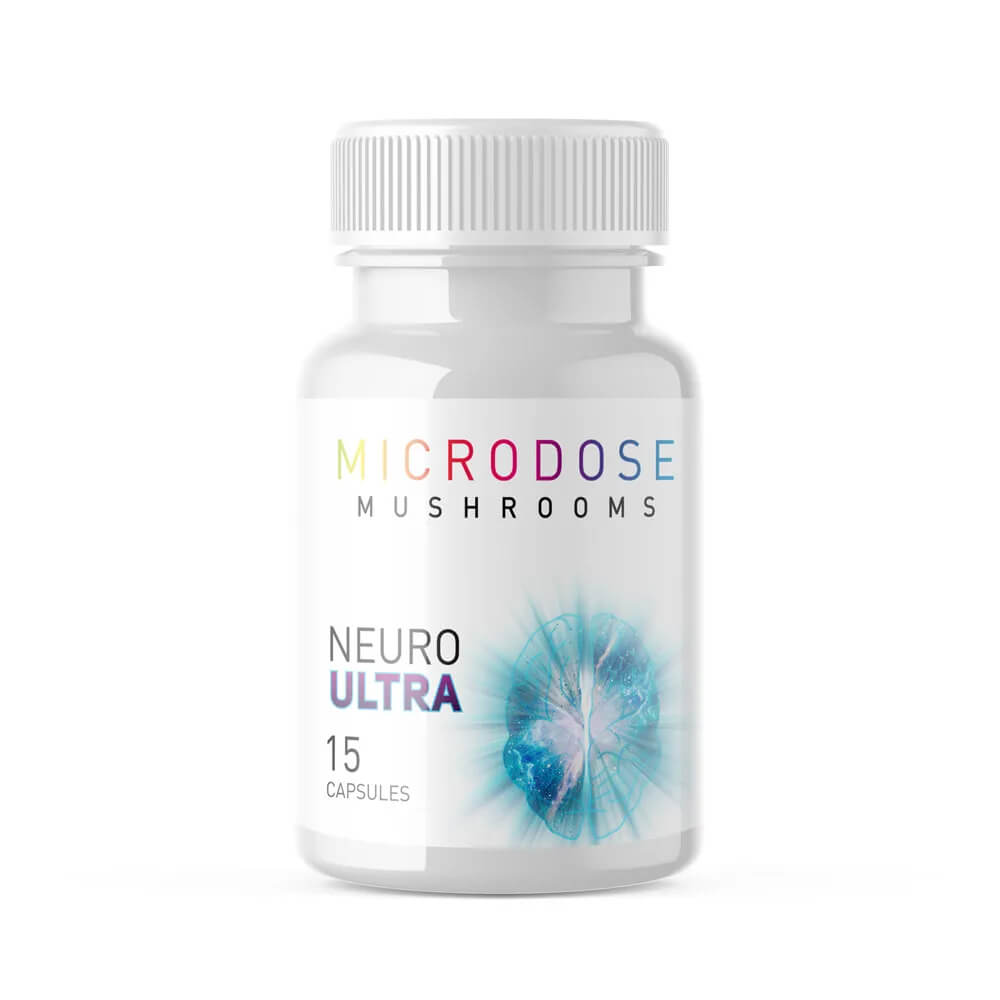
Neuro Ultra 400MG
Neuro Ultra 400MG is a product-style name that needs clarification before discussing microdosing.
Current online descriptions are inconsistent. Some webpages describe “Mushrooms Neuro Ultra” as a nonpsychoactive functional mushroom blend containing or associated with mushrooms such as lion’s mane, reishi and cordyceps. Other online articles connect a product using the Neuro Ultra name with commercial mushroom “microdose” products.
I could not verify an authoritative manufacturer label establishing exactly what Neuro Ultra 400MG contains.
That means readers should not automatically interpret “400MG” as:
400 mg of pure psilocybin.
A standardized pharmaceutical psilocybin dose.
400 mg of one specific mushroom species.
A clinically validated microdose.
A guaranteed amount of active psychedelic compounds.
If the 400 mg refers to dried mushroom material or a mushroom blend, the actual amount of psilocybin—if any—is a completely different measurement.
This distinction matters because searches for Neuro Ultra commonly overlap with questions such as what is microdosing, benefits of microdosing, microdosing for anxiety, microdose mushrooms effects, and long term effects of microdosing.
The scientific evidence is considerably more cautious than many wellness advertisements suggest.
A 2025 critical review examining 57 human studies concluded that people frequently report improvements in mood, cognition and mental health, but controlled experimental studies produce much less consistent benefits than observational reports. (PubMed)
For additional evidence-focused education, explore CannabisTopGrade educational resources.
What Is Microdosing?
For what is microdosing, the term generally describes taking a very small quantity of a psychedelic substance with the intention of avoiding a full psychedelic or hallucinatory experience.
Commonly discussed substances include:
Psilocybin.
LSD.
Some other classic psychedelics.
NCCIH describes psilocybin microdosing as taking very small quantities, often far below amounts associated with a conventional psychedelic experience. People commonly report doing this in hopes of improving mood, productivity, stress or pain. (NCCIH)
However, NCCIH emphasizes an important point:
It is still unclear whether psilocybin microdosing is safe or effective.
That sentence is a useful summary of the current evidence.
Define Microdose
To define microdose accurately:
A microdose is an intentionally small quantity of a psychoactive substance intended to produce limited or no obvious hallucinogenic effects while potentially causing subtler psychological or physiological changes.
The concept is different from a standard therapeutic psychedelic session.
Full-dose clinical psilocybin research may deliberately induce a substantial altered state of consciousness under professional supervision.
Microdosing is instead intended to minimize those overt psychedelic effects.
That does not mean a microdose has no biological effect.
It also does not mean a person cannot experience adverse effects.
Microdose Definition vs Marketing
A useful microdose definition should not rely on product branding.
Words such as:
Microdose.
Neuro.
Focus.
Mood.
Wellness.
Brain boost.
Ultra.
do not establish the actual chemical composition of a product.
A commercial capsule labeled “400MG microdose” may be describing the total weight of mushroom material rather than the amount of psilocybin.
Those values cannot be treated as equivalent.
In clinical pharmacology, milligrams of an active drug refer to the drug itself.
In a whole-mushroom product, milligrams can refer to the weight of complex biological material containing numerous compounds.
Why Do People Microdose?
For why do people microdose, surveys and observational studies repeatedly identify several motivations.
People report microdosing in hopes of improving:
Mood.
Creativity.
Focus.
Productivity.
Energy.
Social functioning.
Emotional well-being.
Stress.
Anxiety.
Depressive symptoms.
Pain.
The 2025 review of 57 human studies found self-reported improvements in areas such as mood, cognition, social functioning and mental health. (PubMed)
However, the same review found a clear scientific pattern:
Observational studies tend to report more benefits than controlled experimental studies.
This matters because people who choose to microdose already expect it to help.
Expectations can influence how someone interprets changes in mood, productivity or creativity.
What Does Microdosing Do?
For what does microdosing do, current controlled research does not support one universal effect.
A person may report feeling:
More energetic.
More focused.
And More emotionally open.
More creative.
Less stressed.
Nothing noticeable.
More anxious.
Distracted.
Physically uncomfortable.
A major 2026 systematic review and meta-analysis examined 14 microdosing studies involving 1,614 participants.
Researchers found no overall improvement in cognitive performance.
The one statistically significant pooled result was actually a small reduction in cognitive control, while other cognitive domains showed no meaningful benefit. (PubMed)
That finding directly challenges common claims that psychedelic microdosing reliably makes people smarter, sharper or more productive.
Microdose Mushrooms Effects
The phrase microdose mushrooms effects generally refers to low-level effects associated with psilocybin-containing mushroom material.
Research and public-health sources describe possible psychological effects including:
Changes in mood.
Altered attention.
Changes in emotional processing.
Mild perceptual differences.
Changes in energy.
Anxiety.
Reduced concentration.
The effects can also include physical symptoms.
NCCIH identifies possible microdosing-related problems such as:
Insomnia.
Increased anxiety.
Worsened mood.
Low energy.
Gastrointestinal discomfort.
Headache.
Disrupted sensory experiences.
Poor focus.
Reduced cognitive functioning.
Impaired social functioning. (NCCIH)
So “microdose” should not be interpreted as “side-effect free.”
Benefits of Microdosing
The benefits of microdosing remain one of the most debated areas of psychedelic research.
Observational studies often report:
Improved mood.
Reduced depressive symptoms.
Greater creativity.
Improved concentration.
Greater psychological well-being.
Reduced stress.
Enhanced social connection.
However, controlled trials generally provide a less impressive picture.
A 2025 critical review found that self-reported benefits were common but inconsistent and that experimental studies frequently produced null findings. (PubMed)
A newer 2026 umbrella review went further.
It concluded that controlled evidence does not support cognitive enhancement from classical psychedelic microdosing and that apparent mood benefits become substantially weaker when placebo-controlled evidence is emphasized. (PubMed)
This does not prove that nobody experiences a benefit.
It means the average benefits promoted online are not yet strongly established under rigorous blinded experimental conditions.
Micro Dose Benefits and the Placebo Question
For micro dose benefits, expectancy is scientifically important.
If someone strongly believes that a microdose will make them:
More creative.
Happier.
More productive.
Less anxious.
they may interpret ordinary day-to-day changes through that expectation.
This is why randomized, placebo-controlled studies matter.
The 2026 umbrella review found that many reported mood improvements are weakened substantially under blinded conditions. (PubMed)
That suggests at least part of the widely reported benefit may involve:
Expectation.
Context.
Behavioral changes.
Placebo responses.
Lifestyle changes occurring alongside microdosing.
The exact proportion attributable to the drug versus expectation remains under investigation.
How Does Microdosing Work?
For how does microdosing work, scientists are still investigating the mechanism.
Psilocybin is converted into psilocin, which interacts with serotonin receptors, particularly 5-HT2A receptors.
LSD also acts strongly through serotonergic systems.
At higher psychedelic doses, these effects contribute to substantial changes in perception, cognition and consciousness.
At much lower exposures, researchers hypothesize that subtle changes in:
Serotonin signaling.
Neural network activity.
Attention.
Emotional processing.
Cognitive flexibility.
may occur without a full psychedelic state.
However, the relationship between those biological effects and claimed real-world improvements remains uncertain.
A biological effect is not automatically a useful clinical effect.
Microdosing for Anxiety
For microdosing for anxiety, evidence is currently inadequate to recommend microdosing as an established anxiety treatment.
This is important because anxiety is one of the most common reasons people report experimenting with microdosing.
Observational research sometimes reports reduced anxiety.
But microdosing can also increase anxiety.
A 2025 systematic review examining adverse effects across 31 LSD and psilocybin microdosing studies found anxiety among commonly reported psychiatric side effects. (PubMed)
NCCIH similarly lists increased anxiety and poor mood among possible effects of psilocybin microdosing. (NCCIH)
Therefore, microdosing cannot responsibly be described as a proven anxiety remedy.
Microdosing vs Full-Dose Psilocybin Therapy
Another major source of confusion is the assumption that evidence supporting full-dose psilocybin therapy also proves microdosing works.
It does not.
Clinical psilocybin studies for depression commonly involve:
Carefully screened participants.
Known pharmaceutical psilocybin.
Professional monitoring.
Preparation sessions.
A clearly psychoactive treatment session.
Psychological support.
Follow-up.
Microdosing generally attempts to avoid the pronounced psychedelic experience.
These are different interventions.
Evidence that a supervised standard-dose psilocybin session may improve depression does not demonstrate that repeated tiny amounts produce the same clinical effect.
For more educational material about psychedelic mental-health research, visit CannabisTopGrade research guides.
Benefits of Microdosing Acid
For benefits of microdosing acid, “acid” usually refers to LSD.
People report using LSD microdoses for many of the same reasons as psilocybin microdoses:
Mood.
Creativity.
Energy.
Productivity.
Focus.
Social functioning.
The controlled evidence again remains mixed.
The 2026 meta-analysis examining microdosing and cognition found no meaningful overall cognitive improvement, and the results did not significantly differ depending on whether the substance was LSD or psilocybin. (PubMed)
This is important because online narratives sometimes portray LSD microdosing as uniquely effective for concentration or productivity.
Current controlled evidence does not establish that claim.
LSD Microdosing Side Effects
LSD microdosing can also produce unwanted effects.
The 2025 systematic review of LSD and psilocybin microdosing found that adverse effects were generally mild and temporary in the available studies, but commonly reported problems included:
Anxiety.
Increased blood pressure.
Cognitive impairment. (PubMed)
The evidence base is limited by inconsistent adverse-event reporting and the short duration of many experiments.
Therefore, “low dose” should not be interpreted as “risk free.”
Microdosing Side Effects
For microdosing side effects, current research identifies both psychological and physiological effects.
Potential psychological effects include:
Anxiety.
Low mood.
Irritability.
Poor concentration.
Cognitive disruption.
Disorientation.
Unwanted perceptual changes.
Potential physical effects include:
Headache.
Gastrointestinal discomfort.
Changes in appetite.
Sleep disruption.
Changes in body temperature perception.
Temporary increases in blood pressure.
A 2026 systematic review specifically examining psilocybin mushroom and truffle microdosing found reports of gastrointestinal symptoms, anxiety-related symptoms, diminished appetite, impaired focus, confusion, dissociation and sensory changes across included studies. (Frontiers in Psychiatry)
Side-effect reporting was inconsistent, however, meaning the true frequency remains uncertain.
Can Microdosing Make Anxiety Worse?
Yes.
Although some users report using psychedelics specifically to reduce anxiety, increased anxiety is one of the documented adverse effects.
This is an important example of why individual responses matter.
People differ in:
Baseline anxiety.
Psychiatric history.
Medication use.
Sleep.
Stress.
Substance sensitivity.
Expectations.
Other drug use.
What one person describes as increased energy might feel like uncomfortable overstimulation to someone else.
Long Term Effects of Microdosing
The long term effects of microdosing remain one of the largest unanswered questions.
Most controlled studies have been relatively short.
The 2025 critical review explicitly concluded that more rigorous research is needed to determine long-term safety. (PubMed)
The 2026 umbrella review similarly concluded that long-term risks remain insufficiently characterized. (PubMed)
Researchers are particularly interested in questions involving:
Cardiovascular effects.
Repeated serotonin-receptor stimulation.
Changes in mood.
Tolerance.
Sleep.
Cognitive function.
Medication interactions.
Psychiatric vulnerability.
Because people may microdose repeatedly for months or years, short laboratory experiments cannot answer every relevant safety question.
The 5-HT2B Question
One theoretical concern in long-term psychedelic microdosing research involves the 5-HT2B serotonin receptor.
Certain drugs that strongly activate this receptor have historically raised concerns about heart-valve effects with repeated exposure.
The 2026 umbrella review notes that long-term cardiovascular risks potentially related to repeated serotonergic receptor stimulation remain uncharacterized in psychedelic microdosing. (PubMed)
This does not prove that microdosing causes heart-valve disease.
It means the available long-term evidence is not sufficient to rule out every theoretical risk.
That distinction matters.
Does Microdosing Improve Focus?
Claims about focus are extremely common.
However, the 2026 meta-analysis involving 1,614 participants found no general cognitive improvement.
Instead, researchers found a small statistically significant decline in cognitive control. (PubMed)
Cognitive control involves abilities such as:
Maintaining task goals.
Suppressing distractions.
Controlling automatic responses.
Organizing behavior.
That does not mean every person will feel less focused.
It does mean the controlled evidence does not support describing microdosing as a proven concentration enhancer.
Does Microdosing Improve Creativity?
Creativity is harder to measure than blood pressure or reaction time.
Some observational reports describe increased creative thinking.
Experimental research has produced inconsistent results.
A person may also feel more creative without producing objectively better creative work.
This difference between subjective experience and measurable performance occurs frequently in psychoactive-drug research.
Therefore, statements such as “microdosing scientifically boosts creativity” remain stronger than the evidence allows.
Does Microdosing Improve Mood?
The evidence for mood is also mixed.
Observational studies often report better:
Mood.
Well-being.
Optimism.
Emotional balance.
Controlled studies are less consistent.
The 2025 review found a substantial gap between positive observational results and more neutral experimental findings. (PubMed)
The 2026 umbrella review similarly concluded that mood benefits are largely reduced when placebo-controlled findings receive greater weight. (PubMed)
This makes expectancy one of the major scientific questions in microdosing research.
Microdosing and Depression
People sometimes use microdosing because of depressive symptoms.
This practice should not be confused with clinically studied psilocybin-assisted treatment for major depression.
NCCIH notes that research into psilocybin for depression has expanded considerably but states separately that it remains unclear whether microdosing is safe or effective. (NCCIH)
Microdosing can also be associated with worsened mood in some individuals.
Persistent depression deserves proper assessment rather than relying solely on commercial mushroom products marketed for mood.
Neuro Ultra 400MG and Product Labeling
The exact formulation of Neuro Ultra 400MG deserves special caution.
Current web results do not provide one authoritative, consistent product identity.
Some recent commercial pages describe “Mushrooms Neuro Ultra” as a nonpsychoactive functional mushroom product.
Other online content associates Neuro Ultra with psychedelic microdosing products.
This means readers should verify the actual package rather than assuming the name establishes the ingredients.
Important label questions include:
What mushroom species is listed?
Does the product explicitly claim psilocybin content?
What does “400MG” measure?
Is it total mushroom material or an extract?
Are individual active compounds quantified?
Is there a batch-specific laboratory report?
Who manufactured the product?
A brand name alone does not answer these questions.
400MG Mushroom Material Is Not 400MG Psilocybin
This point is essential.
If “400MG” refers to total dried mushroom material, that is not equivalent to 400 mg of psilocybin.
Whole mushrooms contain:
Water depending on preparation.
Protein.
Fungal carbohydrates.
Fiber.
Minerals.
Pigments.
Multiple secondary metabolites.
Potentially varying amounts of psychedelic compounds.
Therefore, product weight and active-compound weight are different concepts.
A label that does not clearly distinguish them can easily be misunderstood.
Functional Mushrooms vs Psychedelic Microdosing
Functional mushrooms commonly marketed for wellness include:
Lion’s mane.
Reishi.
Cordyceps.
Chaga.
Turkey tail.
Maitake.
These mushrooms do not produce classic psilocybin psychedelic effects.
A person taking a nonpsychoactive lion’s mane supplement is not “microdosing psychedelics” merely because the supplement comes in a small capsule.
Microdosing in psychedelic research specifically concerns low exposure to a psychedelic compound such as psilocybin or LSD.
This distinction is important when interpreting Neuro Ultra marketing.
Why Product Claims Need Caution
Claims such as:
“Scientifically boosts productivity.”
“Treats anxiety.”
“Improves depression.”
“Enhances intelligence.”
“Guaranteed focus.”
“Safe for daily long-term use.”
require far stronger evidence than testimonials.
Current reviews repeatedly conclude that microdosing evidence is inconsistent.
The newest high-level research does not support reliable cognitive enhancement and identifies unresolved questions about long-term safety. (PubMed)
Consumers should therefore distinguish marketing claims from controlled evidence.
Frequently Asked Questions
1. What is microdosing?
Microdosing generally means taking a very small amount of a psychedelic substance with the intention of producing subtle effects without a full psychedelic experience. NCCIH notes that people commonly try it for mood, productivity, stress or pain but says its safety and effectiveness remain unclear. (NCCIH)
2. What are the benefits of microdosing?
People commonly report improved mood, creativity, productivity and focus. However, controlled research is much less convincing. A 2026 meta-analysis found no overall cognitive benefit and observed a small reduction in cognitive control. (PubMed)
3. Does microdosing help anxiety?
Microdosing has not been established as a proven anxiety treatment. Some observational reports suggest benefits, while clinical reviews also document increased anxiety as a possible adverse effect. (PubMed)
4. What are the long-term effects of microdosing?
They remain inadequately understood. Most controlled studies have been relatively short, and recent reviews specifically call for more research on long-term cardiovascular, psychiatric and cognitive safety. (PubMed)
5. Does Neuro Ultra 400MG contain 400 mg of psilocybin?
That should not be assumed. I could not verify an authoritative Neuro Ultra 400MG label establishing that 400 mg refers to pure psilocybin. Online descriptions of Neuro Ultra conflict, with some describing a functional mushroom product and others discussing it in a microdosing context. The actual package ingredients and laboratory documentation would be needed to establish what “400MG” means.
Final Thoughts on Neuro Ultra 400MG
Neuro Ultra 400MG is a product-style name whose exact formulation should be verified from the actual package rather than inferred from online marketing. Current web descriptions are inconsistent, so it would be inaccurate to automatically describe it as either a standardized psilocybin product or a purely functional mushroom supplement.
For why do people microdose, commonly reported motivations include mood, focus, creativity, productivity, emotional wellness and anxiety reduction.
For what is microdosing, define microdose, and microdose definition, microdosing generally involves very small psychedelic exposures intended to avoid a full psychedelic experience.
Regarding microdose mushrooms effects, the effects can range from subtle changes in mood or attention to anxiety, insomnia, gastrointestinal symptoms, impaired focus and unwanted perceptual changes. (NCCIH)
For benefits of microdosing and micro dose benefits, self-reported improvements are common, but controlled experimental research is far less persuasive. A 2025 review of 57 human studies found observational studies substantially more positive than controlled experiments. (PubMed)
For microdosing for anxiety, evidence remains inadequate for established treatment claims, and anxiety itself can occur as a side effect.
Regarding what does microdosing do and how does microdosing work, psychedelics influence serotonin signaling, but researchers have not demonstrated that subtle receptor effects reliably translate into better mood, productivity or cognition.
For benefits of microdosing acid, LSD microdosing generates many similar subjective claims, yet a 2026 cognitive meta-analysis found no meaningful overall cognitive advantage from either LSD or psilocybin microdosing. (PubMed)
For microdosing side effects, current studies report anxiety, temporary blood-pressure increases, cognitive disruption, gastrointestinal effects, sleep problems and other symptoms. (PubMed)
Finally, for long term effects of microdosing, the evidence is incomplete. Current reviews emphasize that long-term cardiovascular, cognitive and psychiatric consequences have not yet been adequately characterized.
The evidence therefore supports a cautious conclusion: microdosing is scientifically interesting, but claims of reliable improvements in mood, anxiety, creativity, focus or productivity remain considerably stronger in popular culture than in rigorous placebo-controlled research.
For additional evidence-based reading, explore CannabisTopGrade psychedelic and wellness research.
Recommended Outbound Resources
NCCIH — Psilocybin for Mental Health and Addiction
PubMed — 2026 Microdosing Cognition Meta-Analysis
PubMed — 2026 Umbrella Review of Microdosing, Mood and Cognition
Frontiers in Psychiatry — 2026 Psilocybin Microdosing Systematic Review
Be the first to review “Neuro Ultra (400MG) for Sale Online”
Related products
Bulk Mushrooms
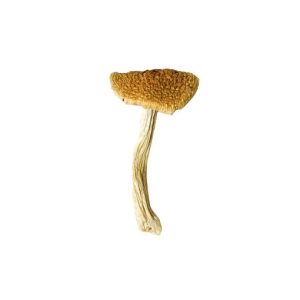
Bulk Mushrooms
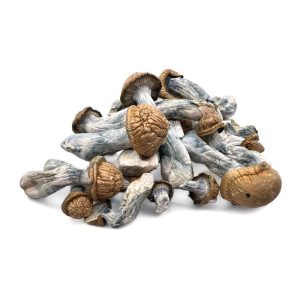
Bulk Mushrooms
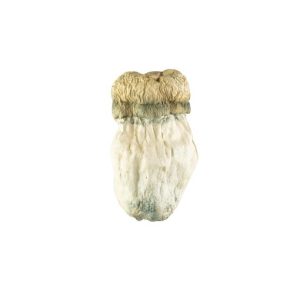
Bulk Mushrooms

Bulk Mushrooms

Bulk Mushrooms
Bulk Mushrooms
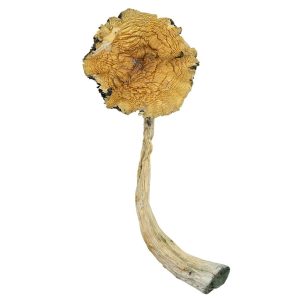
Bulk Mushrooms
Reviews
There are no reviews yet.