
Trainwreck Kush: Sativa, ADHD, Best-Tasting Weed Strains and Top Cannabis Brands Explained
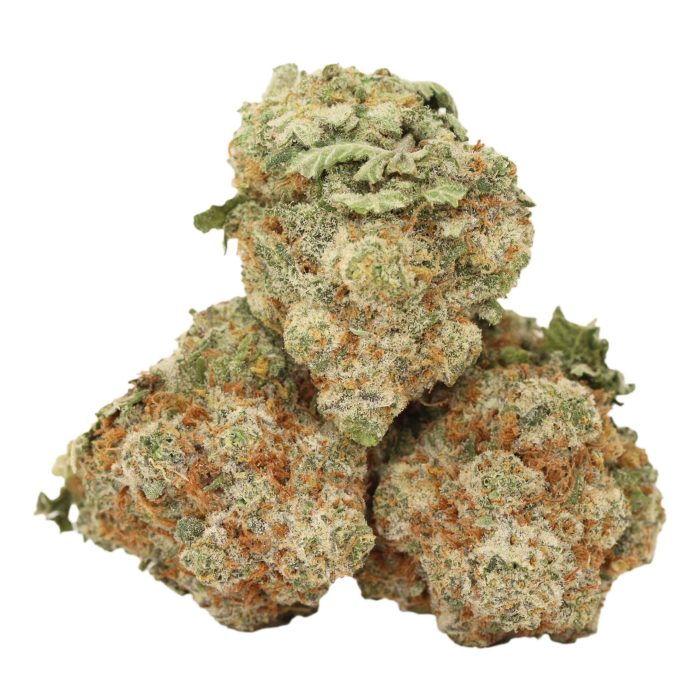
Trainwreck Kush is a name often used by consumers when discussing the classic Trainwreck cannabis family, an energetic strain profile known for pine-heavy aroma, earthy flavor, uplifting effects, and a long connection with Northern California cannabis culture.
The strain naturally overlaps with searches such as sativa ADHD, best tasting weed strains, best tasting strains, best tasting weed, and top weed brands.
These searches cover very different questions.
Someone searching for “sativa ADHD” may be looking for cannabis associated with focus or mental stimulation. Someone searching for the best-tasting weed may care more about terpenes, aroma, curing, freshness, and genetics. A search for top weed brands may focus on testing, consistency, product quality, or reputation in a legal state market.
They should not be treated as interchangeable.
Current evidence also does not establish Trainwreck—or cannabis generally—as a proven ADHD treatment. A 2026 systematic review of cannabinoids for mental-health conditions found trivial-to-no benefit for ADHD in randomized evidence and concluded that the evidence was insufficient to support cannabinoids as first-line treatment.
For additional U.S.-focused strain, cannabinoid, and legal-market education, readers can explore Cannabistopgrade.com.
What Is Trainwreck Kush?
Trainwreck is a classic cannabis strain associated with Northern California.
Leafly currently categorizes Trainwreck as a hybrid, while its historical description emphasizes strong sativa influence. Its ancestry is commonly described as involving:
- Mexican sativa;
- Thai sativa;
- Afghani indica.
This combination contributed to Trainwreck’s reputation for a fast, cerebral, stimulating experience followed by more relaxing physical effects.
Leafly currently displays approximately 17% THC and 1% CBG on its general Trainwreck profile.
These percentages are reference values rather than guaranteed specifications.
Actual cannabis potency varies by:
- phenotype;
- grower;
- cultivation environment;
- harvest timing;
- curing;
- storage;
- and laboratory testing.
A product called Trainwreck Kush therefore should not be assumed to have exactly the same cannabinoid concentration as another Trainwreck product.
Trainwreck Kush Effects
Leafly currently lists Trainwreck’s leading consumer-reported effects as:
Euphoric
Uplifted
Creative
The overall profile is described as mostly energizing.
These reports explain why Trainwreck often appears in discussions involving:
- sativa strains;
- creativity;
- daytime cannabis;
- mental stimulation;
- and focus.
However, subjective effects are not guarantees.
One person may describe a product as energizing while another experiences:
- dizziness;
- anxiety;
- dry mouth;
- fatigue;
- or mental distraction.
Individual response depends on much more than a strain name.
Trainwreck Kush THC
Trainwreck’s current Leafly profile displays around 17% THC.
That places it in a moderately potent range by modern commercial standards, although individual batches can vary substantially.
More THC does not automatically mean better cannabis.
A higher percentage can increase:
- intoxication;
- impairment;
- anxiety in sensitive individuals;
- changes in memory;
- and difficulty judging effects.
The CDC notes that recent cannabis use can immediately affect thinking, attention, memory, coordination, movement, and time perception.
Therefore, THC concentration should be understood as a chemical measurement—not a quality score.
Trainwreck Kush Flavor
Trainwreck has one of the more recognizable classic cannabis flavor profiles.
Leafly currently lists its leading flavors as:
Pine
Earthy
Woody
Historical descriptions also commonly mention sweet lemon and spicy pine characteristics.
This gives Trainwreck a very different character from modern dessert-heavy cannabis varieties associated with:
- candy;
- berries;
- vanilla;
- cream;
- tropical fruit;
- or baked-goods aromas.
For consumers who prefer old-school pine and earth profiles, Trainwreck may stand out.
Trainwreck Kush Terpenes
Leafly currently identifies the leading terpenes as:
Terpinolene
Myrcene
Pinene
Terpinolene
Terpinolene can contribute herbal, floral, woody, pine-like, or citrus-adjacent aromas.
It appears in several cannabis cultivars associated with complex, bright aromatic profiles.
Myrcene
Myrcene commonly produces:
- earthy;
- herbal;
- musky;
- or slightly fruity aromas.
Pinene
Pinene contributes the recognizable fresh-pine character that is strongly associated with Trainwreck.
Together, these compounds help explain why Trainwreck tastes very different from many contemporary sweet strains.
Is Trainwreck a Sativa?
Trainwreck is commonly associated with sativa characteristics even though modern strain databases may classify it as a hybrid.
Its Mexican and Thai sativa ancestry contributes significantly to that reputation.
Consumers commonly associate Trainwreck with:
- mental stimulation;
- euphoria;
- creativity;
- uplifted mood;
- and energy.
Its Afghani ancestry adds an indica component to the genetic background.
This demonstrates why modern cannabis rarely fits perfectly into a strict sativa-versus-indica binary.
What Does “Sativa ADHD” Mean?
The search phrase sativa ADHD generally reflects interest in whether energizing cannabis strains might help with:
- concentration;
- motivation;
- restlessness;
- productivity;
- racing thoughts;
- or task initiation.
Because sativa strains are traditionally marketed as stimulating, consumers sometimes assume they are naturally suitable for ADHD.
Scientific evidence does not support that conclusion.
ADHD is a neurodevelopmental condition involving symptoms such as:
- inattention;
- impulsivity;
- hyperactivity;
- organization difficulties;
- and executive-function challenges.
Cannabis is not an established first-line ADHD treatment.
Cannabis and ADHD: What Does the Research Say?
The latest evidence requires considerable caution.
A 2026 systematic review and meta-analysis examining cannabinoids across mental-health conditions included research involving ADHD.
Randomized evidence showed trivial-to-no effect on ADHD symptoms, and the authors concluded that the evidence base was too uncertain to support cannabinoids as first-line mental-health treatment.
See the research through PubMed.
Earlier research reached similar conclusions.
A scoping review examining cannabis use in ADHD found that only one included study used a randomized placebo-controlled design to directly evaluate cannabis for ADHD. It found no significant improvement on the primary outcome.
The review concluded that most available studies indicated cannabis either worsened ADHD symptoms or produced no meaningful improvement.
Read the review through PubMed.
Why Some People With ADHD Report Liking Sativa Strains
Consumer experience and clinical evidence are not the same thing.
Some people may subjectively report that stimulating cannabis feels:
- engaging;
- mentally interesting;
- calming;
- motivating;
- or creativity-enhancing.
Trainwreck’s euphoric, uplifted, and creative consumer reports may contribute to those perceptions.
But feeling more engaged does not establish improvement in:
- sustained attention;
- impulse control;
- working memory;
- executive functioning;
- organization;
- or academic/work performance.
Subjective focus and objectively measured attention can be very different.
Cannabis Can Affect Attention
The CDC states that cannabis directly affects brain functions involving:
- memory;
- learning;
- attention;
- decision-making;
- coordination;
- emotions;
- and reaction time.
Recent cannabis use can immediately affect thinking, attention, and memory.
That is particularly relevant when discussing cannabis and ADHD because attention is already a central ADHD concern.
Read the current public-health information at the CDC Cannabis and Brain Health page.
ADHD and Cannabis Use Disorder Risk
Another important issue is cannabis use disorder.
A 2024 clinical epidemiological meta-analysis found that people with ADHD had significantly higher rates of cannabis use disorder than comparison populations.
Across the studies analyzed, estimated:
- lifetime cannabis use disorder prevalence was about 26.9%;
- current prevalence was about 19.2%.
The researchers estimated that people with ADHD had nearly three times the risk of current or lifetime cannabis use disorder compared with general-population controls.
Read the study through PubMed.
This does not mean every person with ADHD who uses cannabis develops cannabis use disorder.
It does mean the risk deserves attention.
Is Trainwreck Kush Good for ADHD?
There is insufficient evidence to recommend Trainwreck Kush as an ADHD treatment.
Its reported:
- creativity;
- euphoria;
- uplift;
- and energetic profile
may explain why consumers associate it with the sativa ADHD keyword.
That is a consumer-interest connection, not a medical recommendation.
Someone managing diagnosed ADHD should not replace evidence-based treatment solely with a strain recommendation.
Best Tasting Weed Strains
The phrase best tasting weed strains is fundamentally subjective.
Cannabis flavor depends heavily on:
- terpenes;
- genetics;
- cultivation;
- drying;
- curing;
- freshness;
- storage;
- consumption method;
- and individual taste preference.
Someone who enjoys pine and earth might consider Trainwreck excellent.
Someone who prefers dessert-style or tropical cannabis may disagree completely.
Therefore, no strain can objectively be called the best tasting weed for everyone.
What Makes Weed Taste Good?
Several factors influence cannabis flavor.
Terpene Profile
Terpenes contribute strongly to aroma and flavor.
Genetics
Different cultivars naturally produce different aromatic compounds.
Harvest Quality
Harvest timing can influence cannabinoid and terpene development.
Drying and Curing
Poor curing can reduce aroma or create unpleasant flavor.
Storage
Heat, air, moisture, and prolonged light exposure can degrade aromatic compounds.
Freshness
Old cannabis may smell flatter than appropriately stored fresh flower.
Quality therefore involves more than the strain name.
Best Tasting Strains by Flavor Style
Rather than declaring one winner, cannabis flavor can be organized into broad categories.
| Flavor Preference | Common Profile |
|---|---|
| Pine/forest | Trainwreck-style cultivars |
| Citrus | Lemon and Haze families |
| Sweet/dessert | Cookies and Gelato families |
| Tropical | Fruit-forward hybrids |
| Diesel/fuel | Diesel-family strains |
| Earthy/Kush | Kush-family cultivars |
| Berry | Blueberry-style cultivars |
| Grape | Purple-family cultivars |
These categories are descriptive rather than scientific rankings.
Is Trainwreck One of the Best Tasting Strains?
For someone who enjoys classic cannabis flavors, it can be.
Trainwreck is particularly distinctive because its profile combines:
- pine;
- earth;
- wood;
- spice;
- and sometimes citrus-like sweetness.
This creates a sharper, more herbal profile than many modern candy-style strains.
Its flavor profile may appeal especially to consumers who prefer traditional Northern California cannabis character.
Best Tasting Weed: Flavor vs. Potency
A common mistake is assuming strong cannabis automatically tastes better.
THC and flavor are separate characteristics.
A flower testing at 30% THC can have a weak aroma.
Another flower with less THC can have a much richer terpene profile.
Quality may involve:
- aroma intensity;
- terpene diversity;
- smoothness;
- freshness;
- curing;
- cleanliness;
- visual quality;
- and cannabinoid balance.
THC percentage alone cannot measure these qualities.
Trainwreck vs. Dessert Strains
| Characteristic | Trainwreck | Dessert-Style Strains |
|---|---|---|
| Main flavor direction | Pine, earth, wood | Sweet, creamy, candy-like |
| Typical reputation | Classic/old-school | Modern |
| Common experience reports | Euphoric, uplifted, creative | Highly strain dependent |
| Main appeal | Sharp natural cannabis aroma | Sweet flavor profile |
| “Best tasting” status | Subjective | Subjective |
Neither category is inherently superior.
Preference determines the winner.
What Are Top Weed Brands?
The phrase top weed brands can be misleading because cannabis is not a single national retail market.
Most state-legal cannabis systems operate under state-specific licensing rules.
A company considered prominent in California may not operate in:
- Michigan;
- New York;
- Massachusetts;
- Illinois;
- Colorado;
- or another legal state.
Consequently, a national “top brands” list can quickly become inaccurate.
A better question is:
What characteristics distinguish a reputable regulated cannabis brand?
Characteristics of Strong Cannabis Brands
In regulated U.S. markets, useful quality indicators include:
Transparent Testing
Products should provide required potency and safety information.
Batch Traceability
Lot or batch numbers help identify individual production runs.
Consistency
A reputable producer aims to deliver relatively consistent products across batches.
Accurate Labeling
THC and CBD information should correspond to laboratory testing.
Responsible Packaging
Regulated markets often require child-resistant or clearly marked packaging.
Clear Manufacturer Information
Consumers should be able to identify who produced the product.
Realistic Marketing
Claims such as “guaranteed ADHD relief” or “medically proven focus strain” should raise questions when unsupported.
Top Weed Brands Are State-Specific
Cannabis brands operate within highly fragmented legal markets.
For example, branding and product availability in California can differ significantly from New York or Michigan.
The National Conference of State Legislatures’ State Cannabis Policy Enactment Database, updated August 31, 2026, tracks enacted legislation concerning:
- medical cannabis;
- nonmedical adult use;
- hemp/CBD;
- business licensing;
- product regulation;
- concentrates;
- flower;
- THC;
- edibles;
- packaging;
- labeling;
- and testing.
See the current database at the National Conference of State Legislatures.
This state-by-state structure is why “top weed brands” should be evaluated within the relevant licensed jurisdiction rather than as a single nationwide market.
Brand Reputation vs. Strain Quality
A famous cannabis brand does not automatically guarantee that every batch is exceptional.
Likewise, a less famous licensed producer can produce high-quality cannabis.
Useful evaluation criteria include:
- freshness;
- testing;
- genetics;
- terpene information;
- cultivation practices;
- curing quality;
- batch consistency;
- and regulatory compliance.
Brand recognition is only one factor.
Trainwreck Kush and Brand Names
Consumers should also distinguish a strain name from a brand name.
Trainwreck is primarily a cultivar or strain identity.
Different licensed producers may cultivate Trainwreck or Trainwreck-related genetics.
Those products can vary in:
- THC;
- CBD;
- terpenes;
- appearance;
- curing;
- aroma;
- and overall quality.
Seeing “Trainwreck” on two packages does not mean the contents are chemically identical.
How to Read a Trainwreck Product Label
A regulated product label may contain information such as:
THC
Provides batch-specific potency information.
CBD
Indicates cannabidiol content.
Minor Cannabinoids
Some labels may display CBG, CBC, or other cannabinoids.
Terpenes
Where provided, these can help explain aroma differences.
Package Date
Older products may lose aromatic intensity over time.
Batch Number
Useful for traceability.
Laboratory Results
Provide much more reliable potency information than generic online strain averages.
Trainwreck and Creativity
Creative is one of Trainwreck’s leading current Leafly user-reported effects.
This helps explain the strain’s longstanding popularity in conversations around art, music, hobbies, and brainstorming.
However, increased subjective creativity is not equivalent to increased objective productivity.
THC may also impair:
- memory;
- attention;
- reaction time;
- and decision-making.
The CDC’s brain-health guidance makes that distinction important.
Trainwreck and Focus
Consumers sometimes describe energetic strains as focusing.
Trainwreck can produce this reputation because its reported effects lean:
- euphoric;
- uplifted;
- creative;
- and energizing.
However, cannabis is capable of affecting attention directly.
Therefore, the phrase “focus strain” should be understood as consumer terminology rather than a clinical classification.
Trainwreck and Anxiety
Trainwreck also demonstrates the variability of cannabis effects.
Leafly currently reports that:
- 37% of reviewers discussing medical reasons mention stress;
- 31% mention anxiety;
- 27% mention pain.
These are user reports rather than clinical findings.
They should not be interpreted as evidence that Trainwreck treats those conditions.
Cannabis Flavor and Terpenes
The popularity of best tasting weed searches reflects growing consumer interest in terpene profiles.
Terpenes contribute aroma and may include compounds such as:
- limonene;
- pinene;
- myrcene;
- caryophyllene;
- linalool;
- terpinolene;
- ocimene;
- and humulene.
Different ratios can create dramatically different sensory profiles.
Trainwreck’s terpinolene/pinene-heavy identity contributes to its classic sharp, forest-like aroma.
Does Better Smell Mean Better Cannabis?
Not necessarily.
A strong aroma can indicate abundant volatile compounds, but it does not independently establish:
- cleanliness;
- potency;
- safety;
- cannabinoid balance;
- or therapeutic value.
A product still needs appropriate testing and labeling where required.
U.S. Cannabis Laws in 2026
Cannabis remains governed by a complicated combination of state and federal rules.
Individual states can regulate:
- possession;
- medical programs;
- adult-use sales;
- cultivation;
- retail licensing;
- delivery;
- concentrates;
- edibles;
- THC limits;
- packaging;
- testing;
- and advertising.
The NCSL State Cannabis Policy Enactment Database was updated August 31, 2026 and provides current information on enacted state cannabis legislation.
Therefore, Trainwreck-related product availability and legal access should never be assumed to be identical nationwide.
Licensed Markets and Product Quality
State-regulated cannabis systems can impose testing and packaging requirements designed to improve product transparency.
Depending on jurisdiction, regulated products may be evaluated for:
- cannabinoid potency;
- pesticides;
- residual solvents;
- microbial contamination;
- heavy metals;
- or other regulated contaminants.
Requirements vary by state.
Consumers should rely on the rules of their own jurisdiction rather than assuming one state’s standards apply everywhere.
Educational Resources
For more U.S.-focused cannabis strain, terpene, cannabinoid, and legal-market education, explore Cannabistopgrade.com.
Fcurrent Trainwreck strain information—including its hybrid classification, approximately 17% THC reference profile, euphoric/uplifted/creative user reports, pine-earthy-woody flavor profile, and terpenes—see the Leafly Trainwreck strain profile.
For evidence-based information about cannabis effects on memory, attention, learning, coordination, and decision-making, see the CDC Cannabis and Brain Health resource.
current research concerning cannabis and ADHD, review the 2026 PubMed systematic review of cannabinoids for mental and substance-use conditions. The review found trivial-to-no randomized evidence of ADHD benefit and concluded that cannabinoids should not be considered first-line treatment based on current evidence.
Readers can also review the PubMed meta-analysis of cannabis use disorder in people with ADHD, which found substantially elevated cannabis-use-disorder risk in ADHD populations.
For current state cannabis policy, see the NCSL State Cannabis Policy Enactment Database.
Additional educational material about legal cannabis markets and strain terminology is available through Cannabistopgrade.com.
Frequently Asked Questions
1. Is Trainwreck Kush a sativa?
Trainwreck is currently categorized by Leafly as a hybrid, but its Mexican and Thai sativa ancestry and predominantly energizing user reports explain its longstanding sativa reputation. Afghani indica is also part of its commonly reported genetic background.
2. Is a sativa good for ADHD?
Cannabis is not established as an ADHD treatment. A 2026 systematic review found trivial-to-no randomized evidence of benefit for ADHD, while earlier reviews also concluded that existing evidence does not support cannabis as a recommended ADHD therapy.
3. What are the best tasting weed strains?
There is no universal best-tasting strain. Consumers who prefer pine, earth, wood, and herbal aromas may favor strains such as Trainwreck, while others prefer citrus, fruit, dessert, grape, diesel, or Kush-style profiles.
4. Is Trainwreck one of the best tasting strains?
It can be for people who enjoy classic pine-heavy cannabis. Leafly currently lists pine, earthy, and woody as Trainwreck’s leading flavor descriptors. Flavor quality remains subjective.
5. Does high THC mean the best tasting weed?
No. THC concentration measures potency rather than flavor. Terpenes, genetics, curing, freshness, storage, and cultivation practices have much more direct relevance to aroma and taste.
6. What makes top weed brands different?
Strong regulated-market cannabis brands generally distinguish themselves through accurate labeling, batch traceability, testing, consistency, responsible packaging, and transparent manufacturing information. Because U.S. cannabis markets remain state-specific, there is no permanent nationwide ranking that applies equally in every state.
| weight | Oz, Qp, Hp, P |
|---|
Be the first to review “Trainwreck Kush”
Related products
Sativa Strains
Sativa Strains
Sativa Strains
Sativa Strains
Sativa Strains
Sativa Strains
Sativa Strains
Sativa Strains
Reviews
There are no reviews yet.