
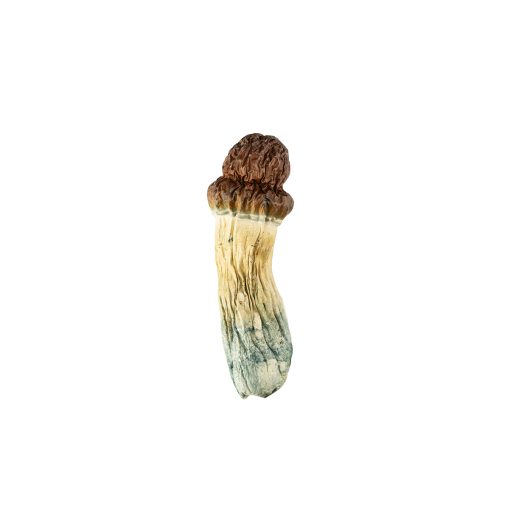
Blue Pulaski Mushroom is an informal psychedelic-mushroom cultivar name associated with Psilocybe cubensis cultivation communities. Community descriptions commonly identify Blue Pulaski as a line involving Melmac and Blue Meanie-type P. cubensis genetics, although this lineage is community-reported rather than an independently established taxonomic classification.
That distinction matters. “Blue Pulaski” is not a separately recognized scientific species, and its name does not establish one guaranteed level of psilocybin, psilocin, potency, appearance, duration or psychological effect.
Recent third-party laboratory listings also illustrate why batch-specific evidence matters. Multiple samples marketed as Blue Pulaski produced slightly different measured concentrations rather than one universal result. A test of one sample cannot establish the chemistry of every mushroom carrying the same informal name.
This article also addresses common questions about mushroom gummies, whether mushrooms can be addictive, mushroom spores and digestion. These topics need to be separated carefully because culinary mushrooms, functional mushroom supplements, Amanita products and psilocybin mushrooms have very different chemical properties and legal treatment.
For additional educational information about cannabis and psychoactive substances, see CannabisTopGrade educational resources.
What Is Blue Pulaski Mushroom?
Blue Pulaski appears primarily in cultivation-community records rather than formal scientific literature.
A Shroomery discussion from 2022 describes Blue Pulaski as a cross involving Melmac—associated with the Penis Envy family—and a Blue Meanie-labeled line. Other community discussions similarly refer to it as a Melmac-related P. cubensis variety.
These descriptions should be treated as cultivar history rather than verified taxonomy.
Mushroom marketing names can become confusing because the same informal name may be:
Used by different cultivators.
Applied to different selections.
Repeated across vendors.
Modified over generations.
Used without genetic verification.
The most scientifically useful description is therefore that Blue Pulaski is an informal cultivated psychedelic-mushroom line associated with Psilocybe cubensis.
Blue Pulaski Potency
There is no universal Blue Pulaski potency.
One current analytical-testing directory lists several Blue Pulaski samples with total measured psychedelic-tryptamine content around 0.9% by dry weight, with small differences among tested batches.
Those results are useful for demonstrating variation, not for establishing a universal potency standard.
Different mushrooms can vary because of:
Genetics.
Individual fruiting-body variation.
Environmental conditions.
Maturity.
Storage.
Drying.
Chemical degradation.
Laboratory methodology.
For this reason, cultivar names should not be treated like standardized pharmaceutical dosage labels.
Are Mushrooms Addictive?
The question are mushrooms addictive depends on what kind of mushrooms are being discussed.
Ordinary culinary mushrooms such as button mushrooms, shiitake and oyster mushrooms are foods and are not addictive drugs.
If “mushrooms” means psilocybin mushrooms, their dependence profile is very different from substances such as nicotine, opioids or cocaine.
Research generally describes classic psychedelics such as psilocybin as having low dependence and reinforcing potential, but scientific agencies remain cautious about claiming that addiction is impossible.
NIDA educational material notes that it is not definitively established whether psilocybin is addictive and that more research is needed.
A scientific review of psilocybin’s abuse potential found limited reinforcing effects and relatively low patterns of repeated use compared with many commonly abused drugs.
Therefore, the most accurate answer is that psilocybin appears to have comparatively low addiction potential, but “low potential” is not the same as “zero risk.”
Can You Get Addicted to Shrooms?
For can you get addicted to shrooms, physical dependence and compulsive repeated use appear substantially less common than with many other psychoactive drugs.
Classic psychedelics also tend to produce rapid tolerance when repeatedly used over short periods, which can make frequent repeated intoxication less reinforcing.
However, psychological patterns of problematic use can still occur.
Someone can develop unhealthy behaviors around almost any psychoactive substance even when that substance does not typically produce a strong physical withdrawal syndrome.
Risk should therefore be evaluated through behavior rather than simply asking whether a substance produces traditional withdrawal.
Warning signs of problematic substance use can include:
Repeated use despite harm.
Neglecting responsibilities.
Taking risks while intoxicated.
Using substances to cope with every difficult emotion.
Continued use despite relationship or occupational consequences.
Difficulty controlling use.
Can You Get Addicted to Mushrooms?
The answer to can you get addicted to mushrooms depends again on whether “mushrooms” means food or psilocybin-containing fungi.
Ordinary edible mushrooms are not addictive.
Psilocybin mushrooms have relatively low known dependence potential, but research is still evolving.
NIDA’s published drug information states that whether psilocybin is addictive is not completely established and lists withdrawal symptoms as unknown rather than describing a characteristic withdrawal syndrome.
Meanwhile, reviews of clinical research describe psilocybin as having low dependence potential.
These statements are not contradictory: the available evidence suggests relatively low addiction liability, while researchers still avoid claiming that all forms of problematic use are impossible.
Are Psilocybin Mushrooms Addictive? What You Should Know
For are psilocybin mushrooms addictive what you should know, four points are especially useful.
First, psilocybin does not appear to produce the same strong reinforcing cycle associated with substances such as nicotine or opioids.
Second, physical withdrawal is not a prominent feature of ordinary psilocybin use in current evidence.
Third, psychological misuse or risky behavior remains possible.
Fourth, psilocybin can still produce significant adverse effects even when addiction is not the primary concern.
NCCIH lists potential adverse effects including anxiety, paranoia, nausea, dizziness, increased heart rate and blood pressure, headache, poor sleep and unpredictable perceptual changes.
Therefore, “not highly addictive” should never be translated into “harmless.”
Can Mushrooms Be Addictive?
For can mushrooms be addictive, it is more useful to distinguish addiction from intoxication.
A substance can significantly alter perception without necessarily having high addiction liability.
Psilocybin illustrates this distinction.
The experience can be psychologically intense, while repeated compulsive use appears much less typical than with many dependence-forming drugs.
Interestingly, clinical researchers are also studying psilocybin-assisted psychotherapy as a possible treatment for other substance-use disorders.
A 2025 systematic review identified preliminary evidence involving alcohol and tobacco use disorders but emphasized that larger controlled studies are needed.
That research does not prove that recreational psilocybin use is safe or that any Blue Pulaski mushroom is an addiction treatment.
How Addictive Are Shrooms?
For how addictive are shrooms, available evidence generally places classic psilocybin mushrooms toward the lower end of the dependence spectrum compared with many commonly misused drugs.
A review assessing psilocybin according to U.S. Controlled Substances Act abuse-potential factors described its reinforcing effects as limited.
However, several separate risks remain:
Accidental injury while impaired.
Panic.
Paranoia.
Unpredictable psychological reactions.
Dangerous behavior.
Interactions with other substances.
Poisoning from mushroom misidentification.
Mental-health complications in vulnerable individuals.
NCCIH specifically notes that psilocybin experiences can vary widely depending on dose, health, mood, expectations, environment and other substances.
For more evidence-based drug education, explore CannabisTopGrade research resources.
Are Mushroom Gummies Legal in Ohio?
For are mushroom gummies legal in Ohio, the answer depends on what the gummy contains.
“Mushroom gummy” is a product format, not a legal classification.
A gummy containing an ordinary functional-mushroom ingredient such as lion’s mane is legally different from a gummy containing psilocybin.
Ohio’s current Schedule I controlled-substances rule explicitly lists:
Psilocybin
and
Psilocyn.
Ohio’s controlled-substance law was also updated in 2026 and continues to require state scheduling consistent with federal controlled-substance law, subject to specified state provisions.
Therefore, a gummy containing psilocybin does not become legal simply because it is candy.
By contrast, non-psilocybin mushroom gummies must be evaluated according to their actual ingredients and the food, supplement or product rules applicable to them.
Ohio Marijuana Edibles Are Not Psilocybin Gummies
Ohio now has regulated adult-use marijuana, including legal cannabis edible forms for qualifying adults.
Current Ohio law explicitly allows adult-use marijuana in forms including edibles, lozenges, beverages and several other preparations.
That does not legalize psilocybin mushroom gummies.
Cannabis and psilocybin are legally different controlled substances.
An edible being lawful under Ohio’s marijuana program therefore provides no legal protection to a psilocybin-containing gummy.
Mushroom Gummies Utah
The phrase mushroom gummies Utah also requires careful ingredient-level analysis.
Utah implemented new licensing requirements for specialized-product retailers in May 2026.
The Utah Department of Agriculture and Food says regulated “specialized products” can include products marketed for psychoactive, euphoric, sedative or intoxicating effects that are not generally recognized as safe conventional food ingredients.
The department gives examples including:
Amanita muscaria products.
Functional mushroom products.
Blue lotus.
Kava.
Kanna.
Other specialized wellness or psychoactive products.
Importantly, Utah explicitly warns that inclusion on its example list does not guarantee that a product is legal to sell.
So “mushroom gummies” in a Utah store do not necessarily mean psilocybin gummies.
Are Psilocybin Gummies Legal in Utah?
Utah still controls psilocybin through its controlled-substance framework.
Current Utah law provides that substances listed under the federal Controlled Substances Act are controlled in Utah, and its 2026 controlled-substance code maintains Schedule I through V.
Utah has created narrow provisions involving investigational psilocybin in behavioral-health treatment programs operated by qualifying health-care systems, but those provisions are not equivalent to ordinary retail legalization.
Therefore:
Functional mushroom gummy: potentially lawful depending on ingredients and compliance.
Amanita muscaria product: subject to Utah’s specialized-product rules and other applicable laws.
Psilocybin gummy: not an ordinary legal recreational retail product.
The active compound matters more than the phrase “mushroom gummy.”
Why Mushroom Gummies Can Be Confusing
Modern mushroom gummies may contain very different ingredients while using similar packaging.
Possible ingredients include:
Lion’s mane.
Reishi.
Cordyceps.
Amanita muscaria components.
Cannabinoids.
Botanical extracts.
Psilocybin.
Other psychoactive substances.
This means a package displaying mushrooms does not tell consumers what pharmacological effects or legal classification apply.
Public-health agencies have also warned about mushroom-branded edible products containing unexpected or undisclosed ingredients.
A Utah-distributed CDC health alert concerning Diamond Shruumz products warned that mushroom-containing gummies and chocolates can include psychoactive compounds, illicit ingredients or contaminants not approved for food use.
Mushroom Spores to Grow at Home
The keyword mushroom spores to grow at home can refer to perfectly ordinary edible mushrooms or psychedelic mushrooms.
For culinary species such as oyster mushrooms, spores and home cultivation are generally part of ordinary food gardening and mushroom cultivation.
Psilocybin-producing mushrooms involve a very different legal question.
Spores are biologically distinct from mature mushrooms, and some ungerminated Psilocybe spores may contain no measurable psilocybin or psilocin.
However, laws vary by jurisdiction, and cultivation that produces psilocybin can create controlled-substance liability where psilocybin remains prohibited.
That means the legality of possessing spores and the legality of actually cultivating mature psilocybin mushrooms are not necessarily the same question.
Anyone researching psychedelic mushroom spores should check current state law rather than assuming that legal possession of spores automatically means cultivation is authorized.
This article does not provide instructions for cultivating psilocybin mushrooms.
Why Spores and Mature Mushrooms Can Be Treated Differently
Spores represent an early reproductive stage of the fungal life cycle.
A mature psychedelic mushroom can contain psilocybin and psilocin, while spores may have a different chemical profile.
Some legal systems therefore distinguish between spores and mature mushrooms.
Other jurisdictions regulate spores capable of producing psilocybin-containing fungi more aggressively.
The result is a patchwork of rules that cannot safely be summarized as “mushroom spores are legal everywhere.”
State-specific research is essential.
Are Mushrooms Hard to Digest?
For are mushrooms hard to digest, some people do find mushrooms more difficult to digest than many other foods.
One reason is chitin, a structural polysaccharide present in fungal cell walls.
Humans do not digest chitin in exactly the same manner as common dietary starches.
Scientific analysis of popular edible mushroom varieties has found measurable chitin concentrations, with levels differing significantly by species and maturity.
Other mushroom carbohydrates and fibers can also contribute to digestive symptoms in sensitive people.
Possible symptoms after eating mushrooms may include:
Bloating.
Gas.
Abdominal discomfort.
A feeling of fullness.
Individual tolerance varies considerably.
Are Mushrooms Easy to Digest?
For are mushrooms easy to digest, the answer varies by person, mushroom species and preparation.
Many people digest properly prepared culinary mushrooms without difficulty.
Others find large quantities uncomfortable.
Cooking changes mushroom composition. A study comparing raw and cooked mushroom varieties found that cooking altered concentrations of dietary fiber, chitin, protein and other components. In that analysis, cooking reduced measured chitin concentration.
This helps explain why cooked culinary mushrooms may be easier for some people to tolerate than large quantities of raw mushrooms.
However, digestive tolerance should not be confused with psychedelic safety.
A psychedelic mushroom can still produce nausea or gastrointestinal discomfort for reasons beyond ordinary food digestion.
Why Psilocybin Mushrooms Can Cause Nausea
Nausea associated with psychedelic mushrooms may involve multiple factors.
These can include:
The fungal material itself.
Individual digestive sensitivity.
Psilocybin’s pharmacological effects.
Anxiety.
Other foods or substances.
Individual physiological differences.
NCCIH lists nausea among recognized adverse effects of psilocybin.
Therefore, gastrointestinal discomfort following psychedelic mushroom use cannot automatically be blamed solely on chitin.
Culinary Mushrooms vs Psychedelic Mushrooms
The phrase are mushrooms easy to digest usually concerns food mushrooms, while terms such as Blue Pulaski refer to an entirely different context.
Culinary mushrooms are evaluated primarily for:
Nutrition.
Food preparation.
Allergy.
Digestibility.
Food safety.
Psilocybin mushrooms additionally involve:
Psychoactive effects.
Controlled-substance law.
Psychological risk.
Altered perception.
Potential interactions.
Cultivar variability.
The fact that both organisms are fungi does not make their health and legal questions interchangeable.
Can Blue Pulaski Be Described as Medicine?
Blue Pulaski should not be advertised as a proven medical treatment.
Clinical research involving psilocybin has investigated potential applications in depression, substance-use disorders and other conditions.
A 2025 systematic review of psilocybin for substance-use disorders found encouraging preliminary results but emphasized the need for larger clinical trials.
Controlled studies typically use:
Screened participants.
Measured preparations.
Professional supervision.
Defined protocols.
Medical monitoring.
Follow-up.
An informal mushroom cultivar with variable chemistry is not automatically equivalent to standardized psilocybin studied in clinical research.
Frequently Asked Questions
1. What is Blue Pulaski Mushroom?
Blue Pulaski is an informal psychedelic-mushroom cultivar name associated with Psilocybe cubensis. Community records commonly describe it as involving Melmac and Blue Meanie-type genetics, but this lineage is not equivalent to formal scientific taxonomy.
2. Can you get addicted to shrooms?
Psilocybin appears to have comparatively low dependence potential compared with many commonly addictive drugs. NIDA notes that whether psilocybin is addictive has not been completely established, while research reviews describe relatively limited reinforcing effects.
3. Are mushroom gummies legal in Ohio?
It depends on the ingredients. Ohio currently lists psilocybin and psilocyn as Schedule I substances, so a psilocybin-containing gummy does not become legal merely because it is sold as an edible. Non-psilocybin mushroom products require separate ingredient-specific analysis.
4. Are mushroom gummies legal in Utah?
Some non-psilocybin mushroom products can be sold within Utah’s specialized-product regulatory system. Utah specifically mentions Amanita muscaria and functional mushroom products as examples of specialized products, but warns that being an example does not itself guarantee legality.
5. Are mushrooms hard to digest?
Some people find mushrooms difficult to digest because fungal cell walls contain chitin and other fibers. Cooking alters mushroom composition and has been shown to reduce measured chitin concentration in several culinary mushroom varieties.
Final Thoughts on Blue Pulaski Mushroom
Blue Pulaski Mushroom is best understood as an informal Psilocybe cubensis cultivar name, with community sources commonly associating it with Melmac and Blue Meanie-type genetics. Its name does not guarantee one potency or chemical profile.
For are mushrooms addictive, can you get addicted to shrooms, can you get addicted to mushrooms, can mushrooms be addictive, and how addictive are shrooms, current research suggests psilocybin has relatively low dependence potential compared with many strongly reinforcing drugs, although scientific agencies do not describe problematic use as impossible.
Regarding are psilocybin mushrooms addictive what you should know, low addiction liability does not mean low overall risk. Psilocybin can still cause anxiety, panic, nausea, altered judgment and unpredictable perceptual experiences.
For are mushroom gummies legal in Ohio, psilocybin and psilocyn remain Schedule I under current Ohio rules. Cannabis edibles may be legal within Ohio’s separate marijuana framework, but cannabis legalization does not legalize psilocybin gummies.
Regarding mushroom gummies Utah, the state now licenses specialized-product retailers, and its examples include Amanita muscaria and functional mushroom products. That does not create general recreational psilocybin legalization.
For mushroom spores to grow at home, culinary mushroom spores and psychedelic mushroom spores raise very different legal issues. Possessing spores should never automatically be interpreted as permission to cultivate a controlled psilocybin-producing mushroom.
Finally, for are mushrooms hard to digest and are mushrooms easy to digest, tolerance varies. Fungal cell walls contain chitin, and research demonstrates that mushroom composition changes with species, maturity and cooking.
For more U.S.-focused educational content, explore CannabisTopGrade guides and awareness articles.
Recommended Outbound Resources
NCCIH — Psilocybin for Mental Health and Addiction.
Ohio Administrative Code — Schedule I Controlled Substances.
Utah Department of Agriculture and Food — Specialized Product Retailers.
PubMed — Effects of Cooking and Maturity on Mushroom Composition.
PubMed — Psilocybin Abuse and Dependence Potential.
| Quantity | 7G, 14G, 28G, 1/4 LB |
|---|
Be the first to review “Blue Pulaski Mushroom”
Related products
Bulk Mushrooms
Bulk Mushrooms
Bulk Mushrooms
Bulk Mushrooms
Bulk Mushrooms
Bulk Mushrooms
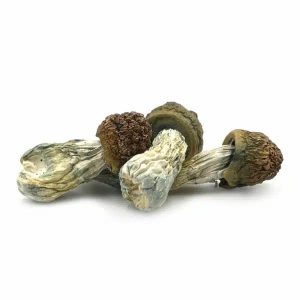
Bulk Mushrooms
Bulk Mushrooms
Reviews
There are no reviews yet.