
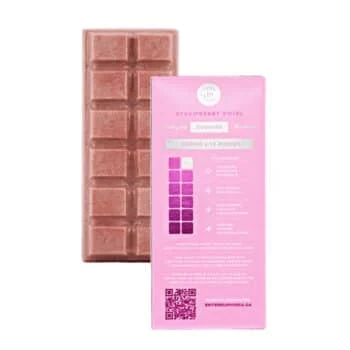
EUPHORIA PSYCHEDELICS
EUPHORIA PSYCHEDELICS is a phrase associated online with psychedelic-style mushroom products, chocolates, edibles and wellness products, but I could not verify one authoritative pharmaceutical or consistently regulated product line under this exact name.
That means the name itself does not establish:
Whether a product contains psilocybin.
Whether it contains functional mushrooms.
And Whether it contains Amanita muscaria compounds.
Whether it contains a synthetic psychedelic.
Whether a package has been independently tested.
And Whether the product is legal in a particular jurisdiction.
This distinction is especially important when discussing the highly recognizable PolkaDot mushroom chocolate category.
Searches for polkadot chocolate bar, polkadot mushroom bar, polka dot shroom bars, polka dot mushroom bars reviews, and polkadot mushroom chocolate bar where to buy can lead to products carrying extremely similar branding while making very different ingredient claims.
Current PolkaDot-branded websites describe bars containing nonpsychoactive functional mushrooms such as lion’s mane, reishi, cordyceps and turkey tail and explicitly claim that their products contain no psilocybin.
However, in November 2024, the California Department of Public Health issued a warning telling consumers not to eat certain PolkaDot Mushroom Magic Blend Chocolate Bars after testing found an unsafe mushroom ingredient and an additional synthetic psychoactive drug. More than $3 million in products were embargoed and voluntarily destroyed.
That history demonstrates why a colorful package or familiar brand name should never be treated as proof of chemical identity.
For more U.S.-focused educational material, explore CannabisTopGrade mushroom and psychedelic resources.
What Is a Polkadot Chocolate Bar?
A polkadot chocolate bar generally refers to chocolate sold under PolkaDot-style mushroom branding.
The problem is that the phrase has been used for very different product categories.
Current PolkaDot-branded websites describe a functional mushroom product containing a proprietary blend of:
Lion’s mane.
Reishi.
Cordyceps.
Turkey tail.
One current website states that its bars contain 500 mg of a functional mushroom blend and no psilocybin.
Another PolkaDot-branded storefront lists individual chocolate products with functional mushroom blends and explicitly states that they contain no scheduled substances or psilocybin.
But public-health authorities have also encountered PolkaDot-branded chocolate marketed in a psychoactive context.
This makes product identity more important than branding.
Polkadot Mushroom Bar
For polkadot mushroom bar, a consumer should first determine what the word “mushroom” actually means on the specific package.
It might mean:
Functional mushrooms such as lion’s mane.
An Amanita-derived ingredient.
Psilocybin-containing mushroom material.
A synthetic tryptamine.
A mixture of substances.
An inaccurately labeled product.
In 2024, California health authorities tested PolkaDot-branded Mushroom Magic Blend bars and reported that products labeled with Amanita muscaria also contained an additional synthetic psychoactive compound.
That finding shows why consumers cannot safely infer ingredients merely from words such as “magic blend.”
Polka Dot Shroom Bars
The phrase polka dot shroom bars often appears in psychedelic-product searches.
“Shroom bar” itself is not a standardized regulatory category.
Online sellers may use it for products described as containing:
Psilocybin mushrooms.
Functional mushrooms.
Amanita extracts.
Synthetic psychedelic compounds.
Proprietary psychoactive mixtures.
These ingredients differ dramatically in pharmacology and legal status.
That means one person’s experience with a so-called Polka Dot shroom bar may tell you almost nothing about a second bar purchased elsewhere.
Polkadot Mushroom
Polkadot mushroom is another ambiguous phrase.
There is no mushroom species scientifically named “Polkadot mushroom.”
Instead, PolkaDot is a commercial or branding term applied to products containing or claiming to contain fungal ingredients.
Current PolkaDot marketing identifies its functional blend as lion’s mane, reishi, cordyceps and turkey tail.
These are nonpsilocybin mushrooms.
A bar claiming to produce a psychedelic experience therefore raises a different question: what psychoactive ingredient is actually producing that effect?
Without reliable laboratory testing, a consumer may not know.
Polka Dot Bar
A polka dot bar can look like an ordinary flavored chocolate bar.
That creates a particular safety issue.
Psychoactive products packaged as candy can be mistaken for ordinary food, especially by children.
California health officials specifically warned that PolkaDot Mushroom Magic Blend Chocolate Bars could be dangerous to children who might mistake them for normal chocolate.
This issue extends beyond one brand.
FDA’s investigation of mushroom-based psychoactive products has documented serious illness associated with chocolates, gummies and other products presented in familiar candy formats.
Polka Dot Mushroom Bars
For polka dot mushroom bars, there are two very different questions:
What does the manufacturer claim?
What does laboratory analysis show?
Those answers may not always match.
The 2024 California investigation is particularly instructive because regulators found psychoactive compounds beyond what consumers might have expected from the labeling.
A professionally printed package does not establish:
Ingredient accuracy.
Potency.
Purity.
Absence of contaminants.
Legal compliance.
Medical safety.
Laboratory evidence is more informative than package appearance.
Polkadot Mushroom Chocolate
Polkadot mushroom chocolate occupies a confusing position because current web listings describe products differently.
One current PolkaDot site describes its chocolate as a functional food containing lion’s mane, reishi, cordyceps and turkey tail and says it is completely free of psilocybin.
At the same time, third-party retail pages and reviews use the same broad PolkaDot branding to describe products marketed for euphoric or psychedelic experiences.
This discrepancy is exactly why consumers should avoid assuming that every package sharing a logo or color scheme has the same formulation.
Polka Dot Mushroom
The search phrase polka dot mushroom should therefore be interpreted as a product query, not a species-identification query.
A real mushroom species has a scientific binomial, such as:
Hericium erinaceus — lion’s mane.
Ganoderma species — commonly called reishi.
Cordyceps militaris — cordyceps.
Trametes versicolor — turkey tail.
Psilocybe cubensis — a psilocybin-containing species.
“Polka Dot” does not identify one of these species.
Consumers should look past branding and identify the actual ingredients.
Polk A Dot
Polk a dot is usually simply a misspelling or search variation of PolkaDot or polka dot.
Search engines frequently treat:
Polkadot.
Polka Dot.
Polk A Dot.
Polkadot chocolate.
Polka Dot mushroom bar.
as related commercial queries.
For SEO purposes, these spelling variations can be incorporated naturally.
For health and safety purposes, however, spelling tells us nothing about ingredients.
Polka Dot Chocolate Bar
A polka dot chocolate bar should be evaluated like any other mushroom-containing edible.
Useful questions include:
Who manufactured it?
What exact mushroom species are listed?
Does the label state psilocybin?
And Does it state Amanita muscaria?
Does it identify muscimol?
Are active ingredients quantified?
Is there a batch-specific certificate of analysis?
Does the laboratory report correspond to the exact lot?
Is the laboratory independent?
Do the package and lab report agree?
Current PolkaDot-branded sites advertise third-party testing and certificates of analysis.
Those claims are still product-specific and should not be transferred automatically to every PolkaDot-looking bar circulating through unrelated sellers.
Why Certificates of Analysis Matter
A Certificate of Analysis, or COA, can potentially provide information about:
Active ingredients.
Microbial contamination.
Heavy metals.
Pesticides.
Other compounds.
But simply seeing the words “lab tested” does not guarantee that the report belongs to the product in someone’s hand.
A meaningful COA should ideally correspond to a specific:
Manufacturer.
Product.
Batch.
Lot.
Test date.
Laboratory.
The risk becomes especially important in markets where similar packaging is easily reproduced.
Polka Dot Shroom
The phrase polka dot shroom often implies a psychedelic product.
But the active substance should never be inferred from the word “shroom.”
FDA investigations into another mushroom-edible brand—Diamond Shruumz—demonstrate how chemically complicated these products can become.
FDA testing found different combinations of compounds across products, including:
Muscimol.
4-acetoxy-DMT, also called O-acetylpsilocin.
Psilocin.
Pregabalin.
Kavalactones.
These substances have different pharmacological profiles.
The lesson is broader than Diamond Shruumz:
a mushroom-themed chocolate may not contain what the consumer assumes it contains.
Mushroom Chocolate and Synthetic Psychedelics
Synthetic psychedelic compounds are particularly important in this discussion.
A consumer may believe a bar contains dried psilocybin mushrooms when its psychoactive effects actually come from another compound.
California’s investigation of PolkaDot-branded Mushroom Magic Blend bars found an additional synthetic psychoactive drug during laboratory analysis.
This means an experience described as a “mushroom trip” does not prove that the product contained psilocybin mushrooms.
Without chemical testing, subjective effects cannot reliably identify the drug.
Amanita Muscaria in Mushroom Edibles
Some commercially available mushroom products use Amanita muscaria or compounds associated with it.
Amanita muscaria is pharmacologically different from psilocybin mushrooms.
Its principal psychoactive compounds include:
Muscimol.
Ibotenic acid.
FDA concluded in December 2024 that Amanita muscaria, its extracts, muscimol, ibotenic acid and muscarine do not meet the safety standard for use as conventional food ingredients. FDA advised consumers to avoid foods containing those ingredients.
This is important because products marketed as “legal mushroom chocolates” sometimes use Amanita-related terminology.
“Legal psychedelic” does not mean “FDA-recognized safe food ingredient.”
Polka Dot Mushroom Bars Reviews
For polka dot mushroom bars reviews, online reviews need careful interpretation.
Reviews can describe:
Taste.
Texture.
Packaging.
Shipping.
Personal subjective experience.
But a review usually cannot establish:
Actual active ingredient.
Drug purity.
Potency.
Presence of synthetic compounds.
Contamination.
Whether the product matches another bar with similar packaging.
Third-party retail reviews sometimes describe PolkaDot bars as producing euphoria or psychedelic experiences.
Those reports should be treated as anecdotes rather than chemical evidence.
A person reporting a psychedelic effect cannot determine whether that effect came from:
Psilocybin.
Psilocin.
A synthetic tryptamine.
Muscimol.
Cannabinoids.
Another substance.
Polka Dot Chocolate Review
A responsible polka dot chocolate review should therefore evaluate more than whether the product tastes good or produces a strong experience.
A useful review should consider:
Ingredient transparency.
Laboratory documentation.
Consistency.
Manufacturer identity.
Regulatory warnings.
Packaging.
Risk of confusion with ordinary candy.
Whether wellness or medical claims are evidence-based.
It should not rank products simply by how intensely intoxicating they are.
A stronger psychoactive effect does not mean a better or safer product.
Why User Reviews Cannot Verify Potency
Two people can experience the same psychoactive product differently because of:
Body size.
Individual metabolism.
Mental state.
Medication.
Other drug use.
Food intake.
Expectation.
Tolerance.
Environment.
That means user reviews are already imperfect measures of pharmacological strength.
If two visually identical bars also contain different compounds, review comparisons become even less reliable.
This is why chemical analysis matters so much more than star ratings for psychoactive products.
Polka Dot Mushroom Chocolate Bars
For polka dot mushroom chocolate bars, current evidence supports a cautious distinction.
Some present-day PolkaDot-branded products claim to contain only nonpsychoactive functional mushrooms.
But California authorities previously identified PolkaDot-branded Mushroom Magic Blend chocolates containing unsafe and psychoactive substances and advised consumers not to eat them.
Therefore, it would be inaccurate to make a blanket statement that:
“All PolkaDot bars contain psilocybin.”
or
“All PolkaDot bars are simply functional mushroom supplements.”
The specific product, formulation, source and batch matter.
Polkadot Mushroom Chocolate Bar Where to Buy
The keyword polkadot mushroom chocolate bar where to buy requires an important distinction between ordinary functional mushroom foods and controlled or unregulated psychoactive products.
For nonpsychoactive mushroom chocolate, consumers can evaluate lawful mainstream products using ordinary retail criteria such as transparent ingredients, manufacturer identity and independent testing.
For products claimed to contain psilocybin or illegal synthetic psychedelics, an online listing or smoke-shop shelf does not establish that the transaction is lawful or regulated.
Because psychoactive mushroom-chocolate legality varies and because U.S. health authorities have documented mislabeled products, this article does not direct readers to unlicensed psychedelic sellers.
The safest way to interpret “where to buy” is to first determine what the product actually contains and whether that exact ingredient is lawful in the relevant jurisdiction.
For additional U.S. legal and safety education, see CannabisTopGrade substance-awareness guides.
Does PolkaDot Contain Psilocybin?
There is no responsible one-word answer covering every product carrying the PolkaDot name or appearance.
Current PolkaDot-branded websites state that their functional mushroom chocolates contain no psilocybin.
Yet public-health regulators previously encountered PolkaDot-branded Mushroom Magic Blend products containing psychoactive ingredients.
So instead of asking only:
“Does PolkaDot contain psilocybin?”
a better question is:
“What does this exact lot contain according to reliable testing?”
Functional Mushroom PolkaDot Products
Functional mushroom products are different from psychedelic products.
Current PolkaDot marketing identifies its blend as containing:
Lion’s mane.
Reishi.
Cordyceps.
Turkey tail.
These mushrooms do not produce a classic psilocybin psychedelic experience.
They may contain beta-glucans and other compounds studied for nutritional or wellness applications, but evidence varies depending on the species and health claim.
A chocolate bar containing these fungi should be evaluated as a functional food or supplement-style product rather than as psychedelic therapy.
Are Functional Mushroom Bars Proven to Improve Mental Health?
No mushroom chocolate should automatically be described as a proven treatment for:
Depression.
Anxiety.
ADHD.
Dementia.
PTSD.
Other mental-health conditions.
Lion’s mane is under active research for cognitive and mood-related effects, but that does not make a chocolate containing a small proprietary blend equivalent to a clinical treatment.
Likewise, reishi, cordyceps and turkey tail have different research profiles.
Bundling them together in chocolate does not create evidence for every marketing claim.
Mushroom Chocolate Safety Lessons From Diamond Shruumz
Although Diamond Shruumz is a different brand, its national outbreak provides important context for the entire psychoactive mushroom-edible market.
FDA reported 180 illnesses and 73 hospitalizations in its investigation, with several potentially associated deaths under review. Testing found considerable variability in the chemicals present across products.
This illustrates why consumers should not assume that:
Professional packaging means pharmaceutical quality.
The same package always contains the same ingredient.
“Natural” means safe.
“Mushroom” means psilocybin.
“Legal” means medically approved.
These lessons apply broadly to mushroom chocolates.
Mushroom Chocolate and Children
Brightly packaged chocolate presents a particular accidental-ingestion risk.
A child may see:
Chocolate.
Cookies.
Fruit flavors.
Bright graphics.
Candy-like sections.
rather than a psychoactive product.
California’s PolkaDot warning specifically highlighted this concern.
Psychoactive products should therefore never be left where children or pets can access them.
What If Someone Becomes Ill After a Mushroom Chocolate?
Unexpected symptoms following a mushroom chocolate should be taken seriously, particularly if the chemical contents are uncertain.
Potential concerning symptoms can include:
Severe agitation.
Confusion.
Repeated vomiting.
Seizures.
Loss of consciousness.
Difficulty breathing.
Abnormal heart rhythm.
Severe sedation.
Other dramatic neurological changes.
FDA’s investigation of mushroom edibles documented severe neurological and cardiovascular symptoms in some affected consumers.
In the United States, Poison Control can be reached at 1-800-222-1222.
Severe or immediately life-threatening symptoms warrant emergency medical assistance.
Counterfeit and Look-Alike Packaging
One of the biggest problems with popular mushroom-chocolate branding is that packaging alone can be duplicated.
Current PolkaDot marketing itself emphasizes authentication features on its products, including scannable authentication technology.
That is indirectly important because it illustrates how seriously the market takes imitation and product-identity concerns.
Even an authentication feature, however, should not substitute for appropriate chemical testing when psychoactive ingredients are involved.
EUPHORIA PSYCHEDELICS and Product Claims
For EUPHORIA PSYCHEDELICS, the same evidence standard should apply.
A product advertised with words such as:
Euphoria.
Psychedelic.
Magic.
Microdose.
Mushroom.
Therapy.
Brain boost.
does not establish which active ingredient is present.
Those terms are marketing descriptors.
Reliable conclusions require:
An exact ingredient list.
A verifiable manufacturer.
Batch identification.
Independent analysis where relevant.
Accurate regulatory status.
Are Psychedelic Chocolate Bars FDA-Approved Treatments?
Commercial psychedelic mushroom chocolates should not be described as FDA-approved psychiatric treatment.
Research involving psilocybin for depression and other conditions generally uses carefully manufactured psychedelic drugs under controlled protocols.
A retail chocolate product is a different category.
FDA has also specifically warned manufacturers and consumers about psychoactive mushroom ingredients such as Amanita muscaria compounds in conventional foods.
Clinical psychedelic science should therefore not be used to imply that an unregulated chocolate bar is a validated medical treatment.
Frequently Asked Questions
1. What is a PolkaDot mushroom bar?
PolkaDot is a commercial mushroom-product branding term rather than a mushroom species. Current PolkaDot sites describe functional chocolate bars containing lion’s mane, reishi, cordyceps and turkey tail with no psilocybin, although regulators have previously warned about PolkaDot-branded “Mushroom Magic Blend” products containing psychoactive substances.
2. Do Polka Dot mushroom chocolate bars contain psilocybin?
Not necessarily. Current functional PolkaDot products explicitly claim no psilocybin. However, similar PolkaDot branding has appeared on psychoactive mushroom products, making exact product and batch identification essential.
3. Are Polka Dot mushroom bars safe?
Safety cannot be inferred from branding alone. California health officials previously advised consumers not to eat certain PolkaDot Mushroom Magic Blend bars after testing found psychoactive adulterants. FDA has also documented serious illnesses associated with the broader mushroom-edible market.
4. Are Polka Dot mushroom bars reviews reliable?
Reviews may be useful for taste or packaging opinions, but they cannot reliably verify active ingredients or potency. Laboratory analysis and a product-specific ingredient record are much more informative for psychoactive-product safety.
5. Where can someone legally buy a PolkaDot mushroom chocolate bar?
Nonpsychoactive functional mushroom chocolate may be sold through ordinary legal retail channels where permitted. Products claiming to contain controlled psychedelic substances involve different laws and risks. An online seller or smoke-shop listing does not itself establish legality, so this article does not provide unlicensed psychedelic vendors.
Final Thoughts on EUPHORIA PSYCHEDELICS
EUPHORIA PSYCHEDELICS should be approached as a product-style phrase rather than proof of one standardized psychedelic formulation.
For polkadot chocolate bar, polkadot mushroom bar, polkadot mushroom chocolate, polka dot chocolate bar, and polka dot mushroom chocolate bars, branding alone cannot establish ingredients.
Current PolkaDot-branded websites describe functional mushroom bars containing lion’s mane, reishi, cordyceps and turkey tail and explicitly claim no psilocybin.
At the same time, California’s Department of Public Health issued a 2024 warning about PolkaDot-branded Mushroom Magic Blend bars after testing found psychoactive adulterants.
For polka dot shroom bars, polka dot shroom, polkadot mushroom, polka dot mushroom, and polk a dot, consumers should therefore identify the exact formulation rather than relying on the familiar name or package style.
Regarding polka dot mushroom bars reviews and polka dot chocolate review, testimonials can describe subjective experiences but cannot establish what chemical produced those experiences.
For polkadot mushroom chocolate bar where to buy, lawful nonpsychoactive functional foods can be evaluated through ordinary regulated retail channels. Psychoactive psilocybin or unapproved synthetic-drug products involve separate legal and public-health issues, so seller listings should never be treated as proof of legal status.
Finally, FDA’s wider investigation of mushroom chocolates demonstrates why this matters. Mushroom-themed edibles have been found to contain unexpected combinations of muscimol, psilocin, acetylpsilocin, prescription medication and other compounds.
The central lesson is therefore simple:
The name on a mushroom chocolate wrapper does not reliably tell you what is inside. Ingredient identity, trustworthy batch testing, legal status and public-health warnings matter much more than branding, reviews or claims of euphoria.
For more evidence-based mushroom-product education, explore CannabisTopGrade psychedelic and product-safety articles.
Recommended Outbound Resources
California Department of Public Health — PolkaDot Mushroom Magic Blend Warning
FDA — Amanita Muscaria Food Safety Alert
FDA — Investigation of Mushroom Chocolate, Gummies and Cones
Be the first to review “EUPHORIA PSYCHEDELICS – Strawberry Swirl (3000mg)”
Related products
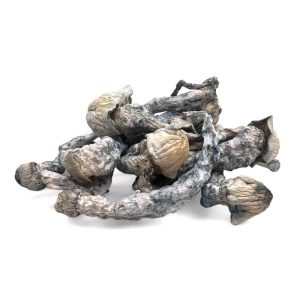
Bulk Mushrooms
Bulk Mushrooms
Bulk Mushrooms
Bulk Mushrooms
Bulk Mushrooms
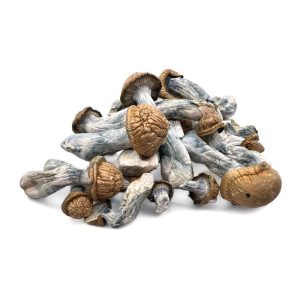
Bulk Mushrooms
Bulk Mushrooms
Bulk Mushrooms
Reviews
There are no reviews yet.