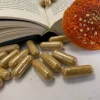
MicroDose Capsules 6000mg
MicroDose Capsules 6000mg is a product-style name that can easily be misunderstood.
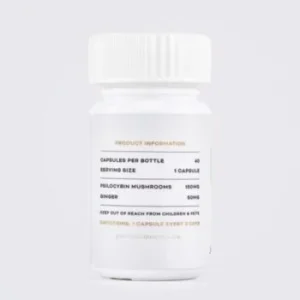
I could not verify one authoritative pharmaceutical product with a standardized formulation under this exact name. Therefore, 6000mg should not automatically be interpreted as 6,000 mg of pure psilocybin.
A commercial 6000mg claim might instead refer to:
Total mushroom material across a package.
A mushroom-extract equivalent.
A multi-ingredient blend.
Several capsules combined.
A manufacturer-defined mushroom equivalent.
Other functional mushroom ingredients.
These measurements are fundamentally different from milligrams of purified psilocybin.
This distinction is critical because searches for MicroDose Capsules 6000mg commonly overlap with questions such as microdosing psilocybin, mushroom microdose amount, microdosing schedule, how much is a microdose of psilocybin, and microdosing mushrooms for depression.
Current evidence does not support treating a commercial capsule’s front-label milligram number as a medically validated psychedelic dose.
NCCIH states that some people use very small quantities of psilocybin hoping to improve depression, stress, productivity or pain, but concludes that it is still unclear whether psychedelic microdosing is safe or effective.
For broader educational material about psychedelics and mental health, explore CannabisTopGrade educational resources.
What Is Microdosing Psilocybin?
Microdosing psilocybin generally refers to taking an amount intended to produce much subtler effects than a conventional psychedelic experience.
The central idea is that the amount is low enough that a person is not seeking a full hallucinatory state.
People commonly report experimenting with microdosing in hopes of improving:
Mood.
Focus.
Creativity.
Energy.
Emotional well-being.
Stress.
Anxiety.
Depressive symptoms.
However, popularity is not the same as clinical effectiveness.
A 2026 systematic review and meta-analysis found that randomized controlled microdosing studies showed no clear immediate improvement in depression, anxiety or stress compared with control conditions.
What Does Micro Dose Mean?
The term micro dose is used inconsistently.
In psychedelic culture, it generally means an intentionally small amount designed to minimize obvious psychedelic effects.
But there is no universally accepted clinical definition that turns one particular quantity of dried mushroom material into “the official microdose.”
That matters because mushrooms are biological organisms.
The concentration of psilocybin and related compounds can vary according to:
Species.
Individual specimen.
Cultivar.
Growing conditions.
Harvest conditions.
Storage.
Age.
Processing.
Parts of the fruiting body.
Therefore, a fixed amount of mushroom material does not guarantee a fixed amount of active psychedelic.
Micro Dose Mushrooms vs Purified Psilocybin
Micro dose mushrooms and purified psilocybin should not be treated as equivalent.
A mushroom contains a complex mixture of biological material.
A pharmaceutical research capsule can contain a carefully characterized amount of one active drug.
Those are completely different measurement systems.
This distinction explains why clinical psilocybin studies can describe an exact drug quantity while an arbitrary weight of dried mushrooms cannot guarantee the same exposure.
Mushroom Microdose Amount
For mushroom microdose amount, there is no universally standardized mushroom weight that can be recommended as medically correct.
Whole-mushroom potency varies too much.
Even products carrying the same cultivar name may not contain identical concentrations of psilocybin.
A commercial capsule stating a mushroom weight therefore tells consumers only the mass of material unless chemical analysis also reports active-compound concentration.
This is particularly important for a product advertised as 6000mg.
That number could describe a large quantity of mushroom material across an entire package while revealing nothing about actual psilocybin concentration.
What Is a Microdose of Mushrooms in Grams?
For what is a microdose of mushrooms in grams, internet guides frequently provide fixed gram ranges.
Those ranges should not be confused with an established medical standard.
There is no single mushroom weight that reliably produces the same exposure from every specimen or product.
A gram-based recommendation ignores chemical variability.
For educational purposes, the scientifically useful distinction is:
Mushroom grams measure biological material.
Psilocybin milligrams measure an active compound.
One cannot be converted reliably into the other without knowing the chemical composition of the mushroom material.
How Much Is a Microdose of Mushrooms in MG?
The same problem applies to how much is a microdose of mushrooms in mg.
Milligrams simply represent a smaller unit of weight than grams.
Changing the unit does not solve the underlying potency problem.
For example, a capsule may list a precise mushroom weight while the quantity of psilocybin inside remains uncertain.
That is why a number such as:
100 mg.
300 mg.
600 mg.
6000 mg.
cannot be interpreted on its own as an active psilocybin dose.
The missing information is what the milligrams actually measure.
How Much Is a Microdose of Psilocybin?
For how much is a microdose of psilocybin, current research does not establish one universal medically approved amount for personal microdosing.
Clinical studies investigating low psychedelic doses use carefully manufactured compounds and defined research protocols.
Those experimental amounts should not automatically become self-treatment recommendations.
This is especially important because FDA only recently finalized its dedicated guidance for clinical investigations of psychedelic drugs, on July 14, 2026. The agency describes psychedelic therapies as an active drug-development field requiring rigorous clinical study.
A controlled experimental dose is not the same thing as an approved home-treatment dose.
Microdosing Schedule
For microdosing schedule, several schedules circulate widely online.
But no universal schedule has been established as an FDA-approved treatment for depression, anxiety or another psychiatric disorder.
Different studies have used different:
Substances.
Amounts.
Frequencies.
Treatment durations.
Participant populations.
Outcome measures.
This variation makes it difficult to establish an optimal schedule.
NCCIH specifically states that the safety and effectiveness of psilocybin microdosing remain unclear.
Therefore, internet schedules should not be treated as clinical protocols simply because they have recognizable names or are frequently repeated.
Microdosing Protocol
A scientifically validated microdosing protocol would need to answer several questions:
Which drug is being used?
What chemical quantity is administered?
How frequently?
For how many weeks or months?
Which patient population benefits?
Which medications interact with it?
Who should avoid it?
What monitoring is required?
What happens with long-term repeated exposure?
Current research has not established all these answers.
The 2026 meta-analysis of psychedelic microdosing concluded that randomized evidence remains inconclusive and that larger, well-designed trials are needed to determine effects beyond placebo.
Microdose Mushrooms Guide
A responsible microdose mushrooms guide should focus more on evidence and safety than on a DIY dosing formula.
Important points include:
Do not assume mushroom weight equals psilocybin weight.
Do not assume a commercial “6000mg” claim identifies active-drug concentration.
And Do not use a psychedelic product as a replacement for prescribed mental-health treatment without clinical guidance.
Be aware that psilocybin can interact with health conditions and potentially with medications.
Avoid driving or operating machinery when affected by a psychoactive substance.
Remember that psilocybin remains federally Schedule I in the United States.
NCCIH also warns that psilocybin can cause anxiety, paranoia, increased heart rate and blood pressure, headache, nausea, dizziness and other unwanted effects.
Microdosing Side Effects
Microdosing is often portrayed as too small to create meaningful side effects.
Current evidence does not support that assumption.
NCCIH identifies possible microdosing effects including:
Insomnia.
Increased anxiety.
Depressed or poor mood.
Low energy.
Gastrointestinal discomfort.
Headache.
Sensory disturbances.
Difficulty focusing.
Reduced cognitive functioning.
Impaired social functioning.
Therefore, “subtle dose” and “risk-free dose” are not equivalent concepts.
How to Microdose Mushrooms for Mood
The search phrase how to microdose mushrooms for mood implies that microdosing has an established treatment method for improving mood.
Current controlled evidence does not support such a conclusion.
Some observational studies report better mood among people who microdose.
But randomized studies generally show much smaller or inconsistent differences from placebo.
The 2026 microdosing meta-analysis found no clear immediate reduction in depressive symptoms compared with control conditions.
For that reason, there is no evidence-based self-treatment method that can responsibly be described as the medically established way to microdose mushrooms for mood.
Microdosing Mushrooms for Depression
For microdosing mushrooms for depression, one of the biggest sources of confusion is research involving standard-dose psilocybin-assisted therapy.
Evidence supporting psilocybin-assisted treatment does not automatically establish that microdosing treats depression.
These interventions are different.
Microdosing generally attempts to avoid a major psychedelic experience.
Psilocybin-assisted therapy for depression typically involves a clearly active psychedelic dose administered within a structured clinical framework.
The therapeutic evidence is currently much stronger for the latter.
Microdosing Mushrooms for Depression and Anxiety
For microdosing mushrooms for depression and anxiety, randomized evidence remains uncertain.
A 2026 review of 24 studies involving 3,681 participants found no clear immediate improvements in depressive symptoms, anxiety or stress in randomized controlled trials.
Some uncontrolled studies reported improvements, but the researchers described those findings as heterogeneous and potentially influenced by methodological limitations.
This distinction is crucial.
Someone reporting that microdosing helped their anxiety is describing a personal experience.
That does not establish a reliable treatment effect across patients.
Microdosing and the Placebo Effect
Expectation is especially important in microdosing research.
People may begin microdosing already believing that it will make them:
Happier.
More productive.
More creative.
Less anxious.
More focused.
Those expectations can influence subjective ratings.
Psychedelic studies also face unusual blinding difficulties because participants may be able to tell when they have received an active substance.
This does not mean every reported benefit is “imaginary.”
It means placebo-controlled experiments are necessary to determine how much benefit is attributable to the drug itself.
Psychedelic Drugs for Depression
Research into psychedelic drugs for depression has expanded rapidly.
Psilocybin is among the most extensively studied classic psychedelics for major depressive disorder and treatment-resistant depression.
Other psychedelic or psychedelic-related compounds are also undergoing investigation.
FDA announced in April 2026 that it was accelerating development pathways for several treatments targeting serious mental illness, including psilocybin programs for treatment-resistant depression and major depressive disorder.
This demonstrates growing regulatory interest.
It does not mean psilocybin has become an ordinary FDA-approved retail antidepressant.
Psilocybin Therapy for Depression
Psilocybin therapy for depression is currently supported by substantially stronger evidence than mushroom microdosing.
A 2026 systematic review and meta-analysis of randomized trials found significant antidepressant effects from psilocybin-assisted therapy in major depressive disorder while emphasizing methodological heterogeneity between studies.
Another 2026 meta-analysis examining six randomized controlled trials found that standard-dose psilocybin was superior to control conditions for reducing depressive symptoms.
This is meaningful clinical evidence.
But the studies do not establish that unregulated mushroom capsules provide the same treatment.
Clinical Psilocybin Is Not the Same as a Mushroom Microdose
In clinical research, participants may receive:
Carefully manufactured psilocybin.
Known drug quantities.
Medical screening.
Psychological preparation.
Several hours of monitoring.
Professional support.
Follow-up assessments.
A commercial microdose capsule may instead contain:
Whole mushroom powder.
Unknown psilocybin concentration.
Multiple mushroom ingredients.
Other supplements.
Unverified active compounds.
Those situations cannot reasonably be considered equivalent.
Psilocybin Depression Treatment
The phrase psilocybin depression treatment therefore refers most accurately to an emerging clinical treatment model rather than self-directed mushroom consumption.
The 2026 depression meta-analysis published in the Journal of Affective Disorders examined standard-dose psilocybin separately from lower-dose treatment arms and concluded that standard-dose psilocybin may represent a promising therapeutic option for major depressive disorder, although more standardized research is needed.
A separate 2026 systematic review likewise reported significant therapeutic effects while rating the overall evidence as still requiring further development.
A Clinical 25mg Dose Is Not a Mushroom-Gram Formula
Several modern depression trials have studied approximately 25 mg of purified psilocybin within supervised clinical settings.
This should not be converted automatically into a particular number of grams of mushrooms.
Whole mushroom concentrations vary.
The clinical number refers to measured pharmaceutical psilocybin.
The mushroom number would refer to total biological material.
That distinction is central to understanding psychedelic dosing research.
Psilocybin and FDA Approval
As of September 2026, psilocybin remains an investigational drug rather than an ordinary FDA-approved treatment for major depressive disorder.
FDA’s 2026 actions have accelerated research and development, including priority attention for psilocybin programs, while its July 2026 final guidance addresses how psychedelic-drug clinical trials should be conducted.
That means promising clinical results should not be described as equivalent to general approval for commercial mushroom capsules.
Depression Research: What the Evidence Actually Says
The emerging depression evidence can be summarized carefully.
Psilocybin-assisted treatment: promising randomized evidence exists.
Microdosing: controlled evidence remains inconsistent.
Commercial mushroom capsules: cannot inherit clinical evidence simply because the package contains the word psilocybin or microdose.
Whole mushrooms: variable potency makes exact pharmaceutical comparisons difficult.
Self-treatment: lacks the screening and monitoring present in clinical studies.
These distinctions matter for both public education and responsible SEO content.
Why Psychological Support Matters
Psilocybin-assisted treatment is frequently described as more than the pharmacological effect of psilocybin alone.
Clinical trials commonly involve:
Preparation.
Support during administration.
A carefully controlled environment.
Post-session follow-up.
Researchers continue studying how much of the therapeutic effect comes from the drug itself versus the psychedelic experience, psychological support and treatment context.
FDA’s final psychedelic guidance specifically acknowledges the unusual methodological challenges involved in studying these treatments.
Can Psilocybin Make Depression or Anxiety Worse?
Yes, unwanted psychological effects can occur.
NCCIH lists anxiety, paranoia, fear, panic, confusion and poor sleep among potential adverse experiences.
A 2026 systematic review also emphasized the need to investigate psychedelic-associated anxiety and affective symptoms rather than examining only possible therapeutic benefits.
This is one reason carefully controlled treatment studies screen participants.
Who Requires Particular Caution?
NCCIH states that psilocybin is considered unsafe for people with psychotic disorders such as schizophrenia or schizoaffective disorder and raises concerns regarding severe forms of certain other psychiatric conditions.
Clinical psychedelic studies frequently screen for:
Psychosis risk.
Bipolar-spectrum illness.
Suicide risk.
Cardiovascular conditions.
Medication use.
Substance-use patterns.
Other medical conditions.
A commercial capsule generally does not provide equivalent screening.
Antidepressants and Psilocybin
Medication interactions are an active area of research.
NCCIH notes that researchers are specifically investigating how psilocybin interacts with conventional psychiatric medicines, including SSRIs.
People should not abruptly stop antidepressants in order to use psychedelic products.
Stopping psychiatric medication suddenly can itself cause serious withdrawal symptoms or psychiatric destabilization.
Medication decisions belong in a clinical context.
Is Microdosing Better Because It Avoids a Full Trip?
Not necessarily.
A lower-intensity experience may sound easier to tolerate, but therapeutic effectiveness has to be demonstrated rather than assumed.
The strongest contemporary depression evidence comes from clearly active psilocybin treatment rather than repeated sub-perceptual microdosing.
The 2026 randomized microdosing review did not find consistent immediate benefits for depression or anxiety.
The fact that an intervention feels milder therefore does not prove that it is more effective.
MicroDose Capsules 6000mg and Product Labeling
If a product is actually marketed as MicroDose Capsules 6000mg, consumers should identify what the label means before drawing conclusions.
Questions worth asking include:
Which mushroom species is listed?
Does it explicitly state psilocybin?
Does 6000mg refer to one serving or the package?
And Does it mean raw material or extract equivalent?
Are individual active compounds quantified?
Is there a legitimate manufacturer?
Does a batch-specific laboratory report exist?
Does the laboratory report correspond to the product’s lot number?
Without these answers, “6000mg” is primarily a marketing number rather than a clinically interpretable psychedelic dose.
6000mg Is Not a Clinical Microdose
This point deserves emphasis.
A number such as 6000mg printed on mushroom capsules does not automatically mean:
A stronger medical treatment.
A standardized microdose.
A safer product.
A clinically proven antidepressant.
A fixed quantity of psilocybin.
A consumer should distinguish total ingredient weight from active-drug content.
That distinction applies throughout the supplement and psychedelic-edible market.
Frequently Asked Questions
1. What is a microdose of mushrooms in grams?
There is no universal medically standardized gram amount for whole mushrooms. Psilocybin concentration varies substantially among mushrooms, meaning an identical mushroom weight can produce different active-compound exposures. A gram figure should not be treated as equivalent to a pharmaceutical psilocybin dose.
2. How much is a microdose of psilocybin?
Research protocols use measured experimental amounts, but there is no FDA-approved universal personal microdosing amount for treating depression or anxiety. Current reviews still conclude that microdosing efficacy is uncertain.
3. What is the best microdosing schedule?
No universal clinical schedule has been established as safe and effective for depression or anxiety. Published studies use different substances, frequencies and durations, which is one reason current reviews call for larger standardized trials.
4. Does microdosing mushrooms help depression and anxiety?
Some observational studies report improvements, but randomized controlled evidence has not consistently demonstrated benefits over placebo. A 2026 meta-analysis found no clear immediate improvement in depressive symptoms, anxiety or stress.
5. Is psilocybin therapy for depression the same as microdosing?
No. Modern psilocybin-assisted depression trials generally use carefully characterized, clearly active psilocybin treatment together with screening and psychological support. Microdosing uses much smaller exposures and currently has a weaker evidence base.
Final Thoughts on MicroDose Capsules 6000mg
MicroDose Capsules 6000mg should not automatically be interpreted as containing 6,000 mg of psilocybin.
The exact manufacturer and formulation need to establish what that number represents.
For microdosing psilocybin, current evidence remains considerably less convincing than popular wellness claims suggest.
For micro dose and micro dose mushrooms, the term describes an intended low-level psychedelic exposure rather than one universally standardized mushroom quantity.
Regarding mushroom microdose amount, what is a microdose of mushrooms in grams, and how much is a microdose of mushrooms in mg, fixed mushroom-weight rules are unreliable because biological potency varies.
For how much is a microdose of psilocybin, current research protocols should not be converted into universal self-treatment recommendations.
For microdosing schedule and microdosing protocol, science has not established one standardized regimen proven to treat depression or anxiety.
Regarding microdose mushrooms guide and how to microdose mushrooms for mood, current evidence does not support presenting self-directed microdosing as a validated psychiatric-treatment method.
For microdosing mushrooms for depression, and microdosing mushrooms for depression and anxiety, a 2026 meta-analysis found no clear immediate benefits in randomized controlled studies compared with placebo.
By contrast, psilocybin therapy for depression and psilocybin depression treatment have substantially stronger randomized evidence. Multiple 2026 meta-analyses report significant reductions in depressive symptoms following supervised psilocybin-assisted treatment.
For psychedelic drugs for depression, the research field continues to develop quickly. FDA finalized dedicated psychedelic clinical-trial guidance in July 2026 and is actively supporting accelerated development of psilocybin treatments for major and treatment-resistant depression.
The most important distinction is therefore:
Evidence that supervised, measured psilocybin may help major depression does not prove that repeated commercial mushroom microdoses or a “6000mg” capsule product provides the same therapeutic effect.
For more evidence-based mental-health and psychedelic education, explore CannabisTopGrade psychedelic research guides.
Recommended Outbound Resources
NCCIH — Psilocybin for Mental Health and Addiction
FDA — Psychedelic Drugs: Considerations for Clinical Investigations
PubMed — 2026 Psychedelic Microdosing Systematic Review and Meta-Analysis
Be the first to review “Euphoria Psychedelics – MicroDose Capsules 6000mg”
Related products
Bulk Mushrooms
Bulk Mushrooms
Bulk Mushrooms
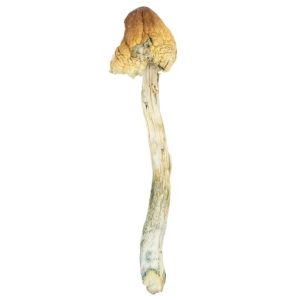
Bulk Mushrooms
Bulk Mushrooms
Bulk Mushrooms
Bulk Mushrooms
Bulk Mushrooms
Reviews
There are no reviews yet.