Gorilla Gas Strain
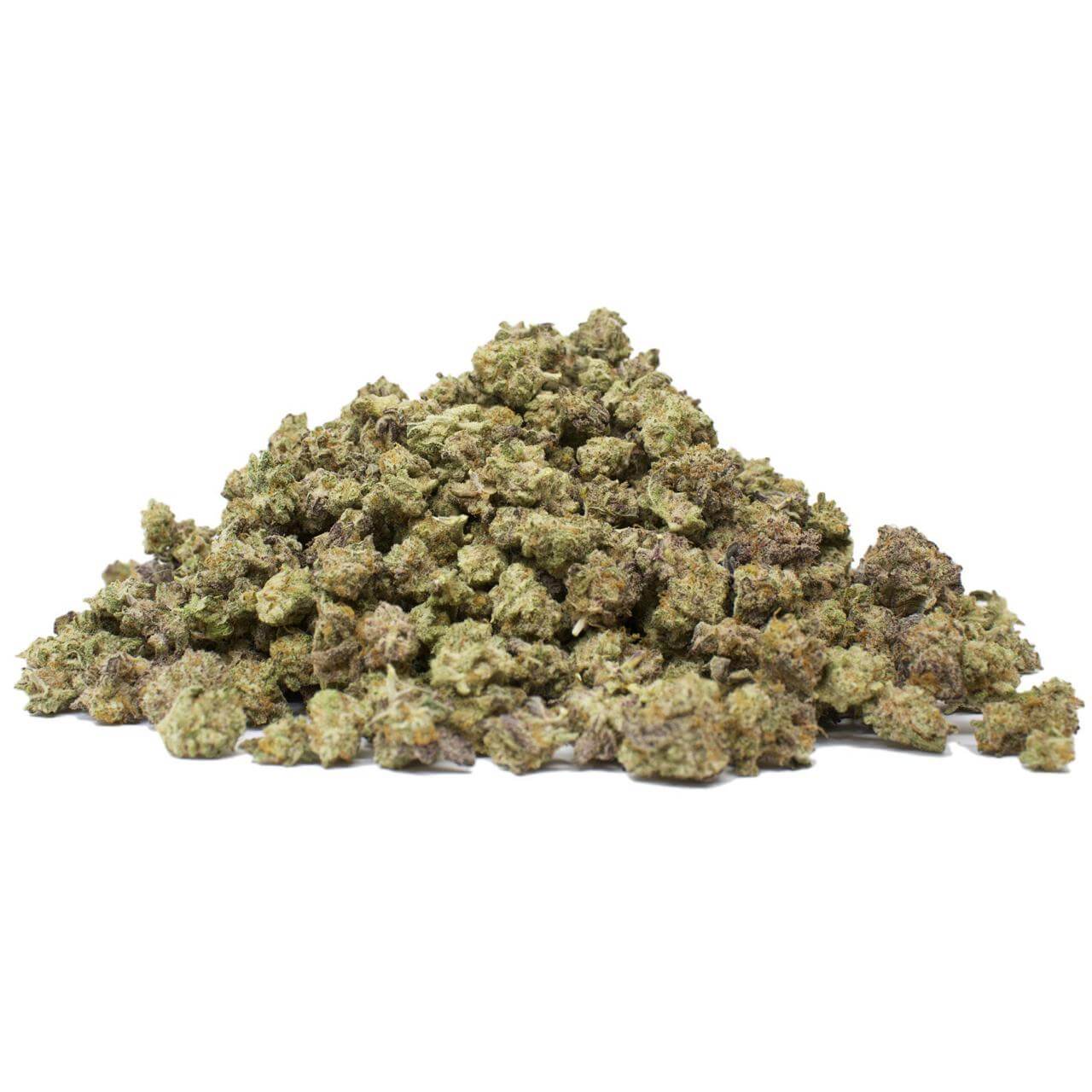
Gorilla Gas Strain is a potent cannabis hybrid associated with Gorilla Glue #4, also known as GG4 or Original Glue. Unlike strains with a single universally accepted lineage, Gorilla Gas has been produced by more than one breeder, meaning its exact genetics can vary according to the version.
Weedmaps currently identifies several Gorilla Gas lineages. One version from Tastebudz combines Gorilla Glue #4, GMO and Chemdawg. A version associated with Pacific NW Roots combines Gorilla Glue #4 with Gas Mask, while another reported version combines Gorilla Glue #4 with Afghani genetics. (weedmaps.com)
That makes Gorilla Gas an especially useful example of why cannabis strain names should not automatically be treated as standardized genetic formulas.
Explore the Weedmaps Gorilla Gas profile
Gorilla Gas also connects naturally with another major cannabis topic: marijuana legalization in the United States.
People researching the strain frequently ask questions such as what states is weed legal in the United States, is weed legal in Utah, is weed legal in Montana, and what a current marijuana legalization map looks like.
As of September 25, 2026, the National Conference of State Legislatures identifies 24 states as permitting adult recreational cannabis use, alongside Washington, D.C. and certain U.S. territories. (ncsl.org)
For more U.S. cannabis education, visit CannabisTopGrade.
What Is Gorilla Gas Strain?
Gorilla Gas is generally a high-potency hybrid built around Gorilla Glue #4 genetics.
Weedmaps describes several recognized versions rather than presenting one universal genetic formula. (weedmaps.com)
The Tastebudz version combines:
Gorilla Glue #4
GMO
Chemdawg
The Pacific NW Roots version combines:
Gorilla Glue #4
and
Gas Mask
Another version reported in Canada combines Gorilla Glue #4 with Afghani genetics.
The common thread is Gorilla Glue #4.
That parent is associated with strong resin production, pungent aromas and potent cannabis products, while GMO, Chemdawg, Gas Mask and Afghani genetics reinforce the earthy, peppery and fuel-heavy characteristics associated with Gorilla Gas.
Gorilla Gas Aroma and Flavor
Gorilla Gas lives up to its name.
Weedmaps describes versions of the strain as producing combinations of:
Diesel
Lemon
Pepper
Spice
Pine
Earth
and intense fuel-like aromas. (weedmaps.com)
The word “gas” is widely used in cannabis culture to describe a pungent gasoline, fuel, chemical or solvent-like aroma.
Leafly explains that “gas” generally refers to the strong fuel aroma associated with many cannabis cultivars and notes that caryophyllene, myrcene, limonene and other aromatic compounds can contribute to these profiles. (leafly.com)
Gas does not literally mean gasoline has been added to cannabis.
It is an aromatic description.
Gorilla Gas THC
There is no single THC percentage that applies to every Gorilla Gas product because different breeders use different lineages.
For example, breeder-linked information for the Tastebudz version places its reported THC range at approximately 17% to 24%, while individual commercial Gorilla Gas batches may test considerably higher or lower.
That variability demonstrates why a strain name alone should never substitute for a laboratory label.
Cultivation environment, phenotype, harvest timing, curing, storage and laboratory methodology can all affect cannabinoid results.
When cannabis is legally sold in a regulated market, the actual product certificate or package label is more useful than a generic strain average.
Gorilla Gas Reported Effects
Weedmaps consumer data associates Gorilla Gas with relaxed and euphoric experiences. (weedmaps.com)
Individual breeder descriptions also commonly portray Gorilla Gas as physically relaxing and long-lasting.
These reports should not be interpreted as guaranteed medical outcomes.
Cannabis affects people differently depending on THC concentration, quantity consumed, tolerance, age, individual biology and use of other substances.
Gorilla Gas should therefore not be promoted as a guaranteed treatment for pain, insomnia, stress, anxiety or another medical condition based solely on consumer reviews.
For additional cannabis strain information, explore CannabisTopGrade strain resources.
What States Is Weed Legal in the United States?
For people searching what states is weed legal in the United States, the current adult-use list contains 24 states.
The National Conference of State Legislatures identifies the following states as allowing adult recreational cannabis:
Alaska
Arizona
California
Colorado
Connecticut
Delaware
Illinois
Maine
Maryland
New York
Massachusetts
Michigan
Minnesota
Missouri
Montana
Nevada
New Jersey
New Mexico
Ohio
Oregon
Rhode Island
Vermont
Virginia
Washington. (ncsl.org)
Washington, D.C. also permits certain adult-use possession activities, although it is not a state.
For current nationwide legislation, use the NCSL State Cannabis Legislation Database.
Marijuana Legalization Map 2026
A marijuana legalization map in 2026 generally divides states into several different categories.
Adult-use legal states permit cannabis possession for adults, typically age 21 and older, within statutory limits.
Medical cannabis states allow qualifying patients to use regulated cannabis but do not necessarily permit recreational use.
Limited cannabinoid states may allow low-THC or high-CBD products without operating a comprehensive medical marijuana system.
Prohibition states continue to prohibit most conventional marijuana possession.
This means a simple red-and-green legalization of weed map can sometimes be misleading.
A state may appear “legal” because it has medical cannabis while still prohibiting recreational marijuana.
Utah is a good example.
Montana represents the opposite category because it permits both medical and adult recreational cannabis.
What State Is Weed Legal in America?
The query what state is weed legal in America is better answered in the plural because 24 states currently permit adult-use recreational marijuana.
These include states across the West, Northeast, Midwest and Mid-Atlantic.
The western states include places such as Alaska, Arizona, California, Colorado, Montana, Nevada, New Mexico, Oregon and Washington.
The Midwest includes Illinois, Michigan, Minnesota, Missouri and Ohio.
Several northeastern states—including Connecticut, Maine, Massachusetts, New Jersey, New York, Rhode Island and Vermont—also permit adult-use cannabis.
Maryland, Delaware and Virginia add additional Mid-Atlantic adult-use legalization.
However, every state establishes its own rules.
Possession quantities, cultivation rights, cannabis taxes, retail availability and consumption restrictions can differ substantially.
Marijuana Legalization Does Not Mean Unlimited Cannabis Use
The phrase marijuana legalization can make cannabis laws appear simpler than they really are.
Even in an adult-use state, laws may still prohibit:
Public cannabis smoking.
Driving while impaired.
Providing cannabis to minors.
Possessing more than the legal limit.
Unlicensed commercial sales.
Using cannabis on certain government or federal property.
Transporting marijuana across state borders.
States can also give cities and counties authority over retail cannabis businesses.
Legalization therefore creates a regulated system rather than eliminating cannabis rules.
Is Weed Legal in Utah?
Recreational weed is not legal in Utah.
Utah instead operates a regulated medical cannabis program.
The Utah Department of Health and Human Services maintains an Electronic Verification System for medical cannabis patients, providers and cards. Eligible patients can obtain approved medical cannabis products from licensed Utah medical cannabis pharmacies. (medicalcannabis.utah.gov)
Current Utah patient guidance says legal medical products can include:
Tablets.
Gummies.
Tinctures.
Unprocessed flower.
Vape cartridges.
Topical products.
Patches.
Certain suppositories. (medicalcannabis.utah.gov)
This does not amount to recreational marijuana legalization.
Utah Medical Cannabis Laws
Utah updated several aspects of its medical cannabis program in 2026.
The state says the changes took effect beginning May 6, 2026 unless otherwise specified. Among other updates, regulatory responsibilities are transitioning toward the Utah Department of Agriculture and Food. (medicalcannabis.utah.gov)
Qualified patients must comply with state limits and obtain cannabis through authorized Utah medical channels.
Utah also specifically prohibits medical cannabis patients from smoking or combusting cannabis.
Current Utah law distinguishes smoking from legal vaporization or heating methods. A first medical-program smoking violation can result in an infraction and fine. (le.utah.gov)
For official patient rules, visit Utah’s Medical Cannabis Center.
Can Gorilla Gas Be Recreationally Purchased in Utah?
Utah does not operate a general adult-use marijuana market.
Therefore, conventional high-THC Gorilla Gas cannot simply be purchased legally for recreational use through a Utah adult-use dispensary because that system does not exist.
Qualifying medical patients must use products available through Utah’s regulated medical cannabis system and comply with the program’s dosage, possession and consumption rules.
The national popularity of Gorilla Gas does not create a Utah exemption.
Is Weed Legal in Montana?
Yes. Recreational marijuana is legal in Montana for adults aged 21 and older, subject to state and local restrictions.
Montana legalized adult-use cannabis following Initiative 190.
Statewide adult-use retail sales began January 1, 2022. (mtrevenue.gov)
Montana’s Cannabis Control Division says an adult-use consumer may possess up to:
1 ounce of marijuana flower
or
8 grams of marijuana concentrate
or
800 milligrams of THC in marijuana products such as edibles. (mtrevenue.gov)
Public cannabis consumption remains prohibited.
Montana Cannabis Control Division personal possession guidance
Montana Home Cannabis Cultivation
Here Montana also allows limited personal cultivation.
State legislative materials describe adult-use cultivation of up to two mature marijuana plants and two seedlings at a private residence, subject to requirements concerning visibility and secure storage. (leg.mt.gov)
Cannabis produced above specified possession amounts must be appropriately secured.
Property and local rules may also matter.
This makes Montana significantly different from Utah.
Montana permits adult recreational possession and cultivation, while Utah restricts cannabis primarily to its medical program.
Montana Marijuana Retail Rules
Montana’s retail cannabis system also contains local differences.
The Cannabis Control Division distinguishes between historically described “green counties,” where adult-use sales were initially permitted, and “red counties,” where adult-use sales were restricted unless locally approved. (mtrevenue.gov)
This illustrates why even a state listed as legal on a marijuana legalization map can contain local differences regarding retail availability.
Statewide legality and local dispensary access are not always the same thing.
Can Gorilla Gas Be Legal in Montana?
Yes.
A Gorilla Gas cannabis product can legally be sold to an eligible adult through Montana’s regulated adult-use system if the product complies with state regulations and is stocked by a licensed dispensary.
However, availability depends on individual dispensary inventories.
The strain name itself does not guarantee a particular THC percentage or genetic lineage.
Consumers should rely on actual product labels and regulated laboratory testing.
For more cannabis-law education, visit CannabisTopGrade U.S. cannabis guides.
America Legalizing Weed: What Is the Current Trend?
The phrase America legalizing weed describes a long-running state-level policy trend rather than one nationwide legalization law.
Colorado and Washington became the first states to approve adult-use recreational cannabis in 2012. Alaska, Oregon and Washington, D.C. followed in 2014, and additional states legalized adult use over subsequent years. (ncsl.org)
NCSL currently identifies 24 states as permitting adult recreational use.
Medical cannabis is more widespread: NCSL’s September 2026 medical cannabis report identifies 41 states, three territories and Washington, D.C. as allowing medical cannabis products, with additional states allowing more limited low-THC products. (ncsl.org)
That does not mean every remaining state will necessarily legalize or that a specific timeline can be predicted.
Future cannabis law changes depend on state legislatures, ballot measures, governors, courts and regulatory systems.
Legalization Pot: Recreational vs Medical
People searching legalization pot should understand the difference between two main forms of legalization.
Recreational legalization generally permits adults 21 and older to possess cannabis within legal limits without requiring a medical condition.
Medical legalization requires qualifying patients to participate in a regulated health-related cannabis program.
Montana allows both.
Utah currently permits medical cannabis but not general recreational possession.
That difference is why national cannabis maps should identify categories rather than using a single “legal” label.
2026 U.S. Weed Legalization Overview
For a simplified textual legalization of weed map, the 24 adult-use states are:
West: Alaska, Arizona, California, Colorado, Montana, Nevada, New Mexico, Oregon, Washington.
Midwest: Illinois, Michigan, Minnesota, Missouri, Ohio.
Northeast: Connecticut, Maine, Massachusetts, New Jersey, New York, Rhode Island, Vermont.
Mid-Atlantic: Delaware, Maryland, Virginia.
This regional grouping is only an orientation tool.
Each state’s individual law should still be checked before making decisions involving possession, cultivation, transportation or consumption. (ncsl.org)
Frequently Asked Questions
1. What is Gorilla Gas Strain?
Gorilla Gas is a cannabis hybrid associated with Gorilla Glue #4 genetics. Weedmaps documents multiple lineages, including Gorilla Glue #4 × GMO × Chemdawg and Gorilla Glue #4 × Gas Mask. The strain is generally associated with pungent diesel, pepper, pine and earthy characteristics. (weedmaps.com)
2. What states is weed legal in the United States?
NCSL currently identifies 24 states as allowing adult recreational cannabis: Alaska, Arizona, California, Colorado, Connecticut, Delaware, Illinois, Maine, Maryland, Massachusetts, Michigan, Minnesota, Missouri, Montana, Nevada, New Jersey, New Mexico, New York, Ohio, Oregon, Rhode Island, Vermont, Virginia and Washington. (ncsl.org)
3. Is weed legal in Utah?
Recreational marijuana is not legal in Utah. Utah operates a regulated medical cannabis program for eligible patients, who must obtain authorized products through Utah’s medical system. (medicalcannabis.utah.gov)
4. Is weed legal in Montana?
Yes. Adults aged 21 and older may legally possess recreational cannabis within Montana’s statutory limits. Current state guidance allows up to one ounce of flower, eight grams of concentrate or 800 milligrams of THC in qualifying marijuana products. (mtrevenue.gov)
5. Is America legalizing weed nationwide?
Cannabis legalization has expanded primarily through individual states rather than one nationwide adult-use legalization law. Twenty-four states currently allow adult recreational use, while medical cannabis programs exist in substantially more states. (ncsl.org)
Final Thoughts on Gorilla Gas Strain and U.S. Marijuana Legalization
Gorilla Gas Strain is a fuel-forward hybrid built around Gorilla Glue #4 genetics. Multiple versions exist, including lineages involving GMO, Chemdawg, Gas Mask and Afghani genetics, so consumers should not assume every Gorilla Gas product has identical genetics or THC levels. (weedmaps.com)
For what states is weed legal in the United States, what state is weed legal in America, marijuana legalization map, and legalization of weed map, 24 states currently permit adult recreational cannabis use.
For is weed legal in Utah, Utah remains a medical-cannabis state rather than an adult-use recreational state. Qualifying patients can access regulated products through the Utah medical cannabis system.
For is weed legal in Montana, the answer is yes for adults 21 and older within Montana’s possession, cultivation and consumption restrictions.
For marijuana legalization, legalization pot, and America legalizing weed, cannabis policy continues to change primarily at the state level. Medical legalization is considerably more widespread than adult-use legalization, while possession limits, retail access, home cultivation and public-consumption laws vary from state to state.
Anyone using a marijuana legalization map should therefore treat it as a starting point and verify the individual state’s current statutes before relying on it.
Be the first to review “Gorilla Gas Strain”
Related products
Hybrid cannabis strains
Hybrid cannabis strains
Hybrid cannabis strains
Hybrid cannabis strains
Hybrid cannabis strains
Hybrid cannabis strains
Hybrid cannabis strains
Hybrid cannabis strains
Reviews
There are no reviews yet.