
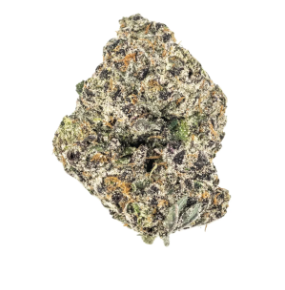
Bowser’s Breath Strain is a relatively uncommon hybrid cannabis cultivar associated with Horners Horticulture. Current strain documentation identifies its lineage as Princess Peach × Garlic Breath, bringing together fruit-oriented genetics with the pungent, savory characteristics associated with Garlic Breath.
People researching Bowser’s Breath also frequently ask questions such as how much is 5 mg of THC, what mg THC means, how to interpret a THC chart, how much is a lot of THC, how much is 50mg of THC, what an edible THC amount means, and is 40 mg of THC a lot.
Those questions require careful answers because THC sensitivity varies greatly from person to person. There is no single milligram amount that is comfortable, appropriate or safe for everyone.
This guide therefore treats THC amounts as consumer education and harm-reduction information, not as personalized dosing instructions.
What Is Bowser’s Breath Strain?
Bowser’s Breath is a cannabis cultivar bred by Horners Horticulture.
SeedFinder’s current cultivar record identifies the cross as:
Princess Peach × Garlic Breath
It classifies the cultivar broadly as an indica/sativa hybrid and notes that Horners Horticulture has produced versions including F2, BX1 and S1 expressions.
A separate current strain database also identifies Horners Horticulture as the breeder and confirms Princess Peach × Garlic Breath ancestry.
For the strain lineage reference:
Bowser’s Breath strain information at SeedFinder
Because Bowser’s Breath is much less standardized commercially than strains such as Blue Dream or Runtz, readers should not assume every product carrying the name has identical THC percentages or terpene profiles.
Bowser’s Breath Genetics
The most consistently documented genetics are:
Princess Peach × Garlic Breath
Princess Peach itself has fruit-forward ancestry, while Garlic Breath belongs to a family of modern cultivars known for intense savory, earthy and pungent aromatic characteristics.
This combination helps explain why Bowser’s Breath can be associated with complex profiles rather than a simple sweet-fruit aroma.
However, genetics alone do not determine the precise chemical composition of finished cannabis.
The final product can be influenced by:
- phenotype;
- cultivation environment;
- harvest timing;
- drying;
- curing;
- storage;
- cannabinoid degradation;
- laboratory methodology.
A batch-specific laboratory report is therefore more useful than relying on a single THC number from a strain database.
Is Bowser’s Breath Indica or Sativa?
Bowser’s Breath is generally described as a hybrid.
SeedFinder categorizes it as an indica/sativa cultivar rather than a pure expression of either category.
Modern cannabis research also supports caution when using indica and sativa labels as predictors of chemistry or effects.
Commercial cannabis products can have substantial chemical variation despite sharing the same strain classification.
A better evaluation considers:
THC, CBD, minor cannabinoids, terpene composition, laboratory testing and the specific producer.
Bowser’s Breath THC Content
Some current databases place Bowser’s Breath examples around 20–26% THC, but these should be treated as database estimates or sample-specific observations rather than a universal specification.
It would therefore be misleading to say:
“Every Bowser’s Breath product contains 26% THC.”
Actual potency should come from the tested product.
This distinction becomes especially important when comparing cannabis flower with edibles.
Flower normally expresses potency as a percentage.
Edibles usually list THC in milligrams.
What Does mg THC Mean?
mg THC means milligrams of tetrahydrocannabinol.
A milligram is one-thousandth of a gram.
Therefore:
1 mg THC = 0.001 grams of THC
and:
5 mg THC = 0.005 grams of THC
The number refers to the quantity of THC itself rather than the total physical weight of the gummy, chocolate, beverage or other edible.
For example, a gummy might weigh several grams overall while containing only 5 mg or 10 mg of THC.
How Much Is 5 mg of THC?
Mathematically:
5 mg THC = 0.005 grams of THC.
From a public-health perspective, 5 mg has also been proposed in scientific literature as a standardized THC unit that could help researchers and consumers compare cannabis exposure across different product types. Importantly, the researchers did not claim that 5 mg is automatically safe or appropriate for every person.
You can read the underlying research here:
PubMed — Standard THC units proposal
New York’s Office of Cannabis Management currently says that someone new to edible cannabis may consider 2.5–5 mg THC a low serving size when following its “start low and go slow” harm-reduction guidance.
That does not mean 5 mg is guaranteed to feel mild.
Some people are highly sensitive to THC.
THC Chart: Understanding Common Edible THC Amounts
The following THC chart is intended for education, not as an individualized dosing schedule.
| Edible THC Amount | General Safety Context |
|---|---|
| 2.5 mg THC | Low amount used in some public-health guidance for new consumers |
| 5 mg THC | Low amount in some state guidance; also proposed as one standardized THC unit |
| 10 mg THC | Can produce substantial intoxication in some people |
| 20 mg THC | Considerably above low starting amounts; may be strong for people with limited tolerance |
| 40 mg THC | High relative to low-dose public-health guidance |
| 50 mg THC | Ten times 5 mg and potentially very strong, particularly for inexperienced consumers |
The table should not be interpreted as meaning everyone should progress from one amount to another.
THC response is highly individual.
New York’s official consumer guidance emphasizes that the onset and duration of cannabis effects vary from person to person.
For official consumer information:
New York Office of Cannabis Management consumer guidance
What Is an Edible THC Amount?
An edible THC amount normally describes the number of milligrams of THC contained in:
- one serving;
- one piece; or
- an entire package.
These numbers should not be confused.
For example, a package could contain multiple individually portioned servings.
The most important label questions are:
How many mg THC are in one serving?
How many servings are in the package?
And How many mg THC are in the entire package?
Failing to distinguish those values can lead to accidental overconsumption.
Why Edibles Require More Caution
Edible cannabis behaves differently from inhaled cannabis.
According to the CDC, edible cannabis can take approximately 30 minutes to two hours before intoxicating effects are felt. The effects may also last longer than expected.
This delay creates a common problem:
A person consumes an edible, feels little immediately, assumes it has not worked, consumes more, and later experiences the combined effects.
For authoritative safety information:
CDC Cannabis and Poisoning guidance
How Much Is a Lot of THC?
There is no scientifically universal answer to how much is a lot of THC.
For someone with little or no tolerance, even a comparatively small edible amount may cause noticeable intoxication.
Another person with frequent cannabis exposure may react differently.
Factors affecting THC response include:
- previous cannabis exposure;
- frequency of use;
- THC tolerance;
- genetics;
- metabolism;
- age;
- medications;
- alcohol or other substances;
- whether the product is eaten or inhaled;
- the product’s formulation.
Therefore, “a lot” should be interpreted relative to the individual and product rather than as one universal number.
However, amounts such as 40 mg or 50 mg THC consumed at once are substantially higher than the 2.5–5 mg low-serving range discussed in New York’s public-health guidance for people new to edibles.
Is 40 mg of THC a Lot?
For many people, particularly those with little THC tolerance:
Yes, 40 mg of THC can be a large edible amount.
It is:
8 times 5 mg
and
16 times 2.5 mg.
That mathematical comparison helps explain why 40 mg should not be treated as equivalent to a low-dose edible.
It does not mean every person will experience exactly the same intensity.
An experienced consumer may react differently from someone using THC for the first time.
But from a harm-reduction perspective, it would be misleading to describe 40 mg THC as a low starting amount.
How Much Is 50mg of THC?
Mathematically:
50 mg THC = 0.05 grams of THC.
Using the 5 mg standardized THC unit proposed in the PubMed-indexed research:
50 mg = 10 proposed standard THC units.
Again, that scientific proposal was designed to help quantify cannabis exposure—not to recommend consuming ten units.
For someone with low or no THC tolerance, 50 mg in one edible exposure could produce intense and unwanted intoxication.
It should therefore not be presented as an ordinary beginner amount.
Is 50 mg More Than 40 mg THC?
Yes.
The difference is:
50 mg − 40 mg = 10 mg THC.
That means 50 mg contains:
25% more THC than 40 mg.
However, subjective effects do not necessarily increase in a perfectly linear way.
A 25% increase in milligrams does not guarantee someone will simply feel “25% more intoxicated.”
Cannabis effects are biologically complex and vary between individuals.
How Much THC Is Too Much?
There is no universally defined milligram threshold where THC suddenly becomes “too much” for everyone.
Instead, excessive THC exposure is generally identified by unwanted symptoms.
The CDC lists potential signs of excessive cannabis use or a bad reaction including:
- extreme confusion;
- anxiety;
- paranoia;
- panic;
- fast heart rate;
- hallucinations or delusions;
- severe nausea or vomiting.
The risk of accidental overconsumption is particularly relevant to edible products because of their delayed effects.
THC Amount vs. THC Percentage
Another common source of confusion is the difference between:
THC percentage
and
mg THC.
A Bowser’s Breath flower product may list THC using a percentage.
An edible may list THC in milligrams.
These numbers cannot be compared directly without knowing the total product weight.
For example:
“25% THC flower” describes concentration.
“5 mg THC gummy” describes an amount of THC.
This distinction is essential when reading cannabis labels.
Does Higher THC Mean Better Cannabis?
No.
Higher THC does not automatically mean higher quality.
Cannabis quality may also involve:
- cannabinoid balance;
- terpene profile;
- cultivation;
- curing;
- freshness;
- contaminant testing;
- consistency;
- regulatory compliance.
A product with a larger THC number is simply more concentrated in THC, assuming the laboratory result is accurate.
It should not automatically receive a higher quality rating.
Why Bowser’s Breath Laboratory Testing Matters
Bowser’s Breath is not documented as extensively as many major commercial cannabis cultivars.
That makes batch-specific information particularly valuable.
A useful product label or certificate of analysis may show:
- total THC;
- THCA;
- CBD;
- CBDA;
- CBG;
- terpene content;
- test date;
- batch number;
- contaminant results.
Consumers should prioritize this information over generic internet potency figures.
Cannabis Safety and High-THC Edibles
Higher THC exposure increases the possibility of unpleasant intoxication for some consumers.
Edibles add another layer of unpredictability because they can take substantially longer to produce effects than inhaled cannabis.
People should not drive while impaired.
THC products should also be stored securely away from children and pets.
If someone experiences severe symptoms, becomes unconscious, has serious breathing difficulty or experiences another medical emergency, emergency medical help should be sought.
Explore More Cannabis Education on CannabisTopGrade
For additional U.S.-focused cannabis information, visit:
CannabisTopGrade cannabis education hub
For research into traditional strain classifications:
CannabisTopGrade Sativa Strains Guide
For information about concentrated cannabis products and how they differ from flower:
CannabisTopGrade Hash and Concentrates Guide
Frequently Asked Questions
1. What is Bowser’s Breath Strain?
Bowser’s Breath is a hybrid cannabis cultivar from Horners Horticulture. Current strain documentation identifies its genetics as Princess Peach × Garlic Breath. Because the cultivar is relatively uncommon, individual products should be evaluated using their specific laboratory information.
2. How much is 5 mg of THC?
Five milligrams of THC equals 0.005 grams of THC. A PubMed-indexed proposal has suggested 5 mg as one standardized THC unit for research and public-health purposes, while New York lists approximately 2.5–5 mg as a low edible serving range for new consumers. Neither figure guarantees how an individual will react.
3. Is 40 mg of THC a lot?
For many people—especially those with little cannabis tolerance—40 mg THC can be a large edible amount. It is eight times 5 mg and substantially above the low amounts discussed in public-health guidance for new edible consumers.
4. How much is 50mg of THC?
50 mg THC equals 0.05 grams of THC. It is ten times a 5 mg quantity. Because individual sensitivity varies greatly, 50 mg should not be interpreted as an ordinary beginner amount.
5. How much THC is considered too much?
There is no universal milligram cutoff. An amount may be too much when it produces significant unwanted effects such as panic, extreme anxiety, confusion, severe nausea, rapid heart rate or substantial impairment. Edible cannabis deserves particular caution because its effects can be delayed.
Final Bowser’s Breath Strain Summary
Bowser’s Breath Strain is a relatively uncommon Horners Horticulture hybrid associated with Princess Peach × Garlic Breath genetics. Because individual expressions and batches can differ, laboratory testing is more reliable for determining actual THC potency than assigning one universal percentage.
The supporting THC questions can be summarized clearly:
5 mg THC = 0.005 grams
mg THC = milligrams of tetrahydrocannabinol
A THC chart should provide context, not promise identical effects
40 mg THC can be a large edible amount for many people
50 mg THC = 0.05 grams and is ten times 5 mg
Edible THC amount should always distinguish per-serving THC from total package THC
There is no single THC amount that is “too much” for everyone
The safest educational message is that THC response varies significantly between individuals. Higher numbers do not automatically mean better cannabis, and edible effects can be delayed enough to make premature additional consumption particularly risky.
Be the first to review “Bowser’s Breath Strain”
Related products
Hybrid cannabis strains
Hybrid cannabis strains
Hybrid cannabis strains
Hybrid cannabis strains
Hybrid cannabis strains
Hybrid cannabis strains
Hybrid cannabis strains
Hybrid cannabis strains
Reviews
There are no reviews yet.