
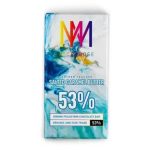
Psilocybin Chocolate Bar 3000mg
Psilocybin Chocolate Bar 3000mg is the type of product name that can easily create confusion about what the milligram number actually measures.
I could not verify one standardized pharmaceutical product sold nationally under this exact name. More importantly, a chocolate bar advertised as 3000mg should not automatically be interpreted as containing 3,000 mg of pure psilocybin.
In mushroom-edible marketing, a number such as 3000mg may instead represent:
Total dried mushroom material.
Total mushroom extract.
A proprietary mushroom blend.
The combined weight of ingredients across an entire chocolate bar.
A manufacturer-defined “mushroom equivalent.”
Another psychoactive ingredient altogether.
Without trustworthy laboratory documentation, the number alone does not establish psilocybin concentration.
This distinction matters because searches for mushroom gummies online, mushroom infused gummies, magic mushroom gummies for sale, psychedelic edibles, and psilocybin microdose gummies increasingly lead consumers into a poorly standardized product market.
CDC testing has demonstrated that some commercial mushroom gummies can contain ingredients that were not disclosed accurately on their labels. In one Virginia investigation, researchers tested mushroom gummies purchased from gas stations and smoke shops and found unlabeled psilocybin or psilocin in multiple products. Additional unexpected compounds included caffeine, ephedrine, and mitragynine. (CDC)
For additional educational reading about mushroom products, explore CannabisTopGrade mushroom safety resources.
What Does 3000mg Mean on a Mushroom Chocolate Bar?
A milligram number is meaningful only when the label identifies exactly what is being measured.
For example:
3000mg mushroom material is not the same thing as 3000mg mushroom extract.
Neither is automatically equivalent to 3000mg psilocybin.
Whole mushrooms contain many components besides psychedelic alkaloids, including fungal carbohydrates, protein, minerals, water depending on processing, and numerous secondary compounds.
Psilocybin and psilocin represent only part of the chemistry of a psilocybin-containing mushroom.
Therefore, using total mushroom weight as though it were pure active-drug weight is incorrect.
Why Mushroom Chocolate Labels Can Be Difficult to Interpret
Unregulated products may use terms such as:
Magic mushroom blend.
Microdose.
Psychedelic complex.
Mushroom extract.
Proprietary blend.
Nootropic mushroom.
Legal psychedelic.
These expressions sound specific but may reveal very little about actual chemistry.
A responsible product label should ideally disclose:
Exact active ingredients.
Individual ingredient quantities.
Manufacturer information.
Batch or lot number.
Laboratory results matching that lot.
Contaminant testing.
Actual concentrations of psychoactive compounds where relevant.
Without those details, consumers cannot reliably determine potency from the package alone.
Mushroom Infused Gummies
Mushroom infused gummies are another broad category.
A mushroom gummy may contain completely nonpsychoactive mushrooms such as:
Lion’s mane.
Reishi.
Cordyceps.
Turkey tail.
Maitake.
Or it may be marketed around:
Psilocybin.
Amanita muscaria.
Muscimol.
Synthetic psychedelic substances.
Proprietary psychoactive blends.
The gummy format tells consumers virtually nothing about the active chemistry.
Two products that look almost identical can therefore have completely different pharmacological effects.
Mushroom Edible Gummies
The same applies to mushroom edible gummies.
A fruit-flavored gummy can resemble ordinary candy while containing biologically active substances.
This creates particular concerns involving:
Ingredient uncertainty.
Children accidentally eating the product.
Variable active-compound concentrations.
Medication interactions.
Unpredictable psychoactive effects.
CDC’s national investigation into Diamond Shruumz mushroom chocolates, gummies, and cones documented 180 illnesses across 34 states and 73 hospitalizations during 2024, with two associated deaths in the agency’s finalized 2026 summary. (CDC)
That outbreak involved a specific product line, but it illustrates a broader problem: commercially packaged mushroom edibles can still contain unpredictable ingredients.
Gas Station Mushroom Gummies
Gas station mushroom gummies deserve particular attention because public-health researchers have specifically studied this retail channel.
CDC researchers reported that gas stations and smoke shops in Virginia were selling mushroom gummies marketed as nootropics or psychedelics.
Six packages representing five brands were chemically analyzed.
Multiple products contained substances that did not match what consumers might have expected from the label, including undisclosed psilocybin or psilocin. (CDC)
This establishes an important consumer-safety principle:
A product being openly sold at a gas station does not prove that its ingredients are lawful, accurately labeled, or safe.
Retail availability and regulatory approval are different things.
Are Gas Station Mushroom Gummies Legal?
There is no universal answer covering every product.
Some may contain ordinary functional mushrooms.
Some are marketed as Amanita muscaria products.
Others may contain substances not accurately disclosed on the package.
Therefore, “legal mushroom gummy” should never be interpreted automatically as “FDA-recognized safe food.”
Psychedelic Edibles
The term psychedelic edibles encompasses a surprisingly broad range of products.
It can refer to:
Psilocybin chocolates.
Psilocybin gummies.
Synthetic tryptamine gummies.
Amanita-based products.
Products containing cannabinoids plus mushroom ingredients.
Other mixed formulations.
FDA specifically notes that mushroom-containing foods may be marketed using language such as “psychedelic edibles,” “legal psychedelics,” and “mushroom edibles.” (FDA)
These marketing categories are not pharmacological classifications.
The exact chemical identity remains the central question.
Magic Mushroom Microdose Gummies
Magic mushroom microdose gummies are usually marketed around the concept of receiving a small amount of a psychedelic without a full psychedelic experience.
However, the term microdose is not a guarantee of chemical standardization.
Important uncertainties can include:
Whether the gummy contains psilocybin.
And Whether it contains psilocin.
Whether the quantity is consistent across pieces.
And Whether another psychedelic has been substituted.
Whether the milligram number refers to active drug or total material.
Whether the product contains unexpected additional substances.
This is particularly relevant because research into psychedelic microdosing uses much more carefully characterized compounds than typical unregulated retail gummies.
Psilocybin Microdose Gummies
For psilocybin microdose gummies, consumers should distinguish clinical research from commercial branding.
Clinical researchers can administer accurately characterized psilocybin.
A commercial gummy saying “microdose” may not provide equivalent pharmaceutical precision.
Current microdosing evidence is also far less definitive than many advertisements suggest.
The term itself should therefore not be interpreted as meaning:
Clinically proven.
FDA approved.
Standardized.
Safe for everybody.
Appropriate for treating anxiety or depression.
For additional evidence-focused information, explore CannabisTopGrade psychedelic education.
Metocin Gummies
A Metocin gummies represent a completely different category.
Metocin is another name for 4-HO-MET, or 4-hydroxy-N-methyl-N-ethyltryptamine.
It is a synthetic psychedelic tryptamine, not a mushroom species and not psilocybin.
A peer-reviewed clinical toxicology report describes 4-HO-MET as a synthetic tryptamine and new psychoactive substance for which toxicological information remains limited. (PubMed)
The National Drug Early Warning System likewise identifies 4-HO-MET, also called metocin or methylcybin, as a psychedelic tryptamine and functional analog of psilocin. NDEWS has tracked increasing online discussion of the substance and reports user discussions involving anxiety, panic, elevated blood pressure, and other adverse experiences. (NDEWS)
Therefore:
Metocin gummies are not psilocybin mushroom gummies.
Calling them “mushroom gummies” can obscure their synthetic-drug identity.
Is Metocin the Same as Psilocybin?
No.
Psilocybin is a naturally occurring psychedelic compound found in numerous mushroom species and is converted by the body into psilocin.
Metocin, or 4-HO-MET, is a different synthetic tryptamine.
It has structural similarities to psilocin but should not be treated as chemically or clinically interchangeable.
The human toxicology literature for metocin is also far smaller than the research literature surrounding psilocybin.
That uncertainty is especially relevant when a commercial product uses metocin in candy or gummy form.
Magic Medicinal Gummies
The phrase magic medicinal gummies can create another misconception.
A product using the word “medicinal” is not automatically an FDA-approved medicine.
Commercial mushroom gummies sometimes use health-oriented branding involving:
Mental clarity.
Stress relief.
Mood support.
Focus.
Sleep.
Creativity.
Depression.
Anxiety.
Those marketing claims do not establish that the gummy has passed the clinical-trial and drug-approval process required for an FDA-approved treatment.
FDA finalized dedicated guidance for psychedelic-drug clinical investigations in July 2026, illustrating how different legitimate drug development is from ordinary retail mushroom candy.
Where to Buy Magic Mushroom Gummies
For where to buy magic mushroom gummies, the first issue is legal status.
Psilocybin remains a Schedule I substance under U.S. federal law.
Some jurisdictions have established different state or local systems, but that does not create a nationwide retail market.
Oregon provides one clear example of regulated state access.
The Oregon Health Authority states that adults aged 21 or older can access psilocybin services through licensed service centers after completing a preparation session with a licensed facilitator.
Importantly, Oregon states that psilocybin products may be purchased only at the licensed service center during an administration session and cannot be purchased for take-home use. (Oregon Health Authority)
That is very different from ordering gummies from an anonymous website.
Where to Buy Mushroom Gummies
For where to buy mushroom gummies, the answer depends entirely on what “mushroom” means.
Nonpsychoactive functional mushroom gummies containing ingredients such as lion’s mane can be sold through ordinary supplement retailers.
Psilocybin gummies involve controlled-substance law and should not be treated as equivalent.
A retailer being willing to ship a product does not establish:
Federal legality.
State legality.
Accurate labeling.
FDA approval.
Safety.
For regulated psychedelic access, official state licensing directories are much more reliable than general web searches.
Where Can I Buy Mushroom Gummies?
For where can i buy mushroom gummies, first identify the product category.
If the intent is a nonpsychoactive functional mushroom supplement, mainstream supplement retail is the relevant category.
If the intent is psilocybin, applicable federal and state rules are very different.
In Oregon’s regulated system, for example, psilocybin is accessed only within licensed service centers rather than through ordinary take-home retail. (Oregon Health Authority)
This article does not provide unlicensed psychedelic sellers.
Mushroom Gummies Online
Searches for mushroom gummies online frequently produce highly polished websites.
Professional design is not evidence of regulatory status.
A site may use:
Laboratory imagery.
Medical-looking graphics.
Certificates.
Customer reviews.
“Made in USA” claims.
Large milligram numbers.
None of these alone prove that an edible contains what its label claims.
A meaningful certificate of analysis should correspond to the exact product and batch rather than merely being a generic document linked through a QR code.
Magic Mushroom Gummies for Sale
For magic mushroom gummies for sale, internet availability creates a particular problem: consumers can encounter products marketed across state lines even though laws differ substantially.
An online listing cannot resolve those differences.
Psilocybin also remains federally controlled.
State-regulated access systems should therefore be distinguished from ordinary commercial listings.
Oregon’s regulated model, for example, requires use at licensed service centers rather than unrestricted retail takeout. (Oregon Health Authority)
Shroom Gummies for Sale
The phrase shroom gummies for sale is similarly ambiguous.
“Shroom” can mean:
Psilocybin mushrooms.
Functional mushroom blends.
Amanita products.
Synthetic psychedelic products marketed with mushroom imagery.
The best first question is therefore not:
“How strong is it?”
It is:
“What is the actual active ingredient?”
CDC’s gas-station study shows why this matters: some products contained undisclosed Schedule I psychedelic compounds. (CDC)
Magic Mushroom Gummies Nearby
For magic mushroom gummies nearby, local availability should not be confused with regulated access.
A smoke shop can be physically nearby while selling an inaccurately labeled product.
A regulated psilocybin service center, where authorized by state law, operates under a different system involving licensing and specific rules.
In Oregon, consumers can use the state’s official licensee directory to identify authorized psilocybin service centers rather than assuming a nearby smoke-shop product is equivalent to regulated psilocybin. (Oregon Health Authority)
Why Online Mushroom Gummies Can Be Hard to Evaluate
Online psychedelic-style products may change formulations rapidly.
The same brand name may appear across:
Different websites.
Different packages.
And Different retailers.
And 3 Different batches.
Similar counterfeit packaging.
Even user reviews may refer to an older formulation.
This is one reason product-specific testing matters.
The label you are holding today is more relevant than a review written about a visually similar package several years ago.
Are Psychedelic Edibles Safer Than Dried Mushrooms?
Not automatically.
Edibles can introduce additional uncertainties involving:
Ingredient substitution.
Uneven mixing.
Synthetic psychoactive compounds.
Additional botanical ingredients.
Contaminants.
Candy-like packaging.
With whole mushrooms, chemical potency is naturally variable.
With an unregulated manufactured edible, both natural variability and manufacturing uncertainty can become relevant.
Neither format should automatically be described as predictable.
Are Chocolate Bars More Predictable Than Gummies?
Again, not necessarily.
Chocolate can distribute ingredients evenly when produced under good manufacturing controls.
But an unregulated bar may have uncertain formulation.
The same is true of gummies.
The important variable is manufacturing and analytical quality—not whether the substance is embedded in gelatin or chocolate.
Why the Diamond Shruumz Investigation Matters
The 2024–2026 Diamond Shruumz investigation demonstrates how serious mushroom-edible problems can become.
CDC reported 180 illnesses and 73 hospitalizations across 34 states. (CDC)
Testing and subsequent investigations identified multiple psychoactive substances across products and showed that mushroom-themed branding did not reliably tell consumers what chemical exposure they were receiving.
This does not mean every mushroom edible is dangerous.
It means the category deserves more scrutiny than ordinary candy.
Psilocybin Is Still Federally Controlled
Oregon Health Authority explicitly notes that even though Oregon operates a state-regulated psilocybin-services program, psilocybin remains Schedule I under the federal Controlled Substances Act. (Oregon Health Authority)
That distinction is essential for articles using buying-intent keywords.
State-regulated access does not equal federal legalization.
Local decriminalization does not automatically create lawful retail sales.
And a seller claiming nationwide legality does not make that claim correct.
What Makes a Mushroom Edible Review Useful?
A useful review should examine:
Exact ingredients.
Manufacturer identity.
Batch-specific laboratory analysis.
Whether psilocybin or another psychoactive compound is quantified.
Potential contaminants.
Packaging and child-safety concerns.
Applicable regulatory warnings.
Whether claims match current evidence.
A review focused only on “how hard it hits” provides relatively little information about product quality.
Can a Psychedelic Feeling Identify Psilocybin?
No.
Several different substances can produce psychedelic or hallucinatory experiences.
These include:
Psilocin.
Psilocybin after conversion to psilocin.
Synthetic tryptamines such as 4-HO-MET.
Other psychedelic compounds.
Muscimol can also cause altered states, though through very different pharmacology.
Therefore, experiencing visuals after eating a gummy does not prove the product contained psilocybin mushrooms.
What to Do After an Unexpected Reaction
People who develop severe or unexpected symptoms after consuming a mushroom edible should seek medical assistance.
Concerning symptoms can include:
Seizures.
Loss of consciousness.
Severe agitation.
Repeated vomiting.
Difficulty breathing.
Severe confusion.
Marked heart-rate or blood-pressure changes.
In the United States, Poison Control can be reached at 1-800-222-1222.
Immediately life-threatening symptoms warrant emergency medical care.
Keeping the package can also help clinicians and poison-control specialists evaluate possible ingredients.
1. Does a Psilocybin Chocolate Bar 3000mg contain 3,000 mg of pure psilocybin?
That should not be assumed. A 3000mg label may refer to total mushroom material, extract, a proprietary blend, or another measurement. A trustworthy product-specific laboratory analysis would be required to establish actual psilocybin concentration.
2. Where can someone legally access psilocybin products in the United States?
Access depends on jurisdiction. Oregon operates a regulated psilocybin-services program for adults 21 and older. Products are accessed only at licensed service centers during administration sessions and cannot be purchased as ordinary take-home retail products. (Oregon Health Authority)
3. Are gas station mushroom gummies safe?
They cannot be assumed safe. CDC researchers tested mushroom gummies purchased from Virginia gas stations and smoke shops and found undisclosed psilocybin or psilocin in multiple products, along with other unexpected compounds. (CDC)
4. What are metocin gummies?
Metocin gummies are products containing or claiming to contain 4-HO-MET, a synthetic psychedelic tryptamine and functional analog of psilocin. Metocin is not a mushroom species and is not the same compound as psilocybin. Human toxicology data remain limited. (PubMed)
5. Are psychedelic mushroom gummies legal just because they are sold online?
No. Online availability does not establish federal, state, or local legality. Psilocybin remains federally Schedule I, while certain states operate their own limited regulated systems. Product labels can also be inaccurate, making legal and chemical verification separate issues.
Final Thoughts on Psilocybin Chocolate Bar 3000mg
Psilocybin Chocolate Bar 3000mg should not be interpreted as 3,000 mg of pure psilocybin without verified analytical evidence.
For mushroom infused gummies and mushroom edible gummies, product composition can range from ordinary functional mushrooms to unregulated psychoactive compounds.
For gas station mushroom gummies, CDC testing has demonstrated that labels can fail to disclose substances such as psilocybin and psilocin. (CDC)
Regarding metocin gummies, metocin is the synthetic psychedelic 4-HO-MET, not a mushroom and not psilocybin. (PubMed)
For magic mushroom microdose gummies and psilocybin microdose gummies, “microdose” is a marketing term unless the active compound and concentration are actually characterized.
For psychedelic edibles, FDA’s warnings concerning Amanita muscaria demonstrate that “legal psychedelic” language does not establish conventional food safety. (FDA)
Regarding where to buy magic mushroom gummies, where to buy mushroom gummies, where can i buy mushroom gummies, magic mushroom gummies for sale, shroom gummies for sale, mushroom gummies online, and magic mushroom gummies nearby, legal access and commercial availability should not be confused. Oregon’s regulated program, for example, allows access only through licensed service centers during supervised administration sessions—not ordinary take-home gummy sales. (Oregon Health Authority)
For magic medicinal gummies, a medicinal-sounding product name does not establish FDA approval or therapeutic effectiveness.
The central lesson is simple:
When a mushroom chocolate or gummy advertises a large milligram number, psychedelic effects, or a “legal” experience, first determine what chemical the number actually describes. Packaging, online availability and subjective reviews cannot replace reliable ingredient testing.
For further evidence-based mushroom education, explore CannabisTopGrade psychedelic and product-safety resources.
Recommended Outbound Resources
CDC — Schedule I Substances Identified in Mushroom Gummies
CDC — Final Diamond Shruumz Investigation
FDA — Amanita Muscaria Food Safety Alert
Oregon Health Authority — Accessing Regulated Psilocybin Services
PubMed — Clinical Toxicology Case Involving 4-HO-MET/Metocin
Be the first to review “Microdose Mushrooms – Psilocybin Chocolate Bar 3000mg”
Related products
Bulk Mushrooms
Bulk Mushrooms
Bulk Mushrooms
Bulk Mushrooms
Bulk Mushrooms
Bulk Mushrooms
Bulk Mushrooms
Bulk Mushrooms
Reviews
There are no reviews yet.