
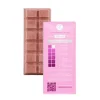
Haven–Blue Raspberry & Grape Gummies
Haven–Blue Raspberry & Grape Gummies are advertised online as a mushroom-based psychoactive gummy product, but consumers should be cautious about assuming that the numbers printed in retail descriptions represent independently verified quantities of pure psilocybin.
A current third-party retailer listing describes a product called Haven – Blue Raspberry + Grape Psilocybin Gummies – 3500mg. That page says the package contains 14 gummies described as 250 mg each and lists “psilocybin extract” among the ingredients. However, I could not verify an authoritative manufacturer specification or independent batch-specific laboratory certificate confirming exactly what the 250 mg figure measures or how much purified psilocybin is actually present.
That distinction is essential.
250 mg of a gummy, mushroom extract, or mushroom material is not automatically 250 mg of pure psilocybin.
Clinical psychedelic research measures active compounds very differently from loosely regulated commercial mushroom products.
The Haven product also appears in the same online market where consumers encounter original PolkaDot, PolkaDot mushroom gummies, Polka Dot Magic Gummies, mushroom chocolate bars, and other products using psychedelic or mushroom-oriented branding.
Those products should not all be placed into one category.
Current PolkaDot-branded websites, for example, describe their present gummies and chocolate products as containing a four-mushroom functional blend of lion’s mane, reishi, cordyceps and turkey tail and explicitly state that the current products contain no psilocybin.
At the same time, the California Department of Public Health issued a specific November 2024 warning against certain PolkaDot Mushroom Magic Blend Chocolate Bars after laboratory testing found psychoactive adulterants.
Those facts are not contradictory when the exact products and dates are kept separate.
They demonstrate why consumers need to look beyond brand names.
For broader educational information about mushroom products and psychedelic safety, see CannabisTopGrade educational resources.
What Are Haven Blue Raspberry & Grape Gummies?
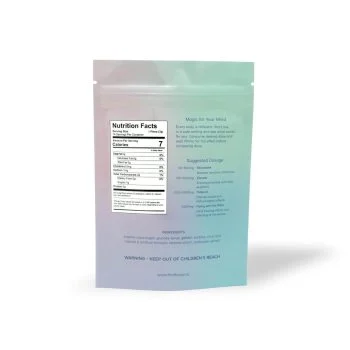
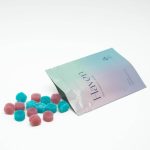
A third-party product listing describes Haven Blue Raspberry + Grape gummies as fruit-flavored gummies marketed as containing psilocybin extract.
The same listing states:
14 gummies per package.
250 mg per gummy according to the retailer’s description.
3,500 mg total according to the product title.
Blue Raspberry and Grape flavors.
A listed ingredient described as “Psilocybin Extract.”
These are retailer claims, not independent laboratory findings.
That distinction should appear prominently in any responsible review.
Without a trustworthy batch-specific certificate showing:
the tested analytes,
actual psilocybin concentration,
psilocin concentration,
contaminants,
sample identity,
laboratory accreditation,
and matching lot information,
the printed milligram number does not establish a pharmaceutical dose.
What Does 3500mg Actually Mean?
Numbers such as 3500 mg can easily create confusion.
A product’s milligram value may refer to:
Total extract weight.
Total mushroom material.
A proprietary mixture.
Total contents across all gummies.
An ingredient blend.
An estimated equivalent.
An actual active compound.
Those possibilities are not interchangeable.
For comparison, FDA-regulated drug-development research requires careful characterization of psychedelic drug products, including chemistry, manufacturing and safety information. In July 2026, FDA finalized dedicated guidance for psychedelic-drug clinical investigations.
A commercial gummy label therefore should not be interpreted as though it were a clinical psilocybin formulation.
Original PolkaDot
The keyword original PolkaDot commonly reflects consumer attempts to distinguish authentic PolkaDot products from look-alike packaging.
Current PolkaDot-branded websites describe themselves as the original manufacturer and emphasize authenticity checks.
One current site says genuine products have:
A raised braille-like texture.
An embossed PolkaDot logo.
A sealed wrapper.
A scannable Berify authentication tag.
The brand also states that authentic products should not use famous candy-brand names such as Reese’s, Snickers or Twix on the packaging.
These are manufacturer authentication claims.
They can help identify whether a package matches what the company currently says it manufactures, but authentication should not be confused with an independent guarantee of medical safety or efficacy.
Why PolkaDot Authenticity Became Important
Mushroom chocolates have become visually distinctive consumer products.
Colorful packaging can be duplicated.
Brand names can be copied.
Popular flavor names can be reproduced.
Third-party sellers can also use language such as:
Original.
Official.
Authentic.
Magic.
Premium.
Lab tested.
These words are not substitutes for independent verification.
Current PolkaDot itself states that counterfeiting is a serious problem and tells consumers to check its authentication features before consuming a product.
Polkadot Magic Mushrooms
The phrase polkadot magic mushrooms can be misleading because PolkaDot is a commercial product identity, not a mushroom species.
There is no scientifically recognized species called:
Polkadot magic mushroom.
Current PolkaDot product pages describe their present chocolate and gummy line as containing:
Lion’s mane.
Reishi.
Cordyceps.
Turkey tail.
The company states that those products contain no psilocybin.
All four are functional or medicinal-mushroom categories rather than classic psilocybin mushrooms.
Therefore, current PolkaDot-branded functional products should not automatically be described as “magic mushrooms.”
PolkaDot vs Psilocybin Products
The distinction is important.
Functional mushroom product
May contain species such as lion’s mane, reishi, turkey tail or cordyceps.
Does not automatically produce a psychedelic effect.
Psilocybin product
Contains the psychedelic compound psilocybin or material from a psilocybin-containing species.
Raises different pharmacological and legal questions.
Amanita-related product
May contain muscimol or other Amanita muscaria-associated compounds.
Does not work through the same pharmacology as psilocybin.
Synthetic psychedelic product
May contain laboratory-produced tryptamines or other psychoactive compounds.
Again, pharmacologically different.
The word “mushroom” does not distinguish among these categories.
Polka Dot Mushroom Chocolate Bar Packaging
Polka Dot mushroom chocolate bar packaging is one of the most frequently searched aspects of the brand because consumers encounter many visually similar packages.
Current PolkaDot authenticity instructions identify several packaging features.
The company states that authentic packaging uses a raised textured surface rather than a flat wrapper.
It also says the chocolate itself has an embossed PolkaDot logo and packages use a Berify authentication tag.
A current product-authentication page further warns about counterfeit stickers that merely direct people to websites rather than using its stated verification process.
These details can help with brand verification.
They cannot establish whether every mushroom edible on the wider market is safe.
Why Packaging Alone Is Not Enough
A sophisticated wrapper can still surround an uncertain product.
Packaging cannot independently establish:
Actual active compounds.
Dose.
Purity.
Microbial contamination.
Heavy metals.
Synthetic adulterants.
Prescription-drug adulteration.
Consistency between batches.
The CDC’s national investigation of mushroom-containing psychoactive edibles illustrates this problem dramatically.
Testing of Diamond Shruumz products identified different combinations of compounds across samples, including:
Muscimol.
Psilocin.
O-acetylpsilocin.
Kavalactones.
Pregabalin.
CDC specifically reported that different samples of the same product type and flavor contained different substances.
Packaging consistency therefore does not necessarily mean chemical consistency.
PolkaDot Mushroom Chocolate Bar Review
A responsible PolkaDot mushroom chocolate bar review should evaluate more than taste and subjective effects.
Useful review criteria include:
Ingredient transparency.
Whether the exact product is currently recognized by the manufacturer.
Authentication features.
A matching batch number.
Availability of a credible certificate of analysis.
Whether the label clearly distinguishes total mushroom weight from active compounds.
Whether psychoactive substances are present.
Any relevant government warnings.
Potential confusion with candy products.
Medical claims made by the seller.
A review saying “this bar felt strong” cannot determine what active chemical caused the experience.
What Current PolkaDot Claims
Current PolkaDot pages describe the present chocolate bars as functional mushroom chocolates containing a proprietary blend of lion’s mane, reishi, cordyceps and turkey tail.
The company says its products are:
Third-party tested.
USA grown.
Made with organic mushroom ingredients.
Free from psilocybin.
These statements are current manufacturer claims.
An independent health-education article should attribute them rather than repeating them as independently proven facts.
The 2024 California PolkaDot Warning
The historical public-health warning is important and must be described precisely.
On November 22, 2024, the California Department of Public Health warned consumers not to eat specific PolkaDot Mushroom Magic Blend Chocolate Bars.
CDPH reported that the products were labeled as containing Amanita muscaria and laboratory testing found an additional synthetic psychoactive drug.
The tested flavors included:
Belgian Milk Chocolate Caramel Peanut Twist.
Belgian Milk Chocolate Intense Dark.
And Belgian Milk Chocolate Maui Coconut Twist.
CDPH reported that more than $3 million worth of PolkaDot-branded products were embargoed and voluntarily destroyed.
This warning should not be rewritten as “every PolkaDot product is dangerous.”
It applied to specifically identified products investigated by California authorities.
Likewise, current brand claims should not erase or rewrite the historical warning.
Both facts can be stated accurately.
Polka Dot Mushroom Gummies
Current polka dot mushroom gummies are advertised by PolkaDot as functional mushroom products.
The current brand site says its gummies contain the same four-mushroom blend promoted in the company’s chocolates:
Lion’s mane.
Reishi.
Cordyceps.
Turkey tail.
The site states that gummy packages contain 10 pieces and do not contain psilocybin.
Again, this is the brand’s current formulation claim.
It should not be generalized to products from unrelated sellers merely because they use similar PolkaDot imagery.
Polka Dot Gummies
For polka dot gummies, current listed flavors include products such as:
Blue Cotton Candy.
Frozen Grape.
Watermelon Agua Fresca.
Cherry Kiwi Limeade.
Orange Creamsicle.
Mango Sorbet.
Lychee Sour Fizz.
Dragonfruit Lemonade.
This is relevant to Haven Blue Raspberry & Grape because some flavor language overlaps.
For example, current PolkaDot listings separately include Blue Cotton Candy and Frozen Grape.
That does not make Haven Blue Raspberry & Grape gummies a PolkaDot product.
Flavor similarity is not evidence of shared manufacturing or chemistry.
Polkadot Gummies
The term polkadot gummies should therefore be interpreted first as a branded functional-mushroom product query rather than automatically as a psilocybin query.
The current PolkaDot website explicitly states:
Its gummies and chocolates contain the same functional mushroom blend.
The gummies come as a 10-piece pack.
The products contain no psilocybin.
Consumers searching older internet discussions may encounter very different descriptions.
Date and exact formulation matter.
Polka Dot Magic Gummies
The keyword polka dot magic gummies illustrates how marketing language creates confusion.
The word magic can make consumers think immediately of psilocybin mushrooms.
But words used in a brand name do not establish pharmacology.
A product described as “magic gummies” might contain:
Functional mushrooms.
Amanita compounds.
Hemp-derived cannabinoids.
Psilocybin-related compounds.
Synthetic psychoactives.
No psychoactive compounds at all.
The ingredient list and independent analysis matter far more than the adjective “magic.”
Polkadot Magic Gummies
For polkadot magic gummies, current PolkaDot branding uses wellness-oriented and “magic” language while simultaneously stating that its current functional mushroom gummies contain no psilocybin.
This is a useful example of why SEO terminology and pharmacological terminology are different.
“Magic” is marketing.
“Psilocybin” is a specific chemical compound.
“Lion’s mane” is a specific mushroom.
“Muscimol” is a different psychoactive compound.
They should not be used interchangeably.
Polkadot Mushroom Gummies
For polkadot mushroom gummies, consumers should also distinguish total mushroom-blend weight from individual active compounds.
Current PolkaDot marketing says its product line contains an organic four-mushroom blend.
That tells consumers something about the claimed ingredients.
It does not establish that the gummies treat:
Anxiety.
Depression.
ADHD.
Dementia.
Neurological disease.
Any other medical condition.
Food or supplement-style products should not be transformed into medical treatments through advertising language alone.
Chocolate Mushroom Edibles
Chocolate mushroom edibles have become one of the most visible formats in the mushroom-product market.
They may contain:
Ordinary culinary mushroom ingredients.
Functional mushroom extracts.
Psilocybin-containing material.
Amanita-related compounds.
Synthetic psychoactive substances.
Multiple substances together.
The FDA and CDC investigations of mushroom-containing edibles demonstrate why exact chemical identity matters.
CDC’s final 2026 outbreak summary for Diamond Shruumz reported 180 illnesses across 34 states, including 73 hospitalizations and two associated deaths following mushroom-containing products.
The later MMWR analysis reported that 38 patients required intensive-care admission and 29 required endotracheal intubation.
That outbreak involved a different brand, but it establishes an important broader point:
Mushroom edibles marketed for psychoactive effects can contain unpredictable combinations of compounds and can cause severe poisoning.
Gummies Can Create the Same Problem
Chocolate receives significant attention because of the outbreak history, but gummies deserve similar caution.
CDC’s investigation included illnesses involving Diamond Shruumz gummies as well as chocolate bars and cones.
The candy-like format can make these products appear ordinary.
This also creates accidental-ingestion concerns for:
Children.
Teenagers.
Visitors.
Pets.
People who do not realize the product contains psychoactive ingredients.
Mushroom gummies should therefore never be treated like ordinary candy when their ingredient identity is uncertain.
Haven Gummies vs PolkaDot Gummies
The available online descriptions suggest these should currently be treated as different products.
Haven Blue Raspberry & Grape
A third-party retailer markets the product as containing “psilocybin extract.”
The retailer describes 14 gummies and a total product claim of 3,500 mg.
Independent verification of those active-ingredient claims was not located.
Current PolkaDot gummies
The current PolkaDot site describes a functional blend of lion’s mane, reishi, cordyceps and turkey tail.
The site states that the products contain no psilocybin.
Therefore, these products should not be grouped simply because both are mushroom-themed gummies.
For additional evidence-based product education, see CannabisTopGrade mushroom product-safety guides.
Are Haven Gummies Clinically Tested Psilocybin?
I found no evidence that Haven Blue Raspberry & Grape Gummies are an FDA-approved psychedelic drug or standardized pharmaceutical psilocybin product.
A retailer listing a product as “psilocybin gummies” is not equivalent to FDA-reviewed clinical-drug manufacturing.
FDA finalized guidance for psychedelic drug development in July 2026 and continues to treat psychedelic compounds as active drug-development subjects requiring rigorous clinical evidence.
Clinical research standards involve far more than printing a milligram value on candy packaging.
Psilocybin Remains a Controlled Substance Federally
DEA’s current psilocybin fact sheet identifies psilocybin as a psychedelic drug found in certain mushrooms, and federal controlled-substance materials continue to list psilocybin and psilocin as controlled substances.
State and local policies vary considerably.
That means the existence of a website willing to sell or ship a product does not itself establish the legality of the product in a particular jurisdiction.
Commercial availability and lawful regulated access are different concepts.
What Makes a Mushroom Gummy Review Useful?
A responsible review should investigate:
What the package claims.
Who manufactured it.
Whether the manufacturer can be independently identified.
Whether a batch code exists.
And Whether the laboratory report matches that batch.
Exactly what the stated milligrams represent.
Whether psychoactive compounds were measured quantitatively.
Whether microbial, heavy-metal and contaminant testing was performed.
And Whether any regulatory agency has issued warnings about that exact product.
A review should not simply say:
“It hit hard.”
“The trip was amazing.”
“This is the strongest gummy.”
Those statements provide little reliable safety information.
Online Reviews vs Laboratory Evidence
Subjective reviews have additional limitations.
Individual experiences depend on:
Expectations.
Food intake.
Other drugs.
Medication.
Body physiology.
Previous psychedelic exposure.
Psychological state.
Environment.
Unknown ingredient concentrations.
If the chemical identity itself is uncertain, subjective reports become even less useful for identifying what caused an effect.
Laboratory evidence therefore deserves much more weight than testimonials.
Can Attractive Packaging Prove a Product Is Authentic?
No.
PolkaDot’s current use of physical authentication features reflects a genuine problem in this market: products can imitate recognizable designs.
The brand currently tells consumers to look for its texture, embossed logo, sealed packaging and Berify tag.
Those indicators may help answer:
“Does this appear to be a current PolkaDot-manufactured product?”
They cannot answer:
“Is every ingredient medically safe for me?”
Authentication and health safety are separate questions.
Mushroom Edibles and Unexpected Ingredients
The national CDC investigation provides one of the strongest reasons for caution.
Testing associated with Diamond Shruumz identified compounds from several completely different pharmacological categories, including psilocin, muscimol, kavalactones, a synthetic hallucinogen and pregabalin.
CDC stated that mushroom-containing edibles can have:
Undisclosed ingredients.
Misformulated ingredients.
Unapproved substances.
Potentially harmful contaminants.
That warning is relevant whenever a mushroom gummy or chocolate makes vague claims about:
Euphoria.
Psychedelic effects.
Microdosing.
Nootropic effects.
Enhanced focus.
Energy.
What If a Mushroom Gummy Causes Unexpected Symptoms?
Unexpected symptoms after consuming an unidentified or poorly characterized mushroom edible deserve attention.
CDC documented symptoms including:
Confusion.
Drowsiness.
Agitation.
Loss of consciousness.
Hallucinations.
Nausea.
Vomiting.
Abnormal heart rate.
Blood-pressure changes.
Seizures.
Shortness of breath.
Severe symptoms such as seizures, loss of consciousness, serious breathing problems or extreme agitation warrant emergency medical care.
In the United States, poison-control specialists are available through 1-800-222-1222. CDC also directs suspected mushroom-product poisonings to poison-control services.
Frequently Asked Questions
1. What are Haven Blue Raspberry & Grape Gummies?
A third-party retailer currently describes Haven Blue Raspberry + Grape as a 14-gummy product marketed with a 3,500 mg total claim and “psilocybin extract” among the ingredients. I could not independently verify a manufacturer COA establishing the exact active psilocybin concentration, so those numbers should be treated as retail-label claims rather than pharmaceutical measurements.
2. Do original PolkaDot gummies contain psilocybin?
Current PolkaDot-branded product pages state that their gummies contain lion’s mane, reishi, cordyceps and turkey tail and contain no psilocybin. This is the company’s current formulation claim.
3. How can you recognize current Polka Dot mushroom chocolate bar packaging?
PolkaDot’s current authenticity guide says genuine products use a raised braille-like packaging texture, embossed branding, sealed packaging and a Berify authentication tag. These are brand-authentication features, not independent guarantees that every mushroom edible is medically safe.
4. Were PolkaDot mushroom products ever subject to a health warning?
Yes. On November 22, 2024, the California Department of Public Health warned consumers not to consume specifically identified PolkaDot Mushroom Magic Blend chocolate bars after testing found psychoactive adulterants. More than $3 million worth of products were embargoed and voluntarily destroyed.
5. Are chocolate mushroom edibles and mushroom gummies always accurately labeled?
No. CDC’s national investigation of mushroom edibles found substantial chemical variability, including undisclosed psychoactive and pharmaceutical ingredients in tested products. The outbreak was associated with 180 illnesses, 73 hospitalizations and two deaths.
Final Thoughts on Haven–Blue Raspberry & Grape Gummies
Haven–Blue Raspberry & Grape Gummies are currently advertised by at least one third-party retailer as a psilocybin-extract gummy product containing 14 pieces and a 3,500 mg total label claim. Those claims should not be interpreted as independently verified pharmaceutical psilocybin dosing without a credible batch-specific laboratory report.
For original PolkaDot, current brand materials emphasize authentication features because counterfeit and look-alike products are a recognized concern.
For polkadot magic mushrooms, PolkaDot is a brand rather than a mushroom species, and current brand pages describe their functional mushroom products as psilocybin-free.
Regarding polka dot mushroom chocolate bar packaging, current PolkaDot authentication materials describe raised texture, embossed branding and Berify verification features.
For polkadot mushroom chocolate bar review, ingredient transparency and batch verification are more meaningful than subjective reports about potency.
For polka dot mushroom gummies, polka dot gummies, polkadot gummies, polka dot magic gummies, polkadot magic gummies, and polkadot mushroom gummies, current PolkaDot pages state that the products use functional mushrooms rather than psilocybin.
Regarding chocolate mushroom edibles, the wider U.S. market deserves particular caution. CDC’s investigation demonstrated that mushroom chocolates and gummies marketed for psychoactive effects can contain unexpected combinations of drugs and have been associated with severe illness.
The 2024 California warning adds another important historical example: certain specifically identified PolkaDot Mushroom Magic Blend chocolate bars were found to contain psychoactive adulterants and were removed from the market.
The central lesson is therefore straightforward:
Do not use flavor, branding, package design, the word “magic,” or a large milligram number as proof of what a mushroom gummy or chocolate actually contains. Exact ingredients, batch-specific testing, product history and current public-health information matter much more.
For additional U.S.-focused mushroom and psychedelic education, explore CannabisTopGrade research and safety articles.
Recommended Outbound Resources
CDC — Mushroom-containing psychoactive edible outbreak investigation. CDC’s August 2026 final summary documents the 180 illnesses, 73 hospitalizations and two associated deaths.
CDC MMWR — Severe Illness Associated with Mushroom-Containing Chocolate Products. Detailed toxicology and clinical findings from the national investigation.
California Department of Public Health — PolkaDot Mushroom Magic Blend warning. The November 22, 2024 notice identifies the specific affected chocolate products and laboratory findings.
FDA — Psychedelic Drugs: Considerations for Clinical Investigations. Finalized July 2026 guidance illustrating how regulated psychedelic drug research differs from commercial mushroom candies.
Be the first to review “Haven–Blue Raspberry & Grape (3500mg Psilocybin Gummies)”
Related products
Bulk Mushrooms
Bulk Mushrooms
Bulk Mushrooms
Bulk Mushrooms
Bulk Mushrooms
Bulk Mushrooms
Bulk Mushrooms
Bulk Mushrooms
Reviews
There are no reviews yet.