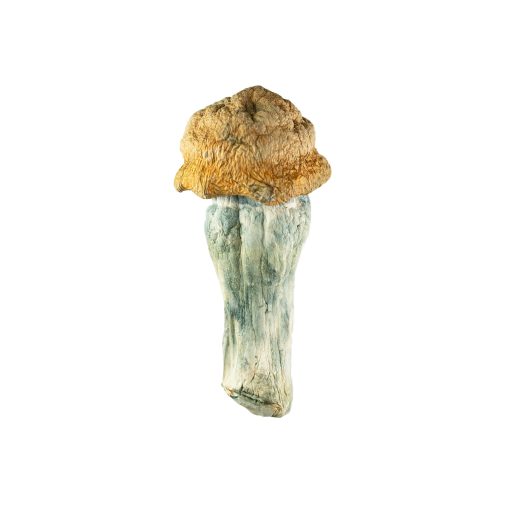
Code Blue Mushroom
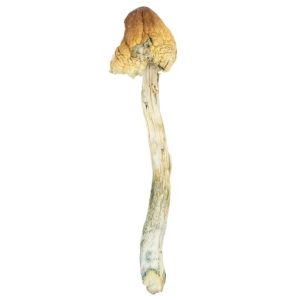
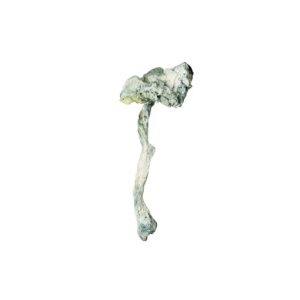
Code Blue Mushroom is an informal psychedelic-mushroom cultivar name used within modern cultivation communities rather than a formally recognized mushroom species. Community discussions about the lineage are inconsistent: one description attributes Code Blue to a cross involving Goldmember Psilocybe cubensis and Psilocybe natalensis, while other community descriptions associate the name with different P. cubensis genetics. That disagreement is a good reason not to treat commercial cultivar names as formal taxonomy or proof of a specific genetic identity.
There is likewise no scientifically established universal psilocybin concentration for every mushroom carrying the Code Blue name. Potency can vary between genetics, individual fruiting bodies, cultivation conditions, storage and batches.
The more important legal issue is the compounds present. The Drug Enforcement Administration continues to classify psilocybin as a Schedule I controlled substance under federal law. Its current fact sheet identifies hallucinations, altered perception, nausea, vomiting, weakness and lack of coordination among possible effects.
State rules are considerably more complicated. Oregon provides regulated supervised psilocybin services, Colorado protects certain adult personal-use activities and operates a natural-medicine regulatory system, while states such as Florida, Ohio and Arkansas continue to control psilocybin.
For more U.S. substance-law education, explore CannabisTopGrade educational resources.
What Is Code Blue Mushroom?
Code Blue appears to be a relatively recent cultivar name rather than an established scientific taxon.
A 2024 Shroomery discussion reproduced a supplier description calling Code Blue a hybrid between Goldmember Psilocybe cubensis and Psilocybe natalensis. Participants in the same discussion disputed that lineage and offered other explanations.
This disagreement illustrates a broader problem with mushroom “strain” names.
Terms such as:
Code Blue.
Golden Teacher.
Melmac.
Penis Envy.
Blue Meanie.
and many newer cross names
are often community, breeder or supplier labels rather than taxonomic classifications recognized by scientific authorities.
The name Code Blue therefore cannot reliably establish:
Exact genetics.
Psilocybin concentration.
Psilocin concentration.
Duration of effects.
Subjective experience.
Medical effectiveness.
A laboratory result from one Code Blue sample would describe that sample rather than every mushroom sold under the same name.
Code Blue Mushroom and Psilocybin
Psilocybin is a naturally occurring psychedelic substance found in certain fungi.
The DEA explains that psilocybin is converted in the body to psilocin, which is also present in many psychedelic mushrooms.
Possible psychological effects include:
Hallucinations.
Changes in visual perception.
Altered sense of time.
Difficulty distinguishing internal experiences from external reality.
Anxiety.
Panic.
Confusion.
Possible physical effects include nausea, vomiting, muscle weakness and reduced coordination.
These effects are not identical for every individual.
The mushroom cultivar name itself also does not demonstrate that a product has therapeutic benefits.
Clinical research involving standardized psilocybin is different from consuming an unregulated mushroom sold under an informal strain name.
Law on Magic Mushrooms in the United States
The law on magic mushrooms has several layers.
At the federal level, psilocybin remains Schedule I under the Controlled Substances Act.
State law may provide different protections or regulated systems.
Local governments can also adopt policies making investigation or prosecution a lower priority.
These three situations should not be confused:
Legalization means specified conduct is affirmatively permitted under law.
Decriminalization generally means criminal consequences have been reduced or removed for specified conduct.
Enforcement deprioritization means an activity may technically remain prohibited even though a local government directs law enforcement to treat it as a low priority.
That distinction is essential when reading headlines about psychedelic reform.
Psilocybin Mushroom Laws in 2026
Current psilocybin mushroom laws vary sharply between jurisdictions.
Federal law continues to classify psilocybin as Schedule I.
Oregon operates a state-regulated psilocybin-services program.
Colorado protects specified personal-use natural-medicine activities for adults and operates a regulated natural-medicine framework. Colorado law states that, subject to its restrictions, an adult may possess, consume, share without remuneration and cultivate natural medicine for personal use without violating state or local law.
Other states continue to prohibit ordinary psilocybin possession.
Therefore, the phrase “magic mushrooms are legal in America” is inaccurate.
What States Are Mushrooms Legal?
If what states are mushrooms legal refers to ordinary culinary mushrooms, they are ordinary legal foods throughout the country.
For psilocybin mushrooms, Oregon and Colorado have the most significant statewide legal frameworks, but they operate very differently.
Oregon: adults aged 21+ can legally access psilocybin through licensed service centers after completing the required preparation process. Psilocybin is purchased and consumed during an administration session and cannot be taken home.
Colorado: state law protects specified personal-use activities involving natural medicine for adults, including possession, consumption, noncommercial sharing and cultivation subject to applicable restrictions. It also established a regulated natural-medicine system.
Neither system should be described simply as unrestricted commercial recreational mushroom sales.
Federal Schedule I status also remains relevant.
Where Can You Buy Magic Mushrooms Legally?
For where can you buy magic mushrooms, the clearest currently regulated example is Oregon—but it is not an ordinary take-home retail model.
The Oregon Health Authority says a person aged 21 or older may access psilocybin services without being an Oregon resident and without obtaining a prescription or medical referral. Before administration, the individual must complete a preparation session with a licensed facilitator.
The state further explains that a licensed service center is the only location where clients may legally purchase and consume psilocybin within Oregon’s regulated program. Products cannot be purchased and taken off-site.
Oregon maintains an official directory of participating licensed service centers.
This is very different from an online retailer shipping mushrooms to someone’s home.
Where Can I Buy Psilocybin?
For where can I buy psilocybin, legal access should be distinguished from ordinary retail purchasing.
In Oregon, eligible adults can obtain psilocybin only as part of the state’s licensed service-center system. The product is purchased during an administration session and cannot legally be taken home.
An online seller claiming to ship psilocybin throughout the United States should not be assumed legal merely because it operates a website.
Readers looking for lawful access should verify providers through official government licensing systems rather than relying on unlicensed marketplace claims.
For additional state-by-state educational material, visit CannabisTopGrade U.S. law guides.
Oregon Psilocybin Services Explained
Oregon voters approved Measure 109 in 2020, establishing the Oregon Psilocybin Services Act.
The state now regulates:
Service centers.
Manufacturers.
Testing laboratories.
Facilitators.
Psilocybin products.
The Oregon Department of Revenue explains that Measure 109 does not permit personal cultivation and that clients cannot take psilocybin products off-site after an administration session.
Oregon’s system is therefore better described as regulated supervised access, not a conventional recreational dispensary market.
Colorado Psilocybin Laws
Colorado uses a different framework.
Following Proposition 122 and subsequent legislation, Colorado protects certain natural-medicine activities for adults aged 21 and older.
Current law provides protections for specified personal-use possession, consumption, noncommercial sharing, cultivation and manufacture. Public consumption and certain commercial conduct remain restricted.
Colorado has also established regulated natural-medicine businesses and services.
The commercial restrictions remain important: noncommercial personal sharing is not equivalent to unrestricted retail sale.
So when answering what states are mushrooms legal, Colorado and Oregon both deserve discussion, but their legal systems should not be presented as identical.
Shroom Laws: Why State Differences Matter
The informal phrase shroom laws usually refers to laws governing psilocybin mushrooms.
Those rules may cover:
Possession.
Cultivation.
Sale.
Transfer.
Transportation.
Psilocybin products.
Spores.
Facilitated services.
Age requirements.
Research.
Penalties.
Even two neighboring states can treat the same mushroom very differently.
A product or activity protected under Colorado law does not automatically remain lawful after crossing into another state.
Similarly, Oregon’s service-center program does not authorize a participant to take psilocybin products home or transport them across state lines.
Are Magic Mushrooms Legal in Florida?
No. Florida does not have general legal recreational psilocybin mushrooms.
The 2026 Florida Statutes explicitly list psilocybin and psilocyn as Schedule I controlled substances.
Florida therefore does not operate an Oregon-style statewide psilocybin-services program or a legal recreational mushroom dispensary system.
For are magic mushrooms legal in Florida, the statewide answer remains no for ordinary unauthorized possession, sale and distribution.
Ordinary culinary mushrooms remain legal foods, of course.
Hallucinogenic Mushrooms Florida
For hallucinogenic mushrooms Florida, the critical compounds are psilocybin and psilocin.
Florida’s Schedule I statute specifically lists both compounds.
Florida also tightened its treatment of mushroom spores and mycelium in 2025.
Current Florida Statute §500.75 makes it unlawful to transport, import, sell, offer for sale, furnish or give away spores or mycelium capable of producing mushrooms that will contain a controlled substance such as psilocybin or psilocyn during their life cycle.
A violation is classified as a first-degree misdemeanor under that provision.
This is especially important because older internet articles may claim mushroom spores are automatically legal in Florida.
That is no longer a safe statement under current state law.
Are Psilocybe Cubensis Spores Legal?
The phrase Psilocybe cubensis spores legal requires both federal and state context.
Psilocybin and psilocin themselves are federally Schedule I substances.
Historically, ungerminated P. cubensis spores have been treated differently where they do not themselves contain controlled psilocybin or psilocin.
But state law can independently regulate spores.
Florida is now a clear example: its 2026 statute prohibits various transactions involving spores or mycelium capable of producing mushrooms containing psilocybin or psilocyn.
Therefore, a blanket statement that “Psilocybe cubensis spores are legal everywhere” is inaccurate.
Anyone researching spores must check the law of the specific jurisdiction.
Why Mushroom Spores and Mushrooms Can Have Different Legal Status
A fungal spore and a mature psilocybin mushroom are biologically related but chemically different stages.
Legal systems sometimes regulate them differently based on whether controlled compounds are present or whether the material is capable of producing a controlled substance.
That produces unusual situations where spores may receive different treatment from mature fruiting bodies under one jurisdiction’s law while another state may explicitly regulate spores themselves.
Florida’s newer statute demonstrates why older mushroom-spore legality articles can become outdated quickly.
Are Psychedelic Mushrooms Legal in Ohio?
No general recreational psilocybin legalization exists in Ohio.
Ohio’s current Schedule I controlled-substances rule remains in force, and state law requires Ohio’s schedules to correspond with applicable federal controlled-substance scheduling.
Federal law continues to place psilocybin in Schedule I.
Therefore, for are psychedelic mushrooms legal in Ohio, the statewide answer remains no for ordinary recreational possession.
This is true even though Ohio separately permits adult-use cannabis.
Cannabis legalization does not automatically legalize psilocybin.
Ohio Cannabis vs Psilocybin
Cannabis and psilocybin are legally separate substances.
A state can legalize or regulate one without changing the legal status of the other.
This is especially important for Ohio because consumers may encounter headlines about legal recreational marijuana and mistakenly assume psychedelic mushrooms received the same treatment.
They did not.
Psilocybin remains subject to Ohio’s controlled-substance framework as of 2026.
Magic Mushrooms Arkansas
For magic mushrooms Arkansas, psilocybin remains controlled.
An Arkansas Department of Health controlled-substances list identifies psilocybin and psilocyn among Schedule I hallucinogenic substances.
Arkansas law prohibits unauthorized possession of Schedule I and Schedule II controlled substances, with penalties determined in part by substance and quantity.
The state also prohibits unauthorized delivery and manufacture of Schedule I or Schedule II controlled substances.
Arkansas therefore does not currently have a general legal recreational psilocybin mushroom system.
Are Magic Mushrooms Legal in Arkansas?
No statewide recreational mushroom legalization exists in Arkansas.
Psilocybin’s placement within the controlled-substance system means ordinary recreational possession remains unlawful.
This should be distinguished from clinical research, proposed psychedelic legislation or changes occurring elsewhere in the United States.
A news story about Oregon, Colorado or psychedelic clinical research does not change Arkansas law.
Can Code Blue Mushrooms Be Legally Purchased Nationwide?
No ordinary nationwide legal market exists for take-home Code Blue psilocybin mushrooms.
The name “Code Blue” has no special legal status.
If a product contains psilocybin, laws governing psilocybin apply regardless of whether the product is called:
Code Blue.
Golden Teacher.
Melmac.
Penis Envy.
Avalanche.
Texas Yellow Cap.
or another cultivar name.
Federal law remains restrictive, while state laws range from regulated access to prohibition.
Online Magic Mushroom Shops and Legal Claims
Online advertisements deserve particular caution.
Statements such as:
“Ships legally to all 50 states.”
“Legal magic mushroom delivery.”
“Federally approved shrooms.”
or
“Legal psychedelic mushrooms everywhere”
should not be accepted without checking applicable law.
A seller’s marketing language cannot override state or federal controlled-substance statutes.
Legality depends on the product’s actual contents and the jurisdiction where possession, sale, delivery or use occurs.
For further educational reading about cannabis and controlled-substance regulations, explore CannabisTopGrade research resources.
Code Blue Mushroom Effects and Safety
Because Code Blue is an informal cultivar name, it should not be assigned a guaranteed psychological profile.
Psilocybin generally can cause substantial changes in perception and cognition.
The DEA identifies potential effects including hallucinations and inability to distinguish fantasy from reality, together with nausea, vomiting, weakness and lack of coordination.
The agency also notes that panic reactions and psychotic-like episodes can occur, particularly with high exposure.
Effects can differ substantially based on:
Amount.
Individual sensitivity.
Other substances.
Environment.
Mental state.
Product chemistry.
Actual mushroom species.
Anecdotal descriptions of one Code Blue experience cannot predict another person’s response.
Psilocybin Research Does Not Make a Cultivar a Medicine
Scientific research into psilocybin is expanding.
However, research involving standardized psilocybin under controlled conditions should not be used to claim that Code Blue or another informal mushroom cultivar is an approved treatment.
Controlled research environments may include:
Participant screening.
Measured preparations.
Professional observation.
Emergency protocols.
Integration or follow-up.
Known product chemistry.
Those conditions differ substantially from an unidentified mushroom product.
Wild Mushroom Identification Safety
Code Blue is a cultivated-name concept and should not be used to identify random wild mushrooms.
The DEA specifically warns that poisoning can occur when poisonous mushroom varieties are incorrectly identified as psilocybin-containing mushrooms.
Appearance alone is not sufficient for safe wild-mushroom identification.
Color, bruising or cap shape can overlap among species.
Anyone who has consumed an unknown wild mushroom and develops concerning symptoms should seek appropriate medical or poison-control assistance rather than relying on online strain photographs.
Frequently Asked Questions
1. What is Code Blue Mushroom?
Code Blue is an informal psychedelic-mushroom cultivar name rather than a formally recognized species. Community descriptions disagree about its exact lineage, with one supplier description reporting Goldmember P. cubensis × P. natalensis. Because documentation is inconsistent, exact genetics and potency should not be assumed from the name alone.
2. Where can you buy magic mushrooms legally?
Oregon provides one clearly regulated access route for adults 21+ through licensed psilocybin service centers. Clients must participate in the required process, purchase psilocybin during an administration session and consume it on-site; products cannot be taken home.
3. What states are magic mushrooms legal in?
Oregon and Colorado have major statewide frameworks, but they are different. Oregon provides regulated supervised services, while Colorado protects specified adult personal-use activities and operates a regulated natural-medicine system. Psilocybin remains Schedule I federally.
4. Are magic mushrooms legal in Florida?
No. Florida’s 2026 controlled-substances statute explicitly lists psilocybin and psilocyn in Schedule I. Florida also now regulates spores and mycelium capable of producing mushrooms containing those substances.
5. Are psychedelic mushrooms legal in Ohio?
Not for ordinary recreational possession. Ohio’s controlled-substance framework remains tied to federal scheduling, and psilocybin remains federally Schedule I.
Final Thoughts on Code Blue Mushroom and U.S. Shroom Laws
Code Blue Mushroom is best described as an informal psychedelic-mushroom cultivar name, not a separate scientifically established species. Community sources disagree about its exact lineage, so claims about genetics, potency and effects should remain cautious.
For law on magic mushrooms, psilocybin mushroom laws, and shroom laws, federal law continues to classify psilocybin as Schedule I.
Regarding what states are mushrooms legal, Oregon and Colorado currently provide the most substantial statewide psilocybin frameworks, but Oregon focuses on licensed supervised service-center access while Colorado provides broader protections for specified noncommercial adult personal-use conduct.
For where can you buy magic mushrooms and where can I buy psilocybin, Oregon permits purchase only through licensed service centers during an administration session; it is not a take-home dispensary model.
Regarding are magic mushrooms legal in Florida and hallucinogenic mushrooms Florida, psilocybin and psilocyn remain Schedule I. Florida’s newer law also specifically restricts spores and mycelium capable of producing psilocybin-containing mushrooms.
For Psilocybe cubensis spores legal, there is no safe nationwide answer because state law can be stricter than federal treatment of spores.
Regarding are psychedelic mushrooms legal in Ohio, Ohio remains aligned with controlled-substance scheduling that treats psilocybin as controlled.
Finally, for magic mushrooms Arkansas, Arkansas controlled-substance materials list psilocybin and psilocyn in Schedule I, and unauthorized possession remains punishable under state law.
Because psychedelic laws continue to evolve, older pages can become inaccurate quickly. Checking the current state statute or official licensing authority is more reliable than assuming a local decriminalization policy or online seller represents statewide legalization.
Recommended Outbound Resources
DEA — Psilocybin Drug Fact Sheet
Oregon Health Authority — Access Psilocybin Services
Oregon Health Authority — Licensed Psilocybin Service Centers
| Weight | Oz, QP, HP, P |
|---|
Be the first to review “Code Blue Mushroom”
Related products
Bulk Mushrooms
Bulk Mushrooms
Bulk Mushrooms
Bulk Mushrooms
Bulk Mushrooms
Bulk Mushrooms
Bulk Mushrooms
Bulk Mushrooms
Reviews
There are no reviews yet.