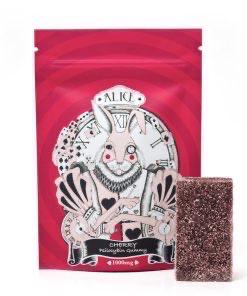
Alice Mushroom Gummy should be treated carefully as a product name rather than a standardized cannabis strain or cannabinoid category. A product carrying this name would need its own ingredient list and laboratory analysis before making claims about THC, THCA, CBD, or mushroom compounds.
There is also a current wellness company called Alice Mushrooms. Its official product range emphasizes functional mushroom chocolates rather than gummies, using ingredients such as Lion’s Mane, Reishi, Cordyceps, and other non-psychedelic functional mushrooms. The company’s own FAQ specifically explains why it uses chocolate instead of gummy formats and says its mushroom chocolates are not intended to produce a psychedelic trip. alice mushrooms
So if Alice Mushroom Gummy is a separate cannabis or mushroom product, it should not automatically inherit the ingredients or claims of the Alice Mushrooms chocolate brand.
For cannabis education, visit Cannabistopgrade Cannabis Education, explore Hash and Concentrates, and read Cannabis Concentrates and Dabbing.
Alice Mushroom Gummy Quick Facts
| Topic | Educational overview |
|---|---|
| Product name | Alice Mushroom Gummy |
| Standardized cannabis strain? | No |
| THC content | Must be established from product testing |
| THCA content | Must be established from product testing |
| Mushroom ingredients | Check actual ingredient label |
| THCA flower | Cannabis flower containing substantial THCA |
| THC carts | Concentrated cannabinoid vape products |
| Hash oil | Concentrated cannabis extract |
| “How much THC is a lot?” | Depends strongly on route, tolerance and individual response |
| Best evidence of potency | Batch-specific laboratory report |
Where to Buy THCA
The search where to buy THCA often leads to hemp retailers, cannabinoid websites, smoke shops, and—in states with regulated cannabis markets—licensed cannabis dispensaries.
The important distinction is that availability does not automatically prove legality.
For lawful-market shopping, prioritize retailers operating within the applicable state regulatory system and products accompanied by batch-specific Certificates of Analysis showing:
- THCA;
- delta-9 THC;
- total THC;
- CBD and other cannabinoids;
- batch identification;
- testing date;
- laboratory information;
- relevant contaminant testing.
USDA hemp-production testing already requires total THC measurements that account for the potential conversion of THCA into THC rather than looking only at delta-9 THC. AMS
THCA Rules Are Especially Date-Sensitive in 2026
Federal law concerning hemp-derived cannabinoid products is changing.
Public Law 119-37 enacted a revised hemp definition based on total tetrahydrocannabinols, including THCA, with a 0.3% dry-weight threshold. It was originally scheduled to take broad effect 365 days after November 12, 2025. GovInfo
Congress subsequently enacted Public Law 119-103 on September 2, 2026. Section 2019 limits application of most of those Section 781 amendments until December 11, 2026, creating a transition period. State restrictions can still differ. GovInfo
Therefore, as of October 3, 2026, a blanket claim such as “THCA is legal everywhere in the United States” is not reliable.
THC-A Flower for Sale
THC-A flower for sale generally refers to cannabis flower marketed for its THCA concentration.
THCA is tetrahydrocannabinolic acid, the precursor from which delta-9 THC can be produced through decarboxylation.
That chemical relationship is important because a flower might display:
- low delta-9 THC;
- high THCA;
- substantial total potential THC.
USDA specifically says its compliance methods must account for conversion of THCA into THC and report total available THC on a dry-weight basis. AMS
This means a high-THCA product should not simply be described as THC-free.
What to Check on THCA Flower
A stronger THCA flower listing should have:
| Check | Why it matters |
|---|---|
| THCA percentage | Shows acidic THC precursor |
| Delta-9 THC | Shows THC already present |
| Total THC | Gives better overall potency context |
| Batch number | Links flower to laboratory result |
| Test date | Helps establish relevance of COA |
| Contaminant testing | Goes beyond cannabinoid potency |
| Business information | Improves traceability |
| State-specific legal information | Avoids misleading nationwide claims |
THC Carts Near Me
The phrase THC carts near me usually refers to cannabis vape cartridges containing THC-rich cannabis extract.
A regulated-market THC cart should not be evaluated solely by how high its potency number appears.
Important considerations include:
- whether the seller is licensed where licensing is required;
- whether the product comes from a regulated supply chain;
- cannabinoid testing;
- contaminant testing;
- ingredient disclosure;
- batch traceability.
Cannabis concentrates can deliver much higher concentrations of THC than conventional flower. Higher THC exposure can produce stronger intoxication and increase the risk of an unpleasant or excessive reaction. CDC
For nearby products, checking the relevant state cannabis regulator’s license database is more reliable than assuming that every business appearing in an online map result is a licensed cannabis dispensary.
Weed Carts Nearby
Weed carts nearby is another common search for cannabis cartridges.
THC carts vary considerably.
Two cartridges can have similar-looking packaging but differ in:
- cannabinoid concentration;
- extract type;
- additives;
- terpene content;
- laboratory testing;
- regulatory status.
The largest THC percentage does not automatically mean the highest-quality product.
A traceable regulated product with credible testing provides more useful information than an anonymous cartridge claiming an unusually high THC percentage.
Hash Oil Near Me
Hash oil is a concentrated cannabis extract rather than ordinary cannabis flower.
Products marketed as hash oil can vary enormously in composition.
Cannabis concentrates may contain far more THC than flower, which is why comparing a flower percentage directly with a hash-oil percentage can be misleading.
Health Canada specifically warns that concentrates such as hash, kief, wax, and shatter can contain high THC concentrations and produce greater impairment and a greater chance of serious adverse effects. Canada
When researching hash oil near me, regulated-market considerations should include:
- licensed retailer status;
- exact extract type;
- THC/THCA analysis;
- solvent testing where relevant;
- pesticide and contaminant results;
- batch identification.
THC Flower
THC flower is dried cannabis flower containing THC or substantial amounts of THCA capable of converting into THC.
Cannabis flower is normally labeled using a percentage by weight, while edibles are generally described using milligrams per serving or package.
Those measurements cannot be directly compared without understanding the product format.
For example:
20% THC flower
does not mean the same thing as:
20 mg THC edible.
The first is a concentration by weight.
The second is an absolute amount of THC.
THC Chart: Understanding Common Potency Numbers
A simple THC chart helps explain why percentages and milligrams need context.
| Product/amount | THC context | Interpretation |
|---|---|---|
| Edible ≤2.5 mg THC | Low-dose public-health benchmark | Health Canada recommends this level or lower for new consumers |
| Edible 2.5–10 mg THC | Increasing intoxication potential | Greater caution recommended |
| Edible ≥10 mg THC | Higher exposure | Health Canada recommends the most caution |
| Flower ≤10% THC | Lower-potency inhaled benchmark | Health Canada uses 10% or less in its lower-risk guidance |
| Flower 20%+ THC | Comparatively high-potency modern flower | Effects depend on amount and individual |
| Concentrates | Frequently higher THC than flower | Potency requires product-specific testing |
Health Canada recommends that people seeking to lower risks choose edible products containing 2.5 mg THC or less and exercise the most caution at 10 mg or more. For smoked or vaped cannabis, it identifies 10% THC or less as a lower-potency choice. Canada
This chart is a risk-context guide, not a promise that a particular amount will produce the same effects in everyone.
How Much THC Is a Lot?
There is no universal answer to how much THC is a lot because the effect of THC varies substantially between people.
Important variables include:
- tolerance;
- age;
- body chemistry;
- prior cannabis experience;
- product format;
- whether cannabis is inhaled or eaten;
- simultaneous alcohol or medication use.
For edible cannabis, Health Canada advises new or occasional consumers to look for 2.5 mg THC or less. It advises caution from 2.5–10 mg and the most caution with products containing 10 mg THC or more, because greater THC exposure increases impairment and adverse-effect risk. Canada
CDC similarly warns that excessive cannabis exposure can produce:
- extreme confusion;
- anxiety;
- paranoia;
- panic;
- rapid heart rate;
- hallucinations or delusions;
- increased blood pressure;
- severe nausea or vomiting. CDC
Therefore, 10 mg can already be a substantial edible dose for someone with little or no tolerance, while an experienced cannabis user may respond differently.
Why Edible THC Is Different
THC consumed through a gummy or other edible behaves differently from inhaled cannabis.
CDC says edible cannabis can take roughly 30 minutes to 2 hours to produce intoxicating effects, and those effects can last longer than expected. Delayed onset creates a greater risk that someone consumes additional THC before the first amount has fully taken effect. CDC
Health Canada adds that it can take as long as four hours to feel the full effects of ingested THC and that effects can last for many hours afterward. Canada
This is particularly important for any product marketed as a gummy.
What About 100 mg THC Gummies?
A 100 mg package and a 100 mg single gummy are completely different situations.
Product labels should specify:
- THC per piece;
- number of pieces;
- THC per serving;
- total package THC.
As one regulatory example, California rules historically established 10 mg THC per edible serving and 100 mg per adult-use edible package. California Department of Public Health
That illustrates why a large number printed prominently on packaging needs context.
Alice Mushroom Gummy vs. THC Gummies
A mushroom gummy and a THC gummy should not be treated as interchangeable products.
| Product | Main concern |
|---|---|
| Functional mushroom gummy | Mushroom ingredients and supplement claims |
| THC gummy | Intoxicating THC dose |
| CBD gummy | CBD content and possible trace THC |
| THCA product | THCA/total-THC chemistry and legal classification |
| Psychedelic mushroom gummy | Completely different compounds and regulatory issues |
If a product called Alice Mushroom Gummy contains functional mushrooms but no THC, cannabis potency information would not describe the gummy itself.
If it also contains cannabinoids, those cannabinoids need to be explicitly listed and tested.
The official Alice Mushrooms brand currently markets functional mushroom chocolates, not THC gummies, and says its formulations use non-psychedelic functional mushrooms. alice mushrooms
Where Should Consumers Look for Legal THC Carts or Hash Oil?
In U.S. jurisdictions where adult-use or medical cannabis sales are permitted, the more reliable route is the relevant state-licensed cannabis system rather than anonymous sellers.
A legitimate-looking label does not prove a cartridge or hash-oil product entered through a regulated supply chain.
Check the state’s official license lookup where available and compare the product’s actual batch information with its laboratory report.
Avoid treating phrases such as:
“lab tested”
“premium THC”
“top shelf cart”
or
“dispensary quality”
as proof by themselves.
Frequently Asked Questions
1. What is Alice Mushroom Gummy?
Alice Mushroom Gummy is not a standardized cannabis strain or cannabinoid category. The exact ingredients should be verified from the individual product label and laboratory report. If the name refers to the Alice Mushrooms wellness brand, its official current products are functional mushroom chocolates rather than gummies. alice mushrooms
2. Where can I buy THCA legally?
THCA products are marketed through hemp retailers and regulated cannabis businesses, but legality varies by jurisdiction. Federal hemp legislation is also in transition through late 2026. Check state rules and use regulated or licensed channels where required. GovInfo
3. How much THC is a lot?
There is no single threshold for everyone. For edible cannabis, Health Canada recommends 2.5 mg THC or less as a lower-dose starting benchmark and advises the most caution at 10 mg or more. Canada
4. Are THC carts stronger than THC flower?
They can be because cartridges generally contain concentrated cannabis extracts. Exact potency depends on the individual cartridge and should be determined from regulated laboratory testing.
5. Is THCA flower THC-free?
No. THCA is chemically distinct from delta-9 THC but can convert into THC when heated. USDA hemp-production testing therefore includes THCA when determining total potential THC. AMS
Be the first to review “Alice Mushroom Gummy – Cherry (1000mg)”
Related products
Bulk Mushrooms
Bulk Mushrooms
Bulk Mushrooms
Bulk Mushrooms
Edibles and Gummies
Bulk Mushrooms
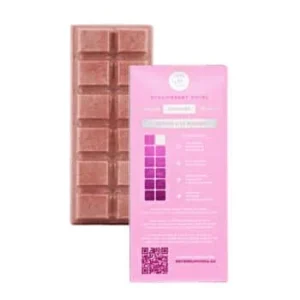
Bulk Mushrooms
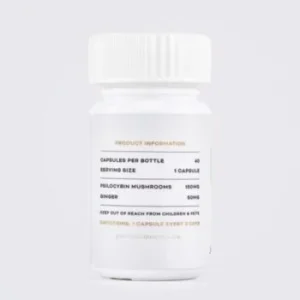
Bulk Mushrooms
Reviews
There are no reviews yet.