Uncategorized
CBD and THC Information: When Weed Became Illegal, Medical Marijuana History and U.S. Legalization
Sep
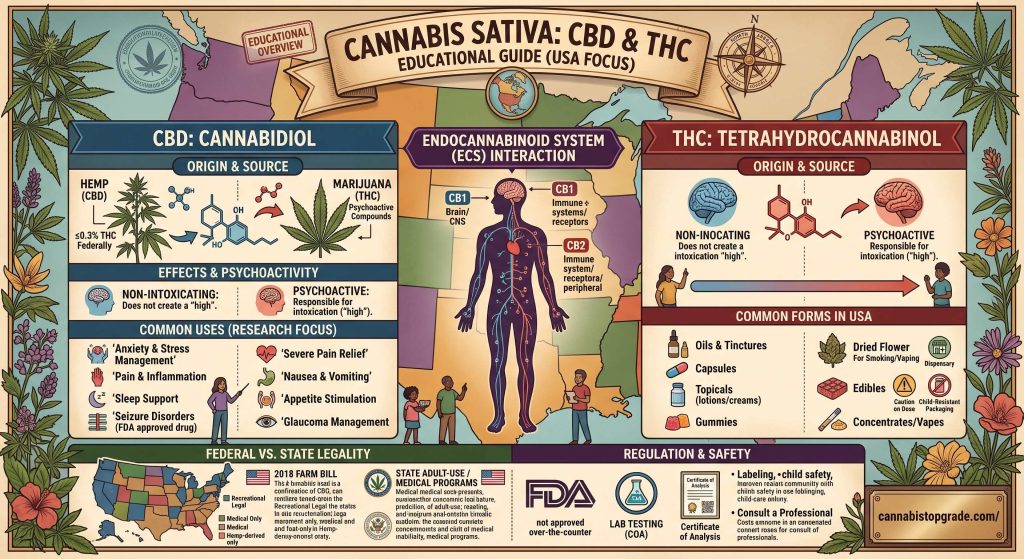
CBD and THC information can be confusing because both compounds come from cannabis, yet they have different effects, legal treatment and roles in modern U.S. cannabis policy.
CBD stands for cannabidiol.
THC usually refers to delta-9-tetrahydrocannabinol, the primary intoxicating cannabinoid associated with marijuana.
The FDA explains that cannabis contains many biologically active compounds, with CBD and THC being among the best known. THC produces the intoxicating “high” associated with marijuana, while CBD does not produce the same intoxicating effect.
Understanding those differences also helps answer common historical questions such as:
- when was weed made illegal in the United States;
- when did recreational weed become legal;
- what was the first state to legalize medical pot;
- when was weed illegal in America;
- and what year was weed made illegal.
The answers depend on whether the question concerns federal law, state law, medical cannabis or adult-use cannabis.
For more U.S.-focused cannabinoid, cannabis-law and strain education, explore Cannabistopgrade.com.
What Is CBD?
CBD, or cannabidiol, is one of the many naturally occurring compounds found in cannabis.
Unlike THC, CBD is not generally considered intoxicating in the same way.
That does not mean every CBD product is risk-free.
The FDA warns that CBD can:
- interact with medications;
- cause liver-related risks;
- produce drowsiness;
- cause gastrointestinal effects;
- and create potential reproductive concerns.
The FDA has approved one prescription CBD medicine for certain seizure disorders, but ordinary retail CBD products are not automatically approved medicines.
What Is THC?
THC is the main intoxicating compound associated with cannabis.
It can affect:
- perception;
- mood;
- attention;
- memory;
- coordination;
- reaction time;
- and judgment.
THC concentration varies substantially between cannabis products.
Flower, edibles, concentrates and vape products can contain very different amounts.
CBD vs. THC
| Feature | CBD | THC |
|---|---|---|
| Full name | Cannabidiol | Delta-9-tetrahydrocannabinol |
| Intoxicating | Generally no | Yes |
| Produces cannabis “high” | No typical THC-like high | Yes |
| Found in cannabis | Yes | Yes |
| Prescription FDA-approved product | One CBD drug for specified seizure disorders | THC-related prescription drugs exist, but ordinary cannabis products are different |
| Legal treatment | Depends on source/product and law | Depends heavily on THC level and jurisdiction |
| Consumer products | Oils, gummies, capsules, topicals and others | Flower, edibles, concentrates, vapes and others |
The product label matters more than assumptions based on appearance or branding.
CBD Is Not the Same as Marijuana
CBD is a chemical compound.
Marijuana is cannabis plant material that can contain THC, CBD and many other compounds.
The FDA specifically distinguishes CBD from marijuana.
A product labeled CBD should therefore not automatically be treated as equivalent to marijuana flower.
THC Is Not the Entire Cannabis Plant
Similarly, THC is only one compound.
Cannabis can contain:
- CBD;
- CBG;
- CBC;
- THC;
- terpenes;
- flavonoids;
- and numerous other compounds.
This chemical diversity helps explain why two cannabis products can produce different experiences despite similar THC percentages.
Hemp, CBD and THC
Federal law created an important distinction between hemp and marijuana.
The 2018 Farm Bill removed hemp from the federal Controlled Substances Act definition of marijuana when the cannabis plant and its derivatives meet the federal definition involving no more than 0.3% delta-9 THC on a dry-weight basis.
However, the FDA makes clear that hemp-derived CBD products remain subject to other federal food, drug and cosmetic laws.
“Hemp-derived” does not mean “unregulated.”
When Was Weed Made Illegal in the United States?
There was no single day when cannabis became illegal everywhere in America.
Restrictions developed gradually.
For federal history, however, 1937 is one of the most important years.
Congress enacted the Marihuana Tax Act of 1937.
The Congressional Research Service describes the law as a major federal restriction that created a de facto prohibition through taxes and regulatory requirements.
So when people ask:
what year was weed made illegal?
1937 is usually the most useful early federal answer.
Was Cannabis Legal Before 1937?
At the federal level, cannabis had not yet been subjected to the modern nationwide prohibition structure.
Cannabis and hemp had previously been used for:
- agricultural purposes;
- medicines;
- tinctures;
- fibers;
- textiles;
- and other products.
Some states and municipalities had already adopted restrictions before 1937.
Therefore, marijuana prohibition developed gradually rather than appearing all at once.
When Was Weed Illegal in America?
A simplified timeline is useful.
Early 1900s
States and municipalities begin adopting cannabis restrictions.
1937
The Marihuana Tax Act imposes major federal controls.
1950s
Federal drug penalties become increasingly strict.
1970
The Controlled Substances Act establishes the modern federal drug-scheduling framework.
1996
California becomes the first U.S. state to legalize medicinal cannabis.
2012
Colorado and Washington approve adult-use cannabis legalization.
2012–2026
More states adopt medical cannabis, adult-use legalization, decriminalization and related reforms.
The Marihuana Tax Act of 1937
The Marihuana Tax Act did not operate exactly like the modern Controlled Substances Act.
Instead, it relied heavily on:
- taxation;
- registration;
- recordkeeping;
- transfer requirements;
- and criminal penalties for violations.
In practice, it made lawful marijuana commerce extremely difficult.
That is why the law is often treated as the beginning of major federal marijuana prohibition.
Why Did the Federal Government Restrict Cannabis?
Cannabis prohibition developed through multiple forces.
These included:
- public-health fears;
- political campaigns;
- sensational journalism;
- racialized rhetoric;
- anti-immigrant sentiment;
- law-enforcement advocacy;
- and claims connecting marijuana with crime or insanity.
Historical marijuana policy therefore cannot be explained by one scientific finding or one political event.
The Controlled Substances Act of 1970
The next major federal milestone came in 1970.
Congress passed the Controlled Substances Act, creating a unified federal framework for controlled drugs.
Marijuana was placed within Schedule I.
The law criminalized unauthorized manufacture, distribution, dispensing and possession at the federal level.
This became the foundation of modern federal cannabis prohibition.
CBD and THC Under Modern Federal Law
CBD and THC are now affected by several overlapping legal frameworks.
Relevant distinctions include:
- hemp versus marijuana;
- THC concentration;
- prescription drug regulation;
- state cannabis law;
- federal drug law;
- and product-specific rules.
That makes it misleading to say simply:
“CBD is legal everywhere”
or
“THC is illegal everywhere.”
The legal answer depends on the product and jurisdiction.
First State to Legalize Medical Pot
The first state to legalize medical cannabis was California.
California voters approved Proposition 215, the Compassionate Use Act, in 1996.
The California Department of Justice states that California became the first state to legalize medicinal cannabis when voters approved Proposition 215.
The law established protections for qualifying patients and primary caregivers under California law.
Why Proposition 215 Was Important
Proposition 215 changed the direction of U.S. cannabis policy.
For decades, cannabis policy had moved primarily toward stronger criminal restrictions.
California reversed that trend by establishing legal protections for medical use.
Other states later adopted their own medical cannabis programs.
Medical Cannabis Expanded After California
Following California, additional states adopted medical cannabis laws.
These programs differed in:
- qualifying medical conditions;
- physician involvement;
- patient registration;
- product types;
- possession limits;
- cultivation;
- and dispensary systems.
There has never been one uniform nationwide medical marijuana program.
When Did Recreational Weed Become Legal?
The answer depends on the state.
For the first state-level legalization measures, the key year is 2012.
Colorado and Washington voters approved adult-use cannabis legalization in November 2012.
Washington approved Initiative 502.
Colorado approved Amendment 64.
Both measures became major milestones in U.S. cannabis history.
Washington Recreational Cannabis
Washington’s Liquor and Cannabis Board states that adult non-medical cannabis became legal in 2012 after voters approved Initiative 502.
The initiative created a regulated system involving:
- producers;
- processors;
- retailers;
- licensing;
- and legal access for adults age 21 and older.
Washington retail cannabis stores began opening in 2014.
Colorado Recreational Cannabis
Colorado voters also approved adult-use legalization in November 2012 through Amendment 64.
The amendment authorized adults age 21 and older to possess limited quantities of marijuana and required the development of a regulated commercial system.
Colorado’s regulated retail market began operating in 2014.
Which State Was First for Recreational Weed?
Colorado and Washington are generally recognized together as the first states to approve adult-use cannabis legalization in 2012.
It is more accurate to name both states than to claim only one was the first.
Medical vs. Recreational Cannabis
| Category | Medical Cannabis | Adult-Use Cannabis |
|---|---|---|
| First major state milestone | California, 1996 | Colorado and Washington, 2012 |
| Medical recommendation | Typically required | Not generally required |
| Age rules | Depend on state program | Usually 21+ |
| Product rules | State-specific | State-specific |
| Registration | Often part of medical systems | Generally not required for ordinary adult consumers |
| Federal-state conflict | Yes | Yes |
State laws continue to evolve.
History of CBD
CBD’s modern legal history differs from marijuana legalization.
Scientific interest in cannabidiol increased considerably because CBD does not create the same intoxication associated with THC.
The 2018 Farm Bill also changed federal hemp policy.
However, CBD remained subject to FDA regulation depending on how products are marketed and sold.
Is CBD Federally Approved for Pain, Anxiety or Sleep?
Ordinary consumer CBD products are not automatically FDA-approved treatments for these conditions.
The FDA has approved one CBD prescription medication for specified seizure disorders.
That distinction is important because marketing language may imply medical benefits that have not been established for a particular retail product.
THC and Medical Cannabis
THC-containing cannabis products are used within some state medical cannabis programs.
However, a state medical program does not mean every THC product is an FDA-approved medication.
State cannabis authorization and federal drug approval are different regulatory systems.
Cannabis Legalization Did Not Make THC Legal Everywhere
One of the most common misconceptions is that marijuana became nationally legal once states began opening dispensaries.
It did not.
States developed separate cannabis programs while federal restrictions continued.
This created the modern federal-state policy gap.
Federal vs. State Cannabis Law
Cannabis can be permitted under state law while remaining subject to different federal rules.
This conflict can affect:
- banking;
- taxes;
- interstate commerce;
- immigration;
- federal property;
- employment;
- and cannabis businesses.
This is why legal cannabis information should always specify the jurisdiction.
Why CBD and THC Need Separate Legal Analysis
CBD may originate from hemp or marijuana.
THC concentration can determine whether certain federal hemp provisions apply.
Different cannabinoids and product categories can also be regulated differently by states.
Therefore, cannabinoid legality depends on more than the words “CBD” or “THC.”
Does CBD Get You High?
CBD does not normally cause the same intoxicating high associated with THC.
However, CBD products can be mislabeled or contaminated.
Some may contain unexpected amounts of THC.
Product testing and regulatory compliance therefore matter.
Does THC Get You High?
THC is the main cannabinoid responsible for cannabis intoxication.
Possible effects can include:
- euphoria;
- altered perception;
- relaxation;
- increased appetite;
- impaired reaction time;
- reduced coordination;
- anxiety;
- or paranoia.
Responses vary substantially.
Is THC Percentage the Same as Quality?
No.
Higher THC does not automatically mean better cannabis.
Quality can also involve:
- terpene profile;
- freshness;
- cultivation;
- curing;
- cannabinoid balance;
- testing;
- and personal preference.
A cannabis product should not be judged solely by THC percentage.
CBD and THC Together
Some cannabis products contain both CBD and THC.
A product’s CBD-to-THC ratio can vary widely.
Examples may include:
- CBD-dominant products;
- THC-dominant products;
- balanced CBD products;
- and products containing additional minor cannabinoids.
These categories can produce different subjective experiences.
CBD and THC Safety
Cannabinoids are sometimes described as harmless because they come from a plant.
That is too simplistic.
THC-related concerns can include:
- intoxication;
- impaired driving;
- anxiety;
- memory impairment;
- and cannabis use disorder.
CBD-related concerns can include:
- medication interactions;
- liver effects;
- sedation;
- and inaccurate product labeling.
Risk depends on the individual and product.
Cannabis and Driving
THC can impair abilities needed for safe driving.
A person may experience changes in:
- reaction time;
- attention;
- coordination;
- judgment;
- and perception.
CBD products can also sometimes contain THC unexpectedly.
People should not rely solely on marketing terms when assessing impairment risk.
CBD, THC and Product Testing
Regulated products may provide laboratory information about:
- THC;
- CBD;
- CBG;
- other cannabinoids;
- pesticides;
- residual solvents;
- heavy metals;
- microorganisms;
- and other contaminants.
Testing requirements differ by jurisdiction.
Batch-specific results are generally more informative than strain or brand names alone.
Current Cannabis Laws Across the United States
Cannabis law remains highly state-specific.
The NCSL State Cannabis Policy Enactment Database was updated August 31, 2026.
It tracks enacted state legislation involving:
- medical cannabis;
- nonmedical adult use;
- hemp and CBD;
- THC;
- flower;
- concentrates;
- edibles;
- tinctures;
- labeling;
- packaging;
- testing;
- taxation;
- and public health.
Because policies continue changing, current official sources should be preferred over older cannabis maps.
CBD and THC in State Cannabis Markets
State-regulated markets may treat CBD and THC differently.
For example, regulations may address:
- potency limits;
- serving sizes;
- labeling;
- testing;
- advertising;
- child-resistant packaging;
- age limits;
- and licensed retail sales.
The existence of legal cannabis in one state does not create the same rules nationwide.
A Simple U.S. Cannabis Timeline
| Year | Major Event |
|---|---|
| Before 1937 | No comparable modern federal marijuana prohibition |
| 1937 | Marihuana Tax Act |
| 1970 | Controlled Substances Act |
| 1996 | California legalizes medical cannabis |
| 2012 | Colorado and Washington legalize adult use |
| 2014 | Early regulated adult-use retail markets begin operating |
| 2018 | Federal hemp policy changes under the Farm Bill |
| 2012–2026 | Continued expansion and revision of state cannabis laws |
This timeline explains why questions about cannabis legality require both historical and modern context.
Educational Resources
For additional U.S.-focused CBD, THC, cannabis history and legal-market education, explore Cannabistopgrade.com.
Concerning federal information about CBD, THC and cannabis-derived products, see the FDA Cannabis and CBD Consumer Update.
For the history of federal marijuana prohibition, see the Congressional Research Service report The Evolution of Marijuana as a Controlled Substance and the Federal-State Policy Gap.
Reagarding California’s historic medical cannabis program, see the California Department of Justice medicinal cannabis guidance.
For current state cannabis legislation, consult the NCSL State Cannabis Policy Enactment Database.
Readers can continue exploring CBD, THC, cannabis strains and U.S. cannabis history through Cannabistopgrade.com.
Frequently Asked Questions
1. What is the difference between CBD and THC?
CBD and THC are cannabinoids found in cannabis. THC is intoxicating and produces the high associated with marijuana, while CBD does not normally produce the same THC-like intoxication.
2. When was weed made illegal in the United States?
Cannabis restrictions developed gradually, but the Marihuana Tax Act of 1937 was a major federal turning point. The Controlled Substances Act of 1970 later created the modern federal drug-scheduling framework.
3. What was the first state to legalize medical pot?
California became the first U.S. state to legalize medical cannabis when voters approved Proposition 215 in 1996.
4. When did recreational weed become legal?
Colorado and Washington voters approved the first state adult-use legalization measures in 2012. Regulated retail markets followed afterward.
5. Is CBD legal everywhere in the United States?
Not necessarily in every form or use. Hemp-derived CBD is treated differently from marijuana under federal law, but CBD products remain subject to FDA rules and state laws.
6. Is THC legal in every state with medical marijuana?
No. States create their own rules involving qualifying patients, THC products, possession limits, product types and licensing. Medical cannabis laws should be checked state by state.
