
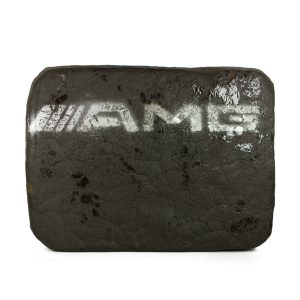
AMG Hash is a cannabis hash or concentrate associated with the AMG cannabis strain.
AMG is a documented hybrid produced from Amnesia Haze × Biker OG genetics. Leafly currently describes AMG as approximately 70% sativa and 30% indica and associates it with diesel, chemical and lemon flavors. Its consumer-review database most commonly reports energetic, talkative and euphoric experiences.
Those descriptions apply to AMG flower and consumer experiences generally. A finished AMG Hash product should not automatically be assigned the same THC percentage, terpene profile or subjective effects.
Hash concentrates cannabis trichomes and resin, meaning the finished product can differ substantially from the flower used to produce it.
The most useful information for any particular AMG Hash batch includes cannabinoid testing, CBD and minor cannabinoid measurements, terpene information where available, batch identification, producer information and contaminant-screening results.
For more educational information, see Cannabistopgrade.com Cannabis Concentrates Guide, Cannabistopgrade.com Hash Collection, and Cannabistopgrade.com Cannabis Education.
AMG Hash Quick Facts
| Topic | Educational Overview |
|---|---|
| Product | AMG Hash |
| Product class | Cannabis hash/concentrate |
| AMG genetics | Amnesia Haze × Biker OG |
| General AMG type | Sativa-leaning hybrid |
| Exact hash THC | Batch-specific |
| Kush connection | Biker OG parentage connects AMG to the broader OG/Kush family |
| OG Kush | Influential modern hybrid cultivar |
| OG meaning | Historically disputed |
| Famous Kush ancestor | Hindu Kush |
| “OG weed” | Usually refers to OG Kush or OG-family genetics |
Kush Strain: What Does “Kush” Mean?
The phrase kush strain does not describe one single marijuana cultivar.
Kush has become the name of a broad cannabis family associated historically with genetics from the Hindu Kush mountain region, which stretches through Afghanistan and Pakistan.
Leafly describes Hindu Kush as a landrace indica named after that mountain range and notes its thick trichome production, a trait historically valued in hash production.
Over time, the word Kush became much broader.
Modern dispensary menus may contain strains called:
| Kush-Related Name | General Relationship |
|---|---|
| Hindu Kush | Historic landrace associated with Hindu Kush region |
| OG Kush | Influential modern Kush/OG hybrid |
| Afghan Kush | Afghan/Hindu Kush-associated cultivar |
| Kosher Kush | OG-related modern cultivar |
| Pink Kush | OG Kush-related hybrid |
| Bubba Kush | Famous American Kush family strain |
| Master Kush | Long-established Kush-style cultivar |
| Tahoe OG | OG Kush phenotype/family member |
| SFV OG | San Fernando Valley OG family |
| Ghost OG | OG Kush phenotype/family member |
The word Kush therefore may describe geographic heritage, breeding ancestry or simply membership in a modern Kush-style cannabis family.
What Is a Kush Plant?
A Kush plant generally means a cannabis plant belonging to Kush-associated genetics.
Traditional Hindu Kush genetics are associated with a harsh mountainous environment. Leafly describes Hindu Kush as a landrace cultivar from the Afghanistan-Pakistan mountain region and notes its naturally heavy trichome covering.
Traditional Kush-associated plants are often described as having dense flowers, significant resin coverage and earthy or woody aromatic characteristics.
However, modern hybridization has made the category extremely broad.
A modern Kush plant could inherit characteristics from:
- Hindu Kush genetics;
- OG Kush;
- Cookies genetics;
- Chemdog-related genetics;
- modern dessert strains;
- other hybrid families.
Therefore, simply seeing the word Kush in a strain name does not prove that the plant is a pure Hindu Kush landrace.
Kush Kush Strain: Is There One Specific Strain?
People sometimes search kush kush strain while trying to understand Kush genetics generally.
There are hundreds of strains whose names contain Kush, but Kush itself is better understood as a cannabis family or lineage term rather than one universal commercial strain.
Hindu Kush is one of the clearest historical reference points.
Leafly describes Hindu Kush as an indica originating in the Hindu Kush mountain range and associates its contemporary profile with earthy, woody and spicy/herbal flavor descriptors.
Modern Kush descendants can be very different.
Some are strongly relaxing.
Others have significant sativa influence.
Some carry fruity dessert aromas, while others retain fuel, pine, earth or spice characteristics.
That genetic diversity is why the word Kush alone cannot predict a product’s exact chemistry.
Pot Kush: Why Is Kush So Important in Cannabis?
The search phrase pot kush often reflects broader interest in why Kush genetics are so prominent.
Kush is important for two major reasons.
First, the Hindu Kush region has a long association with cannabis plants adapted to resin production. Afghan Kush is similarly traced to the Afghanistan-Pakistan region and has historically been associated with hash production.
Second, Kush genetics became central to modern American breeding.
OG Kush in particular became one of the foundations of contemporary West Coast cannabis. Leafly describes OG Kush as the genetic backbone behind numerous famous modern cultivars and families.
That legacy appears in strains connected with:
GSC, Headband, Tahoe OG, SFV OG, Ghost OG, Kosher Kush and many later hybrid families.
What Is OG Kush?
OG Kush is one of the most influential cannabis cultivars of the modern era.
Its early history is not completely documented, and different sources give somewhat different versions of its ancestry.
Leafly describes OG Kush as originating in Florida in the early 1990s, when Northern California cannabis material was reportedly crossed with Chemdawg, Lemon Thai and a Hindu Kush plant. It was later brought to Los Angeles and became an important foundation of West Coast cannabis breeding.
However, Leafly’s more detailed historical coverage also notes that OG Kush’s precise genetic origin remains partly speculative and that its history involves cuttings moving from Florida to California.
That uncertainty should be preserved rather than presenting one lineage as proven fact.
OG Kush Strain Effects
The phrase OG Kush strain effects should be handled as consumer-reported experience rather than a guaranteed pharmacological result.
Leafly’s current OG Kush database lists the most commonly reported effects as:
Hungry, relaxed and sleepy.
The same database associates OG Kush with woody, pine and earthy flavors and lists myrcene, limonene and caryophyllene among its referenced terpenes.
Individual effects can vary substantially.
Factors include THC concentration, other cannabinoids, terpene composition, individual tolerance, amount consumed and the specific product batch.
A person should therefore not assume that all OG Kush flower, hash, rosin or vape products will feel identical.
OG Kush Meaning: What Does “OG” Stand For?
The OG Kush meaning is one of the most debated pieces of cannabis terminology.
Common explanations include:
Ocean Grown
and
Original Gangster.
Leafly’s glossary acknowledges the controversy and says available historical evidence points more strongly toward “Ocean Grown”, while noting that “Original Gangster” remains a widely repeated interpretation.
Leafly’s main OG Kush profile is more cautious, noting that OG is often interpreted as either “Original Gangster” or “Ocean Grown.”
Its detailed OG family history goes even further and says that nobody can establish the acronym’s meaning with certainty.
For accurate SEO content, the safest conclusion is:
The meaning of “OG” remains disputed. “Ocean Grown” has historical support, while “Original Gangster” is also widely used in cannabis culture.
It should not be presented as definitively settled.
OG Weeds: What Does the Term Mean?
The phrase OG weeds usually refers to cannabis cultivars descended from or closely related to OG Kush.
In cannabis terminology, OG has effectively become a family label.
An OG cultivar often has some connection—direct or indirect—to OG Kush genetics or phenotype selections.
Commonly referenced OG-family names include:
| OG Family Name | General Relationship |
|---|---|
| OG Kush | Foundational cultivar |
| Tahoe OG | OG phenotype/family strain |
| SFV OG | San Fernando Valley OG |
| Ghost OG | OG Kush phenotype |
| Fire OG | OG-family hybrid |
| Kosher Kush / Kosher OG | Famous OG-related strain |
| Larry OG | OG family cultivar |
| Triangle Kush | Florida-associated OG lineage |
| Headband | OG-associated modern hybrid |
| Platinum OG | OG-family cultivar |
Leafly specifically identifies Tahoe OG, SFV OG and Ghost OG as different OG Kush phenotypes and describes the family as having influenced hundreds of later cannabis varieties.
OG Weed Strains
The search OG weed strains often targets the broader genetic family rather than one product.
OG Kush became influential partly because breeders repeatedly crossed it with other desirable genetics.
Leafly’s historical review describes OG Kush as one of the foundational strains behind generations of modern cannabis.
Modern OG-associated strains can differ dramatically.
Some preserve the classic lemon-pine-fuel profile.
Others emphasize sweet, earthy, fruity or dessert-like characteristics.
Therefore, OG should not be treated as one aroma, one THC percentage or one effect.
What Makes an OG Strain Recognizable?
Classic OG descriptions frequently reference:
Fuel or gas aromas
Lemon or citrus
Pine
Earth
Dense resinous flowers
Those traits are common descriptors rather than mandatory genetic proof.
Modern breeding and phenotype selection can create substantial variation even among cultivars carrying OG in the name.
What Is OG Bud?
OG bud usually refers to cannabis flower from an OG Kush or OG-family cultivar.
The term bud refers to the harvested cannabis flower rather than hash, concentrate or edible products.
Classic OG Kush flower is commonly described as dense and resinous with a distinctive lemon, pine, fuel, spice or earthy aromatic profile. Leafly characterizes authentic OG Kush as having a recognizable lemon-pine-fuel profile.
That does not mean every product labeled OG bud is genetically identical.
Cannabis naming is not universally standardized, and growers may work with different phenotypes or related OG-family hybrids.
Batch testing and producer information are therefore more reliable than a name alone.
OG Bud vs. AMG Hash
AMG Hash and OG bud belong to different cannabis product formats.
| Feature | AMG Hash | OG Bud |
|---|---|---|
| Product type | Cannabis concentrate/hash | Cannabis flower |
| Main associated genetics | Amnesia Haze × Biker OG | OG Kush or OG-family genetics |
| Resin concentrated? | Yes | No |
| Exact cannabinoid level | Batch dependent | Batch dependent |
| Same product format? | No | No |
| Effects guaranteed by strain name? | No | No |
The Biker OG parent of AMG creates a genetic connection to the broader OG cannabis world, but AMG should still be treated as its own documented hybrid rather than another name for OG Kush.
AMG Strain Effects vs. OG Kush Effects
AMG and OG Kush illustrate why family names alone cannot predict cannabis experience.
Leafly users most commonly report energetic, talkative and euphoric experiences for AMG.
For OG Kush, current consumer reports more often emphasize hungry, relaxed and sleepy experiences.
These are database trends, not guarantees.
| Consumer-Reported Trait | AMG | OG Kush |
|---|---|---|
| Energetic | Commonly reported | Less central in current profile |
| Talkative | Commonly reported | Not among top current effects |
| Euphoric | Commonly reported | Can occur but not current top-three |
| Relaxed | Can occur | Commonly reported |
| Sleepy | Less prominent | Commonly reported |
| Hungry | Less prominent | Commonly reported |
Different hash batches may also behave differently from flower because concentrate chemistry and potency can vary.
Kush, OG and Hash Culture
Kush genetics have an especially strong connection with hash because the historic Hindu Kush and Afghan cannabis regions are associated with resin-rich plants and traditional hash production.
Leafly notes that Hindu Kush developed a thick trichome coating in its mountain environment, a characteristic particularly valued by hash makers.
Afghan Kush is similarly described as being historically associated with charas and Afghan hash production.
Modern AMG Hash is different from traditional Afghan or Hindu Kush hash because AMG is a modern hybrid.
Still, its Biker OG ancestry connects it indirectly with the modern Kush/OG family.
Frequently Asked Questions
1. What is AMG Hash?
AMG Hash is a cannabis concentrate associated with AMG genetics. AMG is documented as an Amnesia Haze × Biker OG hybrid. The exact THC, CBD and terpene content of an AMG Hash product should be determined from its individual batch rather than the generic flower profile.
2. What is a Kush strain?
Kush refers broadly to cannabis genetics historically associated with the Hindu Kush region and the many modern hybrids influenced by those genetics. Hindu Kush itself is a landrace indica associated with the mountain range between Afghanistan and Pakistan.
3. What are the effects of OG Kush?
Leafly’s current consumer database most commonly associates OG Kush with hungry, relaxed and sleepy experiences. Effects vary between people and products and should not be treated as guaranteed medical outcomes.
4. What does OG mean in OG Kush?
The origin is disputed. “Ocean Grown” has historical support, while “Original Gangster” is another widely repeated interpretation. Reliable cannabis-history sources do not establish one explanation with complete certainty.
5. What are OG weed strains?
OG weed strains are cultivars belonging to or influenced by the OG Kush family. Examples include Tahoe OG, SFV OG, Ghost OG and numerous later hybrids. OG Kush became an important genetic foundation for modern West Coast cannabis breeding.
Four External Research Resources
| Quantity | 7G, 14G, 28G |
|---|
Be the first to review “AMG Hash”
Related products
Buy THC Extracts Online
Hash
Buy THC Extracts Online
Hash
Buy THC Extracts Online
Buy THC Extracts Online
Reviews
There are no reviews yet.