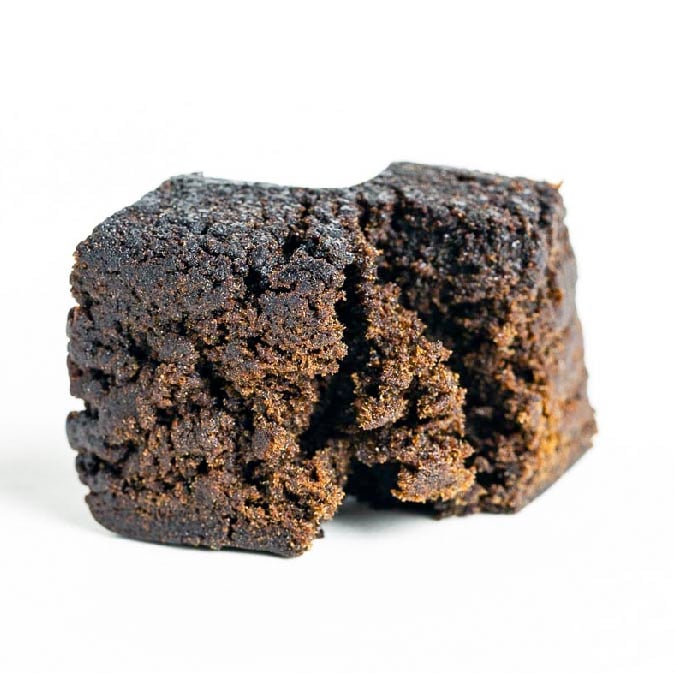
Black Fish Caviar Bubble Hash is best treated as a commercial cannabis concentrate name rather than a universally standardized strain or hash grade.
Current Black Fish flower listings identify Black Fish as a cultivar associated with Pink Guava × Blue Zushi genetics. A current Weedmaps product listing from Teds Budz × Rich the Factor describes Black Fish with Pink Guava and Blue Zushi ancestry and reports approximately 29% THC for one product listing. Other Black Fish menu listings have displayed numbers around 34%, illustrating that potency can differ substantially between batches and retailers. (weedmaps.com)
Those flower figures should not be copied onto Black Fish Caviar Bubble Hash.
Bubble hash is concentrated trichome material. Depending on the source flower, processing, purity and batch, its cannabinoid concentration can differ considerably from ordinary Black Fish buds.
The word caviar is also not a standardized scientific potency grade. Cannabis companies sometimes use terms such as:
- caviar;
- reserve;
- premium;
- gold;
- full melt;
- top shelf;
as commercial descriptions.
The actual chemistry still needs laboratory verification.
For a particular Black Fish Caviar Bubble Hash product, check:
- total THC;
- THCA;
- CBD and minor cannabinoids;
- terpene profile;
- contaminant testing;
- batch number;
- Certificate of Analysis;
- producer and testing-laboratory information.
For more educational information about hash and concentrates, explore the Cannabistopgrade Hash and Concentrates section, read the Cannabistopgrade Cannabis Concentrates and Dabbing Guide, or visit Cannabistopgrade.com for broader cannabis education.
Black Fish Caviar Bubble Hash Quick Facts
| Topic | Educational overview |
|---|---|
| Product | Black Fish Caviar Bubble Hash |
| Black Fish genetics | Commonly listed as Pink Guava × Blue Zushi |
| Product type | Bubble hash / concentrated trichome resin |
| Standardized “caviar” grade? | No |
| Black Fish flower THC | Batch-specific; current listings vary |
| Bubble hash THC | Must be independently tested |
| 40% THC flower | Possible label claims exist, but verification is essential |
| Highest reliable flower result | No universally accepted world record |
| Highest label = highest actual THC? | Not necessarily |
| Strongest strains | Change by batch, producer and testing |
| Better comparison | Reliable COA from a regulated lab |
Potent Weed Strains
The phrase potent weed strains usually refers to cultivars known for relatively high THC concentrations.
Modern high-potency examples frequently appearing in current strain databases include:
- Modified Bananas;
- Hash Burger;
- GMO Cookies;
- Kush Mints;
- Fatso;
- Motorbreath;
- Permanent Marker;
- Bruce Banner;
- Original Glue;
- Cereal Milk.
Leafly’s current high-THC collection lists Modified Bananas at approximately 31% THC, Kush Mints and GMO Cookies around 28%, Motorbreath around 26%, and several other cultivars in the mid-to-high 20% range. (leafly.com)
These figures are useful reference values rather than guaranteed numbers for every harvest.
The same cultivar grown by two producers can test differently.
Strongest Pot Strains
There is no permanent scientific winner for strongest pot strains.
Leafly’s updated 2026 strongest-strains resource highlights cultivars such as:
Permanent Marker
GMO Cookies
Motorbreath
Runtz
Hash Burger
Kush Mints
Cereal Milk
Bruce Banner
Fatso
Original Glue.
Leafly specifically notes that potency depends on genetics, cultivation and other variables and describes its list as a selection of popular strong strains rather than a fixed scientific ranking. (leafly.com)
That distinction is important.
A 31% laboratory-tested batch of one cultivar can contain more THC than a 25% batch of a strain with a stronger reputation.
What Are the Top 10 Strongest Strains?
Instead of presenting a misleading permanent ranking, here are 10 widely recognized high-potency strains appearing in current 2026 strain resources:
| High-potency strain | Current potency context |
|---|---|
| Modified Bananas | Leafly reference around 31% THC |
| Hash Burger | Often high-20s to low-30s |
| GMO Cookies | Leafly reference around 28% |
| Kush Mints | Leafly reference around 28% |
| Fatso | Leafly reference around 28% |
| Motorbreath | Leafly reference around 26% |
| Cereal Milk | Common high-potency cultivar |
| Permanent Marker | Prominent modern high-THC hybrid |
| Bruce Banner | Long-standing high-potency reputation |
| Original Glue | Classic potent hybrid |
These examples should not be interpreted as positions 1 through 10.
Actual rankings would change whenever new laboratory results appeared.
Leafly currently describes Hash Burger, for example, as frequently testing in the high-20% to low-30% THC range, while its strain page displays a reference value around 30%. (leafly.com)
Strongest THC: What Does That Really Mean?
The phrase strongest THC usually means cannabis with the highest measured total THC concentration.
But THC percentage is only useful when the underlying test is accurate.
A laboratory result may include:
- delta-9 THC;
- THCA;
- total THC;
- other cannabinoids.
For dried flower, total THC commonly accounts for the potential conversion of THCA into delta-9 THC.
Different product categories also have very different potency ranges.
Flower vs. Hash vs. Extracts
| Product category | Potency context |
|---|---|
| Cannabis flower | Commonly lower than concentrates |
| Kief | Concentrated trichomes |
| Bubble hash | Concentrated resin/trichomes |
| Rosin | Concentrated extract |
| Budder/wax | Often highly concentrated |
| Shatter | Often highly concentrated |
| Distillate | Can contain very high cannabinoid concentration |
Therefore, a 30% flower and a 60% hash product should not be treated as equivalent product categories.
40 THC Strain: Does 40% THC Flower Really Exist?
The keyword 40 THC strain deserves careful explanation.
There are cannabis flower labels claiming around 40% THC or total cannabinoids, but an extraordinary label does not necessarily establish that ordinary, uninfused flower truly contains 40% THC.
One peer-reviewed study examined 107 commercial cannabis flower samples from California, Colorado and Oregon.
The labels ranged from 12.04% to 58.20% THC.
However, when researchers independently analyzed the flower, the measured range was only 12.95% to 36.55% THC. Only about 30% of the samples were within ±20% of their labeled values. (pubmed.ncbi.nlm.nih.gov)
That is a crucial distinction:
A label claiming 40%, 45% or even 58% THC does not prove the flower actually contains that amount.
What About 40% Infused Flower?
Infused flower is different.
Commercial products exist that combine cannabis flower with concentrates and advertise approximately 40% total cannabinoid content.
For example, Leafly has carried listings for STIIIZY “40’s” infused flower described as testing around 40% total cannabinoids. (leafly.com)
But that does not establish the existence of a naturally grown 40% THC strain.
It is an infused product.
Highest THC Percentage Ever Recorded
The phrase highest THC percentage ever recorded sounds as though cannabis has an official world record.
It does not.
There is no universally recognized scientific organization maintaining a definitive worldwide record for highest THC cannabis flower.
Extreme claims should also be interpreted cautiously because independent studies continue finding potency-label discrepancies.
The study of 107 commercial flower products mentioned above found a maximum independently measured THC concentration of 36.55%, even though some labels claimed up to 58.20%. (pubmed.ncbi.nlm.nih.gov)
That does not prove 36.55% is the highest flower ever produced anywhere.
It simply provides a useful independently measured reference point from that study.
A separate 2025 Scientific Reports study tested 277 cannabis products from 52 Colorado dispensaries.
Researchers found that observed THC was significantly lower than the labeled amount overall. Approximately 56.7% of flower products fell within ±15% of their labels, compared with 96% of concentrate products. (pubmed.ncbi.nlm.nih.gov)
Therefore, extraordinary “world record” THC claims deserve independent verification.
Highest THC Flower
Current legitimate strain databases show many high-potency flowers in the upper-20% range and some reference profiles above 30%.
For example:
Modified Bananas
Leafly currently lists Modified Bananas around 31% THC. (leafly.com)
Hash Burger
Leafly currently lists Hash Burger around 30% THC and says individual products can often test roughly 28–35% THC/THCA. (leafly.com)
GMO Cookies
Current Leafly high-THC data place GMO Cookies around 28% THC. (leafly.com)
Kush Mints
Kush Mints currently appears around 28% THC in Leafly’s high-THC collection. (leafly.com)
Fatso
Fatso is similarly listed around 28% THC in current Leafly reference data. (leafly.com)
None of these numbers should be guaranteed for another producer’s crop.
Best Ganja in the World
The phrase best ganja in the world is subjective rather than scientific.
There is no globally accepted measurement that combines:
- THC;
- terpene profile;
- aroma;
- genetic stability;
- cultivation quality;
- freshness;
- consumer preference;
into one universal “best weed” score.
The highest-THC flower is also not necessarily the highest-quality cannabis.
Someone evaluating cannabis quality may care about:
accurate cannabinoid testing
rich terpene expression
freshness
genetics
absence of contaminants
proper storage
rather than THC alone.
That makes “best ganja” a matter of criteria and personal preference, not a laboratory fact.
Does Highest THC Mean Strongest Experience?
Not perfectly.
THC is a major contributor to cannabis intoxication, but subjective experience also varies with:
- individual tolerance;
- other cannabinoids;
- product format;
- terpene chemistry;
- amount consumed;
- previous cannabis exposure.
Two products both testing at 28% THC do not necessarily feel identical.
This is another reason not to treat THC percentage as the only measure of cannabis quality.
Why THC Testing Can Be Misleading
Cannabis markets have significant economic incentives to report high THC.
A peer-reviewed Colorado study found average observed flower potency was substantially lower than package labels, with about 70% of samples measuring more than 15% below their reported values. (pubmed.ncbi.nlm.nih.gov)
California’s Department of Cannabis Control has also explicitly identified “lab shopping” as a regulatory problem.
In a 2026 rulemaking proposal, the DCC stated that allowing a batch to generate multiple samples could enable businesses to send samples to multiple laboratories and select the most favorable results—such as the highest THC result. The agency says the proposed changes are intended to reduce potency inflation and improve test transparency. (cannabis.ca.gov)
That makes independently regulated testing particularly important for claims such as:
“40% THC”
“strongest flower ever”
“world’s highest THC”
or
“record-breaking strain.”
What Is a Cannabis COA?
A Certificate of Analysis, or COA, reports laboratory results for a cannabis batch.
California’s Department of Cannabis Control requires regulated cannabis batches to undergo safety and cannabinoid testing before retail sale.
Testing can include:
- cannabinoids;
- terpenes;
- pesticides;
- heavy metals;
- residual solvents;
- microbial contaminants;
- mycotoxins;
- foreign material. (cannabis.ca.gov)
For high-THC claims, a batch-specific COA is far more meaningful than promotional language.
Black Fish Potency
Current Black Fish commercial listings demonstrate the importance of batch variation.
One Weedmaps listing for Teds Budz Black Fish identifies the cultivar as Pink Guava × Blue Zushi and displays about 29% THC. (weedmaps.com)
Another retail listing has displayed approximately 34% THC for Black Fish. (weedmaps.com)
Those differing numbers should not be interpreted as a contradiction.
They can represent:
- different batches;
- different test results;
- different harvests;
- different product listings.
More importantly, neither flower number establishes the potency of Black Fish Caviar Bubble Hash.
The hash requires separate testing.
Black Fish Flower vs. Caviar Bubble Hash
| Feature | Black Fish Flower | Black Fish Caviar Bubble Hash |
|---|---|---|
| Common genetics | Pink Guava × Blue Zushi | Depends on source material |
| Product type | Dried flower | Concentrated trichome resin |
| THC | Batch-specific | Batch-specific |
| Current listings | Roughly high-20s to low-30s | Must be tested separately |
| “Caviar” standardized? | N/A | No |
| Potency guaranteed by name? | No | No |
| COA important? | Yes | Yes |
For more hash terminology, visit the Cannabistopgrade Hash and Concentrates section.
Frequently Asked Questions
1. What is Black Fish Caviar Bubble Hash?
Black Fish Caviar Bubble Hash is best treated as a commercial bubble-hash product name. Black Fish flower is currently associated with Pink Guava × Blue Zushi genetics, but the hash product’s THC must be determined from its own laboratory-tested batch. (weedmaps.com)
2. What are the strongest weed strains?
Current high-potency strain resources include Modified Bananas, Hash Burger, GMO Cookies, Kush Mints, Fatso, Motorbreath, Permanent Marker and other cultivars. There is no permanent strongest strain because THC varies from one batch to another. (leafly.com)
3. Is there really a 40% THC strain?
Claims above 40% exist, but independent testing shows that extraordinary flower labels can substantially overstate actual THC. A study of 107 commercial flower samples found labels as high as 58.20%, while the highest independently measured result in that sample was 36.55%. (pubmed.ncbi.nlm.nih.gov)
4. What is the highest THC percentage ever recorded in flower?
There is no universally recognized official world record. Peer-reviewed testing has measured individual commercial flower samples into the mid-30% range, while some product labels claim much higher levels. Extreme claims should be independently verified.
5. Does the highest THC flower mean the best cannabis?
No. THC measures one part of cannabis chemistry. Quality can also involve terpene composition, freshness, genetics, testing accuracy and absence of contaminants.
| Quantity | 1/8 oz(3.5g), 1/4 oz (7g), 1/2 oz (14g), 1 oz (28g) |
|---|
Be the first to review “Black Fish Caviar Bubble Hash for Sale Online”
Related products
Buy THC Extracts Online
Buy THC Extracts Online
Buy THC Extracts Online
Buy THC Extracts Online
Buy THC Extracts Online
Buy THC Extracts Online
Buy Budder Online
Buy THC Extracts Online
Reviews
There are no reviews yet.