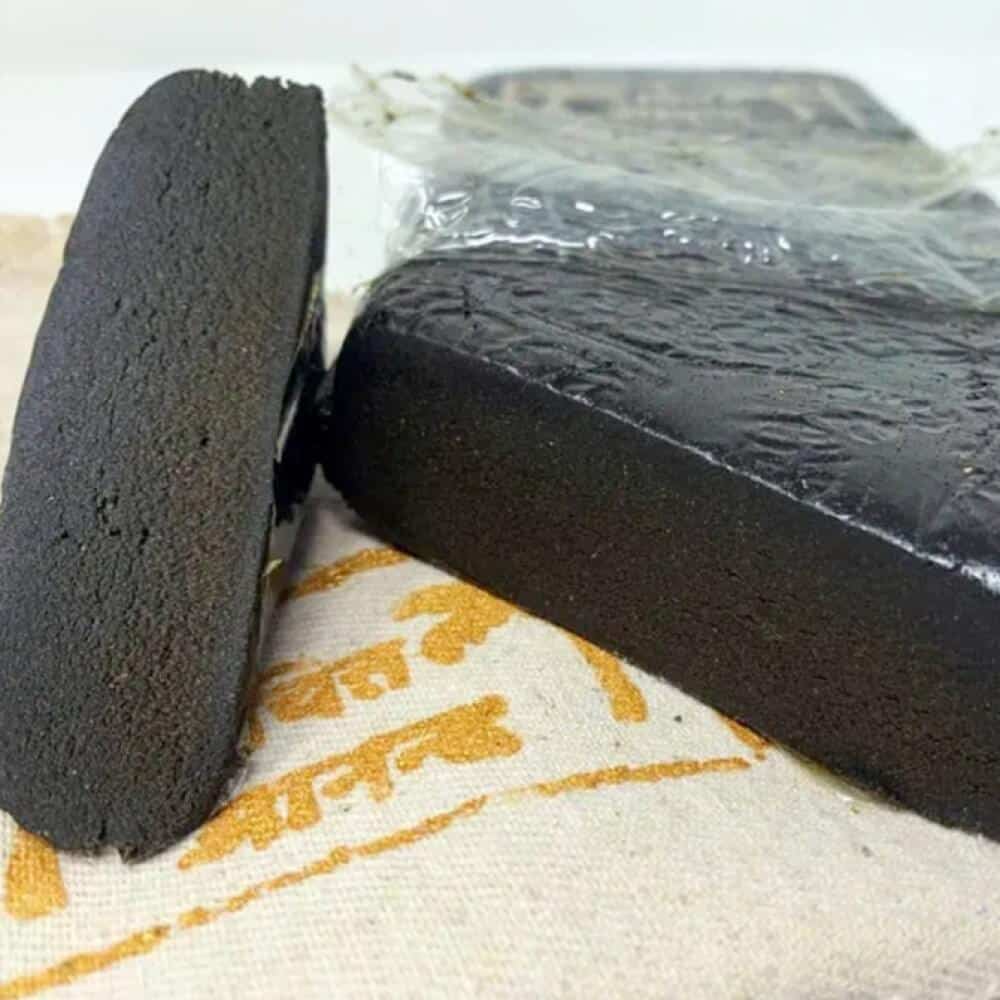
Pakistani Hash generally refers to cannabis resin associated with Pakistan’s long-standing hash and Kush traditions, particularly areas such as Chitral and the broader Hindu Kush region.
It should not be treated as one standardized strain or one fixed-potency product.
Pakistan has several cannabis populations associated with resin production. Pakistani Chitral Kush, for example, is widely described as a resinous indica associated with Chitral and hash production. Leafly-hosted cultivar information describes Chitral as particularly well known for Pakistani hash and highlights the line’s substantial resin production.
The nearby Hindu Kush region spanning parts of Pakistan and Afghanistan is similarly famous for cannabis plants producing thick trichome coatings historically valued by hash makers. Leafly currently describes Hindu Kush as a pure indica from the mountain region between Pakistan and Afghanistan.
A commercial product labeled Pakistani Hash could differ significantly depending on:
- cultivar;
- production region;
- resin quality;
- processing;
- plant material;
- age;
- storage;
- cannabinoid content.
Therefore, Pakistani Hash does not have one universal THC percentage.
For more cannabis-resin education, see the Cannabistopgrade Hash and Concentrates section, read the Cannabistopgrade Cannabis Concentrates and Dabbing Guide, and explore Cannabistopgrade.com for broader cannabis information.
Pakistani Hash Quick Facts
| Topic | Educational overview |
|---|---|
| Product | Pakistani Hash |
| Product type | Cannabis resin / hash |
| Regional association | Pakistan, Chitral, Hindu Kush |
| Standardized THC level | No |
| Common genetic association | Pakistani Kush / Chitral-type indicas |
| Resin production | Historically important |
| Strongest strains | Vary by producer and batch |
| Strongest weed | No single permanent winner |
| High-THC weed | Generally cannabis testing relatively high in THC |
| Strongest product category | Concentrates can exceed ordinary flower potency |
| Best potency evidence | Batch-specific regulated laboratory testing |
What Are the Strongest Strains?
The phrase strongest strains normally refers to cannabis cultivars associated with relatively high THC levels.
However, there is no permanent strongest-strain leaderboard.
The same named strain can produce significantly different cannabinoid concentrations depending on:
- genetics;
- phenotype;
- cultivation;
- environmental conditions;
- harvest timing;
- curing;
- producer;
- laboratory methodology.
Leafly’s updated 2026 high-potency overview includes cultivars such as Permanent Marker, GMO Cookies, Motorbreath, Runtz, Hash Burger, Kush Mints, Cereal Milk, Bruce Banner, Original Glue and Fatso among notable strong cannabis strains.
These should be understood as examples of strains with a reputation for high potency, not as a permanent ranking from strongest to weakest.
Current Leafly strain data also show examples such as Modified Bananas around 31% THC, GMO Cookies and Kush Mints around 28%, and Motorbreath around 26% in their reference profiles.
Actual retail batches can test above or below those figures.
Strong Types of Weed
The phrase strong types of weed can refer either to strains or to product formats.
That distinction is important.
A high-THC flower strain can be strong compared with another flower, while a cannabis concentrate may contain substantially more THC than either flower.
CDC explains that cannabis concentrates can take forms including:
- wax;
- shatter;
- budder;
- live resin;
- oils;
- other extracts.
CDC also notes that these products may deliver very high levels of THC.
General Potency Categories
| Cannabis category | General potency context |
|---|---|
| Lower-THC flower | Relatively less THC |
| High-THC flower | Frequently 20%+ in modern markets |
| Traditional hash | Concentrated resin; highly variable |
| Kief | Concentrated trichomes |
| Rosin | Concentrated cannabis extract |
| Wax/budder | Often high-THC concentrate |
| Shatter | Often high-THC concentrate |
| Live resin | Often high-THC concentrate |
This does not mean every concentrate is stronger than every flower.
Actual potency requires laboratory testing.
What Is the Strongest Weed?
There is no single product that can permanently be called the strongest weed.
A strain may test extremely high in one batch and substantially lower in another.
For example, Leafly’s current high-THC curated strain data include Modified Bananas at approximately 31% THC, while other prominent cultivars such as GMO Cookies, Kush Mints and Fatso are shown around 28% in their reference profiles.
Another Leafly profile currently lists Hash Burger at around 30% THC.
Those numbers are reference data rather than permanent guarantees.
A specific 26% strain batch may be more accurately tested than another package claiming 32%.
The best SEO wording is therefore:
The strongest weed varies by cultivar and batch, and laboratory testing is more reliable than strain reputation alone.
High-THC Weed
High-THC weed generally means cannabis containing comparatively large concentrations of tetrahydrocannabinol.
THC is the main intoxicating cannabinoid in marijuana.
Modern commercial cannabis can contain substantially higher THC concentrations than cannabis from previous decades.
CDC cites research in which the average delta-9 THC concentration of cannabis research samples increased from approximately 9% in 2008 to 17% in 2017. CDC also notes that dispensary products can reach much higher concentrations, with one study of online dispensaries finding an average of 22% THC and a range extending to 45%.
Higher THC does not necessarily mean higher overall product quality.
Quality may also involve:
- cannabinoid accuracy;
- terpene profile;
- freshness;
- contaminants;
- genetics;
- storage;
- producer practices.
What Does High THC Mean for Effects?
CDC states that the greater the concentration of THC in cannabis, the stronger its effects on the brain can be. High-concentration products can have greater intoxicating effects and increase the risk of overconsumption.
Possible effects of excessive THC exposure can include:
- anxiety;
- paranoia;
- confusion;
- impaired coordination;
- memory problems;
- altered perception;
- stronger intoxication.
CDC also notes that highly concentrated THC products may be associated with more severe symptoms of cannabis use disorder.
That is why THC percentage should be treated as product information rather than a quality score.
Strongest Type of Weed
If strongest type of weed means product category rather than strain name, concentrated cannabis products can generally reach higher THC levels than ordinary flower.
Hash itself is a concentrate because it consists largely of concentrated cannabis resin and trichomes.
However, traditional hash should not automatically be assumed to be the highest-potency cannabis category.
Modern extracts such as:
- wax;
- budder;
- shatter;
- live resin;
- high-potency oils;
can contain extremely high cannabinoid concentrations.
CDC specifically warns that dabbing and vaping concentrates may expose people to very high THC levels.
Therefore:
Strong flower < some concentrates is often true,
but
every concentrate > every flower is not a reliable rule.
Testing determines actual potency.
Strains With High THC
Current high-THC cannabis discussions often include several well-known cultivars.
Examples from Leafly’s 2026 potency resources include:
Modified Bananas
Leafly’s current high-THC list shows Modified Bananas at approximately 31% THC in its reference profile.
Hash Burger
The current Leafly Strain of the Year collection lists Hash Burger around 30% THC.
Kush Mints
Current Leafly data show Kush Mints around 28% THC.
GMO Cookies
GMO Cookies is another prominent high-potency hybrid, currently listed around 28% THC in Leafly’s high-THC collection.
Fatso
Fatso currently appears around 28% THC in the same collection.
Motorbreath
Motorbreath appears around 26% THC in current Leafly reference data.
Super Boof
Super Boof currently appears at approximately 26% THC in Leafly’s strain data.
These percentages should not be copied onto every retail product carrying those names.
They are reference profiles.
Strongest Bud
The keyword strongest bud specifically refers to cannabis flower rather than concentrates.
In that context, strains with tested flower percentages approaching or exceeding the upper 20% range are generally considered high potency.
But THC testing alone has limitations.
Factors such as laboratory variability, sampling and differences between individual harvest batches make it difficult to declare one strain permanently the strongest bud.
Modern strain databases show many cultivars in roughly the:
25%–30%+ THC
reference range.
That means a more useful consumer question is:
What did this particular batch test at?
rather than:
What strain name is always strongest?
Pakistani Hash vs. Strong Cannabis Flower
Pakistani Hash and modern high-THC flower belong to different product categories.
| Feature | Pakistani Hash | High-THC Flower |
|---|---|---|
| Material | Concentrated cannabis resin | Dried cannabis buds |
| Regional tradition | Strong Pakistan/Chitral association | Depends on cultivar |
| THC | Highly variable | Batch-specific |
| Resin concentration | High by design | Naturally present on flower |
| One fixed potency? | No | No |
| Strongest automatically? | No | No |
| Testing important? | Yes | Yes |
A high-quality Pakistani-style hash could be potent, but the words Pakistani Hash alone cannot establish its THC percentage.
Pakistani Chitral Kush and Hash Tradition
One of the best-known Pakistani cannabis lines is Pakistani Chitral Kush, often abbreviated PCK.
Leafly’s strain database currently classifies Pakistani Chitral Kush as an indica.
Leafly-hosted cultivar information describes Chitral as well known for Pakistani hash production and highlights the plant’s resinous characteristics.
The nearby Hindu Kush tradition is similarly important. Hindu Kush is currently described as a pure indica originating in the mountain range between Pakistan and Afghanistan, with thick trichome production historically valued for hash making.
This helps explain why Pakistani cannabis is strongly associated with resin concentrates.
Is Pakistani Hash the Strongest Hash?
There is not enough standardization to say that Pakistani hash as a category is objectively stronger than Moroccan, Afghan, Lebanese or modern regulated hash products.
Several variables matter:
- resin concentration;
- cultivar;
- processing;
- purity;
- cannabinoid content;
- age and oxidation;
- contaminants.
Different batches carrying the same regional name can vary substantially.
Therefore, claims such as:
“Pakistani hash is always the strongest hash in the world”
would be difficult to support scientifically.
A better description is:
Pakistan has a major historical association with resin-rich cannabis and hash production, but actual potency depends on the individual product.
Does Stronger Weed Mean Better Weed?
No.
A higher THC percentage does not automatically establish:
- better cannabis;
- better genetics;
- richer terpenes;
- better flavor;
- greater freshness;
- cleaner testing;
- better overall experience.
THC is one measurable cannabinoid.
Cannabis also contains other cannabinoids and many aromatic compounds.
For SEO accuracy, high THC and high quality should be treated as separate concepts.
Why Strain Potency Changes
Even a genetically related cannabis cultivar can produce varying THC levels.
Differences can result from:
Genetics
Different phenotypes can express different cannabinoid levels.
Environment
Growing conditions can affect plant development.
Harvest
Harvest timing influences cannabinoid profiles.
Processing
Hash concentrates resin, changing its chemistry relative to flower.
Storage
Heat, light and time can change cannabis compounds.
Laboratory Testing
Testing methodology and sampling can affect the final reported number.
These variables make permanent “strongest strain” lists inherently imperfect.
Strongest Strains in 2026
Leafly’s updated 2026 strongest-strain coverage highlights several frequently discussed high-potency cultivars, including:
Permanent Marker
GMO Cookies
Motorbreath
Runtz
Hash Burger
Kush Mints
Cereal Milk
Bruce Banner
Fatso
Original Glue.
It also identifies examples by broad strain category, such as Zkittlez and Grease Monkey among strong indica hybrids, Super Lemon Haze and Durban Poison among notable sativas, and Cap Junky, Wedding Cake and Dosidos among high-potency hybrids.
These are useful examples—not permanent laboratory champions.
Pakistani Hash and High-Potency Cannabis Safety
Higher THC concentrations can increase intoxication.
CDC says high-THC cannabis can have stronger effects on the brain and increase the likelihood of consuming too much.
High-potency concentrates are also particularly relevant to cannabis use disorder because repeated exposure to very high THC concentrations may be associated with more severe symptoms.
Therefore, the strongest possible THC percentage should not automatically be viewed as a desirable goal.
Frequently Asked Questions
1. What is Pakistani Hash?
Pakistani Hash is a broad term for cannabis resin associated with Pakistan’s hash traditions. Chitral and the Hindu Kush region are especially associated with resin-rich cannabis genetics and hash production. The name does not specify one THC percentage.
2. What are some strong weed strains?
Current 2026 high-potency strain resources include names such as GMO Cookies, Motorbreath, Kush Mints, Hash Burger, Fatso, Permanent Marker, Bruce Banner and Original Glue. Actual THC varies by batch.
3. What is the strongest weed?
There is no permanent strongest weed. Individual batches can test differently even when they share the same strain name, and concentrates can contain considerably more THC than ordinary flower.
4. What counts as high-THC weed?
There is no universal legal definition of “high THC,” but modern commercial flower frequently exceeds 20% THC, while some strain reference profiles approach or exceed 30%. CDC notes that higher THC concentrations can produce stronger intoxicating effects.
5. Is Pakistani Hash stronger than cannabis bud?
It can be because hash concentrates cannabis resin, but there is no universal rule. A lower-potency hash batch could contain less THC than an unusually high-potency flower batch. Product-specific laboratory results provide the best comparison.
Authoritative Outbound Links
CDC – Cannabis Use Disorder and High-THC Products
| Quantity | 1/8 oz(3.5g), 1/4 oz (7g), 1/2 oz (14g), 1 oz (28g) |
|---|
Be the first to review “Pakistani Hash for Sale Online”
Related products
Buy THC Extracts Online
Buy THC Extracts Online
Buy Budder Online
Buy Budder Online
Buy THC Extracts Online
Buy THC Extracts Online
Buy THC Extracts Online
Buy THC Extracts Online
Reviews
There are no reviews yet.