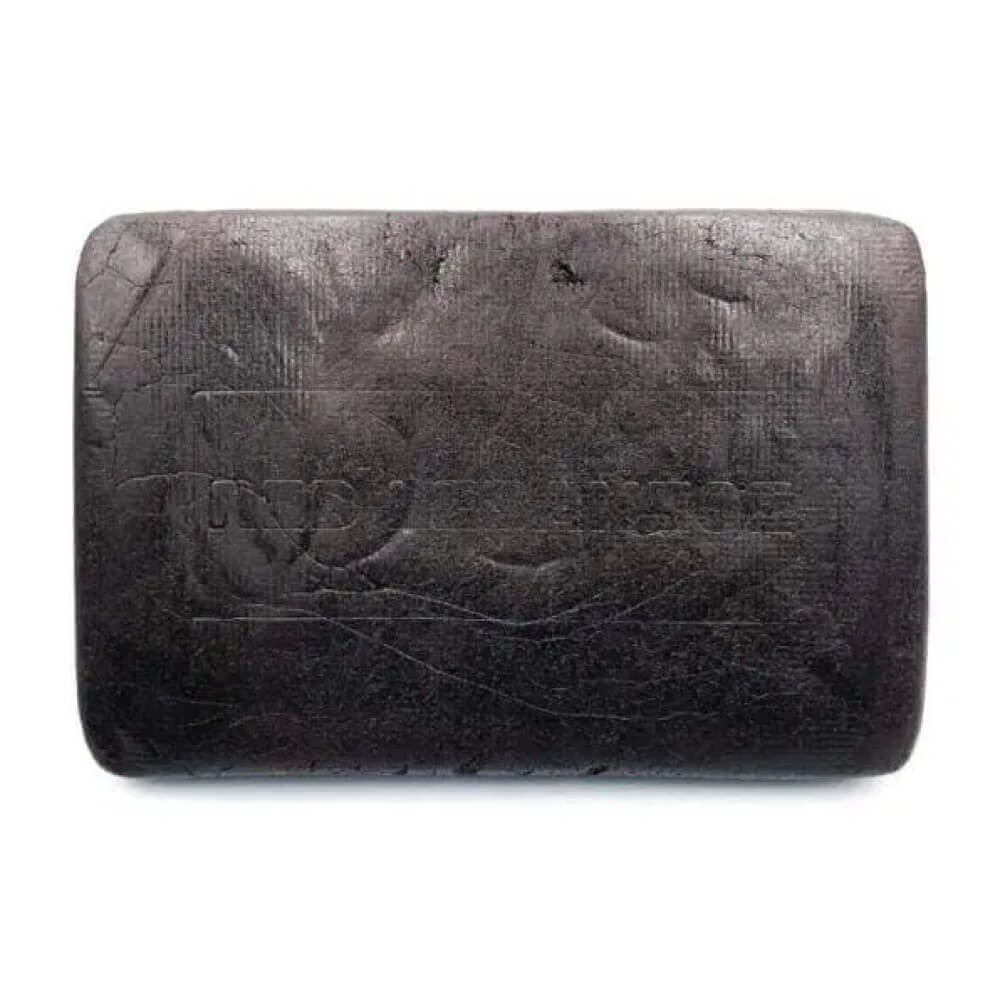
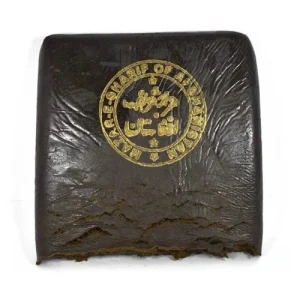
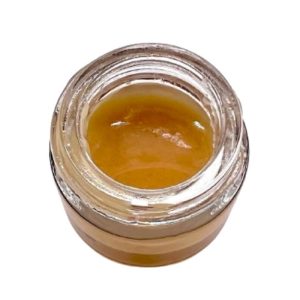
Red Lebanese Hash traditionally refers to cannabis resin associated with Lebanon and the wider Levant region. The reddish-brown color historically associated with some Lebanese hash can result from plant material, resin processing, oxidation, curing, and storage, so color by itself does not establish potency or purity.
There is also a modern cannabis cultivar sold under the Red Lebanese name. Leafly currently describes that cultivar as a hybrid with unknown parentage and gives its reference flower profile at roughly 24.5% THC. That modern strain listing should not be confused with every traditional Lebanese hash product carrying a similar name. Leafly
Most importantly, the flower percentage should never simply be copied onto Red Lebanese Hash. Hash concentrates trichomes and resin, so the actual THC, THCA, CBD, terpene profile, and contaminants need to be established through batch-specific laboratory testing.
For more concentrate education, visit Cannabistopgrade – Hash and Concentrates, read Cannabistopgrade – Cannabis Concentrates and Dabbing, and explore Cannabistopgrade.com.
Red Lebanese Hash Quick Facts
| Topic | Educational overview |
|---|---|
| Product | Red Lebanese Hash |
| Product class | Cannabis resin / hash |
| Historical association | Lebanon and the Levant |
| Fixed THC percentage? | No |
| Modern Red Lebanese flower reference | About 24.5% THC on Leafly |
| CBD lab testing | Measures cannabinoids and may include contaminants |
| Hemp testing | USDA production testing considers total THC, including THCA |
| THCA flower | Cannabis flower containing substantial THCA |
| “Best THCA flower online” | Better judged by legality, COA accuracy, contamination testing, and traceability |
| THCA dispensary | Should comply with applicable state and federal requirements |
CBD Lab Testing: What Does It Actually Measure?
CBD lab testing refers to analytical testing used to determine the chemical composition of a CBD or hemp product.
A cannabinoid laboratory may test for CBD, CBDA, delta-9 THC, THCA, CBG, CBC, and other cannabinoids. Depending on the regulatory program and product, a laboratory may also evaluate pesticides, residual solvents, heavy metals, microorganisms, mycotoxins, moisture, and foreign material.
California’s regulated cannabis program provides a useful example of what comprehensive testing can include. Its Department of Cannabis Control requires batches to be tested for cannabinoids and terpenes as well as pesticides, residual solvents, heavy metals, microbial impurities, mycotoxins, moisture, and foreign material before regulated products are sold. Results are reported through a Certificate of Analysis, or COA. Department of Cannabis Control
This demonstrates an important SEO and consumer-safety point:
CBD percentage alone is not a complete laboratory evaluation.
A product can contain the advertised CBD concentration and still have other quality issues.
Testing for CBD: Understanding a Certificate of Analysis
When people search testing for CBD, they are often trying to determine whether a product contains what the manufacturer claims.
A credible COA should make it possible to match the report to the actual batch. Useful information typically includes a batch or lot number, testing date, CBD and CBDA results, THC and THCA concentrations, and—in stronger testing programs—contaminant results.
FDA has previously found labeling problems with commercially marketed cannabinoid products. Its published cannabis-product testing information includes examples where measured CBD or THC did not always align neatly with marketing expectations. U.S. Food and Drug Administration
Therefore, a statement such as “lab tested” is less useful than knowing:
| Stronger evidence | Weaker evidence |
|---|---|
| Batch-specific COA | Generic “lab tested” badge |
| Named laboratory | Laboratory not identified |
| Recent testing date | Old or undated report |
| CBD, THC and THCA shown | Only CBD shown |
| Batch number matches package | No batch identification |
| Contaminant testing available | Potency only |
| Measurement limits shown | “Zero THC” with no detection limit |
What Is a CBD Lab?
A CBD lab is an analytical laboratory capable of testing cannabidiol-containing products or plant material.
Not every laboratory operates under the same regulatory framework.
USDA’s hemp-production program establishes specific requirements for laboratories performing official THC compliance testing on hemp crops. USDA says testing must use post-decarboxylation or another reliable method that accounts for the potential conversion of THCA into THC, and results must report total THC on a dry-weight basis. AMS
USDA also states that hemp laboratories should use validated methods and evaluate measurement uncertainty. Enforcement of the requirement for all hemp testing laboratories to be DEA-registered has been delayed until December 31, 2026. AMS
That distinction matters because a private laboratory selling optional cannabinoid tests is not necessarily performing the same function as an official compliance laboratory operating under a state, tribal, or USDA hemp program.
Hemp Testing
Hemp testing is especially important because U.S. hemp regulation depends heavily on THC concentration.
For USDA-regulated production, laboratories currently measure total THC, accounting for the potential conversion of THCA to delta-9 THC. USDA provides the common calculation concept as delta-9 THC plus the THC potential represented by THCA. Cannabis that exceeds the acceptable hemp THC level under the production program can be considered non-compliant. AMS
This creates an important distinction between:
delta-9 THC testing
and
total THC testing.
A flower sample might contain less than 0.3% delta-9 THC at one moment while containing considerably more THCA.
For regulated hemp production, USDA testing does not simply ignore that THCA.
Hemp Labs and Measurement Uncertainty
Professional hemp labs do more than produce a THC number.
USDA requires laboratories performing hemp compliance testing to account for measurement uncertainty. This reflects the reality that analytical chemistry does not produce infinitely exact measurements. AMS
For example, a report may show a measured concentration plus or minus a stated uncertainty.
This is important near a regulatory threshold.
Laboratories also need validated methods and appropriate sample preparation. USDA guidelines call for drying and grinding the plant sample so the tested material is reasonably homogeneous before analysis. AMS
So two concepts matter:
accurate chemistry
and
representative sampling.
A perfect laboratory instrument cannot correct for a badly selected sample that does not represent the crop or batch.
What Is THCA Flower?
THCA flower is cannabis flower containing substantial amounts of tetrahydrocannabinolic acid, or THCA.
THCA is the acidic precursor to delta-9 THC. Heating causes decarboxylation, which converts a portion of THCA into delta-9 THC.
That is why total-THC calculations matter.
USDA specifically states that its hemp-production testing must account for the potential conversion of THCA to THC. AMS
This means it is misleading to treat THCA as completely unrelated to THC when discussing cannabis chemistry.
Is THCA Flower the Same as Ordinary Marijuana Flower?
Chemically, high-THCA flower can look and behave much like conventional THC-dominant cannabis because raw cannabis naturally stores a large portion of its potential THC in the acidic THCA form.
The legal classification is more complicated and depends on federal rules, production testing, state law, and the date on which the product is being evaluated.
As of October 3, 2026, USDA hemp-production rules already use total-THC testing that accounts for THCA. AMS
A separate federal statutory change enacted in 2025 is scheduled to take effect on November 12, 2026. Congressional Research Service explains that the amended hemp definition will explicitly use total THC, including THCA, of no more than 0.3% on a dry-weight basis. Congress.gov
CRS also explains that the new definition contains additional restrictions on certain hemp-derived cannabinoid products. Congress.gov
Because state laws may be stricter or structured differently, online availability should never be treated as proof that a THCA product is lawful in every state.
THCA Flower Rules Are Changing in November 2026
This is particularly important for an SEO page published now.
The scheduled November 12, 2026 federal change moves the statutory hemp definition toward a total-THC framework explicitly including THCA. CRS states that products excluded under the new provisions will no longer be treated as hemp under federal law once the new definition takes effect. Congress.gov
That means older articles claiming that high-THCA flower is federally hemp solely because its delta-9 THC concentration is below 0.3% may become seriously outdated.
A good page should therefore include a dated legal note rather than making a permanent statement such as:
“THCA flower is federally legal everywhere.”
That statement is too broad.
Best THCA Flower Online: What Should You Look For?
The phrase best THCA flower online is better handled through objective quality criteria rather than naming a seller.
For educational comparison, stronger indicators include batch-specific COAs, transparent total-THC and THCA results, contamination testing, recent testing dates, clear producer information, traceability, and confirmation that the product is lawful where it is offered.
The largest THCA percentage should not automatically determine the “best” product.
Cannabis quality can also involve freshness, terpene preservation, genetics, storage conditions, and testing accuracy.
Online availability itself does not establish legality or quality.
How to Evaluate THCA Flower Lab Results
A useful THCA flower laboratory report should distinguish between THCA, delta-9 THC, and total THC.
For example, a report containing high THCA but low measured delta-9 THC should not be described as “THC-free.”
That would ignore the potential THC created when THCA decarboxylates.
USDA’s testing methodology is useful educationally because it expressly accounts for this conversion rather than evaluating delta-9 THC in isolation. AMS
What Is a THCA Dispensary?
A THCA dispensary is a retail business marketing cannabis or hemp-derived products containing substantial THCA.
The term itself does not establish that the business is a state-licensed marijuana dispensary.
A retailer could be operating in a regulated adult-use cannabis system, a medical system, or a hemp-product market depending on jurisdiction.
That distinction matters.
In regulated cannabis states, licensed dispensaries commonly operate under testing, tracking, labeling, and product-safety rules that differ from general hemp retailers.
For example, California requires regulated cannabis batches to pass specified laboratory testing before sale. Department of Cannabis Control
Someone researching a THCA dispensary should therefore verify the retailer’s regulatory status rather than relying solely on the word dispensary in its business name.
THCA Dispensary vs. Hemp Shop
| Feature | Licensed cannabis dispensary | Hemp/THCA retailer |
|---|---|---|
| Regulatory system | State cannabis program | Hemp plus applicable state rules |
| THC products | Depends on state program | Depends on hemp/state law |
| THCA products | May be sold as cannabis flower | Legal status varies |
| Required cannabis testing | Usually detailed in regulated markets | Varies significantly |
| Product tracking | Common in regulated markets | Varies |
| “Dispensary” name guarantees license? | No—verify independently | No |
CBD Testing vs. Hemp Testing
These terms overlap but are not identical.
CBD testing asks how much cannabidiol is present and may evaluate related cannabinoids or contaminants.
Hemp compliance testing determines whether cannabis material satisfies applicable hemp-production requirements.
A CBD-rich plant can still fail hemp THC compliance testing.
Likewise, passing a THC compliance test does not automatically prove that a finished product is free of pesticides, heavy metals, microorganisms, or other contaminants.
That is why comprehensive testing is stronger than a one-number potency result.
Red Lebanese Hash and Laboratory Testing
The same principles apply directly to Red Lebanese Hash.
The product name cannot tell you:
- exact THC;
- THCA;
- CBD;
- contaminants;
- origin;
- whether it was produced in Lebanon;
- whether it contains additives.
A modern Leafly listing gives the Red Lebanese flower cultivar a reference profile around 24.5% THC, but that percentage is not a valid potency claim for every Lebanese-style hash product. Leafly
A batch-specific COA is more meaningful.
Red Lebanese Flower vs. Red Lebanese Hash
| Feature | Red Lebanese Flower | Red Lebanese Hash |
|---|---|---|
| Product | Cannabis flower | Concentrated resin |
| Modern reference THC | About 24.5% on Leafly | Must be independently tested |
| THC fixed? | No | No |
| THCA relevant? | Yes | Yes |
| CBD | Batch-specific | Batch-specific |
| Contamination testing useful? | Yes | Yes |
| Geographic origin guaranteed by name? | No | No |
Frequently Asked Questions
1. What is Red Lebanese Hash?
Red Lebanese Hash is a name historically associated with cannabis resin from Lebanon. Modern products carrying the name are not guaranteed to share one THC concentration, cultivar, or geographic origin, so batch-specific laboratory testing is important.
2. What does CBD lab testing show?
CBD lab testing can measure CBD, CBDA, THC, THCA, and other cannabinoids. More comprehensive testing can also examine pesticides, heavy metals, solvents, microorganisms, and other contaminants. Regulated cannabis programs such as California’s require extensive batch testing. Department of Cannabis Control
3. Does hemp testing include THCA?
Yes for USDA production compliance. USDA requires total-THC testing that accounts for the potential conversion of THCA into delta-9 THC. AMS
4. Is the best THCA flower simply the one with the highest THCA percentage?
No. Potency is one measurement. Laboratory accuracy, contamination testing, freshness, genetics, traceability, and applicable law are also important.
5. Is every online THCA dispensary legal everywhere in the United States?
No. State rules differ, and federal hemp rules are scheduled to change on November 12, 2026. Online availability alone does not establish legality in a particular jurisdiction. Congress.gov
| Quantity | 1/8 oz(3.5g), 1/4 oz (7g), 1/2 oz (14g), 1 oz (28g) |
|---|
Be the first to review “Red Lebanese Hash for Sale Online”
Related products
Buy THC Extracts Online
Buy Budder Online
Buy THC Extracts Online
Buy THC Extracts Online
Buy THC Extracts Online
Buy THC Extracts Online
Buy THC Extracts Online
Buy THC Extracts Online
Reviews
There are no reviews yet.