
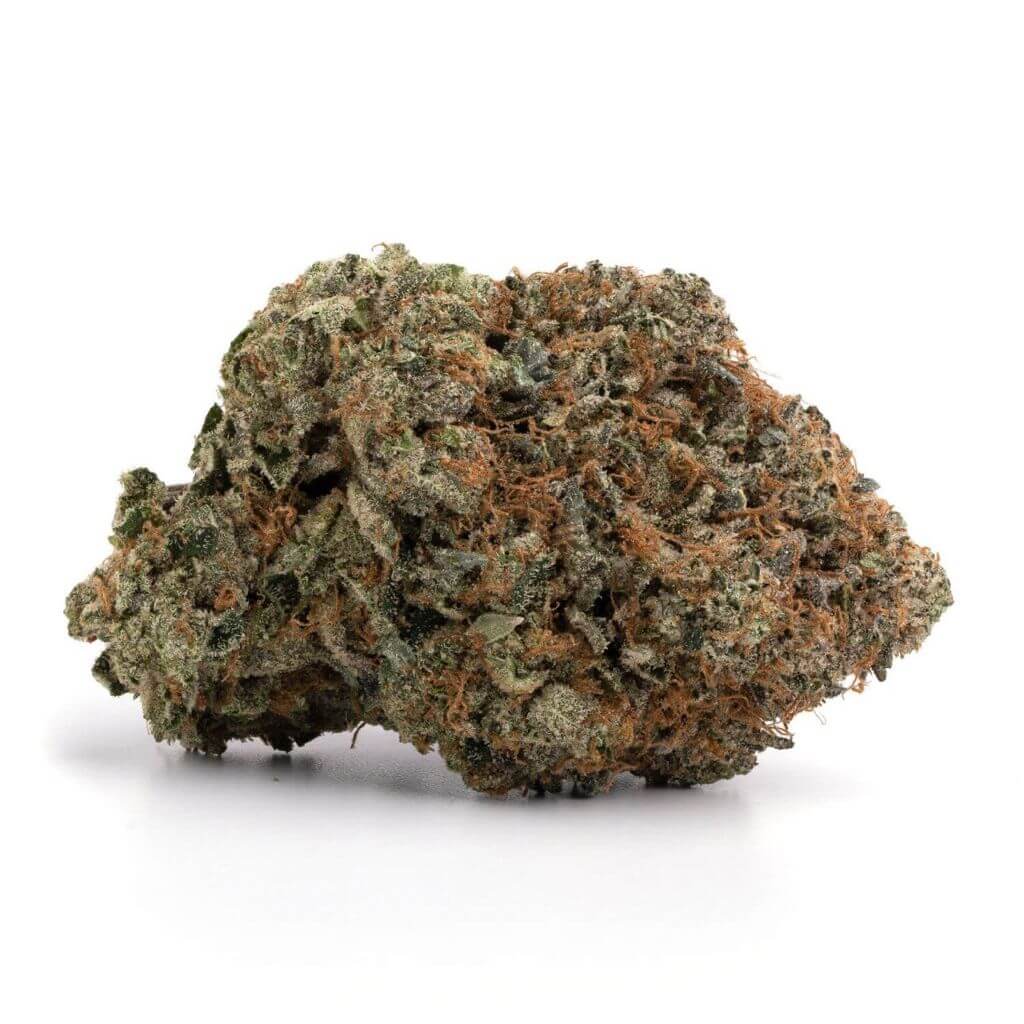
Sour Diesel Strain
Sour Diesel Strain, often shortened to Sour D or Sour Deez, is one of the most recognizable cannabis cultivars in the United States. The strain became famous during the 1990s and remains especially recognizable for its strong diesel-like aroma, chemical notes, skunky characteristics and consumer-reported energetic effects.
Leafly currently describes Sour Diesel as a hybrid associated with Chemdawg and Super Skunk genetics. Its database lists approximately 19% THC as a general strain figure and identifies caryophyllene as the dominant terpene, followed by myrcene and limonene. Individual products can differ substantially, so those figures should not be treated as guaranteed potency for every product carrying the Sour Diesel name.
Explore the Leafly Sour Diesel Strain profile
Sour Diesel also provides a useful starting point for understanding how dramatically U.S. cannabis laws differ by state.
People researching the cultivar frequently ask questions such as is pot legal in Kansas, is THC legal in Kansas, when will weed be legal in Kansas, is medical weed legal in Kentucky, and is marijuana legal in Kentucky.
As of September 24, 2026, Kansas has not established broad recreational marijuana legalization or a comprehensive medical-marijuana dispensary program. Kentucky, by contrast, legalized qualifying medical cannabis effective January 1, 2025, while cannabis use outside that medical program remains illegal.
For more U.S. cannabis education, explore CannabisTopGrade.
What Is Sour Diesel Strain?
Sour Diesel is a legendary cannabis cultivar famous for its intense fuel-like aroma.
Leafly describes the modern strain as a hybrid created from Chemdawg and Super Skunk. Its most frequently reported consumer experiences include feeling energetic, uplifted and talkative, while dry mouth, dry eyes and paranoia appear among reported unwanted experiences.
These descriptions come largely from cannabis consumers rather than controlled clinical trials.
That distinction matters.
A person’s reaction to THC-containing cannabis can depend on potency, amount consumed, tolerance, individual biology and use of other substances.
Sour Diesel should therefore not be promoted as a guaranteed treatment for depression, stress, pain or another health condition merely because individual users report particular experiences.
The Sour Diesel Genetics
Sour Diesel has a somewhat complicated history.
Leafly’s current strain listing connects Sour Diesel with Chemdawg and Super Skunk, while historical discussion surrounding the strain has noted disagreement over its exact origin. Chemical analysis has also found that different products marketed under the Sour Diesel name do not always represent exactly the same chemotype.
This is common in cannabis.
Strain naming developed before widespread standardized cannabis testing, and cultivars with the same name may differ genetically or chemically depending on the producer.
For SEO content and consumer research, it is therefore better to describe Sour Diesel’s commonly accepted characteristics while acknowledging that individual products vary.
Sour Diesel THC and Terpenes
Leafly currently lists Sour Diesel at approximately 19% THC and identifies three prominent terpenes:
Caryophyllene
Myrcene
Limonene
Caryophyllene commonly contributes spicy and peppery aromas.
Myrcene is associated with earthy and herbal characteristics.
Limonene frequently contributes citrus-like aromas.
Together with other volatile compounds, these terpenes contribute to Sour Diesel’s recognizable fuel, chemical and skunk profile.
The actual THC percentage of a specific Sour Diesel product may be considerably different from 19%. Batch-specific testing is more useful than a generic strain average.
For more educational strain information, visit CannabisTopGrade cannabis strain guides.
Kansas Cannabis Legalization in 2026
Kansas cannabis legalization has not produced a general adult-use marijuana system as of September 24, 2026.
The Kansas lawmakers have considered multiple cannabis measures during the 2025–2026 legislative period, including proposals addressing adult-use cannabis, medical cannabis and marijuana possession. The Kansas Legislature’s current statute pages identify measures such as HB 2405, HB 2678, HB 2679, SB 294 and SB 295 as introduced proposals affecting existing marijuana laws.
An introduced bill is not the same thing as enacted legalization.
Current Kansas law continues to make unauthorized possession of marijuana and controlled THC unlawful. A first marijuana or THC possession offense under the cited Kansas statute is generally classified as a class B nonperson misdemeanor, with more serious classifications possible for repeat offenses.
Therefore, readers should not interpret cannabis-legislation headlines as proof that recreational marijuana has become legal in Kansas.
Is Marijuanas Legalized in Kansas?
For the search phrase is marijuanas legalized in Kansas, the practical answer is:
No, Kansas has not broadly legalized marijuana for recreational adult use.
Kansas Statute 21-5706 continues to prohibit unauthorized possession of marijuana and tetrahydrocannabinols. The statute specifically establishes criminal classifications for marijuana and THC possession.
Kansas has considered legalization proposals, but proposed legislation does not change the law unless it completes the legislative process and takes effect.
A consumer should therefore rely on current statutes rather than social-media posts announcing that a cannabis bill has merely been introduced.
Is Pot Legal in Kansas?
No. Recreational pot is not generally legal in Kansas.
The phrase is pot legal in Kansas refers to essentially the same issue as marijuana legalization because “pot” is informal terminology for marijuana.
Unauthorized possession can result in criminal penalties.
Kansas also prohibits unlawful cultivation and distribution of controlled substances, including marijuana, under separate provisions of the criminal code.
This means a strain such as Sour Diesel being legally available in Colorado or another adult-use jurisdiction does not make possession of that marijuana legal after entering Kansas.
Is THC Legal in Kansas?
The answer to is THC legal in Kansas requires an important distinction.
High-THC marijuana products are not generally legal for recreational possession in Kansas.
Kansas law specifically treats tetrahydrocannabinols as controlled substances outside applicable exemptions.
However, Kansas separately recognizes qualifying industrial hemp.
Kansas law defines industrial hemp as Cannabis sativa containing no more than 0.3% delta-9 THC on a dry-weight basis, and final qualifying hemp products may also contain no more than the statutory THC concentration.
Read the Kansas Commercial Industrial Hemp Act
Even this does not mean every intoxicating product advertised as hemp-derived THC is automatically legal in Kansas.
Kansas law restricts certain hemp products and methods of sale or distribution. Consumers should therefore avoid reducing the law to “THC is legal” or “THC is illegal” without considering the specific product and its legal classification.
Is Medicinal Weed Legal in Kansas?
Kansas does not currently operate a comprehensive medical-marijuana program comparable to Kentucky’s new system or mature programs in other states.
Current Kansas law does contain a narrow affirmative defense involving certain cannabidiol treatment preparations for people with qualifying debilitating medical conditions under specified circumstances. That limited CBD-related protection should not be confused with a full medical-marijuana dispensary program.
Multiple comprehensive medical-cannabis proposals were introduced during the 2025–2026 legislative session, including SB 294 and HB 2678, but their appearance on legislative pages does not itself establish that Kansas has enacted a broad medical cannabis market.
Therefore, the safest direct answer to is medicinal weed legal in Kansas is:
Kansas has limited cannabinoid-related exceptions, but it has not broadly legalized conventional medical marijuana through a statewide dispensary-based program as of September 24, 2026.
When Will Weed Be Legal in Kansas?
There is no confirmed future date when recreational weed will become legal in Kansas.
That is the accurate answer to when will weed be legal in Kansas as of September 24, 2026.
Lawmakers can introduce bills proposing adult-use legalization, medical cannabis or decriminalization, but no one can responsibly convert proposed legislation into a guaranteed legalization date.
Kansas’s current legislative materials show that several cannabis proposals have been introduced, including adult-use and medical-cannabis measures.
Whether future legislation becomes law depends on legislative votes, amendments, executive action and the effective dates contained in any successfully enacted measure.
SEO articles should therefore avoid claims such as “Kansas marijuana will definitely be legal next year” unless an enacted law actually establishes that date.
Kentucky Cannabis Law Is Different From Kansas
Kentucky’s position is notably different.
Kentucky enacted Senate Bill 47 in 2023, creating a legal medical-cannabis program that became effective January 1, 2025.
The Kentucky Office of Medical Cannabis explicitly states that cannabis consumption outside the medical cannabis program remains illegal in the Commonwealth.
Visit the official Kentucky Medical Cannabis Program
This creates a relatively simple distinction:
Kansas: no broad recreational market and no comparable comprehensive medical-marijuana dispensary program.
Kentucky: medical cannabis legal for qualifying registered patients, but general recreational marijuana remains illegal.
Is Medical Weed Legal in Kentucky?
Yes. Medical weed is legal in Kentucky for qualifying patients under the state’s regulated Medical Cannabis Program.
Kentucky’s medical cannabis law became effective January 1, 2025.
To qualify for a medical cannabis card, Kentucky’s current program requires an eligible applicant to obtain written certification from an authorized practitioner and have a qualifying medical condition.
The state’s current qualifying-condition information includes conditions such as:
Cancer.
Chronic, severe, intractable or debilitating pain.
Epilepsy and certain seizure disorders.
Multiple sclerosis, muscle spasms or spasticity.
Qualifying chronic nausea or cyclical vomiting syndrome.
Post-traumatic stress disorder.
Additional eligibility is governed by Kentucky’s statutes, regulations and current executive orders.
Therefore, is medical weed legal in Kentucky has a clear yes answer—but only through Kentucky’s regulated medical program.
Is Marijuanas Legalized in KY?
The phrase is marijuanas legalized in KY needs to distinguish medical from recreational use.
Medical cannabis is legalized in Kentucky. Recreational marijuana is not.
Kentucky’s official program states that Senate Bill 47 legalized medical cannabis beginning January 1, 2025 and that cannabis use outside the medical program remains illegal.
That means Kentucky should not be described broadly as a recreationally legal state.
Someone without qualifying medical authorization does not receive general adult-use possession rights merely because the state has medical dispensaries.
Is Marijuana Legal in Kentucky?
Marijuana is legal in Kentucky in the context of the regulated medical cannabis program, but general adult-use marijuana remains illegal.
This distinction is particularly important for visitors.
A person should not assume that marijuana purchased legally in another state can automatically be brought into Kentucky.
Kentucky made another important change in 2026: beginning July 1, 2026, the previous conditional-pardon protection associated with certain qualifying out-of-state medical cannabis purchases was rescinded. Kentucky medical cannabis cardholders purchasing cannabis from an out-of-state dispensary can no longer rely on that prior conditional pardon for marijuana possession.
Patients should therefore use Kentucky’s current regulated system rather than relying on older articles describing the temporary out-of-state policy.
Is Cannabis Legal in Kentucky?
Yes for qualifying medical use; no for general recreational use.
That is the clearest answer to is cannabis legal in Kentucky.
Kentucky has licensed cultivators, processors and dispensaries under its medical program. The state’s Office of Medical Cannabis says 48 dispensary licenses have been issued, with information about licensed dispensaries provided as locations open.
Medical legalization does not authorize home growing.
Kentucky’s official medical-cannabis FAQ explicitly states that individuals are not allowed to grow their own medical cannabis.
Is Pot Legal in Kentucky?
Recreational pot is not legal in Kentucky.
A qualifying registered medical patient may legally possess and use authorized medical cannabis in accordance with Kentucky’s program.
Someone asking is pot legal in Kentucky should therefore not interpret the state’s medical legalization as unrestricted cannabis legalization.
Kentucky’s medical program regulates patients, caregivers, practitioners, licensed cannabis businesses, product standards and legal access. Cannabis outside that system remains illegal under current state policy.
Kansas vs Kentucky Cannabis Laws
Kansas and Kentucky illustrate why cannabis law articles need to identify the exact state.
In Kansas, recreational marijuana remains illegal and the state has not enacted a comprehensive conventional medical marijuana system. Marijuana and unauthorized THC possession remain punishable under existing controlled-substance law.
In Kentucky, medical cannabis became legal January 1, 2025 for qualifying registered patients, while recreational use remains illegal.
Kansas recognizes compliant industrial hemp under its separate hemp statutes, including the 0.3% delta-9 THC threshold.
Kentucky’s medical program permits qualifying cannabis products under a state-controlled framework but does not establish general adult-use legalization.
That distinction should be clear whenever discussing Sour Diesel or another high-THC marijuana cultivar.
Can Sour Diesel Be Legally Possessed in Kansas?
The fact that Sour Diesel is nationally recognized does not create a Kansas exemption.
Traditional Sour Diesel marijuana is commonly associated with THC levels far above Kansas’s industrial-hemp threshold. Leafly currently lists approximately 19% THC as a general strain reference.
Kansas’s hemp definition, by comparison, uses a maximum of 0.3% delta-9 THC on a dry-weight basis.
Traditional high-THC Sour Diesel flower therefore should not be confused with legally defined industrial hemp merely because both originate from Cannabis sativa plants.
Can Kentucky Medical Patients Access Sour Diesel?
A Kentucky medical cannabis card does not guarantee that a particular strain such as Sour Diesel will be stocked at a licensed dispensary.
Availability depends on products produced and distributed through Kentucky’s regulated medical cannabis system.
Patients should evaluate the actual product label, cannabinoid concentrations, testing information and authorized product form rather than expecting a strain name to match national strain-directory averages.
Kentucky’s Office of Medical Cannabis maintains the authoritative information about licensed businesses and program rules.
For additional legal and strain research, visit CannabisTopGrade U.S. cannabis resources.
Frequently Asked Questions
1. What is Sour Diesel Strain?
Sour Diesel, also called Sour D or Sour Deez, is a famous cannabis hybrid associated with Chemdawg and Super Skunk genetics. Leafly currently lists approximately 19% THC and identifies caryophyllene, myrcene and limonene as its leading terpenes.
2. Is marijuana legalized in Kansas?
No. Kansas has not broadly legalized recreational marijuana as of September 24, 2026. Unauthorized marijuana and THC possession remain prohibited under Kansas law, although separate rules and narrow exceptions apply to qualifying hemp and certain cannabidiol preparations.
3. When will weed be legal in Kansas?
There is no confirmed legalization date. Kansas lawmakers have introduced adult-use, medical-cannabis and decriminalization proposals, but an introduced bill is not the same as an enacted law. Any future legalization date would depend on legislation actually becoming law.
4. Is medical weed legal in Kentucky?
Yes. Kentucky’s regulated medical cannabis program became effective January 1, 2025. Patients must meet eligibility requirements and participate through the state’s regulated system. Recreational cannabis remains illegal.
5. Is recreational pot legal in Kentucky?
No. Kentucky legalized qualifying medical cannabis, not general adult-use marijuana. The state’s official program explicitly states that cannabis consumption outside the medical cannabis program remains illegal.
Final Thoughts on Sour Diesel Strain, Kansas and Kentucky Cannabis Laws
Sour Diesel Strain remains one of the most recognizable cannabis names in the United States. Its Chemdawg and Super Skunk-associated genetics, unmistakable diesel aroma and caryophyllene-dominant profile have helped the cultivar maintain its reputation for decades.
Regarding Kansas cannabis legalization, the key fact is that Kansas has not established broad recreational legalization as of September 24, 2026.
For is marijuanas legalized in Kansas, is pot legal in Kansas, and is medicinal weed legal in Kansas, traditional recreational marijuana remains illegal and Kansas has not implemented a comprehensive conventional medical-marijuana dispensary market.
For is THC legal in Kansas, the answer depends on the product. Unauthorized marijuana-derived THC remains controlled, while qualifying industrial hemp is separately defined around a maximum 0.3% delta-9 THC threshold and remains subject to additional Kansas restrictions.
For when will weed be legal in Kansas, no reliable date can currently be given because proposals are not the same as enacted legislation.
Kentucky is different.
For is medical weed legal in Kentucky, the answer is yes through the Medical Cannabis Program that became effective January 1, 2025.
For is marijuanas legalized in KY, is marijuana legal in Kentucky, is cannabis legal in Kentucky, and is pot legal in Kentucky, medical cannabis is lawful for qualifying registered patients while general recreational marijuana remains illegal.
Readers should continue checking official Kansas and Kentucky government sources because cannabis laws can change rapidly.
| weight | Oz, QP, HP, P |
|---|
Be the first to review “Sour Diesel Strain”
Related products
Hybrid cannabis strains
Sativa Strains
Sativa Strains
Sativa Strains
Sativa Strains
Sativa Strains
Sativa Strains
Sativa Strains
Reviews
There are no reviews yet.