
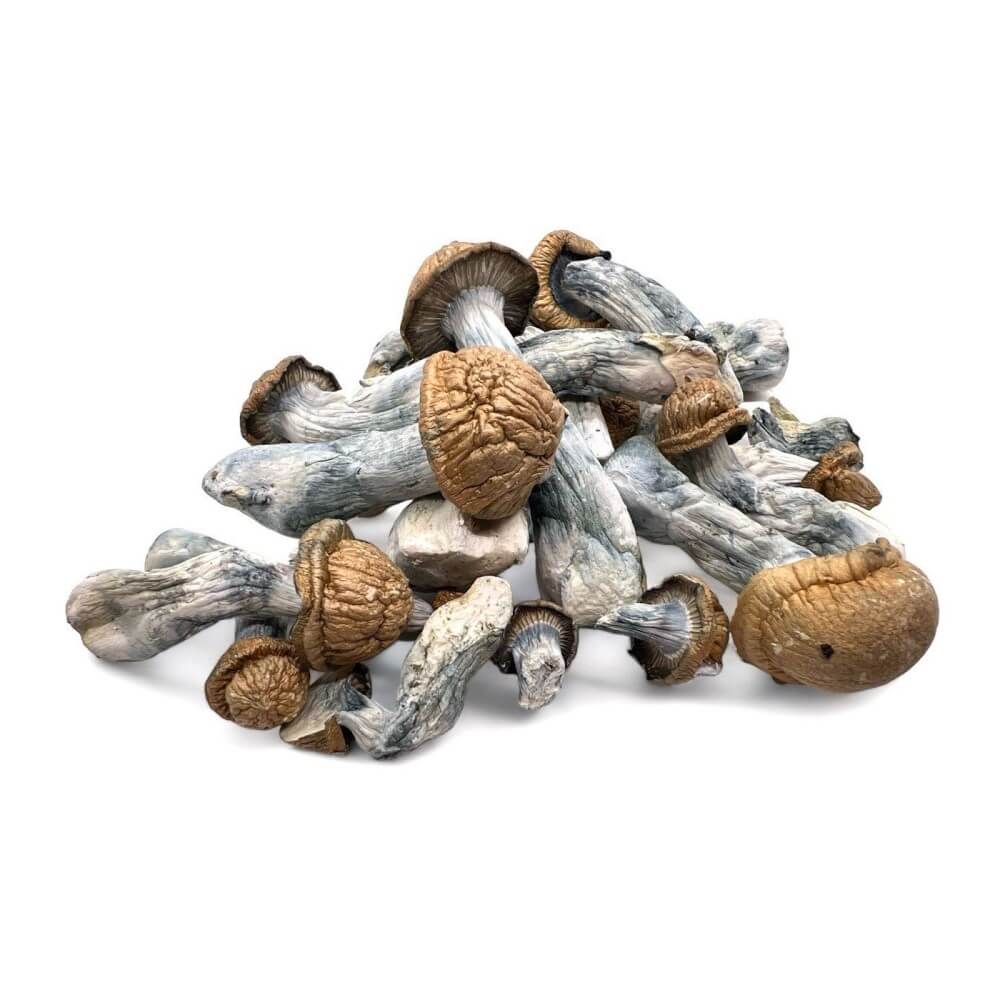

Malabar Mushrooms
Malabar Mushrooms, often called Malabar Coast mushrooms, is an informal cultivation name associated with Psilocybe cubensis. Community records generally connect the cultivar to specimens collected around India’s Malabar Coast in southwestern India. An older Shroomery cultivation archive, for example, describes Malabar as a P. cubensis line originating from specimens collected on the Malabar Coast.
That history should be treated as cultivation-community documentation rather than a formally recognized botanical variety. The scientifically recognized organism is Psilocybe cubensis. NCBI records Psilocybe cubensis (Earle) Singer as a species, while names such as Malabar refer to informal cultivated lines beneath the species level.
This distinction becomes important when online searches for Malabar Mushrooms overlap with terms such as brain mushrooms, best mushroom for brain health, little brown mushrooms, brown mushroom id, and large dark brown mushroom.
There are actually several completely different subjects hidden inside those searches.
Malabar refers to a psychedelic P. cubensis cultivation line.
Lion’s mane is a nonpsychedelic edible mushroom studied for possible cognitive effects.
Cremini and portobello are ordinary brown culinary mushrooms.
“Little brown mushrooms,” meanwhile, is a mycological catchall for hundreds of difficult-to-identify wild mushrooms—some of which can be dangerously poisonous.
Those categories should never be treated as interchangeable.
For broader educational material on mushrooms and psychoactive substances, explore CannabisTopGrade educational resources.
What Are Malabar Mushrooms?
Malabar is generally described within mushroom-cultivation communities as a heritage Psilocybe cubensis line associated with India’s Malabar Coast.
Community descriptions commonly mention comparatively large fruiting bodies and brown-to-golden caps, but such descriptions do not establish a unique scientific species.
The formal species remains:
Psilocybe cubensis
NCBI lists Psilocybe cubensis as a recognized species of basidiomycete fungus and records its older scientific name, Stropharia cubensis, as the basionym.
Therefore, Malabar should not be described as:
A separate species.
A standardized pharmaceutical product.
A guaranteed potency.
A clinically proven brain supplement.
A unique nutritional mushroom.
A treatment for cognitive decline.
The word Malabar primarily refers to an informal cultivation lineage.
Malabar Mushroom Potency and Naming
Mushroom cultivar names do not function like standardized drug labels.
One online analytical database currently lists a Malabar Coast entry with measured tryptamine data, but it simultaneously states that no active matching batch certificates of analysis are available for that variety.
That illustrates an important limitation.
Even when a database gives a number, one cannot assume that every mushroom sold under the Malabar name has the same:
Psilocybin concentration.
Psilocin concentration.
Chemical profile.
Intensity.
Duration.
Psychological effect.
Scientific research has also found substantial taxonomic and chemical inconsistency among Psilocybe specimens and highlighted problems with misidentification and mislabeled sequence data.
Cultivar names therefore provide much less chemical certainty than pharmaceutical labels.
Brain Mushrooms: What Does the Term Mean?
The phrase brain mushrooms is not a formal scientific category.
It is commonly used in wellness marketing for mushrooms claimed to support:
Memory.
Focus.
Learning.
Mood.
Nerve health.
Cognitive aging.
The mushroom most commonly associated with these claims is lion’s mane, scientifically known as Hericium erinaceus.
Other mushrooms investigated for neuroprotective compounds include:
Reishi.
Maitake.
Oyster mushrooms.
Certain Sarcodon species.
Other culinary and medicinal fungi.
A 2025 scientific review described numerous mushroom compounds with potential neuroprotective activity involving oxidative stress, inflammation, mitochondrial function and other pathways relevant to neurological disease.
However, much of this evidence remains laboratory or animal research.
The phrase “brain mushroom” should therefore not be interpreted as “proven medicine for the brain.”
Best Mushroom for Brain Health
For best mushroom for brain health, there is no scientifically established universal winner.
Among supplements, lion’s mane has one of the most developed human research records.
A 2024 systematic review evaluated 34 human studies of mushroom consumption, cognition and mood.
Of those:
24 were observational studies.
10 were intervention studies.
Lion’s mane was the mushroom most frequently investigated in intervention research.
The review found potentially favorable associations between mushroom consumption and cognition or mood, but intervention results were mixed, and the authors called for larger and better-designed trials.
That makes lion’s mane an interesting research candidate—not a guaranteed cognitive enhancer.
Lion’s Mane and Cognitive Function
Lion’s mane receives scientific attention because its fruiting bodies and mycelium contain several bioactive compounds.
Researchers are particularly interested in:
Hericenones.
Erinacines.
Polysaccharides.
Phenolic compounds.
Certain erinacines have demonstrated neurotrophic and neurogenic activity in experimental research. A 2026 review described erinacines as promising lead compounds for future therapeutic development while emphasizing their largely experimental status.
A 2025 systematic review of lion’s mane included randomized trials, pilot clinical studies and laboratory evidence and reported possible effects on cognitive function and mood. The overall clinical evidence base, however, remains relatively small.
This is why saying “lion’s mane may support cognitive research” is more accurate than saying “lion’s mane prevents dementia.”
Lion’s Mane in Healthy Young Adults
Lion’s mane has also been studied in younger adults.
A double-blind placebo-controlled pilot study involved 41 healthy adults aged 18–45.
Researchers investigated acute and 28-day lion’s mane supplementation.
One cognitive task improved shortly after a dose, and some stress-related measures also showed potentially favorable changes, but the authors characterized the project as a pilot study.
Small studies can generate hypotheses.
They do not establish that lion’s mane universally improves intelligence, memory or concentration.
Are Mushrooms Good for Your Brain?
For are mushrooms good for your brain, the current evidence is interesting but not definitive.
A 2024 review found observational associations between regular mushroom consumption and better cognitive or mood outcomes, while intervention studies were less consistent.
Another large observational analysis from the EPIC-Norfolk cohort reported that mushroom consumers showed better cognitive performance across several domains, with stronger scores among people consuming mushrooms at least weekly.
But observational research cannot establish causation.
People who eat mushrooms regularly may also differ in:
Overall diet.
Education.
Exercise.
Smoking.
Alcohol use.
Income.
Healthcare.
Other lifestyle factors.
Researchers attempt to adjust statistically for such differences, but they cannot eliminate every possible confounder.
What Do Controlled Mushroom Studies Show?
Controlled dietary research provides a useful counterbalance.
A randomized controlled feeding trial involving 60 middle-aged and older adults compared a Mediterranean-style diet containing white button and oyster mushrooms with a similar diet without mushrooms.
Both groups experienced certain improvements, but adding mushrooms did not produce consistent additional improvements across most brain-health outcomes.
Another study published in 2025 examined UV-exposed cremini mushrooms in 41 adults.
Participants consumed two servings daily for six weeks.
Researchers found no significant mushroom-specific improvement in the investigated brain-health or cognitive outcomes compared with control.
These results show why health claims should not rely only on observational associations.
Culinary Mushrooms and Brain Health
Ordinary edible mushrooms may still contribute positively to overall nutrition.
Mushrooms can supply varying amounts of:
B vitamins.
Copper.
Selenium.
Potassium.
Dietary fiber.
Ergothioneine.
Other fungal bioactive compounds.
These nutrients fit within healthy dietary patterns that support cardiovascular and neurological health.
But “nutritious food” and “proven cognitive enhancer” are not the same claim.
Current evidence supports eating culinary mushrooms as part of a varied diet much more strongly than it supports treating them as medication for dementia or cognitive impairment.
Are Malabar Mushrooms Good for Your Brain?
There is no credible evidence establishing Malabar Mushrooms specifically as a brain-health treatment.
This distinction is crucial.
Research involving:
Lion’s mane,
white button mushrooms,
oyster mushrooms,
cremini,
or isolated mushroom compounds
cannot automatically be applied to Malabar Psilocybe cubensis.
Similarly, clinical research involving standardized psilocybin does not establish Malabar mushrooms as a cognitive supplement.
These are separate research questions.
Claims such as:
“Malabar repairs the brain.”
“Malabar improves memory.”
or
“Malabar is the best brain mushroom”
are not supported by current evidence.
For more evidence-focused health education, visit CannabisTopGrade health and research resources.
Brown Mushrooms
The broad phrase brown mushrooms can refer to hundreds or even thousands of different fungi.
In a grocery store, a brown mushroom may simply be a cremini or portobello.
In a lawn or forest, however, a small brown mushroom could belong to many unrelated genera.
This makes color alone almost useless for establishing whether a wild mushroom is:
Edible.
Poisonous.
Psychoactive.
Harmless.
Medicinal.
Deadly.
The Missouri Department of Conservation describes “little brown mushrooms,” or LBMs, as a catchall covering hundreds of confusingly similar mushrooms. Even experienced mushroom identifiers can find them difficult to distinguish.
Little Brown Mushrooms
Little brown mushrooms is an informal mycological phrase rather than a species name.
It generally describes small-to-medium mushrooms with:
Brown or tan caps.
Typical mushroom-shaped stalks and caps.
Relatively inconspicuous features.
Numerous possible species.
The problem is that this appearance occurs across many unrelated fungi.
Missouri’s conservation agency warns that the LBM category includes mushrooms that are:
Harmless.
Mildly poisonous.
Hallucinogenic.
Severely poisonous.
Potentially deadly.
For this reason, an unknown LBM should never be assumed edible based on a photograph or cap color.
Small Brown Mushrooms
For small brown mushrooms, the same rule applies.
A small brown cap is not enough to identify a species.
Factors professional mycologists may examine include:
Overall morphology.
Habitat.
Substrate.
Gill attachment.
Spore characteristics.
Odor.
Stem structures.
Microscopic characteristics.
DNA evidence in difficult cases.
But even with several features available, some groups remain challenging.
Research on the genus Galerina found that its roughly 300 species are notoriously difficult to distinguish morphologically, and some contain potentially deadly amatoxins.
This is one reason wild brown mushrooms are a poor category for casual food identification.
Little Brown Mushroom Identification
For little brown mushroom identification, there is no reliable visual shortcut that can guarantee safety.
The Missouri Department of Conservation recommends avoiding LBMs for eating because so many species resemble one another.
The University of Connecticut likewise warns that there is no simple test that can separate dangerous wild mushrooms from edible ones and specifically advises avoiding little brown mushrooms unless their identity is certain.
An identification based only on:
“brown cap,”
“white stem,”
“grew in my yard,”
or
“looks like something online”
is not enough to determine edibility.
Why Brown Mushroom Identification Can Be Dangerous
One major concern is Galerina.
Certain Galerina species contain amatoxins, the same toxin family associated with deadly Amanita poisonings.
The Missouri Department of Conservation describes deadly galerina as a common LBM and warns that poisoning can eventually produce liver or kidney dysfunction and death.
Michigan State University Extension also warns that deadly Galerina mushrooms have been mistaken for psilocybin-containing mushrooms.
This is particularly relevant to an article discussing Malabar because people searching for psychedelic mushrooms may incorrectly assume that every small brown mushroom resembling a photograph is a Psilocybe.
That assumption can be extremely dangerous.
Brown Mushroom ID
For a brown mushroom id, photographs can provide clues but should not be used as the sole basis for deciding whether an unknown wild mushroom is safe to consume.
Important contextual information can include:
Where it was found.
Whether it grew from soil, grass or wood.
Size.
Cap shape.
Gill structure.
Stem characteristics.
Any veil structures.
Season.
Geographic region.
Spore information.
Even then, some identifications require microscopy or expert examination.
An online image match is therefore best treated as an educational possibility—not an eating decision.
Brown Cap Mushrooms
Brown cap mushrooms can include familiar edible species and dangerous wild fungi.
Examples of edible cultivated brown mushrooms include cremini and portobello.
Both are forms of Agaricus bisporus.
Colorado State University explains that the widely eaten Agaricus bisporus appears commercially as:
White button mushrooms.
Cremini mushrooms.
Portobello mushrooms.
The brown varieties are therefore normal grocery-store foods.
But visual similarity to a supermarket mushroom does not establish the identity of a mushroom found outdoors.
Wild Agaricus includes multiple species, and other genera can superficially resemble cultivated mushrooms.
Big Brown Mushroom
A big brown mushroom in a grocery store is frequently a portobello.
Portobello is the mature brown form of Agaricus bisporus. Cremini mushrooms are smaller brown forms of the same species.
The U.S. Department of Agriculture’s 2026 proposed mushroom-grade revisions similarly describe brown button mushrooms, cremini, baby bella, portabella and giant cremini as forms covered under Agaricus bisporus standards.
Therefore:
Small commercial brown mushroom: commonly cremini/baby bella.
Large commercial brown mushroom: commonly portobello.
But this shortcut applies to known commercial produce—not unidentified wild mushrooms.
Large Dark Brown Mushroom
For large dark brown mushroom, portobello is again one familiar supermarket example.
A portobello develops a broad, mature brown cap and exposed dark gills.
However, “large + dark brown” is still not a species identification in the wild.
Numerous unrelated mushrooms develop large brown caps.
The University of Connecticut emphasizes that safe wild mushroom consumption requires positive species identification rather than broad visual categories.
The safest interpretation of a wild large dark brown mushroom is therefore simply:
unidentified fungus until properly identified.
Mushroom Dark Brown
A mushroom dark brown in color can become darker because of:
Species genetics.
Age.
Moisture.
Drying.
Bruising.
Spore deposition.
Environmental exposure.
That means color is variable even within a single species.
For example, commercially grown Agaricus bisporus appears as both white and brown cultivated forms.
Color should therefore be one observation among many, not the deciding identification feature.
Cremini Mushrooms
Some Cremini mushrooms are a useful example because they explain why “brown mushroom” does not necessarily mean an exotic species.
Cremini, baby bella and portobello are all associated with Agaricus bisporus.
Some Cremini are brown forms harvested while relatively young.
Portobellos are allowed to mature until their caps become larger and more expanded.
These culinary mushrooms are completely different from psychedelic Malabar mushrooms.
Malabar Mushrooms vs Brown Culinary Mushrooms
Cremini and Malabar may both have brownish caps, but they are not closely interchangeable products.
Malabar
Associated with Psilocybe cubensis.
Psychoactive.
Informal cultivar name.
Contains psilocybin-related compounds.
Not an ordinary culinary supermarket mushroom.
Cremini/Portobello
Agaricus bisporus.
Nonpsychedelic food mushrooms.
Common U.S. grocery products.
Widely used in cooking.
This distinction illustrates why color is such a poor basis for mushroom classification.
Malabar vs Little Brown Mushrooms
Another important distinction concerns wild mushroom identification.
Someone should never identify a mushroom as “Malabar” simply because it:
Has a brown cap.
Has a thin stem.
Was found in grass.
Looks similar to an internet image.
Numerous mushrooms share those properties.
Michigan State University’s wild-mushroom safety guidance specifically notes that deadly Galerina species have been mistaken for Psilocybe mushrooms.
Scientific research also shows how difficult identification can become even for curated mushroom collections, with DNA work revealing widespread errors among archived Psilocybe specimens.
That is strong evidence against casual visual identification.
Brown Mushrooms Growing in a Lawn
Small brown mushrooms commonly appear in lawns following periods of moisture.
Their presence does not automatically mean:
The lawn is unhealthy.
They are edible.
And They are psychedelic.
They are Malabar.
They are poisonous.
Fungi often grow because underground mycelium is decomposing organic material in soil.
An Ohio Extension response to a homeowner with little brown garden mushrooms explained that they were likely feeding on organic material rather than harming the plants, while emphasizing that edibility could not be determined safely from the photograph alone.
Never Use One Feature to Identify a Mushroom
Statements such as these are unreliable:
“It bruised blue, so it must be psychedelic.”
“It has brown gills, so it is edible.”
And “It looks like a portobello.”
“It grew on wood, so it is this species.”
“It looks exactly like the photograph.”
Accurate mycology considers combinations of characteristics, and even then some groups require microscopic or molecular analysis.
This is especially important for LBMs because several dangerous species share ordinary brown coloration.
What to Do If Someone Eats an Unknown Brown Mushroom
An unknown wild mushroom should not be tested by tasting or eating it.
If an accidental ingestion occurs and poisoning is suspected, the safest approach is to contact a local poison service or emergency medical provider promptly rather than waiting for symptoms to appear.
Some dangerous mushroom toxins can have delayed symptoms.
The Missouri Department of Conservation notes that deadly galerina poisoning may begin 10 or more hours after ingestion, with gastrointestinal symptoms potentially followed later by kidney or liver injury.
A long symptom-free period therefore does not necessarily prove an unknown mushroom was safe.
Brain Health: Food Mushrooms vs Psychedelic Mushrooms
Search engines frequently blend two very different concepts:
“Mushrooms good for the brain”
and
“psychedelic mushrooms affecting the brain.”
These are not interchangeable.
Culinary and medicinal mushroom studies investigate:
Nutrition.
Cognition.
Neuroprotective compounds.
Inflammatory pathways.
Mood.
Psychedelic research investigates:
Psilocybin.
Serotonin signaling.
Altered consciousness.
Psychiatric treatment research.
Perception.
A clinical study showing possible cognitive effects from lion’s mane does not establish that Malabar has those effects.
Likewise, research into psilocybin-assisted therapy does not demonstrate that lion’s mane is psychedelic.
Can Ordinary Mushrooms Prevent Dementia?
Current evidence does not establish mushrooms as a guaranteed method of preventing dementia.
Observational studies have found associations between mushroom consumption and cognitive performance, but controlled trials have produced mixed results.
A healthy brain-aging strategy depends on a much broader set of factors, including:
Blood-pressure management.
Physical activity.
Sleep.
Cardiovascular health.
Smoking avoidance.
Social engagement.
Balanced nutrition.
Management of diabetes when present.
Treatment of hearing loss and other health conditions where appropriate.
Mushrooms can be part of a healthy diet without needing to be promoted as a dementia cure.
Frequently Asked Questions
1. What are Malabar Mushrooms?
Malabar or Malabar Coast is an informal Psilocybe cubensis cultivation name. Community records associate the lineage with specimens collected from India’s Malabar Coast, but Malabar is not recognized as a separate mushroom species. The formal species is Psilocybe cubensis.
2. What is the best mushroom for brain health?
No mushroom is scientifically established as universally best for brain health. Lion’s mane is among the most extensively studied medicinal mushrooms for cognition, but a 2024 review found human intervention results mixed and called for larger studies.
3. Are mushrooms good for your brain?
Some observational studies associate mushroom consumption with better cognitive outcomes, while controlled trials have been inconsistent. Mushrooms can be nutritious foods, but they should not be described as proven treatments for cognitive decline.
4. What are little brown mushrooms?
“Little brown mushrooms,” or LBMs, is a catchall term for hundreds of similar-looking small brown fungi. Some are harmless, some psychoactive, some poisonous and a few potentially deadly. Missouri conservation authorities recommend avoiding them for eating because identification can be extremely difficult.
5. Is a large dark brown mushroom a portobello?
A known supermarket large brown mushroom may be a portobello, which is the mature brown form of Agaricus bisporus. However, a large brown mushroom found in the wild should not be identified as portobello based solely on color and size.
Final Thoughts on Malabar Mushrooms
Malabar Mushrooms is best understood as an informal Psilocybe cubensis cultivation lineage associated in community records with India’s Malabar Coast. It is not a separate scientifically recognized mushroom species, and the Malabar name does not guarantee one chemical profile or predictable effect.
For brain mushrooms, scientific interest currently centers heavily on lion’s mane and other culinary-medicinal fungi.
Regarding best mushroom for brain health, lion’s mane is a leading research candidate, but systematic reviews find a limited and mixed human evidence base rather than proof of universal cognitive enhancement.
For are mushrooms good for your brain, observational studies are encouraging, while randomized dietary trials show that results are considerably more complicated.
For little brown mushrooms, small brown mushrooms, brown mushroom id, little brown mushroom identification, and brown cap mushrooms, appearance alone is not enough for a safe identification. Some LBMs contain dangerous amatoxins, and government wildlife guidance recommends avoiding unidentified members of this group for consumption.
Concerning brown mushrooms, ordinary grocery-store cremini and portobello mushrooms are forms of Agaricus bisporus.
For big brown mushroom, mushroom dark brown, and large dark brown mushroom, a commercial product may simply be portobello, but a wild mushroom cannot safely be identified using size and color alone.
The central lesson is that a mushroom’s color, cap size or marketing name does not establish its species, safety or health effects.
For additional mushroom and substance-awareness education, explore CannabisTopGrade mushroom research articles.
Recommended Outbound Resources
NCBI Taxonomy — Psilocybe cubensis
PubMed — Mushrooms, Mood and Neurocognitive Health Review
PubMed — Lion’s Mane Systematic Review
Missouri Department of Conservation — Little Brown Mushrooms
| Quantity | 1/4 oz (7g), 1/2 oz (14g), 1 oz (28g) |
|---|
Be the first to review “Malabar Mushrooms”
Related products
Bulk Mushrooms
Bulk Mushrooms
Bulk Mushrooms
Bulk Mushrooms
Bulk Mushrooms
Bulk Mushrooms
Bulk Mushrooms
Bulk Mushrooms
Reviews
There are no reviews yet.