
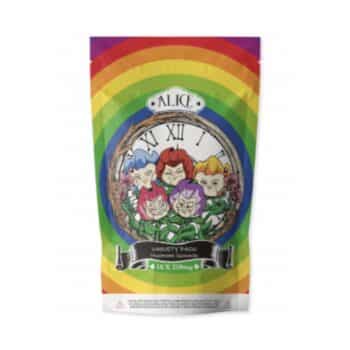
Alice Mushroom Gummy
The phrase Alice Mushroom Gummy is increasingly used by people searching for mushroom-based wellness edibles, but there is an important product distinction to understand: the current official Alice Mushrooms catalog is built primarily around functional mushroom chocolates rather than gummies.
Alice’s own product information explicitly explains why the company chose chocolate instead of a powder, pill, or gummy. Its current catalog includes chocolate formulas marketed for energy, calm, sleep, social occasions, and intimacy.
The company also states that its functional mushrooms are not psychedelic and do not produce a psilocybin-style trip.
That makes Alice fundamentally different from many mushroom-themed gummies, chocolates, and bars marketed online with psychedelic imagery.
The most recognizable Alice products currently include Nightcap, marketed for sleep and relaxation, and Happy Ending, marketed around intimacy and sexual wellness. Alice also publishes product-specific certificates of analysis on its science page and says its ingredients and mushrooms undergo third-party testing.
Those facts do not mean every marketing claim has been proven through large independent clinical trials. Understanding the difference between product formulation, consumer reviews, ingredient research, and proven treatment effects is essential when evaluating Alice mushroom chocolates.
For more mushroom and wellness education, explore CannabisTopGrade mushroom education.
Is There an Official Alice Mushroom Gummy?
The current official Alice catalog strongly emphasizes chocolate.
Alice explicitly answers the question of why it uses chocolate instead of a powder, pill, or gummy, saying it selected chocolate because the company wanted a product people would enjoy using consistently.
Current official product pages prominently feature chocolate formulas rather than a dedicated Alice-branded mushroom gummy.
Therefore, someone searching for Alice Mushroom Gummy should be careful not to assume that every gummy using the Alice name, Alice-style imagery, or similar mushroom branding comes from Alice Mushrooms.
The safest product-identification approach is to verify the manufacturer and exact product through the company’s current official catalog rather than relying on a reseller title or social-media image.
What Is Alice Mushroom?
The search phrase alice mushroom usually refers to the Alice Mushrooms wellness brand rather than a mushroom species.
There is no scientific fungal species called “Alice mushroom.”
Instead, Alice uses extracts from established functional mushroom species in different products.
Its current formulas include mushrooms such as reishi, lion’s mane, and cordyceps, depending on the product.
These are generally categorized as functional or medicinal mushrooms, not psilocybin-containing mushrooms.
That distinction matters because Alice marketing uses imaginative branding that could otherwise be mistaken for psychedelic-product language.
Alice’s own FAQ states that its functional mushrooms do not have psychedelic properties and will not make users trip.
Alice Mushroom Chocolates
Alice mushroom chocolates are functional chocolate supplements combining dark chocolate with mushroom extracts and other botanicals or nutritional ingredients.
The company’s current portfolio includes formulas designed around different wellness goals.
Nightcap is marketed for sleep and relaxation.
Happy Ending is marketed for intimacy.
Brainstorm is positioned around energy and focus.
Zen-X targets stress and calm.
Party Trick is positioned for social mood and energy.
That means “Alice chocolates” is not one identical formula.
Consumers should evaluate the exact product because ingredients can differ substantially between formulas.
Functional Mushroom Chocolate
A functional mushroom chocolate is a food or supplement-style product that combines chocolate with mushroom-derived ingredients marketed for wellness purposes.
The term “functional” usually distinguishes mushrooms such as:
Lion’s mane for cognition-related research.
Reishi for wellness and stress-related research.
Cordyceps for energy and exercise-related research.
Turkey tail for immune-related research.
These mushrooms are different from psychedelic mushrooms such as Psilocybe cubensis.
Functional mushroom chocolate also does not automatically qualify as a proven treatment for sleep disorders, anxiety, depression, sexual dysfunction, or another medical condition.
In the United States, FDA does not approve dietary supplements for safety and effectiveness before they are marketed. Manufacturers are primarily responsible for ensuring that supplement products are safe, properly labeled, and legally marketed.
That regulatory distinction is important when reviewing wellness claims.
Alice Sleep Chocolate
The best-known alice sleep chocolate is Nightcap.
Current official product information describes Nightcap as a dark chocolate containing:
Reishi mushroom from 100% fruiting bodies, chamomile, L-theanine, magnesium malate, and zinc citrate. The company states that the formula contains no melatonin.
Alice markets Nightcap for nighttime relaxation and improved sleep patterns.
However, the scientific evidence for each ingredient varies.
Some components have more human research than others.
Nightcap by Alice
Nightcap by Alice combines several ingredients frequently found in relaxation or sleep supplements.
Alice identifies reishi as its principal functional mushroom ingredient and combines it with L-theanine, chamomile, magnesium, and zinc.
The company says it uses organic reishi from the fruiting body and that ingredients are third-party tested for safety and stability, while the mushroom extracts are tested for potency.
That is useful product-quality information.
It does not, however, mean that the finished Nightcap formula has gone through the same clinical approval process as an FDA-approved insomnia medication.
Mushroom Chocolates for Sleep
Interest in mushroom chocolates for sleep often centers on reishi.
Reishi, usually associated with Ganoderma lucidum, has a long history of traditional medicinal use. Human evidence specifically establishing it as an effective treatment for insomnia remains much less developed than the marketing around “sleep mushrooms” might suggest.
Research on Alice Nightcap’s other ingredients provides somewhat clearer evidence in certain areas.
A 2025 systematic review and meta-analysis evaluating L-theanine and sleep included 19 articles and 897 participants. Researchers reported modest improvements in subjective sleep onset, daytime dysfunction, and overall subjective sleep quality, while emphasizing that better studies are still needed.
A 2026 review examining L-theanine alone identified 13 eligible trials and reported potentially favorable effects on sleep latency, maintenance, efficiency, and perceived sleep quality.
These findings support continued interest in L-theanine.
They do not prove that every chocolate containing L-theanine will treat clinical insomnia.
Alice Sleep Mushrooms
For alice sleep mushrooms, reishi is the relevant mushroom in the Nightcap formula.
Current Alice product information identifies reishi as the functional mushroom used specifically in Nightcap.
The company’s broader claims include supporting relaxation, healthy sleep cycles, and stress management.
However, people with persistent insomnia should distinguish a wellness supplement from an evidence-based insomnia treatment.
Chronic sleep difficulty can have causes including sleep apnea, anxiety, depression, medication effects, restless legs syndrome, circadian disorders, pain, and other health conditions.
A chocolate supplement cannot determine which of these is responsible.
Does Nightcap Contain Melatonin?
Current Alice product information states that Nightcap contains zero melatonin.
Instead, the formula uses reishi, L-theanine, chamomile, magnesium, and zinc.
That may appeal to consumers who prefer a melatonin-free nighttime product.
However, “melatonin free” does not mean that a product is automatically suitable for everyone.
Individual ingredients can still interact with medication or medical conditions.
Are Alice Mushroom Chocolates Safe?
For are Alice mushroom chocolates safe, the most accurate answer is that safety depends on the specific formula, the individual, allergies, medications, and health conditions.
Alice says its ingredients are third-party tested for safety and stability and its mushrooms undergo potency testing. It also publishes certificates of analysis through its science section.
Its Nightcap product lists coconut and soy as allergens and warns that the product is processed on shared equipment that may also contain peanuts, tree nuts, milk, eggs, or soy.
Ingredient-specific health considerations also matter.
For example, Memorial Sloan Kettering notes that reishi can cause side effects such as nausea and has potential interactions with anticoagulants and immunosuppressants.
So a better answer than simply “yes, they are safe” is:
For many healthy adults, the ingredients may be tolerated, but the product is not risk-free for every person.
Alice Chocolates and FDA Regulation
Consumers sometimes interpret a wellness supplement sold openly in the United States as an FDA-approved product.
That is not how dietary-supplement regulation works.
FDA explains that dietary supplements generally do not undergo premarket FDA approval for safety and effectiveness. Manufacturers and distributors are responsible for ensuring compliance, and FDA can take enforcement action when products are adulterated or misbranded.
Therefore, statements such as:
“Sold legally, therefore medically proven,”
or
“Available online, therefore FDA approved,”
would be incorrect.
Alice Mushrooms Reviews
For alice mushrooms reviews, Alice’s current website displays a substantial number of customer reviews across products such as Nightcap and Happy Ending.
The company’s product pages show predominantly favorable consumer ratings.
These reviews can provide information about:
Taste.
Texture.
Convenience.
Individual perceptions.
Packaging.
Customer experience.
However, reviews hosted by a manufacturer should not be treated as equivalent to independent clinical trials.
A five-star review can tell readers that a customer liked the product.
It cannot prove that the product objectively treats insomnia, anxiety, sexual dysfunction, or another health condition.
Alice Chocolates Review
A useful alice chocolates review should evaluate four separate questions.
The first is product identity: does the package match a current Alice formula?
The second is ingredient transparency: are the mushrooms, botanicals, allergens, and other ingredients clearly listed?
The third is evidence: do independent studies support the intended wellness claims?
The fourth is individual safety: could the ingredients interact with medical conditions or medication?
This produces a more meaningful review than simply rating a chocolate according to flavor.
For additional consumer-health education, explore CannabisTopGrade wellness research guides.
Alice Happy Ending Chocolates
Alice Happy Ending chocolates are marketed as functional mushroom chocolates for intimacy and sexual wellness.
Current official product information identifies the formula as containing dark chocolate, cordyceps mushroom, ashwagandha, maca, horny goat weed, mucuna, damiana, tribulus, cayenne pepper, and Ceylon cinnamon.
This ingredient list is substantially different from Nightcap.
That means someone who tolerates Nightcap cannot automatically assume that Happy Ending will be equally appropriate for them.
Alice Happy Ending Mushroom Chocolates Review
For an alice happy ending mushroom chocolates review, the first useful distinction is that Happy Ending is not marketed as a psychedelic mushroom chocolate.
Its mushroom component is cordyceps.
Alice markets the formulation around arousal, sensitivity, stamina, and intimacy.
The official Happy Ending page displays hundreds of customer reviews, most of them favorable.
Those testimonials may be helpful for understanding consumer experience, but claims about improving sexual function require more rigorous evidence.
The finished Alice formula itself should not be treated as a clinically established treatment for erectile dysfunction, low libido, or sexual dysfunction merely because individual ingredients have traditional-use histories.
Ashwagandha in Happy Ending
Ashwagandha deserves additional attention because it is a biologically active supplement ingredient.
NCCIH states that some ashwagandha preparations may help stress or insomnia and that limited evidence suggests possible effects on testosterone and sperm quality. However, evidence is insufficient for many other proposed health benefits.
Safety also matters.
NCCIH reports that ashwagandha may cause gastrointestinal effects or drowsiness and has rarely been associated with liver injury. It advises against use during pregnancy and notes potential concerns for people with thyroid or autoimmune disorders and possible interactions with several medications.
That is one example of why “natural ingredients” should not automatically be translated into “safe for everyone.”
Cordyceps in Happy Ending
Cordyceps has long been associated with traditional vitality and sexual-wellness claims.
However, traditional use and finished-product clinical evidence are different things.
Happy Ending contains cordyceps from mushroom fruiting bodies according to Alice’s product information.
That establishes the claimed ingredient.
It does not independently establish that the complete chocolate formula treats sexual dysfunction.
A responsible review should keep that distinction clear.
Functional Mushroom Chocolate vs Psychedelic Chocolate
This distinction is especially important for readers arriving from psychedelic-mushroom searches.
Alice functional mushroom chocolate uses nonpsilocybin mushrooms.
The company explicitly states that its functional mushroom products do not cause psychedelic trips.
This is different from a chocolate containing:
Psilocybe cubensis.
Psilocybin.
Psilocin.
Synthetic tryptamines.
Amanita muscaria compounds.
Therefore, Alice chocolates should not be grouped automatically with “magic mushroom chocolate bars.”
Does Alice Mushroom Chocolate Make You Trip?
According to Alice’s official product information, no.
The company says it uses functional mushrooms without psychedelic properties.
Reishi, lion’s mane, and cordyceps are not psilocybin mushrooms.
That means the word “mushroom” on an Alice chocolate does not imply that the product contains psilocybin.
This is one of the most important distinctions for readers familiar with mushroom gummies or psychedelic chocolate products.
Nightcap vs Happy Ending
Nightcap and Happy Ending share the Alice chocolate format but are substantially different formulations.
| Feature | Nightcap | Happy Ending |
|---|---|---|
| Main positioning | Sleep and relaxation | Intimacy and sexual wellness |
| Functional mushroom | Reishi | Cordyceps |
| Other notable ingredients | L-theanine, chamomile, magnesium, zinc | Ashwagandha, maca, horny goat weed, mucuna, damiana, tribulus |
| Melatonin | Alice says none | Not positioned as a sleep product |
| Psilocybin | Alice says functional products are nonpsychedelic | Alice says functional products are nonpsychedelic |
The product ingredients and positioning come from Alice’s current product information.
Are Alice Chocolates Better Than Gummies?
Alice itself argues in favor of chocolate.
The company says it designed its supplements as chocolate because it wanted the daily wellness routine to be enjoyable and easier to use consistently than powders, pills, or gummies.
That is the company’s product philosophy.
There is not enough evidence to claim broadly that mushroom nutrients delivered in Alice chocolate are universally superior to every properly formulated capsule, powder, or gummy.
Product quality depends on much more than format.
Relevant factors include:
Ingredient identity, extraction method, amount, bioavailability, testing, storage, and individual physiology.
Alice Mushroom Chocolates and Allergies
Chocolate-based supplements still contain food ingredients.
Nightcap identifies coconut and soy allergens and warns about shared equipment involving several additional common allergens.
People with serious food allergies should therefore read the exact current package rather than relying on an online review written months earlier.
Formulations and manufacturing information can change.
Can Nightcap Replace Insomnia Treatment?
Nightcap should not automatically be considered a replacement for evidence-based insomnia care.
The L-theanine evidence is promising: a 2025 meta-analysis found modest improvements in several subjective sleep measures.
But the entire Alice formula has not been established as an FDA-approved insomnia treatment.
Persistent insomnia deserves proper evaluation because it can reflect conditions that a supplement cannot diagnose.
Can Alice Chocolates Be Used With Medication?
That depends on the product and medication.
Reishi may interact with anticoagulants and immunosuppressants.
Ashwagandha can potentially interact with medications affecting blood pressure, blood sugar, thyroid hormones, seizure control, immune function, and sedation.
FDA generally recommends discussing dietary supplements with a healthcare professional because supplements can interact with medications or other supplements.
That advice becomes particularly relevant when a formula combines many biologically active ingredients.
What Alice’s Certificates of Analysis Tell Consumers
Alice maintains a science page containing links to certificates of analysis for finished products and mushroom ingredients, including Nightcap and Happy Ending.
Publishing testing information is a useful transparency practice.
However, a COA should be interpreted according to what it actually measures.
A laboratory report may confirm certain constituents, contaminants, or specifications.
It does not necessarily prove every advertised health outcome.
Chemical quality testing and clinical efficacy testing answer different questions.
Frequently Asked Questions
1. Does Alice currently make an Alice Mushroom Gummy?
Alice’s current official catalog focuses on mushroom chocolates, and the company explicitly explains that it chose chocolate instead of pills, powders, or gummies. A product advertised elsewhere as an “Alice Mushroom Gummy” should therefore be verified carefully against the current official catalog.
2. Are Alice mushroom chocolates psychedelic?
Alice says no. Its products use functional mushrooms such as reishi, lion’s mane, and cordyceps rather than psilocybin mushrooms, and the company states that its functional mushrooms do not produce a psychedelic trip.
3. What is Nightcap by Alice?
Nightcap is Alice’s sleep-oriented functional mushroom chocolate. Current ingredients include organic reishi fruiting-body mushroom, L-theanine, chamomile, magnesium malate, zinc citrate, and dark chocolate. Alice states that Nightcap contains no melatonin.
4. Are Alice mushroom chocolates safe?
Alice reports third-party testing and publishes product COAs, but individual ingredients still have potential side effects, allergy considerations, and drug interactions. FDA also does not preapprove dietary supplements for safety and effectiveness before marketing.
5. What are Alice Happy Ending chocolates?
Happy Ending is Alice’s intimacy-focused functional mushroom chocolate. Current ingredients include cordyceps, ashwagandha, maca, horny goat weed, mucuna, damiana, tribulus, cayenne, cinnamon, and dark chocolate. It is marketed as a wellness supplement rather than a psychedelic product.
Final Thoughts on Alice Mushroom Gummy
The first thing to understand about Alice Mushroom Gummy is that Alice’s current official product identity is built around functional mushroom chocolates, not a primary gummy line. Alice itself explains that it deliberately chose chocolate instead of gummies, powders, or pills.
For alice mushroom and alice mushroom chocolates, the brand currently uses functional mushroom ingredients such as reishi, cordyceps, and lion’s mane rather than psilocybin mushrooms.
For alice chocolates and alice chocolates review, product formulas should be evaluated separately because Nightcap, Happy Ending, Brainstorm, Zen-X, and Party Trick contain different ingredient combinations.
Regarding alice mushrooms reviews, Alice’s own site displays many favorable customer reviews, but testimonials remain different from independent randomized clinical evidence.
For alice happy ending mushroom chocolates review and alice happy ending chocolates, the current product contains cordyceps along with numerous botanical ingredients including ashwagandha and maca. The product is marketed for intimacy but should not be treated as an approved treatment for sexual dysfunction.
For functional mushroom chocolate, Alice is a clear example of why the phrase “mushroom edible” does not automatically mean psychedelic.
Regarding are alice mushroom chocolates safe, Alice reports third-party testing and publishes COAs, but ingredients such as reishi and ashwagandha can still have side effects or medication interactions in some people.
For alice sleep chocolate, mushroom chocolates for sleep, nightcap by alice, and alice sleep mushrooms, Nightcap is the relevant formula. It combines reishi with L-theanine, chamomile, magnesium, and zinc without added melatonin.
Current human evidence suggests L-theanine may modestly improve several sleep-quality measures, although more high-quality research is still needed.
The most useful conclusion is therefore:
Alice is primarily a functional mushroom chocolate brand, not a psilocybin-mushroom brand. Nightcap and Happy Ending contain different nonpsychedelic mushroom and botanical formulas, and their wellness claims should be evaluated ingredient by ingredient rather than assuming that “mushroom chocolate” guarantees a particular medical effect.
For additional evidence-based mushroom research, explore CannabisTopGrade functional mushroom and wellness articles.
Recommended Outbound Resources
Alice Mushrooms — Nightcap product information
Alice Mushrooms — Product science and certificates of analysis
PubMed — L-theanine and sleep systematic review and meta-analysis
Be the first to review “Alice Mushroom Gummy – Variety Pack (2500mg)”
Related products
Bulk Mushrooms
Bulk Mushrooms
Bulk Mushrooms
Bulk Mushrooms
Bulk Mushrooms
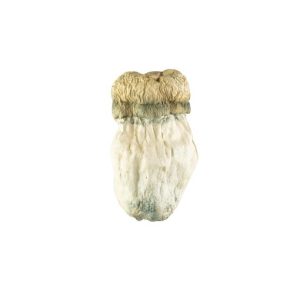
Bulk Mushrooms
Bulk Mushrooms
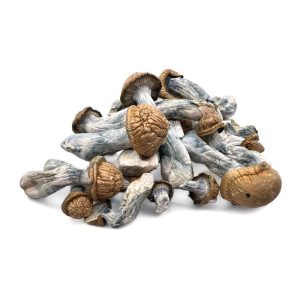
Bulk Mushrooms
Reviews
There are no reviews yet.