
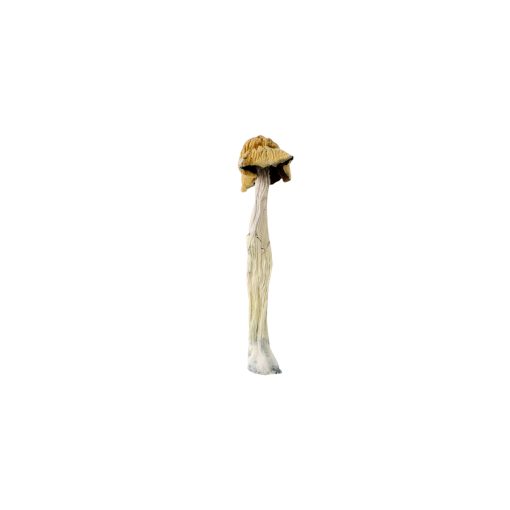
Psilocybe Cubensis B+
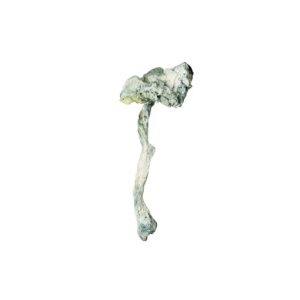
Psilocybe Cubensis B+, usually shortened to B+, is an informal cultivated variety of Psilocybe cubensis. Modern lineage references trace B+ through hobbyist mushroom communities to the 1990s and commonly attribute its distribution to a cultivator known as “Mr. G.” The exact history of the name remains partly based on community records rather than formal genetic documentation.
B+ is therefore not a separate scientific species. The scientifically recognized organism is Psilocybe cubensis, while B+ functions as a cultivar name within cultivation communities.
The name also does not guarantee one particular psychedelic experience.
A B+ mushroom can contain varying concentrations of psilocybin and related compounds depending on genetics, individual fruiting bodies, maturity, environmental conditions, storage and other variables. A person therefore cannot reliably determine the intensity of a future experience simply because a mushroom was labeled B+.
This becomes particularly important when discussing a bad mushroom trip, bad mushroom trip after effects, shrooms pupils, or coming down from mushrooms.
Psilocybin experiences can include intense positive emotions and perceptual changes, but they can also produce anxiety, confusion, fear or panic. NCCIH specifically notes that unpleasant experiences sometimes described as “bad trips” can involve extreme fear, confusion and panic.
For broader educational information about psychoactive substances, readers can explore CannabisTopGrade educational resources.
What Is Psilocybe Cubensis B+?
B+ is one of the older and more widely circulated Psilocybe cubensis cultivar names.
A current mushroom lineage reference describes B+ as a domesticated P. cubensis variety first documented around the 1990s and widely attributed to an online cultivator known as Mr. G.
The name “B+” has generated numerous origin stories, but authoritative documentation explaining exactly what the “B” originally meant is lacking.
This is common in psychedelic mushroom culture.
Cultivar names may become widespread without:
Formal registration.
Genetic sequencing.
Standardized chemical composition.
Consistent potency.
Peer-reviewed lineage documentation.
B+ should therefore be described as a community cultivar of Psilocybe cubensis rather than a scientifically distinct mushroom species.
Psilocybe Cubensis B+ Effects
Psilocybin is converted by the body into psilocin, which produces characteristic psychedelic effects through serotonin-related pathways.
Possible experiences include:
Changes in visual perception.
Altered perception of time.
Intensified emotions.
Unusual thought patterns.
Changes in sense of self.
Feelings of connectedness.
Visual imagery.
Changes in music perception.
An experience can also include uncomfortable effects such as anxiety, confusion, nausea, dizziness or panic.
NCCIH emphasizes that psilocybin effects can be difficult to predict because they depend on numerous factors, including the person’s mood, personality, expectations, health, surroundings, mushroom type and other substances.
For this reason, statements such as “B+ always gives a happy trip” or “B+ cannot cause anxiety” are not scientifically defensible.
Psychedelic Mushroom Experiences
Psychedelic mushroom experiences vary dramatically.
Two people can respond very differently even under apparently similar circumstances.
One person may describe:
Euphoria.
Awe.
Emotional openness.
Enhanced colors.
Unusual visual patterns.
Introspection.
Changes in time perception.
Another person may experience:
Fear.
Paranoia.
Confusion.
Panic.
Disorientation.
Nausea.
A sense of losing control.
NCCIH identifies dose, personality, mood, expectations, setting, health, mushroom type and use of other substances as factors that can influence psilocybin experiences.
This variability is one reason clinical psilocybin research places considerable emphasis on participant screening and controlled environments.
Can You Have a Bad Trip on Mushrooms?
Yes.
For can you have a bad trip on mushrooms, documented adverse psychedelic experiences can include intense fear, anxiety, confusion and panic.
Poison Control describes bad psilocybin experiences as potentially involving panic reactions and severe changes in perception or behavior.
A “bad trip” is not an official psychiatric diagnosis. It is an informal term used to describe a frightening or highly distressing psychedelic experience.
A person experiencing one may feel as though:
Something terrible is about to happen.
The experience will never end.
They are losing control.
They are dying.
Other people are threatening them.
Reality is no longer understandable.
Time has stopped.
They cannot escape disturbing thoughts or imagery.
These feelings can seem extremely convincing during intoxication even when they do not reflect what is actually happening.
Bad Trip Symptoms
Common bad trip symptoms can include psychological and physical effects.
Psychological symptoms may include:
Extreme fear.
Panic.
Paranoia.
Confusion.
Disorientation.
Disturbing hallucinations.
Catastrophic thoughts.
Intense emotional distress.
Fear of dying.
Fear of “going crazy.”
Physical effects associated with psilocybin can include:
Dilated pupils.
Nausea.
Dizziness.
Trembling.
Sweating.
Changes in heart rate.
Temporary increases in blood pressure.
Weakness.
Impaired coordination.
NCCIH lists anxiety, paranoia, headache, nausea, dizziness, increased blood pressure and increased heart rate among reported adverse effects.
Importantly, these symptoms can overlap with medical emergencies or reactions to other substances. Severe symptoms should not automatically be dismissed as “just a bad trip.”
Bad Mushroom Trip
A bad mushroom trip can develop even when someone previously had uneventful psychedelic experiences.
Previous experience does not guarantee future reactions.
Potential contributing factors can include:
An unexpectedly intense psychedelic effect.
Anxiety before the experience.
Stressful surroundings.
Unexpected events.
Unknown product potency.
Other drugs or medications.
Sleep deprivation.
Psychological vulnerability.
The systematic review literature also shows why recreational experiences should not be compared directly with clinical studies.
A 2025 systematic review covering 42 clinical psilocybin studies and 1,068 participants found common adverse events such as headache, nausea and temporary blood-pressure increases, while serious adverse events were uncommon in the carefully controlled research environments studied.
Those findings apply to screened clinical participants and should not be assumed to represent every unsupervised setting.
Bad Shroom Trip
A bad shroom trip is essentially another common phrase for a distressing psilocybin mushroom experience.
One important misconception is that someone must be experiencing elaborate hallucinations for the situation to qualify as a bad trip.
In reality, intense anxiety alone can dominate an experience.
The person may become trapped in repetitive thoughts such as:
“This will never stop.”
“I damaged my brain.”
“I am dying.”
“Everyone knows something is wrong with me.”
“I will never feel normal again.”
Distorted time perception can make a few minutes feel much longer.
This can intensify panic because the person may believe the experience has continued for far longer than it actually has.
How Long Does a Bad Trip Last?
For how long does a bad trip last, the acute psychedelic period generally follows the duration of the drug itself, although individual experiences vary.
The Merck Manual gives an approximate oral psilocybin effect duration of 4–6 hours, compared with approximately 12–24 hours for LSD.
Poison Control describes mushroom effects as beginning around 20 minutes after ingestion, peaking several hours later and having a total duration that may extend approximately 6–8 hours.
These ranges are not guarantees.
Duration can vary according to:
Product composition.
Individual metabolism.
Amount.
Other substances.
Food consumption.
Psychological state.
Medication interactions.
The distress associated with a frightening experience can sometimes continue after the strongest psychedelic effects have disappeared.
Bad Mushroom Trip After Effects
Possible bad mushroom trip after effects can include temporary:
Fatigue.
Anxiety.
Emotional sensitivity.
Difficulty sleeping.
Headache.
Mental exhaustion.
Low mood.
Preoccupation with the experience.
Feeling unsettled.
A large meta-analysis of controlled therapeutic psilocybin trials found that common acute adverse effects such as headache, nausea, anxiety, dizziness and elevated blood pressure generally resolved within 48 hours in those research settings.
A separate 2025 systematic review found that headache, transient blood-pressure increases and nausea were among commonly reported adverse events and that most resolved without medical intervention.
But controlled clinical studies screen participants and provide professional monitoring.
Rare longer-lasting psychological or perceptual problems have also been reported outside typical short-lived after-effects.
Can Bad Trip Effects Last Longer?
Yes, although persistent serious problems appear much less common than acute distress.
NCCIH lists persistent psychosis and hallucinations among potential concerns associated with psilocybin.
Poison Control also discusses hallucinogen persisting perception disorder (HPPD), in which recurring visual disturbances can continue after a psychedelic experience.
This should be distinguished from being temporarily tired or emotionally unsettled the next morning.
Someone experiencing persistent:
Hallucinations.
Visual disturbances.
Severe anxiety.
Paranoia.
Confusion.
Inability to sleep for an extended period.
Major behavioral changes.
Suicidal thoughts.
or inability to function normally
should receive professional medical or mental-health evaluation rather than assuming the symptoms will simply disappear.
Shrooms Pupils: Do Mushrooms Dilate Your Eyes?
Yes. Shrooms pupils may appear noticeably larger because psilocybin can cause pupil dilation, known medically as mydriasis.
Controlled research has objectively measured this effect.
A double-blind Johns Hopkins study found that psilocybin significantly increased pupil diameter along with systolic blood pressure and heart rate.
Pupil dilation does not tell observers:
Exactly how much psilocybin was consumed.
Which mushroom cultivar was used.
How intoxicated someone is.
Whether the person is experiencing a “good” or “bad” trip.
Other medications, drugs, lighting conditions and medical factors can also change pupil size.
Therefore, dilated pupils alone cannot diagnose psilocybin use.
Coming Down From Mushrooms
Coming down from mushrooms refers to the period during which the strongest psychedelic effects gradually decrease.
A person may notice:
Visual effects becoming weaker.
Thoughts becoming less unusual.
Time perception returning toward normal.
Greater awareness of ordinary surroundings.
Physical tiredness.
Emotional sensitivity.
Hunger.
Headache.
Difficulty sleeping immediately afterward.
Relief after an intense experience.
For many people, this transition occurs gradually rather than suddenly.
Research examining clinical psilocybin adverse effects indicates that many short-term physical effects resolve without intervention.
Someone may nevertheless remain mentally or physically tired after the acute psychedelic period has ended.
For more educational material about psychoactive-drug effects and safety, see CannabisTopGrade research guides.
Bad Acid Trip vs Bad Mushroom Trip
A bad acid trip refers to a distressing experience involving LSD rather than psilocybin mushrooms.
Both substances are classic serotonergic psychedelics and can produce:
Altered perception.
Changes in time perception.
Visual effects.
Anxiety.
Paranoia.
Panic.
However, their typical time courses differ substantially.
The Merck Manual lists approximate effects of:
Psilocybin: 4–6 hours.
LSD: 12–24 hours.
This means a distressing LSD experience may last considerably longer than the acute effects of psilocybin.
Poison Control describes a bad LSD trip as a panic reaction that may include anxiety, fear, paranoia, unusual reasoning, tearfulness or dangerous behavior.
Neither a “bad acid trip” nor a “bad mushroom trip” should be dismissed when the person is at risk of harming themselves or others.
What Helps Someone Experiencing Severe Psychedelic Distress?
The priority is safety.
A severely distressed person should be kept away from:
Traffic.
Heights.
Water hazards.
Weapons.
Driving.
Other obvious physical dangers.
A quieter environment and calm reassurance may reduce stimulation.
Poison Control recommends a calm, low-stimulation environment for psychedelic panic reactions and advises medical attention when symptoms become moderate or severe.
In the United States, Poison Control provides confidential expert guidance through its national service.
Emergency medical attention is appropriate when there is severe agitation, dangerous behavior, seizures, loss of consciousness, significant physical symptoms, suicidal behavior, or another reason to suspect a medical emergency.
Shroom Trip Report
A shroom trip report is a personal account describing someone’s psychedelic mushroom experience.
These reports are widespread online and may describe:
Visual patterns.
Changes in music perception.
Emotional experiences.
Fear.
Euphoria.
Mystical experiences.
Confusion.
Time distortion.
Personal insights.
Difficult experiences.
Trip reports can help researchers understand what people say they experienced, but they have serious scientific limitations.
A trip report usually cannot verify:
The mushroom species.
Cultivar identity.
Psilocybin concentration.
Amount actually consumed.
Other drugs involved.
Medical history.
Environmental factors.
Whether the account is accurate.
Therefore, a dramatic trip report should not be interpreted as evidence that everyone consuming B+ will experience the same effects.
Why One B+ Trip Report Cannot Predict Another
Psychedelic experiences are influenced by far more than a cultivar name.
NCCIH specifically identifies personality, mood, expectations, surroundings, health, mushroom type, prior psychedelic experience and other drugs as factors that can affect outcomes.
Even controlled laboratory research finds considerable individual variation.
A person reading a positive B+ trip report should therefore not assume:
“My experience will also be positive.”
Similarly, a frightening trip report does not prove everyone will have the same reaction.
Anecdotes describe individuals.
Clinical evidence describes patterns across systematically studied participants.
Those are different forms of information.
Can B+ Cause a Bad Trip?
Yes.
There is no evidence that B+ is uniquely protected against distressing psychedelic experiences.
Because B+ is associated with psilocybin-containing P. cubensis, the same broad risks associated with psilocybin apply.
These include:
Anxiety.
Fear.
Panic.
Confusion.
Paranoia.
Nausea.
Dizziness.
Temporary cardiovascular changes.
Impaired judgment.
Distressing perceptual experiences.
Calling B+ “beginner friendly,” “gentle,” or “positive” in community descriptions should not be interpreted as a medical guarantee.
Set and Setting
Psychedelic literature frequently uses the terms set and setting.
“Set” refers broadly to a person’s psychological state, including expectations and mood.
“Setting” refers to the surrounding environment and social circumstances.
NCCIH notes that these factors can meaningfully affect a psilocybin experience and that clinical settings carefully control them.
This is one reason outcomes from professionally supervised clinical trials cannot simply be generalized to recreational psychedelic use.
Clinical studies may involve:
Participant screening.
Known psilocybin preparations.
Trained facilitators.
Quiet controlled rooms.
Psychological preparation.
Continuous monitoring.
Follow-up care.
Recreational situations may contain none of those safeguards.
Can a Bad Trip Cause Permanent Brain Damage?
A frightening experience does not automatically mean permanent brain damage occurred.
Acute anxiety can create a very strong feeling that something has gone permanently wrong.
In controlled trials, common psilocybin adverse effects are usually temporary.
However, persistent psychiatric or perceptual complications have been reported, and severe symptoms deserve evaluation.
The important distinction is between:
Feeling frightened that permanent damage occurred
and
having persistent objectively concerning symptoms.
Someone who continues experiencing substantial psychiatric or neurological symptoms should obtain professional assessment rather than relying on online reassurance.
Bella Mushrooms
The keyword bella mushrooms usually refers to Baby Bella mushrooms, also called cremini or crimini mushrooms.
They are completely different from Psilocybe Cubensis B+.
Baby Bella mushrooms are immature brown Agaricus bisporus mushrooms—the same species that includes white button mushrooms and mature portobello mushrooms. U.S. government documents recognize “cremini” and “baby bella” as common names for Agaricus bisporus.
Baby Bella mushrooms are ordinary culinary mushrooms.
They are not psychedelic.
They do not naturally provide a psilocybin experience.
And they should therefore never be confused with:
B+ mushrooms.
Magic mushrooms.
Psilocybin mushrooms.
Psychedelic mushroom cultivars.
This distinction is particularly useful because searches containing simply “mushrooms” can mix culinary and psychedelic topics.
Are Baby Bella Mushrooms Psychoactive?
No.
Baby Bella mushrooms are common grocery-store Agaricus bisporus mushrooms.
They are harvested at a more mature stage than white buttons but before reaching the fully mature portobello stage.
A standard serving is low in calories and contains ordinary food nutrients rather than psilocybin-related psychedelic compounds.
The similarity ends with both organisms being fungi.
Clinical Psilocybin Safety vs Recreational Experiences
Scientific safety data require context.
A 2024 systematic review and meta-analysis found that classic psychedelics were generally well tolerated in controlled clinical or research environments, although serious adverse events can occur and continued safety monitoring is necessary.
A 2025 review focused specifically on psilocybin-assisted psychotherapy likewise found considerable variation in how adverse events are measured and reported.
These findings should not be summarized as “shrooms are completely safe.”
Clinical trial participants are commonly:
Screened for medical conditions.
Screened for psychiatric risk.
Given standardized substances.
Observed by professionals.
Monitored during acute effects.
Followed afterward.
An uncontrolled recreational experience is different.
Frequently Asked Questions
1. What is Psilocybe Cubensis B+?
B+ is an informal cultivated variety of Psilocybe cubensis. Modern lineage records generally trace its distribution to the 1990s and associate it with a cultivator known as Mr. G., although the history is based largely on cultivation-community documentation rather than formal genetic records.
2. Can you have a bad trip on mushrooms?
Yes. Psilocybin can produce frightening experiences involving extreme fear, panic, confusion or paranoia. Individual responses depend on numerous factors, including psychological state, surroundings, health, mushroom type and other substances.
3. How long does a bad mushroom trip last?
The strongest distress usually occurs during the acute psychedelic period. Psilocybin effects commonly last approximately 4–6 hours, although individual experiences can be longer, and emotional after-effects may persist after intoxication ends.
4. Do shrooms make your pupils bigger?
Yes. Controlled studies have documented increased pupil diameter following psilocybin administration. However, pupil dilation alone cannot establish that someone took mushrooms because many other factors can affect pupil size.
5. What are common bad mushroom trip after effects?
Temporary fatigue, headache, anxiety, emotional sensitivity, poor sleep and feeling mentally unsettled can occur. Controlled studies generally find common acute adverse effects resolve relatively quickly, but persistent or severe psychiatric or perceptual symptoms require medical evaluation.
Final Thoughts on Psilocybe Cubensis B+
Psilocybe Cubensis B+ is best understood as an informal Psilocybe cubensis cultivar, not a standardized psychedelic product. Its community history reaches back to approximately the 1990s, but the cultivar name cannot predict exact potency or guarantee a particular experience.
For bad mushroom trip, bad shroom trip, and can you have a bad trip on mushrooms, psilocybin can produce extreme fear, confusion, anxiety or panic. These experiences are recognized in both clinical literature and public-health guidance.
Concerning bad trip symptoms, psychological effects can include panic, paranoia and disorientation, while physical effects can include nausea, dizziness, pupil dilation and cardiovascular changes.
For how long does a bad trip last, psilocybin’s principal acute effects commonly last around 4–6 hours, although individual duration varies. LSD generally lasts much longer, which is one important difference when comparing a mushroom trip with a bad acid trip.
Regarding bad mushroom trip after effects, clinical evidence indicates that headache, nausea, anxiety, dizziness and temporary blood-pressure increases generally resolve relatively quickly in controlled environments, commonly within about 48 hours.
For shrooms pupils, psilocybin can objectively dilate pupils.
Concerning coming down from mushrooms, perceptual effects gradually diminish while temporary tiredness, emotional sensitivity or headache may remain.
For psychedelic mushroom experiences and shroom trip report, individual stories may be useful for understanding personal experiences but cannot reliably predict another person’s response.
Finally, bella mushrooms generally refers to Baby Bella or cremini Agaricus bisporus mushrooms. They are ordinary culinary mushrooms and are unrelated to the psychedelic B+ cultivar.
For more evidence-based educational reading, explore CannabisTopGrade psychedelic and substance-awareness articles.
Recommended Outbound Resources
NCCIH — Psilocybin for Mental Health and Addiction
Poison Control — Magic Mushrooms and Psilocybin
PubMed — Adverse Events in Psilocybin Clinical Trials
JAMA Network Open — Acute Adverse Effects of Therapeutic Psilocybin
| Quantity | 3.5G, 7G, 14G, 28G, 1/4 LB |
|---|
Be the first to review “Psilocybe Cubensis B+”
Related products
Bulk Mushrooms
Bulk Mushrooms
Bulk Mushrooms
Bulk Mushrooms
Bulk Mushrooms
Bulk Mushrooms
Bulk Mushrooms
Bulk Mushrooms
Reviews
There are no reviews yet.