
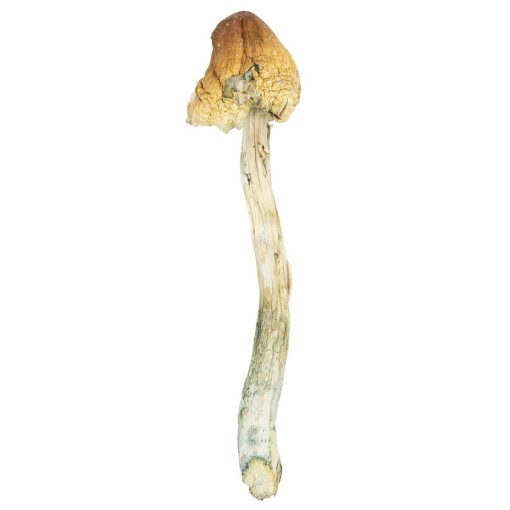
Psilocybe Mexicana
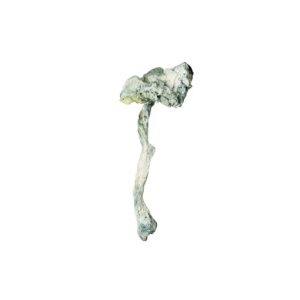
Psilocybe mexicana is a formally recognized psychedelic mushroom species rather than merely a modern commercial strain name. Index Fungorum records Psilocybe mexicana R. Heim as a currently accepted species first published in 1957, with the original type material associated with mountainous pastureland in Oaxaca, Mexico.
That scientific status distinguishes Psilocybe mexicana from many contemporary names used for cultivated psychedelic mushrooms.
It also has historical importance in psychedelic science. Psilocybin research involving P. mexicana dates back to the 1950s, with early scientific literature specifically examining psilocybin obtained from the Mexican mushroom.
Modern searches for Psilocybe mexicana, however, frequently overlap with two very different subjects.
The first is basic mushroom nutrition:
Do mushrooms count as vegetables?
Are mushrooms a source of protein?
What food group is mushrooms?
The second concerns emerging psychedelic research:
Are psychedelics good?
Can psilocybin help PTSD?
Are psychedelic drugs useful for depression and anxiety?
These subjects need to be separated carefully. Nutrition research generally concerns ordinary culinary mushrooms such as white button, oyster, shiitake and portobello mushrooms. It should not automatically be used to promote Psilocybe mexicana as a nutritious food or health supplement.
Likewise, clinical research studying standardized psilocybin under professional supervision does not establish that consuming Psilocybe mexicana independently is an effective treatment for PTSD, depression, anxiety or another mental-health condition.
For broader evidence-focused education, readers can explore CannabisTopGrade educational resources.
What Is Psilocybe Mexicana?
Psilocybe mexicana is an accepted fungal species belonging to the genus Psilocybe.
Index Fungorum records the species as:
Psilocybe mexicana R. Heim
First formally published: 1957
Original locality: Oaxaca, Mexico.
GBIF also recognizes Psilocybe mexicana as an accepted species and lists the Spanish common name pajarito.
This makes P. mexicana taxonomically different from informal cultivation names such as Golden Teacher, Penis Envy or Jedi Mind Fuck.
Those names generally refer to selected cultivated lines, whereas Psilocybe mexicana is an actual species name recognized in fungal taxonomy.
Psilocybe Mexicana and Psilocybin
Psilocybe mexicana contains psilocybin-related psychedelic compounds.
Psilocybin is converted in the human body into psilocin, which interacts strongly with serotonin systems and can produce substantial changes in perception, emotion and thought.
NCCIH notes that psilocybin experiences vary greatly according to factors including the amount taken, health status, personality, expectations, environment and use of other substances.
Potential adverse effects can include:
Anxiety.
Panic.
Paranoia.
Nausea.
Dizziness.
Headache.
Increased heart rate.
Increased blood pressure.
Distressing perceptual effects.
NCCIH also warns that psilocybin is not considered safe for certain people with psychotic conditions and that psychedelic experiences can be unpredictable.
This is why psychedelic clinical research should not be interpreted as evidence supporting unsupervised self-treatment.
Do Mushrooms Count as Vegetables?
For do mushrooms count as vegetables, there are two correct answers depending on context.
Biologically: No
Mushrooms are fungi.
They belong to Kingdom Fungi rather than the plant kingdom.
They therefore are not scientifically vegetables.
Nutritionally: Often yes
USDA MyPlate groups mushrooms in the vegetable group for dietary planning.
Its current vegetable guide says that 1 cup of raw or cooked mushrooms counts as 1 cup from the vegetable group.
Therefore:
Scientific classification: fungus.
USDA dietary classification: vegetable group.
This is why reputable nutrition resources sometimes describe mushrooms alongside vegetables even though fungi are biologically separate from plants.
Are Mushrooms Vegetables or Fruits?
For are mushrooms vegetables or fruits, the scientific answer is neither.
A mushroom is a fungal fruiting body.
Calling it a “fruiting body” does not mean it is a fruit in the botanical sense of apples, oranges or tomatoes.
Mushrooms belong to fungi rather than plants.
In everyday cooking, however, they are typically used more like vegetables than fruit.
That is why USDA meal-planning guidance places ordinary culinary mushrooms within the vegetable group.
What Food Group Is Mushrooms?
For what food group is mushrooms, USDA MyPlate categorizes mushrooms under Other Vegetables.
The current USDA table lists:
Mushrooms — 1 cup raw or cooked
as the equivalent of one cup from the vegetable food group.
That is a dietary classification rather than a biological one.
Scientifically, mushrooms remain fungi.
For practical nutrition planning:
Mushrooms = vegetable group
For taxonomy:
Mushrooms = fungi
Serving Size of Mushrooms
There is not one universal serving size of mushrooms for every purpose.
USDA MyPlate provides a simple dietary reference:
1 cup of raw or cooked mushrooms counts as 1 cup from the vegetable group.
Packaged-food serving sizes can differ depending on the particular product.
Fresh mushrooms, canned mushrooms, dried mushrooms and mushroom-based foods have different weights and nutrient concentrations.
For example, drying mushrooms removes substantial water, meaning 100 grams of dried mushrooms is nutritionally very different from 100 grams of fresh mushrooms.
Always use the Nutrition Facts label when evaluating a packaged mushroom food.
Are Mushrooms a Source of Protein?
Yes, culinary mushrooms contain protein, but they are not particularly concentrated protein foods.
USDA-derived nutritional information for raw white mushrooms reports approximately:
3.09 grams of protein per 100 grams
along with:
22 calories.
3.26 grams of carbohydrate.
0.34 grams of fat.
1 gram of fiber.
For perspective, the FDA Daily Value for protein is 50 grams on a 2,000-calorie reference diet.
So mushrooms can contribute protein, but a normal serving is not comparable with more concentrated protein foods such as:
Beans.
Lentils.
Soy foods.
Eggs.
Fish.
Poultry.
Meat.
Certain dairy foods.
Nuts and seeds.
Is Mushroom a Vegetable or Protein?
For is mushroom a vegetable or protein, mushrooms are grouped with vegetables in USDA dietary guidance rather than the Protein Foods Group.
They do contain protein, but containing protein does not automatically make a food a “protein food” for dietary classification.
White mushrooms, for instance, provide around 3.1 grams of protein per 100 grams.
That is useful but modest.
The most accurate answer is:
Biologically: fungus.
USDA food group: vegetable.
Nutritionally: contains some protein but is not usually considered a primary protein food.
Culinary Mushrooms vs Psilocybe Mexicana
This distinction matters greatly.
Nutrient information for white button mushrooms should not automatically be applied to Psilocybe mexicana.
Studies determining calories, fiber, potassium and protein in common grocery-store mushrooms generally investigate species deliberately consumed as foods.
P. mexicana is primarily discussed scientifically because of:
Taxonomy.
Ethnomycology.
Psilocybin.
Neuropharmacology.
Psychedelic research.
Using ordinary mushroom nutrition figures to market Psilocybe mexicana would therefore be misleading.
Are Psychedelics Good?
For are psychedelics good, there is no scientifically responsible universal yes-or-no answer.
Psychedelics are a group of psychoactive substances with different effects, risks and research evidence.
Research interest has increased considerably because controlled studies suggest some psychedelic-assisted therapies may have therapeutic potential.
However, potential medical usefulness under carefully controlled conditions is not the same as saying recreational psychedelic use is “good.”
NCCIH says research is examining psilocybin in areas including:
Depression.
Anxiety and existential distress associated with serious illness.
Addiction.
Other mental-health conditions.
At the same time, possible adverse effects include anxiety, paranoia, nausea, cardiovascular changes and persistent psychological problems in some individuals.
The most accurate conclusion is:
Some psychedelics show promising therapeutic potential in controlled research, but they also carry risks and are not universally beneficial or appropriate.
Psychedelics for Mental Health
Research into psychedelics for mental health has expanded rapidly.
Psilocybin has received particular attention.
Current clinical studies generally do not simply give participants mushrooms and send them home.
Research protocols typically involve combinations of:
Medical or psychological screening.
A controlled psilocybin preparation.
Professional supervision.
Preparation sessions.
Psychological support.
Structured follow-up.
These features make clinical psychedelic therapy very different from unsupervised recreational use.
The evidence is currently much stronger for some conditions—particularly depression—than for others such as PTSD.
Psychedelic Drugs for Depression and Anxiety
For psychedelic drugs for depression and anxiety, psilocybin has generated some of the strongest modern research.
A 2025 systematic review and meta-analysis examined six randomized controlled trials involving 427 participants with major depressive disorder. It found significant short-term improvements in depression outcomes with psilocybin-assisted therapy compared with control conditions.
A newer 2026 meta-analysis similarly reported antidepressant effects from standard-dose psilocybin in randomized trials, although study methods and results still varied between trials.
Another systematic review found that several trials also reported improvements in anxiety symptoms among participants being treated for major depressive disorder.
These findings are promising.
But there are important limitations.
Studies remain relatively small.
Blinding psychedelic trials is difficult because participants often recognize whether they received a psychedelic.
Long-term outcomes require further study.
Treatment protocols differ.
Participants are carefully screened.
Clinical psilocybin treatment is not equivalent to taking an unknown amount of psychedelic mushrooms independently.
Psilocybin and Depression in 2026
Research continued advancing in 2026.
A 2026 systematic review and meta-analysis concluded that psilocybin-assisted therapy remains an emerging intervention showing significant antidepressant effects but emphasized the need for greater standardization in treatment protocols.
Another 2026 meta-analysis examining randomized trials likewise found meaningful reductions in major-depression symptoms.
This strengthens evidence that psilocybin deserves continued clinical investigation.
It does not establish that Psilocybe mexicana itself should be used as a treatment for depression.
Clinical research usually investigates measured preparations of psilocybin rather than uncontrolled mushroom material with variable chemistry.
Psilocybin PTSD
The evidence for psilocybin PTSD is at a much earlier stage than the evidence for depression.
The U.S. Department of Veterans Affairs explains that psilocybin research for treating PTSD is less developed and historically had very limited clinical data.
That situation began changing with newer clinical trials.
A 2026 publication reported results from a Phase 2, open-label trial involving 22 adults with PTSD.
The study primarily investigated safety and tolerability.
Researchers reported no serious treatment-emergent adverse events, while headache, nausea, crying and fatigue were among commonly reported events. PTSD symptom scores also improved during follow-up.
However, the study was:
Small.
Open label.
Nonrandomized.
Without a placebo-controlled comparison.
That means it cannot establish definitive treatment effectiveness.
PTSD and Mushrooms
For PTSD and mushrooms, it is especially important to avoid converting preliminary psilocybin research into a recommendation to self-medicate with psychedelic mushrooms.
The VA’s National Center for PTSD says research into psilocybin-assisted therapy for PTSD remains at an earlier stage than research for some other conditions.
A newer 2026 open-label pilot involving U.S. military veterans with severe treatment-resistant PTSD has also evaluated the safety and feasibility of psilocybin-assisted therapy.
These studies represent legitimate scientific progress.
But they involve professional clinical environments—not unsupervised consumption of Psilocybe mexicana or another psychedelic mushroom.
VA Research on Psilocybin and Mental Health
The U.S. Department of Veterans Affairs announced another significant development on August 5, 2026.
The VA launched the PIVOT trial, designed to study psilocybin in veterans with treatment-resistant major depression, including some veterans who also have PTSD.
This is evidence that major U.S. health institutions consider psychedelic research scientifically important.
It is not evidence that psilocybin has become standard PTSD treatment.
The VA continues to describe the clinical evidence as emerging.
Current PTSD Treatment Guidelines
Current VA/DoD clinical guidelines have been cautious about psilocybin.
Their PTSD guideline concluded there was insufficient evidence to recommend either for or against psilocybin and several other classic psychedelics for treating PTSD.
That conclusion reflects the evidence available when the guideline review was conducted.
Since then, small early-stage psilocybin PTSD trials have begun reporting results, but larger randomized controlled trials are still needed.
The distinction between:
“promising,”
“being researched,”
and
“proven treatment”
is particularly important here.
Are Psychedelics Approved Mental-Health Treatments?
As of September 2026, psilocybin remains an experimental treatment within U.S. mainstream federal clinical practice rather than an FDA-approved routine psychiatric medication.
The VA notes that psychedelic drugs continue to be studied in research settings and that research on psilocybin for PTSD remains relatively early-stage.
FDA “breakthrough therapy” designation should also not be confused with approval.
NCCIH notes that the FDA previously granted breakthrough-therapy designations for psilocybin-assisted therapy research involving treatment-resistant depression and major depressive disorder.
A breakthrough designation is intended to facilitate drug development.
It does not mean a treatment is already proven, approved or available for unrestricted clinical use.
Psilocybe Mexicana Is Not the Same as Clinical Psilocybin
This distinction is one of the most important points in the article.
Clinical trials typically administer carefully measured psilocybin.
A mushroom contains naturally variable concentrations of psychoactive compounds.
That variability can involve:
Species.
Individual specimens.
Genetics.
Maturity.
Environment.
Storage.
Age.
Preparation.
Therefore, a published trial involving a standardized psilocybin preparation does not establish an equivalent dose or therapeutic effect for Psilocybe mexicana.
Readers can explore additional substance-research education through CannabisTopGrade health and awareness resources.
Risks of Treating Depression or PTSD Without Medical Supervision
Depression, severe anxiety and PTSD can involve substantial health and safety risks.
Using an uncontrolled psychedelic experience as a substitute for professional mental-health care can create additional problems.
NCCIH identifies possible psilocybin adverse effects including:
Anxiety.
Paranoia.
Increased heart rate.
Higher blood pressure.
Headache.
Nausea.
Dizziness.
Fatigue.
Poor sleep.
Persistent psychosis in rare circumstances.
Clinical research attempts to reduce risk through participant screening, controlled environments and trained supervision.
Those safeguards are not automatically present in recreational settings.
Psychedelics and Anxiety Research
The phrase psychedelic drugs for depression and anxiety also needs context regarding anxiety.
Research has investigated psilocybin for anxiety associated with serious and life-threatening illnesses.
NCCIH reports that a 2020 analysis of four small studies involving 117 people—mostly people with life-threatening cancer—suggested that psilocybin combined with psychotherapy might improve anxiety, depression and existential distress. However, study limitations and small participant numbers restricted the certainty of those conclusions.
That population is not identical to everyone with generalized anxiety disorder.
Therefore, it would be inaccurate to claim that psychedelic mushrooms have been proven to treat anxiety generally.
Psychedelics and Depression: Why Context Matters
The strongest modern evidence involves psilocybin-assisted treatment, not simply psilocybin exposure.
In many trials, psychological support forms part of the treatment protocol.
This creates an important scientific question:
How much improvement comes from psilocybin?
Like How much comes from therapy?
How much comes from expectations?
How important is the controlled environment?
These questions are still being studied.
A BMJ systematic review involving 436 participants found a statistically significant benefit of psilocybin for depressive symptoms compared with comparator treatments, but—as with other psychedelic studies—trial design and participant expectations remain important methodological issues.
Psilocybe Mexicana and Mental-Health Claims
It would be inaccurate to advertise Psilocybe mexicana using claims such as:
“Cures PTSD.”
“Treats depression.”
“Eliminates anxiety.”
“Scientifically proven antidepressant mushroom.”
“PTSD treatment mushroom.”
The current scientific evidence does not justify those statements.
Research concerns controlled psilocybin-assisted treatment.
It does not establish a therapeutic indication for an individual wild or cultivated Psilocybe mexicana mushroom.
Frequently Asked Questions
1. Is Psilocybe mexicana a real mushroom species?
Yes. Psilocybe mexicana R. Heim is an accepted fungal species first formally published in 1957. Index Fungorum records its type locality in Oaxaca, Mexico.
2. Do mushrooms count as vegetables?
Biologically, mushrooms are fungi rather than vegetables. For dietary planning, USDA MyPlate groups mushrooms with vegetables and counts one cup raw or cooked as one cup from the vegetable group.
3. Are mushrooms a good source of protein?
Mushrooms contain protein but are not highly concentrated protein foods. Raw white mushrooms provide approximately 3.09 grams of protein per 100 grams, compared with the FDA’s 50-gram Daily Value reference.
4. Can psilocybin treat PTSD?
Psilocybin-assisted therapy for PTSD is an active area of research, but the evidence remains preliminary. A 2026 open-label Phase 2 study of 22 people reported encouraging symptom changes and no serious treatment-emergent adverse events, but larger randomized controlled trials are needed.
5. Do psychedelics help depression and anxiety?
Controlled psilocybin-assisted therapy trials have produced promising results for depression, and some studies have reported anxiety improvements. However, effects vary, research limitations remain, and these findings should not be interpreted as support for unsupervised psychedelic self-treatment.
Final Thoughts on Psilocybe Mexicana
Psilocybe mexicana is a genuine scientific species with important historical connections to psychedelic research. It was formally described by Roger Heim in 1957, with type material associated with Oaxaca, Mexico.
For do mushrooms count as vegetables, are mushrooms vegetables or fruits, what food group is mushrooms, and is mushroom a vegetable or protein, mushrooms are biologically fungi rather than vegetables or fruit. USDA nevertheless places culinary mushrooms in the vegetable group for dietary planning.
For serving size of mushrooms, USDA MyPlate uses one cup raw or cooked mushrooms as the equivalent of one cup from the vegetable group.
Regarding are mushrooms a source of protein, ordinary white mushrooms provide around 3.09 grams per 100 grams, meaning they contribute protein but are not particularly concentrated protein foods.
For are psychedelics good and psychedelics for mental health, the evidence requires nuance. Certain professionally supervised psychedelic-assisted treatments show promising therapeutic potential, particularly psilocybin-assisted therapy for depression, while meaningful risks and unanswered scientific questions remain.
Regarding psychedelic drugs for depression and anxiety, randomized controlled trials and recent meta-analyses provide encouraging evidence for psilocybin-assisted therapy in depression, with some evidence of anxiety improvement.
For psilocybin PTSD and PTSD and mushrooms, research is considerably earlier. Small 2026 clinical studies have reported promising preliminary results, while the VA continues to describe psilocybin PTSD research as emerging rather than established treatment.
Most importantly, evidence from carefully controlled psilocybin trials should not be converted into claims that Psilocybe mexicana itself treats mental illness.
For more evidence-based educational reading, explore CannabisTopGrade research articles.
Recommended Outbound Resources
NCBI Taxonomy — Psilocybe mexicana
Index Fungorum — Psilocybe mexicana
USDA MyPlate — Vegetable Group
NCCIH — Psilocybin for Mental Health and Addiction
VA National Center for PTSD — Psychedelic-Assisted Therapy
PubMed — Psilocybin-Assisted Therapy for Major Depressive Disorder
| Quantity | 7G, 14G, 28G, 1/4 LB |
|---|
Be the first to review “Psilocybe Mexicana”
Related products
Bulk Mushrooms
Bulk Mushrooms
Bulk Mushrooms
Bulk Mushrooms
Bulk Mushrooms
Bulk Mushrooms
Bulk Mushrooms
Bulk Mushrooms
Reviews
There are no reviews yet.