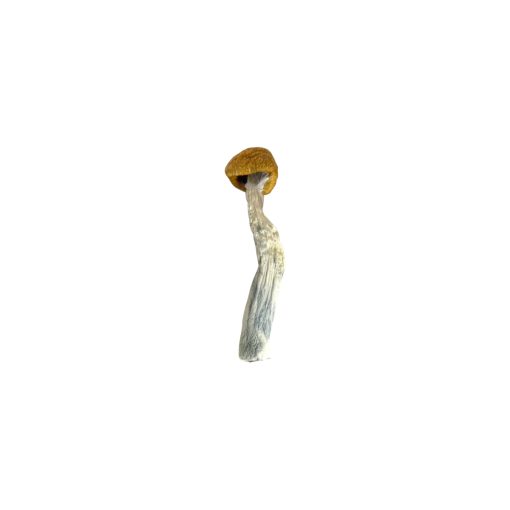
Amazonian Cubensis
Amazonian Cubensis is an informal heritage cultivation name associated with Psilocybe cubensis. A community-maintained mushroom lineage archive describes the Amazonian or PES Amazonian line as a heritage P. cubensis variety whose origin is attributed to the Amazon basin and whose documentation reaches back to approximately the 1970s. This is useful cultivar history, but it is not equivalent to formal genetic or taxonomic proof of one standardized strain.
That distinction matters when discussing benefits of psychedelic drugs, psychedelic mushrooms and PTSD, medical psychedelics, or psychedelics and mood disorders.
Modern clinical research typically studies carefully measured psilocybin under controlled conditions—not an informal mushroom cultivar such as Amazonian Cubensis.
The evidence base has nevertheless changed considerably. By 2026, clinical researchers have reported early human trials specifically investigating psilocybin-assisted therapy for PTSD, while randomized trials and meta-analyses provide a stronger evidence base for depression.
This is promising research, but it does not establish that consuming Amazonian Cubensis independently treats PTSD, depression, anxiety or another psychiatric condition.
For additional U.S.-focused educational material, readers can explore CannabisTopGrade research and awareness resources.
What Is Amazonian Cubensis?
Amazonian Cubensis is generally described as a cultivated Psilocybe cubensis lineage associated with Amazonian or South American origins.
One modern community lineage database calls it Amazonian (PES) and describes it as a heritage lineage whose origins are attributed to the Amazon basin.
The word “strain” is commonly used in psychedelic-mushroom communities, but it should not be interpreted like the name of a standardized pharmaceutical.
An informal cultivar label cannot guarantee:
Exact psilocybin concentration.
Exact psilocin concentration.
Duration of effects.
Intensity.
Psychological experience.
Therapeutic outcome.
Adverse-effect profile.
Potency can vary among individual mushrooms, batches and cultivation lines.
For medical research, the distinction is especially important because clinical trials generally administer a known amount of pharmaceutical-grade or standardized psilocybin.
Amazonian Cubensis and Psilocybin
Psilocybin is a psychedelic compound found in certain mushroom species, including Psilocybe cubensis.
After ingestion, the body converts psilocybin into psilocin.
Psilocin influences serotonin signaling, especially pathways involving the 5-HT2A receptor, and can significantly change:
Perception.
Thought.
Mood.
Emotion.
Sense of time.
Sense of self.
NCCIH notes that psychedelic experiences can vary substantially depending on the amount used, the person’s health, expectations, mood, environment, mushroom type and other substances being used.
Possible adverse effects include anxiety, paranoia, nausea, headache, dizziness, increased blood pressure, increased heart rate and poor sleep.
For that reason, promising clinical findings should not be interpreted as evidence that unsupervised mushroom use is medically equivalent to psychedelic-assisted therapy.
Benefits of Psychedelic Drugs
Research into the benefits of psychedelic drugs has expanded rapidly.
Potential benefits being investigated include improvements in:
Depressive symptoms.
Anxiety.
Psychological distress associated with serious illness.
PTSD symptoms.
Substance-use disorders.
Certain forms of emotional avoidance or rigid thinking.
A large systematic review and meta-analysis examining psilocybin, ayahuasca, LSD and MDMA found evidence of therapeutic effects across several mental disorders, particularly depression and anxiety. The authors nevertheless emphasized that evidence quality and quantity differ substantially by drug and condition.
A 2025 umbrella review reached a similarly nuanced conclusion: the strongest evidence bases differed by treatment and condition, with psilocybin research particularly concentrated on depression and MDMA research historically concentrated on PTSD.
So the phrase “benefits of psychedelics” should always identify:
Which psychedelic?
And Which condition?
Which patient population?
What dose?
AndWhat type of professional support?
What clinical evidence?
Without those details, the claim becomes overly broad.
Psychedelics Positive Effects
Possible psychedelics positive effects reported in controlled research can include reductions in depressive symptoms, anxiety and emotional distress.
Some participants also report psychological experiences involving:
Emotional processing.
Changes in perspective.
Feelings of connectedness.
Greater psychological flexibility.
Changes in self-perception.
However, these experiences are not universally positive.
A 2026 systematic review specifically examining anxiety and affective symptoms after classic psychedelics found that persistent problems were relatively uncommon in structured clinical studies but were more strongly associated with risk factors such as high exposure, multiple substances, unstructured recreational settings, psychosocial stress and psychiatric vulnerability.
The same psychedelic can therefore produce a meaningful therapeutic experience in one carefully selected participant and acute fear or distress in another.
Medical Psychedelics
The phrase medical psychedelics commonly refers to psychedelic substances being studied or used within structured therapeutic or research frameworks.
Examples under investigation include:
Psilocybin.
LSD.
DMT or ayahuasca-related compounds.
Mescaline.
MDMA, although pharmacologically MDMA is generally described differently from classic serotonergic psychedelics.
Psilocybin has received significant research attention for depression.
NCCIH notes that the FDA previously granted breakthrough-therapy designations to psilocybin-assisted approaches being developed for treatment-resistant depression and major depressive disorder.
“Breakthrough therapy” does not mean a treatment has already received FDA approval.
It is a development pathway intended to accelerate research and review where preliminary evidence is promising.
As of September 2026, psilocybin is still not an FDA-approved routine treatment for PTSD or depression.
The Department of Veterans Affairs stated in August 2026 that clinical use outside research would be considered only after FDA approval.
Psychedelics and Mood Disorders
The evidence concerning psychedelics and mood disorders is strongest for depressive disorders.
A 2026 systematic review and meta-analysis examined seven randomized controlled trials involving 522 participants with major depressive disorder. Researchers found a significant antidepressant effect from psilocybin-assisted therapy while also noting that treatment protocols vary and require further standardization.
Another systematic review of randomized trials similarly found evidence supporting psilocybin-assisted treatment for major depressive disorder.
However, “mood disorders” include more than depression.
Bipolar-spectrum conditions require particular caution.
A 2026 systematic review examined reports of psychedelic-associated hypomanic and manic symptoms, reflecting continuing concern about possible mood switching in people vulnerable to bipolar disorders.
NCCIH likewise cautions against psilocybin use in people with certain psychotic conditions and severe bipolar presentations.
This is another reason psychedelic mental-health treatment cannot be reduced to the idea that “psychedelics improve mood.”
Psychedelic Drugs for Depression
Depression currently has a substantially stronger psilocybin evidence base than PTSD.
Recent meta-analyses have found significant reductions in depressive symptoms with psilocybin-assisted therapy.
Still, psychedelic clinical trials have unusual methodological challenges.
Participants can often tell whether they received a psychedelic, making true blinding difficult.
Expectancy may influence outcomes.
Therapy protocols differ.
Participant screening is often strict.
Follow-up periods may be relatively short.
Therefore, promising results should be interpreted as evidence supporting further medical development—not permission to substitute recreational mushrooms for evidence-based depression treatment.
Psychedelic Mushrooms and PTSD
Research into psychedelic mushrooms and PTSD has moved from theoretical discussion into early human trials.
Before these recent studies, most evidence for psilocybin and PTSD was indirect.
Researchers noted that psilocybin might affect processes relevant to PTSD, including:
Fear processing.
Emotional avoidance.
Depression.
Anxiety.
Psychological flexibility.
Trauma-related memory processing.
A previous review concluded that these mechanisms justified clinical investigation but emphasized that dedicated PTSD trials were still needed.
Those trials are now beginning to report results.
Psilocybin and PTSD: 2026 Clinical Evidence
Two important human studies have substantially updated the conversation around psilocybin and PTSD.
One Phase 2 open-label study involved 22 adults with PTSD who received a single psilocybin treatment.
Researchers primarily assessed safety and tolerability.
No serious treatment-emergent adverse events or withdrawals caused by treatment-emergent adverse events were reported. Common effects included headache, nausea, crying and fatigue.
PTSD symptom scores improved during follow-up, including at 12 weeks.
These findings are encouraging—but there was no randomized placebo-control comparison.
That limits conclusions about effectiveness.
Psychedelics PTSD Study in U.S. Veterans
A second major psychedelics PTSD study published in July 2026 examined psilocybin-assisted therapy in U.S. military veterans with severe, treatment-resistant PTSD.
The trial enrolled 12 participants who completed treatment.
Participants received psychotherapy plus two synthetic psilocybin sessions at 15 mg and 25 mg.
Researchers reported no serious adverse events. Headache, anxiety and dizziness were among non-serious adverse events.
Clinician-rated PTSD symptoms declined significantly through one-month follow-up.
However, this was also a small open-label pilot study without a control group.
That means its results cannot yet establish that psilocybin-assisted therapy is more effective than placebo, established PTSD psychotherapy or other treatments.
Larger randomized trials are necessary.
Do Psychedelics Help With PTSD?
For do psychedelics help with PTSD, the answer in 2026 is:
There are encouraging early findings, but the evidence is not yet strong enough to conclude that psilocybin is an established PTSD treatment.
The newest psilocybin studies show improvements worth investigating.
But both major 2026 reports were open-label studies.
Meanwhile, the broader psychedelic PTSD evidence base historically contains more research involving MDMA than psilocybin.
The evidence therefore supports continued clinical research, not claims that psychedelic mushrooms cure PTSD.
Magic Mushrooms for PTSD
For the keyword magic mushrooms for PTSD, an important distinction is needed.
Clinical psilocybin-assisted therapy is not equivalent to simply consuming magic mushrooms.
Clinical studies may include:
Psychiatric screening.
Medical screening.
Measured synthetic or standardized psilocybin.
Preparation sessions.
Eight-hour monitored dosing sessions.
Professional therapeutic support.
Blood-pressure monitoring.
Adverse-event monitoring.
Integration or follow-up therapy.
For example, the 2026 U.S. veteran study used two precisely measured synthetic psilocybin doses alongside approximately eight hours of preparation therapy and approximately eight hours of post-psilocybin therapy.
An Amazonian Cubensis mushroom does not provide that type of standardized clinical protocol.
So “magic mushrooms for PTSD” should not be presented as a do-it-yourself treatment recommendation.
PTSD and Amazonian Cubensis
There is no clinical evidence demonstrating that the Amazonian Cubensis cultivar itself treats PTSD.
Research concerns psilocybin-assisted therapy, not a particular informal P. cubensis cultivar.
Amazonian Cubensis mushrooms can vary in psilocybin concentration.
That makes it inappropriate to infer a clinical dose from:
Mushroom weight.
Cultivar name.
Online potency descriptions.
Another person’s experience.
Clinical evidence should remain attached to the intervention actually studied.
Microdosing for PTSD
Interest in microdosing for PTSD is widespread online, but scientific evidence remains much weaker than popular discussion suggests.
NCCIH defines psychedelic microdosing as the use of very small amounts, often around one-tenth or one-twentieth of a typical nonclinical psychedelic dose.
Importantly, NCCIH states that it remains unclear whether psilocybin microdosing is safe or effective.
There is currently no robust clinical evidence establishing psilocybin microdosing as an effective PTSD treatment.
The major PTSD studies discussed above used full therapeutic psilocybin sessions—not microdosing protocols.
Can Microdosing Cause Side Effects?
Yes.
“Microdose” does not mean “no risk.”
NCCIH lists reported problems associated with psilocybin microdosing including:
Insomnia.
Increased anxiety.
Worsened mood.
Low energy.
Gastrointestinal discomfort.
Headache.
Poor concentration.
Altered sensory experiences.
Reduced social functioning in some situations.
This is particularly relevant for people with PTSD because anxiety, poor sleep and emotional instability can already be significant symptoms.
Microdosing should therefore not be portrayed as a proven low-risk PTSD treatment.
Safest Psychedelics
For safest psychedelics, there is no scientifically defensible single “safest psychedelic” for every person.
Safety depends on:
The substance.
Dose.
Purity.
Other medications.
Physical health.
Mental-health history.
Family psychiatric history.
Setting.
Professional support.
Combined substance use.
Individual vulnerability.
Clinical trials attempt to lower risk through extensive screening and monitoring.
The U.S. veteran PTSD pilot, for example, excluded many people with psychotic or bipolar disorders, significant cardiovascular conditions, certain substance-use disorders and several other risk factors.
That careful selection makes clinical safety findings different from population-wide recreational safety.
Classic Psychedelics and Physical Toxicity
Classic serotonergic psychedelics are often described as having comparatively low physiological toxicity relative to some other psychoactive substances.
But low direct toxicity does not equal overall safety.
Major risks can include:
Panic.
Accidents while impaired.
Risky decisions.
Psychological destabilization.
Drug interactions.
Unrecognized psychiatric vulnerability.
Poisonous mushroom misidentification.
Contaminated products.
Persistent perceptual or psychological symptoms in rare circumstances.
A 2026 systematic review found persistent anxiety or affective problems were less common in controlled clinical settings than in situations involving factors such as polydrug use, high exposure, psychiatric vulnerability or poorly controlled environments.
That reinforces the importance of clinical context.
Psychedelics for Mental Health
The broader field of psychedelics for mental health is best described as promising but still developing.
Evidence currently varies substantially by condition.
Depression: comparatively strong and growing psilocybin evidence.
Anxiety associated with serious illness: promising but based on smaller trials.
PTSD: emerging psilocybin evidence, including new 2026 open-label studies.
Substance-use disorders: promising early findings for some applications.
Bipolar disorders and psychotic disorders: require significant caution because these populations are frequently excluded from trials and may face greater risk.
The field therefore should not be summarized as “psychedelics work for mental health.”
Different disorders require different evidence.
For more evidence-focused articles on psychoactive substances, visit CannabisTopGrade health and research guides.
VA Psychedelic Research in 2026
An important indication of the field’s development came on August 5, 2026, when the U.S. Department of Veterans Affairs announced the PIVOT clinical trial.
PIVOT is studying psilocybin for veterans with treatment-resistant major depression, including some participants who also have PTSD.
The VA stated that it was involved in 20 active clinical trials involving psychedelic therapies for mental-health conditions at that time.
However, the VA also specifically discouraged self-medication with psychedelics and stated that clinical use outside research would depend on FDA approval.
That illustrates the current scientific position well:
Psychedelic therapy is being taken seriously.
But research is still research.
Psychedelics Positive Effects vs Risks
Balanced education needs both sides.
Potential positive findings include:
Reduced depressive symptoms.
Potential reductions in PTSD symptoms.
Changes in emotional processing.
Reductions in anxiety in certain clinical populations.
Improved psychological flexibility.
Possible improvements in quality of life.
Potential risks include:
Anxiety.
Paranoia.
Headache.
Nausea.
Dizziness.
Temporary cardiovascular changes.
Psychological distress.
Mania or hypomania concerns in vulnerable people.
Rare persistent problems.
NCCIH emphasizes that outcomes are difficult to predict and can depend heavily on the individual’s health, psychological state and surroundings.
Amazonian Cubensis Is Not a Medical Psychedelic Product
It is important not to market Amazonian Cubensis itself as “medical psilocybin.”
A clinical psilocybin product and a mushroom fruiting body are not interchangeable.
Clinical researchers know:
How much psilocybin is administered.
What the product contains.
How it was manufactured.
What contaminants were tested.
Which patients were screened.
How participants were monitored.
An informal mushroom sample may not provide any of those assurances.
Therefore, research results involving 25 mg of synthetic psilocybin cannot be converted reliably into a certain amount of Amazonian Cubensis mushrooms.
Frequently Asked Questions
1. What is Amazonian Cubensis?
Amazonian Cubensis is an informal heritage cultivar associated with Psilocybe cubensis. Community lineage records attribute its origin to the Amazon basin and describe it as a line documented since approximately the 1970s, but this history should not be confused with formal genetic verification.
2. Do psychedelics help with PTSD?
Early psilocybin-assisted therapy studies published in 2026 reported meaningful reductions in PTSD symptoms, but the studies were small and open-label. Larger randomized controlled trials are needed before psilocybin can be considered an established PTSD treatment.
3. Is microdosing useful for PTSD?
There is currently insufficient evidence demonstrating that psilocybin microdosing treats PTSD. NCCIH states that the safety and effectiveness of psilocybin microdosing remain unclear.
4. What is the safest psychedelic?
No psychedelic can be identified as universally safest. Safety depends on the substance, dose, health conditions, psychiatric history, medications, purity, environment and professional supervision. Clinical safety findings come from carefully screened participants and should not automatically be generalized to unsupervised use.
5. Are psychedelics effective for depression and mood disorders?
Psilocybin-assisted therapy has a growing evidence base for depression. A 2026 meta-analysis of seven randomized trials involving 522 participants found significant antidepressant effects, although researchers emphasized the need to standardize treatment methods further.
Final Thoughts on Amazonian Cubensis and Psychedelic Mental Health Research
Amazonian Cubensis is best understood as an informal heritage Psilocybe cubensis lineage, not as a standardized medical psychedelic product. Community archives associate the line with Amazon-basin genetics, but a cultivar name cannot establish exact potency or clinical effectiveness.
For benefits of psychedelic drugs and psychedelics positive effects, controlled research has reported potentially meaningful reductions in depression, anxiety and other psychiatric symptoms. The evidence varies greatly by condition and intervention.
Regarding psychedelic mushrooms and PTSD, magic mushrooms for PTSD, do psychedelics help with PTSD, psychedelics PTSD study, and psilocybin and PTSD, the evidence changed meaningfully in 2026. Two small open-label human studies reported encouraging safety and PTSD symptom improvements following psilocybin-assisted treatment. Neither study, however, provides the randomized controlled evidence needed to establish psilocybin as a proven PTSD treatment.
For medical psychedelics, psilocybin remains an investigational psychiatric treatment rather than an FDA-approved routine PTSD or depression medicine. The VA launched a major new psilocybin trial in August 2026 while explicitly discouraging psychedelic self-medication.
Regarding safest psychedelics, there is no universal winner. Risk varies according to the person, substance, dose and setting.
For microdosing for PTSD, evidence remains inadequate, and NCCIH states that the safety and effectiveness of psilocybin microdosing are uncertain.
Finally, for psychedelics and mood disorders, depression currently has a more developed psilocybin evidence base than PTSD, while people with bipolar-spectrum or psychotic vulnerability require particular caution.
The central distinction is therefore between promising clinical psychedelic research and claims that a specific mushroom cultivar is itself a proven mental-health treatment.
For additional educational material, explore CannabisTopGrade psychedelic and substance-awareness articles.
Recommended Outbound Resources
National Center for Complementary and Integrative Health — Psilocybin
PubMed — Psilocybin-Assisted Therapy for Veterans With Treatment-Resistant PTSD
PubMed — Phase 2 Psilocybin Trial for PTSD
U.S. Department of Veterans Affairs — 2026 PIVOT Psilocybin Trial
| Quantity | 3.5G, 28G, 1/4 LB |
|---|
Be the first to review “Amazonian Cubensis”
Related products
Bulk Mushrooms
Bulk Mushrooms
Bulk Mushrooms

Bulk Mushrooms
Bulk Mushrooms
Bulk Mushrooms
Bulk Mushrooms
Bulk Mushrooms
Reviews
There are no reviews yet.