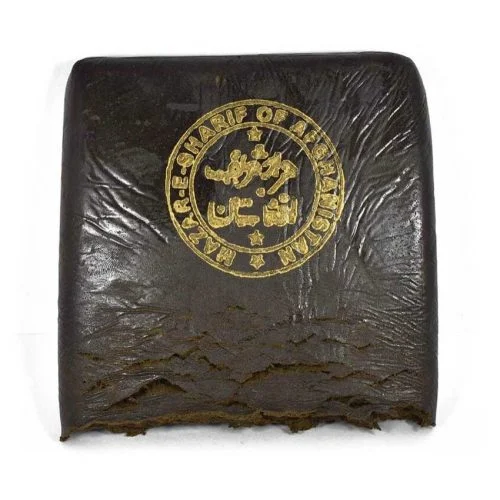
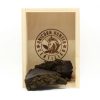
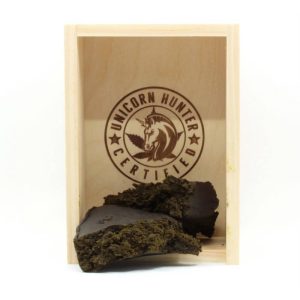
Afghan Mazar Sharif Hash refers to hash associated with the cannabis and resin traditions of northern Afghanistan, particularly the Mazar-i-Sharif region.
Mazar I Sharif is a documented Afghan indica. Leafly currently describes it as originating in far northern Afghanistan and notes that the plants can produce particularly resinous flowers. Its reference profile currently lists about 13% THC, with linalool, caryophyllene and myrcene among the leading terpenes. Leafly
The region’s connection to hash is particularly relevant because resin production is one of the traditional characteristics associated with Afghan cannabis. Leafly also describes Pure Afghan as a landrace originating from the Mazar I Sharif region, while Afghan Kush traces to the Hindu Kush area around Afghanistan and Pakistan and is similarly known for substantial resin production. Leafly
However, a modern product carrying the name Afghan Mazar Sharif Hash should not automatically inherit Mazar I Sharif flower’s approximately 13% THC reference figure.
Hash is concentrated resin.
Its actual:
- THC;
- THCA;
- CBD;
- minor cannabinoids;
- terpene profile;
- contaminants;
need to come from the specific product’s laboratory analysis.
For further educational reading, see Cannabistopgrade Hash and Concentrates, Cannabistopgrade Cannabis Concentrates and Dabbing, and Cannabistopgrade.com.
Afghan Mazar Sharif Hash Quick Facts
| Topic | Educational overview |
|---|---|
| Product | Afghan Mazar Sharif Hash |
| Regional association | Northern Afghanistan |
| Mazar I Sharif classification | Indica |
| Reference flower THC | About 13% |
| Hash THC | Batch-specific |
| Main Mazar terpenes | Linalool, caryophyllene, myrcene |
| THCA flower | Cannabis flower containing significant THCA |
| Premium THCA flower | Marketing term, not an official grade |
| Organic THCA flower | Organic claims should be substantiated |
| Cheap THCA flower | Low price does not automatically mean poor quality |
| THCA vendors | Best judged through compliance, testing and transparency |
| Best THCA websites | No universal best; use objective criteria |
THCA Flowers
THCA flowers are cannabis flowers containing tetrahydrocannabinolic acid, the acidic precursor to delta-9 THC.
When cannabis is heated, some THCA can convert to delta-9 THC through decarboxylation.
This is why evaluating only the delta-9 THC line of a laboratory report can give an incomplete picture of a cannabis flower’s potential THC.
USDA’s current hemp-production laboratory rules expressly require compliance testing to consider the conversion of THCA into THC and report total THC on a dry-weight basis. AMS
So a useful laboratory report distinguishes among:
- THCA;
- delta-9 THC;
- total THC;
- CBD and CBDA;
- other cannabinoids.
A product advertised as “high THCA” but showing only one isolated cannabinoid number deserves closer inspection.
Premium THCA Flower
The phrase premium THCA flower is a marketing description rather than a federally standardized quality grade.
There is no official USDA category called “premium THCA flower.”
A more reliable quality assessment looks at measurable characteristics.
Batch-Specific Laboratory Testing
A current COA should match the specific lot or batch being offered.
Cannabinoid Transparency
A strong report clearly shows THCA, delta-9 THC and preferably total THC.
Contaminant Screening
Testing for substances such as pesticides, heavy metals and microorganisms can provide information beyond potency alone.
Freshness
Harvest, packaging and laboratory dates can help users understand how old the flower is.
Traceability
The grower or responsible business should be identifiable.
Realistic Marketing
Terms such as premium, exotic, AAAA or top shelf do not independently prove quality.
A seller providing transparent test results is offering more useful evidence than one relying on premium-sounding terminology.
THCA Flower Cheap
The search term THCA flower cheap often assumes inexpensive flower must be lower quality.
That is not necessarily true.
Lower prices can result from:
- small buds;
- bulk packaging;
- older inventory;
- clearance pricing;
- outdoor cultivation;
- seasonal supply;
- less elaborate packaging.
However, a low price should never compensate for missing laboratory data.
For inexpensive THCA flower, the important questions remain:
Does the batch have a COA?
Does the COA actually match the product?
Are THCA and delta-9 THC both reported?
Is contaminant testing available?
Is the product lawful in the relevant jurisdiction?
Cheap cannabis with transparent testing can provide more useful quality information than an expensive product supported only by marketing claims.
THCA Flower Deals
THCA flower deals are commonly used to move bulk inventory, small buds, seasonal harvests or products approaching the end of a retailer’s preferred inventory cycle.
A discount does not necessarily mean there is something wrong with the product.
But shoppers should check whether a deal involves:
- an older harvest;
- a near-expiry laboratory report;
- small-bud material;
- damaged packaging;
- a discontinued cultivar;
- bulk quantities;
- clearance stock.
The same COA standards should apply to discounted flower as to full-price products.
A promotional price does not change cannabinoid chemistry.
Organic THCA Flower
The phrase organic THCA flower deserves additional scrutiny.
“Organic” has a specific meaning in regulated agricultural marketing, and casual cannabis marketing does not necessarily establish that a product has recognized organic certification.
A seller might use organic informally to mean:
- grown without certain synthetic pesticides;
- cultivated in soil;
- produced with organic-style nutrients;
- naturally cultivated.
Those descriptions are not all equivalent.
For SEO accuracy, avoid assuming that every product marketed as organic THCA flower is USDA-certified organic unless documentation establishes the claim.
Consumers can instead look for specific evidence such as:
- cultivation disclosures;
- pesticide test results;
- soil or input information;
- certification details where applicable.
THCA Vendors
There are many businesses calling themselves THCA vendors, but the title does not establish quality, legality or licensing.
A useful vendor comparison should focus on objective indicators.
| Vendor factor | Stronger signal | Warning sign |
|---|---|---|
| COAs | Batch-specific | One generic COA |
| Laboratory | Identified | Anonymous |
| THCA result | Clearly disclosed | Missing |
| Delta-9 THC | Clearly disclosed | Hidden |
| Total THC | Reported or calculable | Avoided |
| Contaminants | Results available | Potency only |
| Batch numbers | Product and COA match | No traceability |
| Legal information | State-aware and dated | “Legal everywhere” |
| Business identity | Transparent | Little company information |
| Health claims | Cautious | Disease-cure claims |
This provides a stronger basis for evaluating THCA vendors than simply comparing product counts or advertised THC percentages.
Best THCA Flower Companies
There is no objectively universal list of best THCA flower companies.
Different consumers can prioritize different factors, including:
- laboratory transparency;
- freshness;
- cultivation style;
- cannabinoid profiles;
- terpene profiles;
- contaminant screening;
- pricing;
- customer service;
- state availability.
Rather than declaring one company the best, a strong educational page can explain the criteria by which companies should be evaluated.
For example, a company with moderate potency and excellent batch-level testing may provide stronger transparency than a company advertising extraordinary THCA percentages without recent supporting reports.
Best THCA Websites
The same principle applies to best THCA websites.
A polished website is not proof of product quality.
A strong THCA website should ideally provide:
Current COAs
Reports should correspond to currently available batches.
Full cannabinoid information
THCA and delta-9 THC should be clear.
Product traceability
Lot or batch numbers should be visible.
Company information
The responsible business should be identifiable.
Legal information
The website should avoid claiming that every product is legal in every U.S. jurisdiction without qualification.
Contaminant information
Potency testing alone is not the complete picture.
What About Customer Reviews?
Reviews can help identify recurring customer experiences involving shipping, packaging or freshness.
However, customer reviews cannot replace chemical testing.
A five-star review cannot establish:
- THC concentration;
- pesticide status;
- heavy-metal status;
- microbial safety.
Those questions require laboratory analysis.
THCA Regulations in October 2026
THCA pages published in 2026 require especially careful legal wording because the federal hemp framework is changing.
The current U.S. Code still shows the existing hemp definition using a delta-9 THC limit of no more than 0.3% on a dry-weight basis, while also noting the 2025 amendment scheduled under Public Law 119-37. Legal Information Institute
Public Law 119-37 created an amended hemp definition using total tetrahydrocannabinols, expressly including THCA, capped at 0.3% on a dry-weight basis. The amendment was originally structured to become effective 365 days after enactment. The White House
However, Public Law 119-103, enacted September 2, 2026, states that until December 11, 2026, the Section 781 amendments apply only to specified categories identified in the statute. GovInfo
Therefore, as of October 3, 2026, federal hemp law is in a transition period.
State laws can also impose their own requirements.
This makes claims such as:
“All THCA flower is legal nationwide”
too broad.
Hemp Production Already Uses Total-THC Testing
Even before the wider federal statutory transition is complete, USDA’s hemp-production system already requires compliance testing to account for THCA.
USDA says laboratories must use post-decarboxylation or a similarly reliable method in which total THC reflects the potential conversion of THCA to THC. The current acceptable hemp THC level under that production-testing framework is 0.3% on a dry-weight basis, subject to measurement uncertainty. AMS
This is why the phrase THCA hemp flower can be more complicated than simply looking at the delta-9 THC line on a finished-product COA.
Why Very High THCA Claims Need Verification
THCA percentage has become a major marketing metric.
Consumers may see flower advertised at:
- 25% THCA;
- 30% THCA;
- 35% THCA;
- even higher.
The number should be tied to an identifiable batch and laboratory report.
If a seller simply prints “35% THCA” on a product page without a matching report, the claim is less useful.
A credible COA should allow someone to confirm:
product name → batch number → laboratory result.
This simple chain of traceability is more meaningful than potency-focused promotional language.
Afghan Mazar Sharif Hash and THCA
Mazar I Sharif is historically relevant to resin-heavy Afghan cannabis and hash traditions. Leafly describes it as a northern Afghan indica capable of producing intensely resinous flowers. Leafly
But traditional-style Afghan hash and modern THCA flower are different product formats.
| Feature | Afghan Mazar Sharif Hash | THCA Flower |
|---|---|---|
| Format | Concentrated cannabis resin | Dried flower |
| Mazar connection | Potentially geographic/genetic | Cultivar-dependent |
| THCA | Batch-specific | Often substantial |
| THC | Batch-specific | Batch-specific |
| Resin concentration | Concentrated | Naturally present on buds |
| Potency fixed by name? | No | No |
| COA useful? | Yes | Yes |
| Legal treatment | Jurisdiction-dependent | Jurisdiction-dependent |
Neither category should inherit a potency figure from the other.
Is Mazar I Sharif a High-THC Strain?
Leafly’s current reference profile lists Mazar I Sharif at approximately 13% THC, which it characterizes as lower THC than average in today’s market. Leafly
That does not undermine Mazar’s historical relevance to hash.
Hash production has traditionally emphasized resin and trichomes, not simply the highest modern flower THC percentage.
This distinction is important for accurate cannabis content.
A historically valued hash cultivar does not need to be a modern 30%-THC flower strain to be relevant to resin production.
Mazar I Sharif vs. Mazari
Mazar I Sharif should also not automatically be confused with every modern cultivar containing “Mazar” in its name.
For example, Leafly identifies Mazari as Mazar I Sharif × Skunk #1 and currently lists it around 17% THC. Leafly
Likewise, modern Dutch Mazar cultivars may contain Skunk #1 and Afghani genetics. Leafly
So:
Mazar I Sharif
Mazari
and
modern Mazar hybrids
are related terms but should not automatically be treated as genetically identical products.
Frequently Asked Questions
1. What is Afghan Mazar Sharif Hash?
Afghan Mazar Sharif Hash refers to cannabis hash associated with Mazar-i-Sharif or northern Afghan cannabis traditions. Mazar I Sharif itself is a documented Afghan indica known for resinous flowers, but individual hash potency must be measured separately. Leafly
2. What makes premium THCA flower premium?
“Premium” is not an official government grade. Stronger indicators include fresh flower, batch-specific laboratory testing, cannabinoid transparency, contaminant screening and reliable traceability.
3. Is cheap THCA flower automatically low quality?
No. Lower prices can result from bulk packaging, small buds, outdoor production or clearance stock. Laboratory results and freshness provide more useful quality evidence than price alone.
4. How should THCA vendors be compared?
Compare current COAs, batch traceability, THCA and delta-9 THC disclosure, total-THC information, contaminant testing and accurate jurisdiction-specific legal information.
5. Is high-THCA flower legally hemp throughout the United States?
Not automatically. Federal rules are in transition in late 2026, USDA production testing already considers THCA in total THC, and individual states can impose additional restrictions. Public Law 119-103 limits application of most of the newer federal hemp amendments until December 11, 2026. AMS
| Quantity | 1/8 oz(3.5g), 1/4 oz (7g), 1/2 oz (14g), 1 oz (28g) |
|---|
Be the first to review “Afghan Mazar Sharif Hash for Sale Online”
Related products
Buy THC Extracts Online
Buy THC Extracts Online
Buy THC Extracts Online
Buy THC Extracts Online
Buy THC Extracts Online
Buy THC Extracts Online
Buy THC Extracts Online
Buy THC Extracts Online
Reviews
There are no reviews yet.