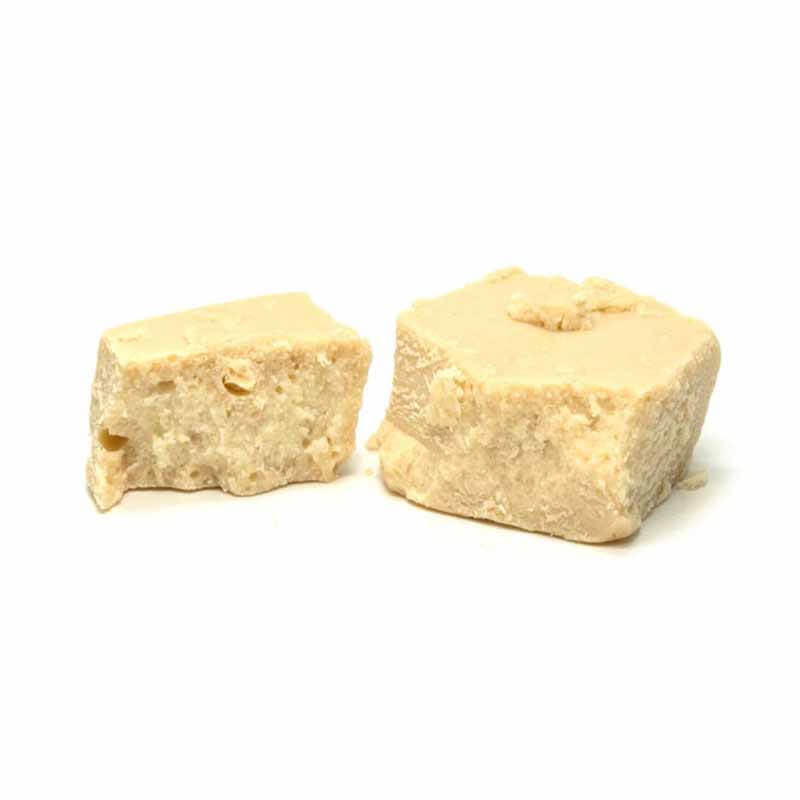
Girl Scout Cookies Budder is a cannabis concentrate associated with the famous GSC cultivar, formerly known as Girl Scout Cookies and also commonly called Cookies.
Leafly currently classifies GSC as a hybrid cannabis strain and lists a reference flower profile around 25% THC and 1% CBG. Its current consumer database most frequently associates GSC with relaxed, hungry and happy experiences, while mint, sweet and earthy are among its leading flavor descriptions. Caryophyllene, myrcene and limonene appear prominently in its terpene profile.
GSC’s genetics are commonly described as OG Kush crossed with F1 Durban, although historical explanations of the original Cookie Fam genetics vary slightly. Leafly’s strain-history coverage notes Durban-family influence combined with OG Kush/Kush genetics in the development of GSC.
These strain percentages should not automatically be copied onto Girl Scout Cookies Budder.
Budder is a cannabis concentrate, so its THC, CBD and terpene concentrations can differ substantially from dried GSC flower.
For a particular product, useful information includes:
- total THC and THCA;
- CBD and CBDA;
- minor cannabinoids;
- terpene profile;
- batch number;
- laboratory-testing date;
- producer information;
- contaminant-screening results.
For more concentrate education, visit the Cannabistopgrade Cannabis Concentrates and Dabbing Guide, explore Cannabistopgrade Hash and Concentrates, or browse Cannabistopgrade.com for broader cannabis education.
Girl Scout Cookies Budder Quick Facts
| Topic | Educational overview |
|---|---|
| Product | Girl Scout Cookies Budder |
| Also called | GSC Budder / Cookies Budder |
| Product type | Cannabis concentrate |
| Strain classification | Hybrid |
| Common lineage | OG Kush × F1 Durban |
| Leafly reference flower THC | About 25% |
| Exact budder THC | Batch-specific |
| Major terpenes | Caryophyllene, myrcene, limonene |
| Hemp flower | Cannabis flower meeting applicable hemp law |
| CBD-only flower | Marketing term requiring lab verification |
| Indoor CBD flower | Hemp/CBD flower cultivated indoors |
| Full-spectrum CBD flower | CBD-rich flower retaining multiple natural cannabinoids and terpenes |
Where Can I Buy Hemp?
The phrase where can I buy hemp can refer to several different products:
- hemp flower;
- CBD flower;
- hemp-derived CBD products;
- hemp foods;
- hemp textiles;
- industrial hemp materials.
For CBD-rich hemp flower, the most important issue is not simply finding a retailer. Consumers should determine whether the flower complies with applicable federal and state rules.
USDA currently defines hemp as Cannabis sativa L. and its derivatives with no more than the applicable 0.3% THC threshold, while federal hemp-production testing uses post-decarboxylation or equivalent methods that account for potential THC from THCA.
This means a product being sold as “hemp” does not automatically establish that every batch complies.
A lawful retail hemp product should be supported by appropriate testing and sold in accordance with the rules applicable where the buyer lives.
For educational purposes, consumers should look for:
- transparent cannabinoid testing;
- identifiable batch numbers;
- THC and THCA data;
- CBD and CBDA levels;
- clear producer information;
- state-law compliance.
What Is Hemp Plant Flower?
Hemp plant flower refers to the flowering portion of a cannabis plant that legally qualifies as hemp.
Hemp flower and marijuana flower can look remarkably similar.
Both can have:
- visible trichomes;
- dense buds;
- orange pistils;
- strong aromas;
- terpenes;
- cannabinoids.
The main legal difference is chemical composition rather than appearance.
USDA explains that hemp and marijuana come from the same cannabis genus but are legally distinguished by THC concentration.
Therefore, the visual appearance of a bud cannot establish whether it qualifies as hemp.
Laboratory testing is much more useful.
CBD Bud No THC
The phrase CBD bud no THC should be handled carefully.
CBD-rich flower does not automatically contain absolutely zero THC.
Hemp flower can naturally contain:
- CBD;
- CBDA;
- THCA;
- small quantities of delta-9 THC;
- CBG;
- other cannabinoids.
If a product is advertised as “no THC,” the laboratory report should support that claim.
Even then, laboratories often use the term ND, meaning not detected, rather than proving an absolute chemical zero.
The laboratory’s detection limits matter.
Does Hemp Mean THC-Free?
No.
Current U.S. hemp rules permit hemp that remains within the applicable THC threshold. USDA also requires hemp-production testing to account for THCA through a total-THC calculation.
So:
Hemp ≠ automatically zero THC.
CBD flower ≠ automatically THC-free.
“No THC” should be verified with laboratory data.
CBD Only Flower
CBD only flower is another marketing phrase rather than a standardized botanical category.
Most natural cannabis flower contains multiple cannabinoids rather than one isolated cannabinoid.
A CBD-dominant flower might still contain:
- CBDA;
- CBD;
- CBG;
- CBC;
- THCA;
- trace delta-9 THC;
- natural terpenes.
Therefore, a product marketed as CBD only flower may actually mean:
CBD-dominant
rather than
literally containing only CBD and nothing else.
A laboratory Certificate of Analysis provides a better answer than the marketing phrase.
The FDA also emphasizes that retail CBD products have not generally gone through the same safety and effectiveness evaluation as approved medicines. Potential concerns can include medication interactions and liver injury.
Top Shelf CBD Flower
The phrase top shelf CBD flower is widely used in hemp marketing, but “top shelf” is not an official federal grade.
There is no USDA category called Top Shelf CBD Flower.
Instead, consumers can compare objective quality indicators.
Batch-Specific Laboratory Testing
A current Certificate of Analysis should match the actual product batch.
Cannabinoid Transparency
The product should disclose meaningful CBD, CBDA, THC and THCA information.
Flower Condition
Premium-quality flower should not show obvious mold or severe degradation.
Freshness
Recent harvest and packaging dates can be useful.
Traceability
The producer or responsible distributor should be identifiable.
Realistic Claims
A company claiming that CBD flower cures diseases should be treated cautiously.
FDA continues to warn that ordinary retail CBD products have not been approved to diagnose, cure, mitigate, treat or prevent diseases simply because they contain CBD.
Top-Shelf CBD Flower Evaluation
| Quality factor | Stronger signal | Weaker signal |
|---|---|---|
| COA | Batch-specific | Generic certificate |
| CBD/CBDA | Clearly disclosed | Vague potency claim |
| THC/THCA | Clearly disclosed | Missing data |
| Testing date | Recent | Very old report |
| Batch number | Matches product | No traceability |
| Contaminant results | Available | No information |
| Medical marketing | Cautious | Disease-cure claims |
Indoor CBD Flower
An Indoor CBD flower refers to hemp or CBD-rich cannabis cultivated inside a controlled growing environment.
Indoor cultivation can allow growers to control variables such as:
- temperature;
- humidity;
- lighting;
- airflow;
- irrigation;
- environmental exposure.
However, the word indoor does not automatically mean higher quality.
A poorly cultivated indoor crop can be inferior to carefully grown outdoor or greenhouse hemp.
The more useful quality indicators remain:
- laboratory testing;
- cannabinoid profile;
- terpene profile;
- freshness;
- contamination screening;
- proper storage.
Therefore:
Indoor does not automatically mean premium.
It describes the cultivation environment.
Indoor vs. Outdoor CBD Flower
| Factor | Indoor CBD Flower | Outdoor CBD Flower |
|---|---|---|
| Environment | Highly controlled | Natural environment |
| Lighting | Usually artificial | Primarily sunlight |
| Climate control | Greater | Lower |
| Appearance consistency | Often higher | Can vary |
| Quality guaranteed? | No | No |
| Lab testing needed? | Yes | Yes |
| Hemp law compliance | Required | Required |
Both cultivation methods can produce quality hemp flower.
What Is Full-Spectrum CBD Flower?
The phrase full-spectrum CBD flower generally refers to CBD-rich flower that retains the naturally occurring range of cannabis compounds rather than consisting solely of isolated CBD.
Natural cannabis flower can contain:
- CBD;
- CBDA;
- minor cannabinoids;
- terpenes;
- flavonoids;
- small amounts of THC where legally permitted.
This is why the phrase full spectrum is more naturally applicable to whole CBD flower than “CBD only.”
However, full-spectrum should not be interpreted as meaning:
“high THC”
or
“intoxicating.”
The actual cannabinoid profile still depends on the specific product.
FDA notes that hemp-derived CBD products remain subject to federal requirements applicable to FDA-regulated products, even though qualifying hemp was removed from the federal Controlled Substances Act definition of marijuana under the 2018 Farm Bill framework.
Full-Spectrum vs. Broad-Spectrum vs. CBD Isolate
These terms are especially common with oils and extracts, but consumers also encounter similar terminology when researching flower.
| Product concept | General meaning |
|---|---|
| Full spectrum | Multiple naturally occurring cannabinoids and terpenes retained |
| Broad spectrum | Multiple compounds retained while THC is generally reduced or removed |
| CBD isolate | Highly purified CBD |
| CBD-rich flower | Natural cannabis flower emphasizing CBD |
| “CBD only flower” | Marketing term; verify actual chemistry |
Whole flower naturally tends to contain multiple plant compounds.
Therefore, calling a flower literally “CBD only” can be misleading unless laboratory evidence shows an unusually restricted cannabinoid profile.
Girl Scout Cookies vs. CBD Hemp Flower
Classic GSC is not ordinarily considered CBD hemp flower.
Leafly currently lists the GSC reference profile at approximately 25% THC and 1% CBG, making classic GSC a THC-dominant marijuana cultivar rather than a conventional CBD-rich hemp variety.
A hemp company could market a CBD-rich cultivar using Cookies-inspired branding, but the name alone would not make that product genetically or chemically identical to classic GSC.
Always compare:
- genetics;
- THC;
- THCA;
- CBD;
- CBDA;
- laboratory results.
GSC vs. CBD Hemp Flower
| Feature | Classic GSC | CBD Hemp Flower |
|---|---|---|
| Main cannabinoid emphasis | THC | CBD |
| Leafly reference THC | About 25% | Must satisfy applicable hemp rules |
| Product classification | Marijuana hybrid | Hemp if legally compliant |
| CBD level | Generally low | Usually substantially higher |
| Same product? | No | No |
| Lab testing important? | Yes | Yes |
What Is Budder?
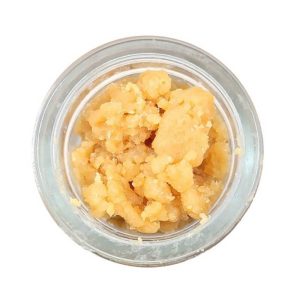
Budder is a cannabis concentrate with a soft, creamy or whipped texture.
It should not be confused with:
- cannabis flower;
- CBD flower;
- hemp buds;
- kief;
- hash.
The word budder refers primarily to concentrate consistency.
A Girl Scout Cookies Budder product can therefore contain a much more concentrated cannabinoid profile than GSC flower.
For additional concentrate education, visit the Cannabistopgrade Cannabis Concentrates Guide.
Girl Scout Cookies Effects
Leafly’s current GSC profile most frequently reports:
Relaxed
Hungry
Happy.
Its leading flavor descriptions include:
Mint
Sweet
Earthy.
Caryophyllene, myrcene and limonene are currently among its leading terpenes.
These are consumer-reported effects.
They should not be converted into claims that Girl Scout Cookies Budder treats anxiety, chronic pain, depression, insomnia or another medical condition.
The exact experience can also differ because concentrates have a different cannabinoid concentration from flower.
Girl Scout Cookies Flower vs. Budder
| Feature | GSC Flower | Girl Scout Cookies Budder |
|---|---|---|
| Product format | Dried cannabis flower | Cannabis concentrate |
| General classification | Hybrid | Concentrated hybrid-derived product |
| THC | Batch-specific | Batch-specific |
| Potency | Variable | Usually more concentrated |
| CBD | Typically low | Batch-specific |
| Terpenes | Flower dependent | Extraction/process dependent |
| Effects guaranteed? | No | No |
| Testing important? | Yes | Yes |
U.S. Hemp Rules Are Changing in Late 2026
This is especially important for articles discussing hemp plant flower, CBD bud, and full-spectrum CBD flower.
The current USDA hemp framework remains in effect as of October 2, 2026 and already uses total-THC considerations for licensed hemp production testing.
A federal statutory change enacted in 2025 is scheduled to tighten the federal definition of hemp beginning in November 2026, including broader treatment of total THC and THCA.
Because federal and state requirements can differ, hemp flower should never be described simply as “legal everywhere.”
Consumers and businesses should verify the rules applicable at the time and location of sale.
Frequently Asked Questions
1. What is Girl Scout Cookies Budder?
Girl Scout Cookies Budder is a concentrated cannabis product associated with GSC genetics. GSC is a hybrid commonly associated with OG Kush and Durban-family genetics. Its flower profile should not be used as the potency figure for a concentrate.
2. Where can I buy hemp flower legally?
Legal hemp flower is sold through retailers where hemp sales and the particular product format are permitted. Consumers should verify state law, retailer legitimacy and batch-specific testing rather than assuming all online hemp products are lawful everywhere.
3. Is CBD bud completely THC-free?
Not necessarily. CBD-rich hemp flower can contain small amounts of THC and THCA. A THC-free claim should be supported by laboratory results.
4. What makes top-shelf CBD flower?
Useful quality indicators include batch-specific laboratory testing, cannabinoid transparency, freshness, traceability and appropriate contaminant screening rather than the phrase “top shelf” alone.
5. What does full-spectrum CBD flower mean?
Full-spectrum CBD flower generally means CBD-rich cannabis flower that retains multiple naturally occurring cannabinoids, terpenes and other plant compounds rather than containing isolated CBD alone.
Authoritative Outbound Links
USDA – Hemp Program Frequently Asked Questions
| Quantity | 1/8 oz(3.5g), 1/4 oz (7g), 1/2 oz (14g), 1 oz (28g) |
|---|
Be the first to review “Girl Scout Cookies Budder for Sale Online”
Related products
Buy THC Extracts Online
Buy THC Extracts Online
Buy THC Extracts Online
Buy THC Extracts Online
Buy THC Extracts Online
Buy THC Extracts Online
Buy THC Extracts Online
Buy Budder Online
Reviews
There are no reviews yet.