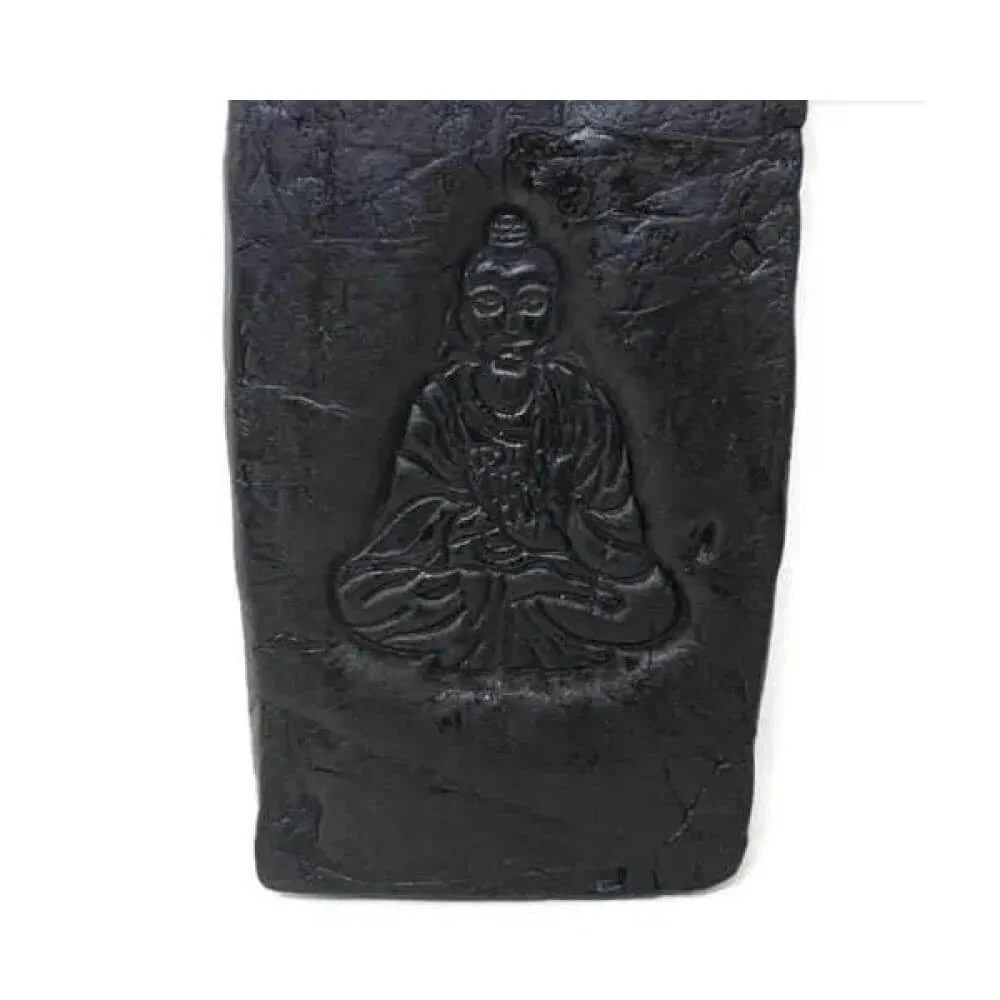
Laughing Budder Hash is best treated as a commercial cannabis concentrate name rather than a universally standardized cultivar.
I could not verify a major standardized cannabis strain registered broadly under the exact name “Laughing Budder Hash.” That means a product carrying this name should be evaluated through its actual genetics, cannabinoid testing, producer information and batch Certificate of Analysis rather than assuming the name represents one fixed strain.
Budder and hash are also concentrate-related terms.
Hash generally refers to concentrated cannabis resin or trichome material.
Budder commonly describes a softer, whipped or creamy cannabis concentrate consistency.
A commercial product combining those terms may therefore have considerably greater cannabinoid concentration than conventional cannabis flower.
For a specific Laughing Budder Hash batch, useful information includes:
- total THC;
- THCA;
- CBD;
- minor cannabinoids;
- terpene profile;
- contaminant testing;
- batch number;
- laboratory identity;
- production date.
For more concentrate education, explore Cannabistopgrade – Hash and Concentrates, read Cannabistopgrade – Cannabis Concentrates and Dabbing, or visit Cannabistopgrade.com Cannabis Education.
Laughing Budder Hash Quick Facts
| Topic | Educational overview |
|---|---|
| Product | Laughing Budder Hash |
| Standardized strain? | Not verified as one universal cultivar |
| Product category | Cannabis concentrate / hash-style product |
| Exact THC | Batch-specific |
| Strongest weed | No permanent single winner |
| Highest THC flower | Usually evaluated batch-by-batch |
| THC and intoxication | Higher THC can increase intoxicating effects |
| Concentrates | Can contain much more THC than flower |
| Reliable potency evidence | Batch-specific independent laboratory testing |
What Is the Most Powerful Weed?
The question “what is the most powerful weed?” can mean two different things:
- Which cannabis strain has the highest THC?
- Which cannabis product category can contain the most THC?
Those are different questions.
If the comparison is limited to flower, modern high-potency strains frequently test somewhere in the upper-20% to low-30% THC range.
If concentrates are included, products can reach substantially higher cannabinoid concentrations.
A 2025 Scientific Reports study independently tested 277 commercial cannabis products from Colorado. Flower products had observed THC concentrations ranging from approximately 11.7% to 33.0%, while concentrates ranged as high as 83.6% observed THC in the study sample.
That does not mean 83.6% represents the highest concentrate ever made.
It demonstrates why asking about the strongest weed strain is different from asking about the strongest cannabis product.
What THC Gets You Highest?
There is no THC percentage that guarantees the “highest” experience for everyone.
In general, products with greater THC concentration can produce stronger intoxicating effects, but cannabis response depends on several factors, including:
- individual tolerance;
- amount consumed;
- previous cannabis exposure;
- product format;
- cannabinoid profile;
- biology;
- whether alcohol or other substances are also involved.
CDC states that products with high THC concentrations can produce greater intoxicating effects and increase the risk of overconsumption. Concentrates such as budder, wax and live resin can deliver especially high THC exposure.
Therefore:
There is no scientifically reliable THC percentage that guarantees the strongest possible high. Higher THC generally increases intoxication potential, but individual response varies and greater potency can also increase adverse effects.
A product claiming 35% THC is not automatically going to feel exactly 35% “stronger” than a 20% product.
Human intoxication does not work as a simple linear percentage scale.
What Is the Highest THC Level in Weed?
For cannabis flower, extraordinary label claims require caution.
A peer-reviewed study evaluated 107 commercial cannabis flower samples from dispensaries in California, Colorado and Oregon.
Product labels claimed between 12.04% and 58.20% THC.
When researchers independently tested those samples, actual measured THC ranged from 12.95% to 36.55%. Only about 30% of the tested samples were within ±20% of their labeled potency.
That means a package claiming:
40% THC
45% THC
or even
58% THC
does not by itself prove that the flower genuinely contains that concentration.
The independently measured maximum of 36.55% in that study is a useful scientific reference point, but it should not be called the universal world record.
Other cannabis samples and laboratories exist outside that study.
Highest THC Weed Strains
Several modern cultivars are regularly associated with high THC.
Leafly’s updated 2026 strong-strain resource highlights examples including:
- Permanent Marker;
- GMO Cookies;
- Motorbreath;
- Runtz;
- Hash Burger;
- Kush Mints;
- Cereal Milk;
- Ice Cream Cake;
- MAC;
- Bruce Banner;
- Fatso;
- Original Glue.
These should be treated as examples of popular potent cultivars, not as an immutable ranking.
Modified Bananas
Modified Bananas is currently one of the stronger reference profiles in Leafly’s strain database.
Leafly currently displays approximately 31% THC for Modified Bananas and identifies it as Banana OG × GMO genetics.
That does not mean every Modified Bananas crop tests at 31%.
One producer could grow a batch testing considerably lower or higher than another.
Hash Burger
Leafly’s 2026 strongest-strain coverage says Hash Burger routinely appears in the high-20% to low-30% THC range.
Motorbreath
Motorbreath is another prominent high-potency cultivar, with Leafly currently describing average THC around 26%+.
Again, all of these percentages are strain-reference data rather than guaranteed values.
Strongest THC Strain
There is no permanent strongest THC strain.
The strongest verified batch today can be surpassed by another cultivation batch tomorrow.
Several factors influence THC concentration:
Genetics
Different cultivars have different cannabinoid-production potential.
Phenotype
Plants from related genetics can still express different chemistry.
Cultivation
Environment, lighting and plant health can influence cannabinoid production.
Harvest Timing
Cannabinoid composition changes as flowers mature.
Processing
Drying, curing and storage influence final chemistry.
Testing
Sampling and laboratory methods influence the reported result.
Therefore, the scientifically useful question is:
What did this specific batch measure in a reliable laboratory?
rather than:
Which strain name is always strongest?
Strongest Weed in the World
Claims such as “strongest weed in the world” should be treated primarily as marketing unless supported by strong evidence.
There is no universally accepted independent organization continuously testing every cannabis harvest worldwide and awarding one permanent global THC record.
The cannabis market also has documented label-accuracy problems.
The 2025 Colorado study of 277 cannabis products found that only 56.7% of flower samples were within ±15% of their labeled THC content. Concentrates performed considerably better, with 96% falling within that accuracy threshold, but observed THC was still statistically lower than labeled THC overall for both product categories.
This makes a statement such as:
“This is officially the strongest weed in the world”
difficult to substantiate without independent testing and a clearly defined comparison pool.
What Weed Has the Highest THC Percentage?
If the question specifically concerns flower, current reference databases and independent studies suggest that credible modern high-potency flower commonly appears in the upper-20% and low-30% range.
Examples include:
| Cultivar | Current potency context |
|---|---|
| Modified Bananas | Leafly reference around 31% |
| Hash Burger | Often high-20s to low-30s |
| GMO Cookies | Common high-THC cultivar |
| Kush Mints | Common high-THC cultivar |
| Motorbreath | Leafly notes 26%+ average |
| Permanent Marker | Modern potent hybrid |
| Bruce Banner | Long-established potency reputation |
| Original Glue | Famous high-potency hybrid |
This should not be interpreted as a fixed ranking.
A particular GMO batch could test higher than a Modified Bananas batch, even if Modified Bananas currently has the larger reference percentage.
Does 40% THC Flower Exist?
Labels claiming 40% THC certainly exist.
The harder question is whether uninfused cannabis flower actually verifies at that level under rigorous independent analysis.
The study of 107 commercial flower samples found labels as high as 58.20%, but independent testing found no sample above 36.55% THC.
Another 2025 study found its tested flower products had labels as high as 39.0%, while the highest observed laboratory result was 33.0%.
This does not prove that naturally grown flower can never test at 40%.
It does mean that extraordinary 40%+ flower claims deserve unusually strong verification.
Concentrates Can Be Much Stronger Than Flower
Cannabis concentrates can reach THC concentrations far above conventional flower.
The 2025 Colorado study observed concentrate THC levels reaching 83.6% among products tested.
CDC also notes that cannabis concentrates may deliver very high levels of THC and identifies common concentrate forms including:
- extract;
- wax;
- shatter;
- budder;
- live resin.
This is especially relevant for Laughing Budder Hash.
If the product is genuinely a concentrated cannabis preparation, comparing its THC percentage directly with ordinary flower would be an apples-to-oranges comparison.
Flower vs. Hash vs. Budder Potency
| Product | General potency context |
|---|---|
| Cannabis flower | Usually lower than concentrated extracts |
| Kief | Concentrated trichomes |
| Traditional hash | Concentrated resin |
| Bubble hash | Mechanically separated trichome concentrate |
| Rosin | Concentrated extract |
| Budder | High-potency concentrate format |
| Wax/shatter | Often high-potency extracts |
| Distillate | Can contain very high cannabinoid concentrations |
Exact potency is still batch-specific.
Does Higher THC Always Mean a Better High?
No.
THC concentration is only one part of a cannabis product.
Higher THC does not automatically mean:
- better quality;
- better flavor;
- better terpene preservation;
- better genetics;
- cleaner testing;
- greater freshness;
- a more enjoyable experience.
It also does not guarantee that a person will prefer the subjective effects.
CDC notes that high-THC products can have stronger intoxicating effects and increase overconsumption risk. Evidence also suggests highly concentrated THC products may be associated with more severe cannabis-use-disorder symptoms.
That means “strongest” and “best” are two different concepts.
Why THC Lab Accuracy Matters
Cannabis THC percentage has become an important marketing metric.
That creates financial incentives for unusually high results.
Independent research shows why consumers should pay attention to testing quality.
In the 2025 Colorado study:
- 178 flower products were tested;
- 99 concentrate products were tested;
- 56.7% of flower products were within ±15% of the label;
- 96% of concentrates were within ±15%;
- measured THC was lower than labeled THC overall in both categories.
A credible Certificate of Analysis, or COA, is therefore more useful than a promotional claim stating “world’s strongest THC.”
What Should a High-THC COA Show?
A useful cannabinoid laboratory report can include:
Delta-9 THC
The active form of THC already present.
THCA
The acidic precursor that can convert to THC with heat.
Total THC
A calculation designed to estimate overall potential THC.
CBD and CBDA
Other important cannabinoid measurements.
Batch identification
This connects the test result to the actual product.
A potency number without traceable batch information is much less informative.
Is Laughing Budder Hash the Strongest?
There is no evidence supporting a universal claim that Laughing Budder Hash is the strongest cannabis product.
The exact name does not appear to identify a standardized, universally recognized strain with a consistent potency record.
The responsible description is:
Laughing Budder Hash is a commercial concentrate name whose actual potency should be established by batch-specific cannabinoid testing.
If one batch tests at 60% THC and another at 75%, they are not chemically identical simply because they have the same product name.
Frequently Asked Questions
1. What is Laughing Budder Hash?
Laughing Budder Hash appears to be a commercial cannabis concentrate name rather than a standardized strain with universally documented genetics. Its actual THC and cannabinoid composition should come from the individual product’s laboratory report.
2. What is the most powerful weed?
There is no permanent strongest strain. Current high-potency strain resources include Modified Bananas, Hash Burger, GMO Cookies, Kush Mints, Motorbreath and several other modern cultivars. Concentrates can contain much more THC than flower.
3. What THC gets you the highest?
No specific THC percentage guarantees the strongest subjective high. Greater THC concentration can increase intoxication, but individual tolerance, product format, amount used and personal biology substantially affect the experience. High-THC products also increase overconsumption risk.
4. What is the highest THC level in weed?
There is no universally verified world record for cannabis flower. One peer-reviewed analysis found labels as high as 58.20%, but the highest independently measured flower in that sample was 36.55%. A separate 2025 study found observed flower THC up to 33%.
5. Which weed has the highest THC percentage?
The answer changes between batches. Modified Bananas currently carries a Leafly reference profile around 31% THC, while Hash Burger frequently appears in the high-20% to low-30% range. Other individual batches can test above or below those levels.
Authoritative Outbound Links
PubMed – Accuracy of Labeled THC Potency Across Cannabis Products
PubMed – Independent Evaluation of Cannabis Flower THC Labels
| Quantity | 1/8 oz(3.5g), 1/4 oz (7g), 1/2 oz (14g), 1 oz (28g) |
|---|
Be the first to review “Laughing Budder Hash for Sale Online”
Related products
Buy THC Extracts Online
Buy Budder Online
Buy THC Extracts Online
Buy THC Extracts Online
Buy THC Extracts Online
Buy THC Extracts Online
Buy Budder Online
Buy THC Extracts Online
Reviews
There are no reviews yet.