
Amnesia Haze: Cannabis Strains for Anxiety, Stress, CBD Joint Pain and U.S. Cannabis Guide
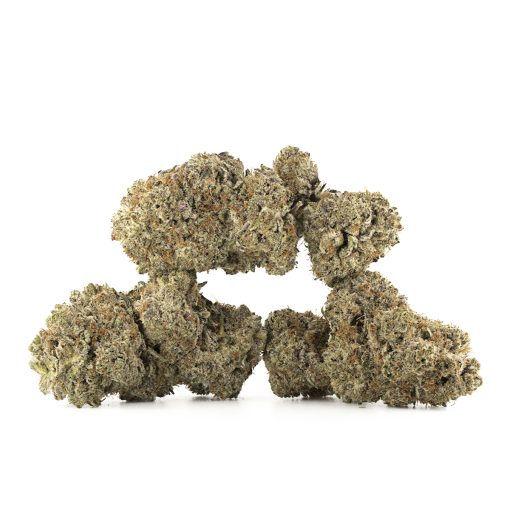
Amnesia Haze is one of the better-known sativa cannabis strains, recognized for its citrus-forward aroma, energizing reputation, international history, and long-standing popularity among cannabis consumers.
The strain also appears naturally within searches such as cannabis strains for anxiety, best cannabis for anxiety, weed for stress and anxiety, and broader cannabinoid questions such as best CBD for joint pain relief.
These search terms deserve careful interpretation.
Leafly currently classifies Amnesia Haze as a sativa, displays approximately 19% THC and 1% CBG, and lists giggly, euphoric, and talkative as its leading consumer-reported effects. Its profile is described as predominantly energizing.
However, consumer experiences are mixed. Leafly reports that 31% of reviewers discussing medical-use reasons say it helped with stress and 22% mention anxiety, while paranoia is simultaneously one of the leading reported negative effects.
That makes Amnesia Haze a useful example of why no cannabis strain should automatically be marketed as the “best cannabis for anxiety.”
The CDC states that cannabis can sometimes cause anxiety and paranoia, meaning individual sensitivity, cannabinoid concentration, and context matter considerably.
Readers can explore additional U.S.-focused cannabis strain and cannabinoid education through Cannabistopgrade.com.
What Is Amnesia Haze?
Amnesia Haze is a sativa cannabis strain with genetics associated with South Asian and Jamaican landrace cannabis.
Leafly notes that the strain became particularly well known through Amsterdam’s cannabis coffee-shop culture and has received major cannabis awards, including recognition at the Cannabis Cup.
Its popularity stems from several characteristics:
- citrus-heavy aroma;
- energetic consumer reports;
- relatively high THC;
- classic Haze genetics;
- international cannabis history;
- and a distinctive euphoric reputation.
Amnesia Haze is different from heavily sedating cannabis cultivars that consumers commonly associate with nighttime use.
Amnesia Haze THC
Leafly currently displays approximately 19% THC and 1% CBG on its general Amnesia Haze profile.
These figures should not be interpreted as fixed specifications.
Actual potency can vary according to:
- phenotype;
- cultivation conditions;
- harvest time;
- curing;
- plant nutrition;
- storage;
- testing methodology;
- and producer.
One Amnesia Haze batch may therefore differ substantially from another.
A strain name is not a laboratory result.
Amnesia Haze Effects
The current Leafly profile lists Amnesia Haze’s leading reported effects as:
Giggly
Euphoric
Talkative
Its overall profile is described as predominantly energizing.
That can make the strain appealing to consumers seeking cannabis associated with:
- sociability;
- mood elevation;
- conversation;
- daytime activities;
- creativity;
- or mental stimulation.
These descriptors represent consumer reports, not guaranteed effects.
Amnesia Haze Negative Effects
Leafly currently lists the leading negative reports as:
- paranoid;
- dry mouth;
- dizzy.
Paranoia is particularly relevant when discussing cannabis strains for anxiety.
A strain may feel uplifting and enjoyable to one person but uncomfortable or overstimulating to another.
Responses can change depending on:
- THC exposure;
- tolerance;
- mood;
- environment;
- frequency of use;
- other substances;
- medication use;
- and individual physiology.
Amnesia Haze Flavor
Amnesia Haze is strongly associated with citrus.
Leafly currently lists:
Citrus
Lemon
Lime
as its leading flavor characteristics.
These bright aromatic characteristics are part of the reason Amnesia Haze remains recognizable among Haze-family strains.
Amnesia Haze Terpenes
Leafly currently lists the major terpenes associated with Amnesia Haze as:
Myrcene
Caryophyllene
Limonene
Myrcene
Myrcene commonly contributes earthy, herbal, and musky aromas.
Caryophyllene
Caryophyllene is associated with peppery and spicy aromatic characteristics.
Limonene
Limonene contributes citrus-like aromas.
These compounds help describe a strain’s chemical and aromatic profile.
They should not be treated as proof that Amnesia Haze will relieve anxiety, pain, inflammation, or another medical condition.
Cannabis Strains for Anxiety
The phrase cannabis strains for anxiety is popular because many cannabis consumers report using cannabis in situations involving stress, worry, or emotional discomfort.
However, the relationship between cannabis and anxiety is complicated.
The CDC states that cannabis use can cause disorientation and sometimes unpleasant feelings of anxiety and paranoia.
At the same time, some consumers subjectively report relaxation.
This means two people can use similar cannabis products and experience completely different psychological effects.
Is Amnesia Haze Good for Anxiety?
There is no simple yes-or-no answer.
Leafly currently reports that approximately 22% of reviewers discussing medical reasons say Amnesia Haze helped with anxiety.
However, paranoia is also among its leading negative effects.
That means Amnesia Haze should not be described as a proven anxiety treatment.
The more accurate conclusion is that:
some consumers report anxiety-related benefit, while others experience unpleasant psychological effects.
Best Cannabis for Anxiety
There is no scientifically established universal best cannabis for anxiety.
Online lists may recommend strains according to:
- consumer reviews;
- CBD content;
- THC content;
- indica or sativa labels;
- terpene profile;
- or popularity.
These characteristics provide descriptive information.
They do not prove that a particular strain treats an anxiety disorder.
Anxiety itself can include:
- generalized anxiety disorder;
- panic disorder;
- social anxiety;
- trauma-related anxiety;
- phobias;
- or anxiety secondary to another health condition.
No single cannabis strain can reasonably be expected to address all these conditions equally.
THC and Anxiety
THC is the primary intoxicating cannabinoid in cannabis.
Its effects can include:
- euphoria;
- altered sensory perception;
- relaxation;
- increased sociability;
- changes in attention;
- or changes in mood.
It can also contribute to:
- nervousness;
- panic;
- anxiety;
- paranoia;
- dizziness;
- or disorientation.
The CDC specifically identifies anxiety and paranoia as possible unpleasant cannabis effects.
This is particularly relevant with a THC-dominant strain such as Amnesia Haze.
Does More THC Mean Better Anxiety Relief?
No.
Higher THC means greater THC concentration.
It does not mean:
- better anxiety control;
- greater relaxation;
- better cannabis quality;
- fewer side effects;
- or stronger therapeutic value.
For individuals sensitive to THC, stronger intoxication may actually worsen anxiety.
This is why the cannabinoid profile matters more than simply chasing the largest THC percentage.
Weed for Stress and Anxiety
The phrase weed for stress and anxiety combines two concepts that are related but not identical.
Stress is commonly a response to outside pressures such as:
- work;
- finances;
- school;
- relationships;
- family responsibilities;
- or major life changes.
Anxiety can persist even when there is no immediate threat or external pressure.
Some consumers report using cannabis because it temporarily changes mood or helps them disengage from stressful thoughts.
However, temporary relaxation should not automatically be equated with treatment of an anxiety disorder.
Amnesia Haze for Stress
Amnesia Haze has substantial consumer-report data related to stress.
Leafly currently reports that around 31% of reviewers discussing medical reasons say the strain helps with stress.
Again, this is anecdotal consumer data.
It is useful for understanding strain reputation but does not establish clinical effectiveness.
Why an Energizing Strain Can Feel Different During Anxiety
Amnesia Haze is primarily described as energizing.
For some consumers, that may feel:
- positive;
- social;
- motivating;
- euphoric;
- or mentally engaging.
For another person, similar stimulation may feel:
- restless;
- overwhelming;
- anxious;
- dizzy;
- or paranoid.
This is why energetic cannabis should not automatically be recommended to someone experiencing anxiety.
Amnesia Haze vs. Calming Cannabis Profiles
| Feature | Amnesia Haze | Calming-Profile Cannabis |
|---|---|---|
| General classification | Sativa | Often indica/hybrid |
| Overall reports | Energizing | Often relaxing |
| Common Amnesia Haze effects | Giggly, euphoric, talkative | Product dependent |
| Stress reports | Common | Product dependent |
| Anxiety relief guaranteed | No | No |
| Anxiety/paranoia possible | Yes | Yes |
| THC impairment | Possible | Possible |
The table highlights why broad strain categories should not be interpreted as medical classifications.
Does Sativa Mean Bad for Anxiety?
Not automatically.
“Sativa” and “indica” are commonly used cannabis market categories.
Consumers often associate:
- sativa with energy;
- indica with relaxation.
Modern cannabis genetics are far more complex.
Two sativa-labeled products can have very different:
- THC levels;
- CBD levels;
- minor cannabinoids;
- terpene profiles;
- and subjective effects.
Therefore, strain chemistry is often more informative than the sativa label alone.
Amnesia Haze vs. Original Haze
Amnesia Haze belongs to the broader Haze tradition, but it should not be confused with Original Haze.
Leafly currently describes Original Haze as a sativa with energetic, creative, and uplifted consumer reports. Its genetics are associated with Colombia, Mexico, Thailand, and South India.
Amnesia Haze has its own distinct history and consumer profile.
Both demonstrate the energetic reputation commonly associated with Haze-family cannabis.
Cannabis and Mental Health
Mental-health discussions require more caution than ordinary strain descriptions.
The CDC states that cannabis use is associated with several mental-health outcomes and that cannabis can sometimes produce anxiety and paranoia. It also notes an association between cannabis use and psychosis, with stronger associations among people who begin using cannabis earlier or use it more frequently.
These findings do not mean every cannabis consumer develops mental-health problems.
They do demonstrate why cannabis should not be marketed as universally beneficial for mental health.
When Anxiety Needs Professional Support
Persistent anxiety deserves appropriate attention.
Professional evaluation may be useful when anxiety:
- repeatedly disrupts sleep;
- interferes with work or school;
- produces panic attacks;
- affects relationships;
- causes avoidance of normal activities;
- or persists for weeks or months.
A strain recommendation should not replace appropriate mental-health care.
Best CBD for Joint Pain Relief
The supporting phrase best CBD for joint pain relief represents a different cannabinoid topic from Amnesia Haze.
CBD, or cannabidiol, is a cannabis-derived cannabinoid that does not usually produce THC’s classic intoxicating effect.
CBD has been investigated extensively for pain and inflammation.
A 2024 systematic review examined both clinical and preclinical evidence concerning isolated CBD and pain. The researchers reported promising findings while also emphasizing that clinical evidence remains limited and more studies involving isolated CBD are needed.
Therefore, there is no scientifically established universal “best CBD” product for joint pain.
CBD and Joint Pain Research
Joint pain can arise from many different conditions.
Examples include:
- osteoarthritis;
- rheumatoid arthritis;
- injury;
- gout;
- overuse;
- bursitis;
- tendon disorders;
- or infection.
CBD research does not establish that one retail formulation works equally well for every cause.
The 2024 systematic review of isolated CBD identified possible analgesic and anti-inflammatory activity, including emerging relevance to osteoarthritis and chronic pain, but it emphasized the need for additional clinical research.
That is more nuanced than claiming CBD “cures joint pain.”
CBD vs. THC for Pain
CBD and THC are different compounds.
| Feature | CBD | THC |
|---|---|---|
| Classic intoxicating high | Generally no | Yes |
| Pain research | Ongoing | Ongoing |
| Anxiety response | Being researched | Can either feel relaxing or worsen anxiety |
| Cognitive impairment | Less characteristic | Possible |
| Retail formulations | Oils, gummies, topicals, capsules | Flower, edibles, concentrates, oils |
| Universal joint-pain treatment | No | No |
Evidence concerning one cannabinoid should not automatically be transferred to another.
What Does “Best CBD” Actually Mean?
People can mean different things when asking for the best CBD for joint pain relief.
They may be comparing:
- CBD concentration;
- extract type;
- gummies versus oils;
- topical products;
- ingredient transparency;
- laboratory testing;
- or price.
These factors can help evaluate product quality.
They do not establish medical effectiveness.
CBD Gummies vs. CBD Oil vs. Topicals
CBD Gummies
Convenient and pre-measured, but oral absorption can vary.
CBD Oils
Allow liquid measurement, though actual concentration depends on the formulation.
CBD Capsules
Provide fixed amounts in an oral format.
CBD Topicals
Applied directly to the skin, but evidence for joint conditions remains product-specific.
No format has been scientifically established as the universal best choice for joint pain.
Joint Pain Requires the Cause to Be Understood
A major problem with online “best CBD” rankings is that they treat all joint pain as identical.
It is not.
Joint pain caused by an acute injury is different from:
- autoimmune arthritis;
- osteoarthritis;
- gout;
- infection;
- or nerve compression.
Treatment can therefore differ significantly.
CBD should not delay evaluation of unexplained or worsening joint symptoms.
When Joint Pain Needs Medical Attention
Professional evaluation may be especially important when joint pain includes:
- severe swelling;
- redness;
- warmth;
- fever;
- recent major trauma;
- inability to use the joint;
- sudden severe pain;
- or progressive symptoms.
These can indicate conditions requiring specific treatment.
Amnesia Haze, Anxiety and CBD Are Not the Same Topic
It is important not to blend these search terms into one medical claim.
Amnesia Haze is typically a THC-dominant cannabis strain.
CBD for joint pain concerns cannabidiol products.
Cannabis for anxiety involves a complex relationship between cannabinoids, psychology, dose, and individual sensitivity.
One type of evidence cannot automatically support all three.
This distinction helps create more reliable cannabis education.
Reading an Amnesia Haze Label
In regulated cannabis markets, the product label may provide more useful information than the strain name alone.
Look for information such as:
Total THC
Indicates intoxicating cannabinoid concentration.
CBD
Shows whether meaningful cannabidiol is present.
Minor Cannabinoids
May include CBG or others.
Terpenes
Provide additional chemical and aromatic information.
Batch Number
Connects the product with its production lot.
Laboratory Information
May verify potency and contaminant testing according to state requirements.
Is Amnesia Haze Legal in the United States?
Cannabis laws vary by state.
The National Conference of State Legislatures’ current State Cannabis Policy Enactment Database was updated August 31, 2026 and tracks enacted cannabis legislation from May 2022 onward. It covers medical and adult-use programs, hemp/CBD, product regulation, testing, packaging, concentrates, edibles, THC, and other policy areas.
Therefore, Amnesia Haze should not be described as lawfully available everywhere in the United States.
Individual states can regulate:
- possession;
- medical cannabis;
- adult-use cannabis;
- cultivation;
- dispensary licensing;
- product testing;
- concentrates;
- edibles;
- packaging;
- and delivery.
Major U.S. Cannabis Markets
Educational strain content is particularly relevant in established regulated markets including:
California, Colorado, Washington, Oregon, Nevada, Arizona, Michigan, Illinois, Massachusetts, New York, New Jersey, Maryland, and Missouri.
Availability of Amnesia Haze itself can vary significantly by producer and market.
A strain being listed online does not mean it is available at every licensed retailer.
Why State Rules Matter
U.S. cannabis regulation continues to change.
NCSL’s database specifically includes product regulations involving:
- flower;
- THC;
- concentrates;
- edibles;
- tinctures;
- labeling;
- packaging;
- and testing.
Readers should therefore use current official state regulatory information rather than relying only on old cannabis-law articles.
Cannabis and Driving
A strain being described as energetic, social, or euphoric does not make driving safe.
THC can affect:
- judgment;
- coordination;
- reaction time;
- perception;
- and attention.
People should not drive or operate dangerous machinery while impaired.
This remains true whether cannabis was used recreationally or because the individual hoped it would reduce stress.
Educational Resources
For additional U.S.-focused cannabis strain, cannabinoid, THC, CBD, and legal-market education, explore Cannabistopgrade.com.
Amnesia Haze strain characteristics, consumer-reported effects, flavors, and current reference potency information, see the Leafly Amnesia Haze strain profile.
Concerning evidence-based public-health information regarding cannabis, anxiety, paranoia, and mental health, consult the CDC Cannabis and Mental Health resource.
For scientific research concerning isolated CBD and pain, see the PubMed systematic review of CBD in pain treatment. The review found promising clinical and preclinical evidence while emphasizing that more high-quality isolated-CBD research is still needed.
Readers can continue exploring strain and cannabinoid terminology through Cannabistopgrade.com.
Frequently Asked Questions
1. Is Amnesia Haze one of the cannabis strains for anxiety?
Some users report anxiety-related benefit, but Amnesia Haze can also produce paranoia. Leafly currently reports that 22% of reviewers discussing medical reasons mention anxiety benefit, while paranoia appears among the leading negative effects.
2. What is the best cannabis for anxiety?
There is no scientifically established universal best cannabis for anxiety. THC concentration, CBD content, tolerance, individual sensitivity, and the type of anxiety can all affect response.
3. Is Amnesia Haze good for stress?
Leafly currently reports that 31% of reviewers discussing medical reasons say Amnesia Haze helps with stress. This is consumer-generated information, not clinical proof that the strain treats stress or anxiety.
4. Can weed for stress and anxiety make anxiety worse?
Yes. Cannabis can sometimes produce anxiety and paranoia. The CDC recognizes both as potential unpleasant cannabis effects.
5. What is the best CBD for joint pain relief?
There is no scientifically established universal best CBD product for joint pain. A 2024 systematic review found promising CBD pain research but emphasized that clinical evidence remains limited and more isolated-CBD studies are needed.
6. Is CBD proven to treat joint pain?
CBD is being investigated for pain and inflammatory conditions, including osteoarthritis, but existing evidence does not establish ordinary consumer CBD products as universally effective joint-pain treatments.
| Quantity | Oz, Qp, Hp, P |
|---|
Be the first to review “Amnesia Haze”
Related products
Hybrid cannabis strains
Hybrid cannabis strains
Hybrid cannabis strains
Hybrid cannabis strains
Hybrid cannabis strains
Hybrid cannabis strains
Hybrid cannabis strains
Hybrid cannabis strains
Reviews
There are no reviews yet.