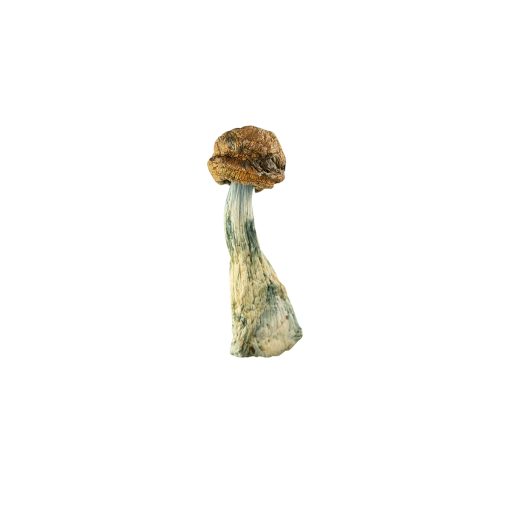
Blue Meanies Mushroom
Blue Meanies Mushroom is an unusually confusing name because it can refer to two different psychedelic mushroom concepts.
The longstanding common name Blue Meanies is widely associated with Panaeolus cyanescens, a psychoactive mushroom species also historically known as Copelandia cyanescens. The same name has also been used commercially for a Psilocybe cubensis cultivation line, so the phrase “Blue Meanies” alone does not establish the mushroom’s scientific identity.
That distinction matters because species names, informal cultivar names, supplement marketing and health research are often mixed together online.
It is equally important to separate Blue Meanies from nonpsychedelic medicinal or culinary mushrooms such as lion’s mane, oyster mushrooms, reishi and cordyceps. Research suggesting possible effects on mood, cholesterol, inflammation or cardiovascular markers usually involves those other mushrooms—not Panaeolus cyanescens.
There is currently no credible basis for claiming that Blue Meanies itself is the best mushroom for anxiety and depression, the best mushroom for high blood pressure, or a proven treatment for cholesterol, erectile dysfunction or inflammation.
For broader evidence-based mushroom and psychoactive-substance education, explore CannabisTopGrade educational resources. CannabisTopGrade educational resources
What Are Blue Meanies Mushrooms?
The name Blue Meanies most traditionally refers to Panaeolus cyanescens.
It is a psychoactive species separate from the genus Psilocybe. Modern mushroom references describe Panaeolus cyanescens as a tropical or subtropical species historically known as Copelandia cyanescens and commonly nicknamed Blue Meanies.
However, the same nickname is also used for a Psilocybe cubensis cultivar.
That means two products labeled “Blue Meanies” may not even represent the same species.
For educational accuracy, readers should distinguish:
Panaeolus cyanescens — the species commonly called Blue Meanies.
Psilocybe cubensis “Blue Meanie” — an informal cultivar name used within cultivation communities.
This naming confusion also makes claims about potency or predictable effects unreliable unless the actual species and tested material are known.
Blue Meanies vs Medicinal Mushrooms
Blue Meanies contains psychedelic compounds such as psilocybin and psilocin.
Lion’s mane, oyster mushrooms and many other so-called medicinal mushrooms do not produce a classic psilocybin psychedelic experience.
These categories are often blended together in search results because they all use the word “mushroom.”
But the scientific questions are very different.
Psychedelic mushroom research focuses on:
Psilocybin pharmacology.
Altered perception.
Psychological effects.
Potential psychiatric applications.
Toxicology.
Medicinal or culinary mushroom research may instead examine:
Dietary fiber.
Beta-glucans.
Cardiovascular biomarkers.
Cognitive function.
Inflammatory markers.
Nutritional value.
These evidence bases should not be substituted for one another.
Lions Mane Fruiting Bodies
For lions mane fruiting bodies, lion’s mane is scientifically known as Hericium erinaceus.
The fruiting body is the visible mushroom structure—the portion most people recognize as the mushroom itself.
Lion’s mane also produces a fungal network called mycelium.
These two parts contain different profiles of bioactive compounds.
A 2026 review reports that hericenones are associated particularly with lion’s mane fruiting bodies, while erinacines are predominantly produced in the mycelium.
Another recent review likewise distinguishes hericenones in fruiting bodies from erinacines in mycelia.
This distinction matters when comparing supplements.
A label stating “lion’s mane” does not tell consumers whether the product contains:
Fruiting body.
Mycelium.
Both.
A standardized extract.
Mostly growing substrate.
A specific amount of hericenones or erinacines.
Consumers interested in lion’s mane should therefore read the full ingredient and testing information rather than assuming every supplement is chemically equivalent.
Lion’s Mane and Mental Health
Lion’s mane is one of the most frequently marketed mushrooms for cognitive and emotional wellness.
Some human research is interesting, but the evidence remains limited.
A small randomized trial involving 30 women found that four weeks of Hericium erinaceus intake was associated with lower depression-related and general symptom scores, with some anxiety measures also trending lower.
However, 30 participants is a very small evidence base.
A 2025 systematic review found that lion’s mane has promising neurological and mood-related properties, but clinical evidence remains far smaller than supplement marketing often implies.
Therefore, lion’s mane should not be advertised as a proven antidepressant or anxiety medication.
Best Mushrooms for Mental Health
For best mushrooms for mental health, there is no scientifically established universal winner.
Different mushrooms are being studied for different reasons.
Lion’s mane is researched mainly for cognition, neurotrophic compounds and possible mood effects.
Psilocybin-containing mushrooms are relevant because standardized psilocybin is under clinical investigation for depression and other psychiatric conditions.
Reishi and other medicinal mushrooms have been investigated for stress, immunity and sleep-related outcomes, but clinical evidence is inconsistent or limited.
The term “best” becomes misleading because research quality, target condition and product type differ substantially.
For depression specifically, clinical evidence involving standardized psilocybin-assisted therapy is more developed than evidence showing that a normal mushroom supplement treats major depressive disorder.
That does not make an unregulated Blue Meanies mushroom a depression medicine.
Best Mushroom for Anxiety and Depression
For best mushroom for anxiety and depression, no over-the-counter mushroom supplement has been established as a first-line treatment for either condition.
Lion’s mane has some preliminary human data.
The small trial discussed above reported potentially favorable effects after four weeks, but the sample size was limited.
Psilocybin has a more substantial clinical research program, particularly for depression, but the evidence involves professionally supervised psilocybin-assisted therapy rather than ordinary mushroom supplements or unsupervised psychedelic use.
People with persistent anxiety or depression should not replace evidence-based mental-health treatment with a mushroom product based on internet claims.
Best Mushroom for Depression
For best mushroom for depression, the same caution applies.
There is no FDA-approved culinary or medicinal mushroom supplement established as the “best mushroom” for treating depression.
Lion’s mane remains interesting because of:
Hericenones.
Erinacines.
Neurotrophic research.
Preliminary mood studies.
But much of the proposed biological activity still comes from laboratory and animal research rather than large human clinical trials.
Psilocybin-assisted therapy is a different category entirely and should not be confused with lion’s mane supplementation.
Where to Get Mushrooms for Anxiety
The phrase where to get mushrooms for anxiety requires an important safety distinction.
There is no mushroom product that should be treated as a guaranteed anxiety treatment simply because a seller markets it that way.
For nonpsychoactive products such as lion’s mane, consumers generally encounter supplements through pharmacies, supplement retailers and mainstream food or wellness stores.
Product quality should be evaluated through:
Clearly identified species.
Fruiting-body versus mycelium disclosure.
Ingredient amounts.
Independent testing where available.
Manufacturer transparency.
Absence of unsupported disease-treatment claims.
For psilocybin mushrooms, self-purchasing or self-medicating for anxiety is not equivalent to clinical psychedelic therapy and can raise both legal and health risks.
Readers researching mental-health options should use licensed healthcare professionals and legitimate clinical programs rather than choosing a mushroom seller based on marketing claims.
Mushrooms for Mood
Research into mushrooms for mood is still developing.
Lion’s mane is one of the better-known examples.
Researchers are studying compounds including hericenones and erinacines because of possible effects involving nerve-growth pathways and neuroplasticity.
A small human trial has also reported possible reductions in depression and anxiety measures.
However, these findings should be viewed as early evidence.
“Mood support” is a broad wellness phrase and does not mean a product has been shown to treat:
Major depressive disorder.
Generalized anxiety disorder.
PTSD.
Bipolar disorder.
Other psychiatric illnesses.
Medicinal Mushrooms for Anxiety
For medicinal mushrooms for anxiety, the strongest public interest currently surrounds lion’s mane.
But scientific reviews of medicinal mushrooms repeatedly emphasize that relatively few large Phase III clinical trials have been completed.
A product can have promising laboratory mechanisms and still fail to produce clinically meaningful benefits in people.
This is an important point because supplement advertising often moves directly from:
“Compound affects neurons in a laboratory”
to
“This mushroom treats anxiety.”
Those are not equivalent scientific conclusions.
For additional mental-health and substance education, see CannabisTopGrade research articles. CannabisTopGrade research articles
Cordyceps Libido
Cordyceps libido is another popular supplement search.
Cordyceps-related fungi have a long history in traditional East Asian medicine, including claims involving vitality and sexual function.
However, scientific evidence supporting improved human libido remains weak.
A published review of Ophiocordyceps sinensis and sexual dysfunction found that the traditional claims are interesting but described the scientific evidence concerning efficacy and mechanisms as scarce and often unconvincing.
Much of the positive evidence comes from:
Animal studies.
Cell studies.
Traditional-use reports.
Mechanistic hypotheses.
These are not the same as large, rigorous randomized clinical trials demonstrating increased sexual desire in humans.
Cordyceps for ED
For cordyceps for ED, erectile dysfunction should not be self-treated on the assumption that cordyceps is a proven therapy.
ED can be associated with:
Cardiovascular disease.
Diabetes.
Medication effects.
Hormonal problems.
Neurological conditions.
Stress.
Anxiety.
Relationship factors.
Smoking.
Vascular disease.
Persistent erectile dysfunction can therefore sometimes be an important health signal.
The cordyceps literature does not currently establish it as a standard treatment for erectile dysfunction. The dedicated review of Ophiocordyceps sinensis and sexual dysfunction emphasizes that strong clinical evidence is lacking.
A broader 2025 meta-analysis of herbal products for ED found potential benefits for some supplements overall, but that does not establish cordyceps itself as an evidence-based ED treatment.
Best Mushroom for High Blood Pressure
For best mushroom for high blood pressure, there is no mushroom proven to replace established hypertension treatment.
Research into mushroom consumption and blood pressure is mixed.
A 2021 systematic review found that edible mushroom intake might be associated with modest improvements in blood pressure and lipid markers, but concluded that evidence for cardiovascular protection was not conclusive.
A more comprehensive 2023 systematic review found experimental evidence for blood-pressure effects to be inconsistent or limited.
A 2025 review similarly found only limited evidence for beneficial blood-pressure effects from whole mushrooms.
Therefore, there is no scientifically justified best mushroom for high blood pressure.
Mushrooms Blood Pressure
For mushrooms blood pressure, ordinary edible mushrooms can still fit comfortably into a heart-conscious diet.
They tend to be:
Low in saturated fat.
Relatively low in calories.
Naturally cholesterol-free.
Sources of potassium.
Sources of dietary fiber.
These nutritional qualities may help explain why mushroom-rich diets are being studied for cardiometabolic health.
However, hypertension treatment depends on much more than one food.
Evidence-based blood-pressure management may include:
Overall dietary pattern.
Sodium reduction when appropriate.
Exercise.
Weight management.
Medication when prescribed.
Limiting tobacco.
Treating underlying medical conditions.
Mushrooms can complement a healthy diet but should not replace antihypertensive medication.
Best Mushroom for Heart Health
For best mushroom for heart health, no specific species has enough high-quality evidence to be universally ranked first.
Whole edible mushrooms generally have favorable nutritional features.
Systematic reviews suggest possible improvements in certain cardiometabolic markers, but they do not demonstrate clear reductions in cardiovascular disease, stroke or coronary heart disease.
This means the most defensible recommendation is not “take mushroom X to prevent heart disease.”
Instead, ordinary culinary mushrooms can be part of a broader heart-healthy eating pattern.
Oyster mushrooms receive particular research interest because they contain beta-glucans and other bioactive compounds.
A systematic review of oyster-mushroom clinical trials found reductions in some glucose, cholesterol, triglyceride and blood-pressure measurements in certain studies.
But those studies were small and heterogeneous.
Best Mushroom to Lower Cholesterol
For best mushroom to lower cholesterol, there is no mushroom supplement established as a substitute for statins or other clinically indicated cholesterol management.
Oyster mushrooms have produced some of the more interesting clinical findings.
A systematic review of Pleurotus ostreatus trials found that several studies reported decreases in total cholesterol, LDL cholesterol or triglycerides.
However, broader systematic reviews of all mushroom consumption are more cautious.
The 2023 Purdue review found limited evidence that greater mushroom consumption lowers triglycerides but did not find reliable improvements in LDL cholesterol across the overall literature.
The 2025 whole-food review likewise found consistent reductions mainly in triglycerides while reporting no clear effect on LDL or HDL cholesterol.
Therefore, oyster mushrooms are interesting research candidates, but calling them a proven cholesterol treatment would be inaccurate.
Mushrooms and Cholesterol
Mushrooms contain several compounds of scientific interest in lipid metabolism, including:
Beta-glucans.
Sterols.
Fiber.
Eritadenine in certain species.
Phenolic compounds.
Older scientific reviews proposed mechanisms through which these substances might influence cholesterol and cardiovascular risk.
But modern systematic reviews remind us that plausible mechanisms do not automatically produce clinically meaningful LDL reductions in real-world human studies.
Reishi and Cholesterol
Reishi, Ganoderma lucidum, is another mushroom frequently marketed for cardiovascular health.
Evidence remains mixed.
A Cochrane review of randomized trials found insufficient evidence to support Ganoderma lucidum for treating cardiovascular risk factors such as blood pressure, glucose or lipid abnormalities.
Animal studies sometimes report much stronger cholesterol-lowering effects, but animal results cannot be assumed to occur in humans.
This illustrates why consumers should be careful with claims such as “reishi lowers cholesterol naturally.”
Mushrooms for Inflammation
For mushrooms for inflammation, researchers are particularly interested in beta-glucans, phenolic compounds and other fungal bioactives.
Some laboratory and animal research demonstrates anti-inflammatory activity.
Human evidence is much less consistent.
The 2023 systematic review of mushroom consumption found limited experimental evidence suggesting improvement in high-sensitivity C-reactive protein (hs-CRP) in some studies.
However, a 2025 review of whole-mushroom consumption found no consistent effect on C-reactive protein overall.
That means mushrooms may contain anti-inflammatory compounds without necessarily producing a clinically significant reduction in systemic inflammation every time people eat them.
Lion’s Mane and Inflammation
Lion’s mane also contains compounds being investigated for anti-inflammatory properties.
The 2025 systematic review of Hericium erinaceus describes anti-inflammatory and neuroprotective activity among its proposed biological effects.
A 2026 review of hericenones likewise discusses laboratory evidence involving inflammatory pathways and other biological activity.
But much of this research is preclinical.
It would therefore be premature to call lion’s mane a clinically proven anti-inflammatory treatment.
Best Mushrooms for Mental Health vs Psychedelic Therapy
There is an important conceptual difference between a wellness mushroom and a psychedelic drug used in therapy.
Lion’s mane supplements are generally taken repeatedly as food-derived or supplement products.
Psilocybin therapy typically involves a controlled psychoactive dose in a professionally managed environment.
Blue Meanies mushrooms are psychedelic mushrooms and cannot be assumed to reproduce a pharmaceutical psilocybin protocol.
The fact that psychedelic medicine is being researched for mental-health conditions does not mean an uncontrolled Blue Meanies product should be used to self-treat anxiety or depression.
Mental Health Claims and Supplements
When reviewing a supplement advertised for mental health, claims such as these deserve caution:
“Cures depression.”
“Eliminates anxiety.”
“Works better than antidepressants.”
“Rebuilds the brain.”
“Clinically proven mood mushroom.”
A legitimate scientific statement should identify:
Which mushroom species.
Which mushroom part.
What extract.
Which dosage.
What population.
Which outcome.
How large the study was.
Whether the study was randomized and placebo controlled.
Without those details, impressive marketing language may be far stronger than the actual evidence.
Lion’s Mane Fruiting Body vs Mycelium
The lions mane fruiting bodies keyword deserves additional attention because supplement labels increasingly emphasize fruiting-body products.
Recent research distinguishes major compound families:
Hericenones: particularly associated with fruiting bodies.
Erinacines: predominantly found in mycelial material.
That means “fruiting body only” is not automatically scientifically superior in every context.
A fruiting-body product and a mycelial extract may emphasize different compounds.
The relevant question should be whether the product actually contains characterized compounds at meaningful concentrations and whether human evidence supports the intended benefit.
Can Mushrooms Improve Libido Indirectly?
Sexual function can be influenced by:
Mood.
Stress.
Sleep.
Hormones.
Blood flow.
Cardiovascular health.
Medication.
Relationship factors.
Because some mushroom products are marketed for energy or mood, companies sometimes extend those claims into libido.
But indirect biological plausibility is not proof of a sexual-health benefit.
For cordyceps specifically, the human evidence remains too limited to guarantee improved libido or erectile function.
Mushrooms, Heart Health and Lifestyle
The strongest case for mushrooms and heart health may be much simpler than supplement advertising suggests.
Culinary mushrooms can help build meals that are:
Relatively low in calorie density.
Low in saturated fat.
Flavorful without excessive meat.
Sources of potassium.
Sources of fiber.
Part of vegetable-rich dietary patterns.
Those qualities can support healthy eating without requiring mushrooms to function as drugs.
Evidence of a healthy food pattern should not be converted into claims that one mushroom supplement “cleans arteries” or “reverses hypertension.”
Are Blue Meanies Good for Heart Health?
There is no evidence-based reason to use Blue Meanies for cardiovascular health.
Psychedelic mushrooms and culinary heart-health mushrooms are different subjects.
Research on oyster mushrooms, reishi and whole edible mushrooms cannot be transferred to Panaeolus cyanescens.
Psilocybin can also temporarily increase heart rate or blood pressure in some settings, which makes simplistic “heart healthy psychedelic” marketing particularly inappropriate.
Blue Meanies should therefore not be grouped with ordinary edible mushrooms when discussing cholesterol or hypertension benefits.
Are Blue Meanies Good for Anxiety or Depression?
Clinical research involving standardized psilocybin has reported promising findings for depression and certain anxiety-related conditions.
However, Blue Meanies itself has not been established as an approved anxiety or depression treatment.
The key difference is between:
A known clinical psilocybin formulation.
and
an informal psychoactive mushroom product with variable chemistry.
Someone seeking treatment for anxiety or depression should not rely on an unregulated mushroom cultivar as though it were standardized psychiatric medication.
For additional educational material, explore CannabisTopGrade mushroom and wellness guides. CannabisTopGrade mushroom and wellness guides
Frequently Asked Questions
1. What are Blue Meanies mushrooms?
“Blue Meanies” most traditionally refers to Panaeolus cyanescens, a psychoactive mushroom also historically called Copelandia cyanescens. The same nickname is also used for a Psilocybe cubensis cultivar, making the common name ambiguous.
2. Is lion’s mane the best mushroom for anxiety and depression?
There is not enough clinical evidence to call lion’s mane the best treatment for anxiety or depression. A small randomized trial involving 30 women found potentially favorable changes in depression and anxiety-related measures, but larger studies are needed.
3. Does cordyceps improve libido or erectile dysfunction?
Cordyceps has a long traditional-use history for sexual vitality, but human clinical evidence remains limited. A scientific review concluded that evidence concerning sexual dysfunction was scarce and often unconvincing.
4. What is the best mushroom for high blood pressure or cholesterol?
No mushroom is established as a replacement for medical treatment. Oyster mushrooms have shown potentially favorable cholesterol, triglyceride and blood-pressure changes in some small clinical trials, but broader reviews find the evidence inconsistent.
5. Are mushrooms good for inflammation?
Some mushrooms contain beta-glucans and other compounds with anti-inflammatory activity in laboratory studies. Human research is mixed: some trials show improvements in inflammatory markers, while broader reviews have not found consistent reductions.
Final Thoughts on Blue Meanies Mushroom
Blue Meanies Mushroom is best approached first as a naming problem. The traditional common name refers to Panaeolus cyanescens, although the same phrase is also used for a Psilocybe cubensis cultivar.
For lions mane fruiting bodies, modern research distinguishes fruiting-body hericenones from mycelial erinacines, although both remain active areas of research rather than established psychiatric treatments.
Regarding best mushrooms for mental health, best mushroom for anxiety and depression, best mushroom for depression, mushrooms for mood, and medicinal mushrooms for anxiety, lion’s mane has promising preliminary evidence but not enough high-quality human research to be called a proven anxiety or depression treatment.
For where to get mushrooms for anxiety, consumers should not treat an online mushroom seller as a substitute for mental-health care. Nonpsychoactive supplements should be assessed for species identity, product quality and evidence, while psilocybin self-treatment should not be confused with professionally supervised clinical psychedelic therapy.
For cordyceps libido and cordyceps for ED, traditional claims are stronger than the current human evidence. Research reviews continue to describe the evidence as limited.
Regarding best mushroom for high blood pressure, mushrooms blood pressure, best mushroom for heart health, and best mushroom to lower cholesterol, current evidence does not establish one universally superior species. Oyster mushrooms have produced some favorable results in small trials, but broader systematic reviews find cardiovascular evidence incomplete and inconsistent.
For mushrooms for inflammation, laboratory evidence is extensive, but human clinical effects remain inconsistent.
The key SEO and health-education principle is therefore simple: research on lion’s mane, cordyceps, oyster mushrooms or reishi should not be used to make medical claims about psychedelic Blue Meanies mushrooms.
Recommended Outbound Resources
PubMed — Lion’s Mane Supplement Systematic Review. Lion’s Mane systematic review
PubMed — Lion’s Mane Depression and Anxiety Trial. Lion’s Mane mood trial
PubMed — Mushroom Consumption and Cardiovascular Health. Cardiovascular mushroom review
PubMed — Cardiometabolic Effects of Mushroom Consumption. Cardiometabolic systematic review
PubMed — Oyster Mushrooms and Cardiometabolic Markers. Oyster mushroom clinical review
| Quantity | 3.5G, 7G, 14G, 28G |
|---|
Be the first to review “Blue Meanies Mushroom”
Related products
Bulk Mushrooms
Bulk Mushrooms
Bulk Mushrooms
Bulk Mushrooms
Bulk Mushrooms
Bulk Mushrooms
Bulk Mushrooms
Bulk Mushrooms
Reviews
There are no reviews yet.