
Platinum Cake Strain
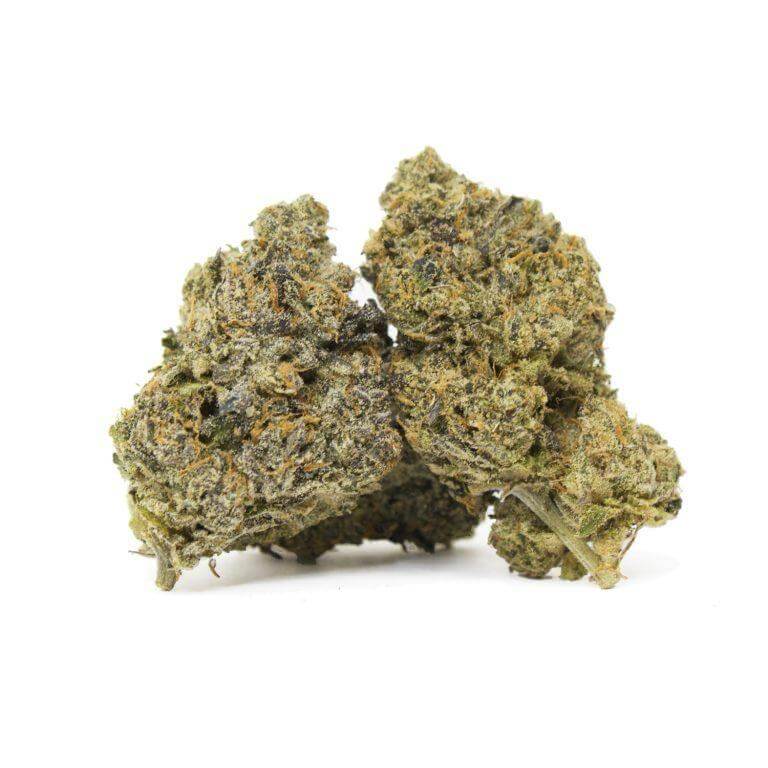
Platinum Cake Strain—sometimes called Platinum Cheesecake or Platinum Cheese Cake—is an indica-dominant hybrid associated with Platinum OG × Wedding Cake genetics. The cultivar is known for earthy coffee, cake, diesel and dried-fruit characteristics, along with consumer-reported relaxing and euphoric effects.
Leafly currently lists Platinum Cake at approximately 20% THC, although actual products can test considerably higher or lower depending on phenotype, cultivation, harvest timing, curing and laboratory testing. Its prominent listed terpenes are myrcene, caryophyllene and pinene.
Readers can review the strain profile directly at Leafly’s Platinum Cake strain profile.
Platinum Cake also provides a useful starting point for understanding an important reality about American cannabis: legality changes dramatically across state lines. Iowa, Georgia, Texas and Missouri currently have very different cannabis systems, while 24 states are categorized by the National Conference of State Legislatures as allowing recreational adult use.
For more U.S. cannabis education, explore CannabisTopGrade cannabis information.
What Is Platinum Cake Strain?
Platinum Cake is an indica-dominant hybrid created from Platinum OG and Wedding Cake.
Leafly’s current listing describes the cultivar as having approximately 20% THC and 0% CBD as general strain-directory figures. Its reported leading flavors include coffee, chestnut and diesel, while consumers commonly report tingly, euphoric and relaxed experiences.
Those percentages and experiences should not be treated as guarantees.
Cannabinoid concentrations can vary between growers and batches, while individual cannabis responses can depend on THC concentration, amount consumed, tolerance, other substances and personal biology.
A regulated product’s laboratory information is therefore more useful than assuming every flower sold under the Platinum Cake name contains exactly the same chemistry.
Platinum Cake Genetics
The commonly documented lineage is:
Platinum OG × Wedding Cake = Platinum Cake
Platinum OG itself is an indica-dominant hybrid associated with Master Kush, OG Kush and an additional unidentified parent. Leafly currently lists Platinum OG at approximately 19% THC.
Wedding Cake contributes another well-known modern cannabis lineage.
The result is a cultivar combining OG-style earthiness and pungency with creamier, sweeter characteristics.
Cannabis names are not universal genetic certifications, however. Two products using the same strain name can differ genetically or chemically.
Platinum Cake THC and Terpenes
Leafly currently lists Platinum Cake at approximately 20% THC and identifies:
Myrcene
Caryophyllene
Pinene
among its primary terpenes.
Myrcene is commonly associated with earthy and herbal aromas.
Caryophyllene contributes spicy and pepper-like characteristics.
Pinene is associated with pine aromas.
Together with numerous additional volatile compounds, these contribute to Platinum Cake’s earthy coffee, diesel and dessert-like aromatic profile.
Platinum Cake Reported Effects
Leafly’s consumer-generated data most commonly associates Platinum Cake with feeling:
Tingly
Euphoric
Relaxed.
Dry mouth, dry eyes and paranoia are among the unwanted experiences reported by some consumers.
These are anecdotal reports rather than guaranteed clinical effects. Platinum Cake should not be promoted as a proven treatment for pain, anxiety, headaches, inflammation or another medical condition merely because cannabis users report particular experiences.
For additional educational strain information, visit CannabisTopGrade strain resources.
State by State Weed Laws in America
Understanding state by state weed laws requires separating recreational legalization from medical legalization.
The National Conference of State Legislatures’ cannabis resources, updated in September 2026, continue to identify 24 states as permitting recreational marijuana use, alongside Washington, D.C. and certain U.S. territories.
Those 24 states are:
Alaska, Arizona, California, Colorado, Connecticut, Delaware, Illinois, Maine, Maryland, Massachusetts, Michigan, Minnesota, Missouri, Montana, Nevada, New Jersey, New Mexico, New York, Ohio, Oregon, Rhode Island, Vermont, Virginia and Washington.
This does not mean the laws are identical.
Possession limits, retail sales, home cultivation, taxation, public consumption and local restrictions vary considerably.
For current nationwide legislative tracking, see the National Conference of State Legislatures cannabis database.
States Where Weed Is Legal
When people search states where weed is legal, they often mean states where adults can possess recreational cannabis without participating in a medical program.
NCSL currently identifies 24 adult-use states.
However, the term “legal” should not be interpreted as unrestricted.
A legal adult-use state can still prohibit:
Public smoking.
Driving while impaired.
Possession above statutory limits.
Sales by unlicensed individuals.
Use by people under 21.
Cannabis use on certain federal property.
Transporting marijuana across state lines.
Some states also authorize home cultivation while others impose much tighter restrictions.
What States Is Weed Legal In?
For what states is weed legal, the adult-use states currently identified by NCSL are Alaska, Arizona, California, Colorado, Connecticut, Delaware, Illinois, Maine, Maryland, Massachusetts, Michigan, Minnesota, Missouri, Montana, Nevada, New Jersey, New Mexico, New York, Ohio, Oregon, Rhode Island, Vermont, Virginia and Washington.
Washington, D.C. also permits certain adult-use possession activities but is not a state.
Medical cannabis access is considerably broader. NCSL’s September 2026 report says 41 states, three territories and Washington, D.C. allow medical cannabis products, while seven additional states have more limited low-THC/high-CBD approaches.
This distinction matters when researching individual states such as Iowa, Georgia and Texas.
States Where Weed Is Legal in America
The phrase states where weed is legal in America can refer to several different legal categories:
Adult recreational cannabis.
Comprehensive medical cannabis.
Limited low-THC medical programs.
Decriminalized possession without full legalization.
Hemp-derived cannabinoid laws.
These categories should not be combined.
Missouri, for example, allows adult recreational cannabis.
Iowa operates a medical cannabis program but has not legalized adult recreational marijuana.
Texas operates its restricted Compassionate Use Program while continuing to criminalize conventional recreational marijuana.
Georgia operates a state medical cannabis program but does not authorize recreational adult-use marijuana.
That is why state-specific legal information is considerably more useful than a simple national “legal/illegal” map.
Is Weed Legal in Iowa?
Recreational weed is not legal in Iowa as of September 25, 2026.
Iowa Code continues to prohibit unauthorized possession, manufacture and distribution of controlled substances, including marijuana.
Iowa does, however, operate a legal Medical Cannabis Program administered by Iowa Health and Human Services. Registered patients with qualifying medical conditions can receive authorized cannabis products.
Iowa’s medical program allows registered patients to possess approved THC-containing products in forms including vaporizable preparations, capsules, tinctures, topical products and certain other approved formulations.
Traditional cannabis flower and THC-infused edibles such as gummies and chocolates are not authorized under the Iowa medical program.
For official patient information, see Iowa Health and Human Services Medical Cannabis Program.
Therefore, the answer to is weed legal in Iowa is:
Medical cannabis is available to qualifying registered patients, but general recreational marijuana remains illegal.
Can Platinum Cake Be Recreationally Purchased in Iowa?
Not through a legal Iowa adult-use marijuana system because Iowa does not currently operate one.
A conventional Platinum Cake flower product containing THC around the levels commonly associated with the strain should not be confused with Iowa’s regulated medical products.
Being legally purchased in another state also does not automatically make a marijuana product lawful after it enters Iowa.
Is Weed Legal in Georgia?
General recreational weed is not legal in Georgia.
The Georgia Access to Medical Cannabis Commission explicitly states that the state’s laws do not legalize recreational or adult-use marijuana and that unauthorized marijuana possession remains unlawful.
Georgia does, however, operate a Medical Cannabis Patient Registry.
Current Georgia guidance states that a registered patient or caregiver with a valid registry card may legally possess medical cannabis containing up to 12,000 milligrams of THC.
Georgia substantially expanded its medical program effective July 1, 2026. Licensed businesses can now produce regulated forms including oils, tinctures, transdermal patches, lotions, capsules, ingestibles and vaporizers for registered patients and caregivers.
Therefore, for is weed legal in Georgia, the most accurate answer is:
Medical cannabis is legal for properly registered patients under Georgia’s regulated program, but recreational marijuana remains illegal.
Is Marijuana Legal in Texas?
General recreational marijuana is not legal in Texas.
Texas Health and Safety Code §481.121 states that unauthorized possession of a usable amount of marijuana remains a criminal offense. Possession of two ounces or less is generally classified as a Class B misdemeanor, while more than two but no more than four ounces is generally a Class A misdemeanor.
Texas does have a legal medical cannabis system called the Compassionate Use Program.
Texas DPS operates the program for qualifying residents with eligible medical conditions. The state’s current definition of low-THC cannabis allows no more than 1.0% tetrahydrocannabinols by weight.
The program was expanded through HB 46 beginning September 1, 2025, adding qualifying conditions and providing for additional licensed dispensing organizations.
So the answer to is marijuana legal in Texas is:
Recreational marijuana remains illegal. Qualifying low-THC medical cannabis is legal for eligible patients through the Compassionate Use Program.
Can Texas Medical Patients Buy Ordinary Platinum Cake?
A conventional Platinum Cake flower product should not automatically be treated as a Texas medical cannabis product.
Leafly currently lists Platinum Cake around 20% THC, while the Texas Compassionate Use Program defines its authorized low-THC cannabis around a maximum of 1.0% tetrahydrocannabinols by weight.
Texas patients must obtain qualifying products through licensed dispensing organizations, and Texas does not authorize patients to grow their own medical cannabis. Smoking is also specifically excluded from the authorized medical-use definition.
Is Weed Legal in Missouri?
Yes. Recreational weed is legal in Missouri for adults aged 21 and older.
Missouri’s Department of Health and Senior Services says adult-use consumers aged 21+ may purchase cannabis from licensed dispensaries.
An adult-use consumer may currently purchase up to three ounces in a single transaction and lawfully possess up to three ounces of dried, processed marijuana or its equivalent.
Missouri also operates a separate medical cannabis program.
Public consumption remains prohibited, and driving under the influence of cannabis is not authorized by legalization.
Therefore, for is weed legal in Missouri, the answer is yes for adults 21 and older under Missouri’s regulated adult-use framework.
Can Missouri Adults Grow Cannabis?
Missouri allows adult consumers to apply for a consumer personal cultivation identification card.
An approved adult consumer may cultivate up to six flowering marijuana plants, six nonflowering plants at least 14 inches tall and six smaller nonflowering plants in an enclosed, locked area at a private residence.
Personal cultivation requires the appropriate authorization; ordinary adult-use legalization alone should not be interpreted as unrestricted cultivation.
Iowa vs Georgia vs Texas vs Missouri Weed Laws
The four states included in your keywords demonstrate how dramatically U.S. cannabis laws differ.
Iowa: recreational marijuana remains illegal, but qualifying patients may participate in Iowa’s Medical Cannabis Program.
Georgia: recreational marijuana remains illegal, while registered patients have access to regulated medical cannabis under the expanded 2026 program.
Texas: recreational marijuana remains illegal, but qualifying low-THC medical cannabis is available through the Compassionate Use Program.
Missouri: recreational marijuana is legal for adults aged 21 and older, subject to state rules and possession limits.
This is why state by state weed laws should always be checked individually.
Can You Carry Legal Weed From Missouri Into Iowa, Texas or Georgia?
State legalization does not create a general right to transport marijuana across state borders.
A cannabis product can be lawfully possessed under one state’s adult-use law while becoming unlawful after crossing into a state where that type of possession is prohibited.
Consumers should therefore evaluate the rules of the state they are physically in rather than assuming the law of the purchasing state follows the product.
The same principle applies to Platinum Cake or any other cannabis strain.
Frequently Asked Questions
1. What is Platinum Cake Strain?
Platinum Cake, also called Platinum Cheesecake, is an indica-dominant hybrid associated with Platinum OG × Wedding Cake genetics. Leafly currently lists it around 20% THC, with myrcene, caryophyllene and pinene among its prominent terpenes.
2. Is weed legal in Iowa?
Recreational marijuana is not legal in Iowa. Iowa does operate a Medical Cannabis Program for registered patients with qualifying conditions, but traditional flower and THC-infused edibles are not authorized products within that program.
3. Is weed legal in Georgia?
Recreational marijuana remains illegal in Georgia. Registered medical cannabis patients and caregivers may possess authorized regulated products, with current Georgia guidance allowing up to 12,000 milligrams of THC under its medical program.
4. Is marijuana legal in Texas?
Recreational marijuana remains illegal under Texas law. Texas does operate the Compassionate Use Program, allowing qualifying patients to obtain prescribed low-THC cannabis from licensed organizations.
5. Is weed legal in Missouri?
Yes. Adults aged 21 and older may legally purchase marijuana from licensed Missouri dispensaries and may possess up to three ounces of marijuana or its equivalent under the current adult-use framework.
Final Thoughts on Platinum Cake Strain and U.S. Weed Laws
Platinum Cake Strain is an indica-dominant Platinum OG × Wedding Cake hybrid known for earthy coffee, diesel and dessert-like characteristics. Leafly currently lists it around 20% THC and identifies myrcene, caryophyllene and pinene among its primary terpenes.
For states where weed is legal, what states is weed legal, and states where weed is legal in America, NCSL currently identifies 24 states that permit recreational adult cannabis use, although possession, cultivation and retail rules differ significantly from one jurisdiction to another.
Regarding is weed legal in Iowa, recreational marijuana remains illegal, while Iowa operates a limited regulated medical cannabis system.
For is weed legal in Georgia, recreational use remains illegal, but Georgia maintains an expanded medical cannabis program.
Regarding is marijuana legal in Texas, conventional recreational marijuana remains illegal, while qualifying low-THC cannabis is available through the state’s Compassionate Use Program.
For is weed legal in Missouri, adults aged 21 and older may legally participate in the state’s regulated adult-use cannabis market.
The larger lesson from state by state weed laws is that “legal cannabis” does not mean the same thing everywhere. Age limits, possession quantities, home cultivation, medical access, product forms and public-use rules must all be checked for the individual state.
For additional state-by-state educational material, explore CannabisTopGrade U.S. cannabis guides.
| Quantity | 1/4 oz (7g), 1/2 oz (14g), 1 oz (28g) |
|---|
Be the first to review “Plantinum Cake Strain”
Related products
Hybrid cannabis strains
Hybrid cannabis strains
Hybrid cannabis strains
Hybrid cannabis strains
Hybrid cannabis strains
Hybrid cannabis strains
Hybrid cannabis strains
Hybrid cannabis strains
Reviews
There are no reviews yet.