
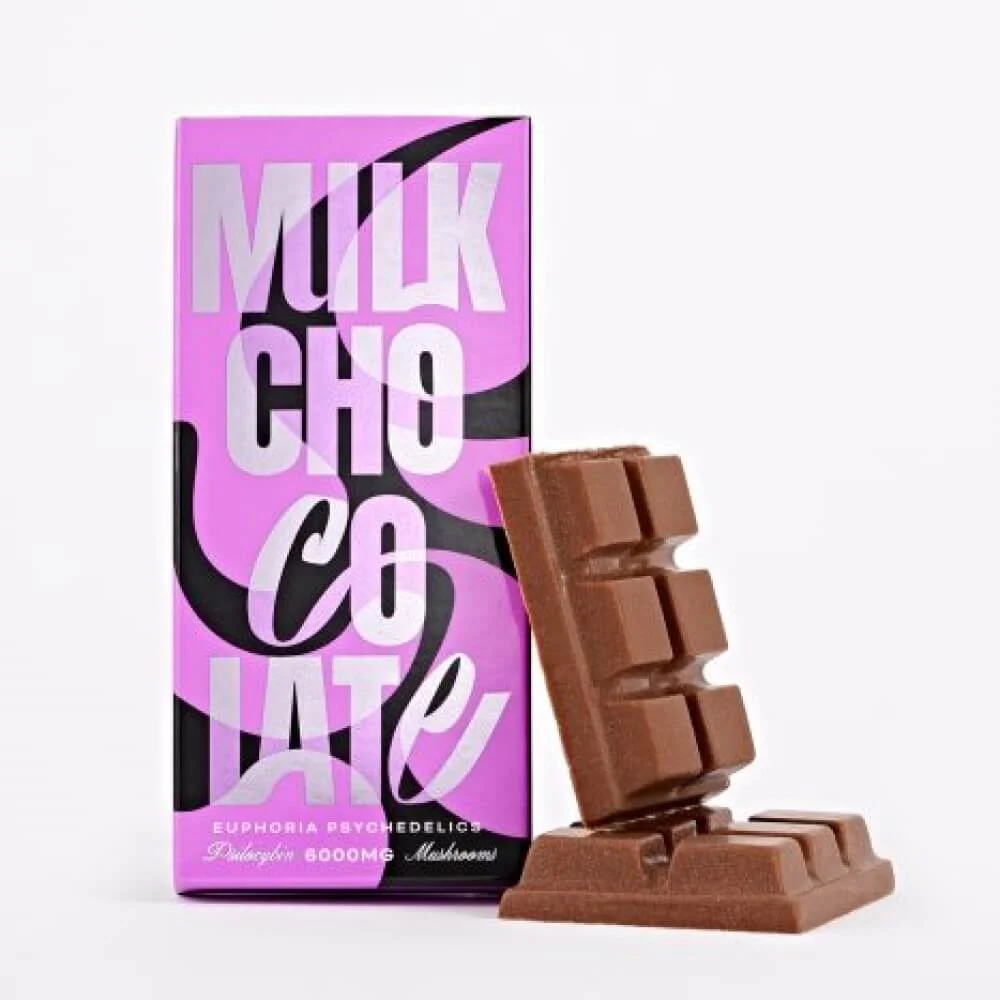
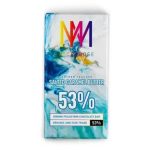
Milk Chocolate 6000mg
Milk Chocolate 6000mg sounds like a high-potency mushroom chocolate product, but the number 6000mg should never automatically be interpreted as 6,000 mg of pure psilocybin.
Without an authoritative manufacturer label and reliable laboratory analysis, 6000mg could refer to total mushroom material, total extract weight, an entire proprietary blend, an extract-equivalent calculation, or the contents of the whole chocolate bar.
Those measurements are not interchangeable.
This is especially important because mushroom-chocolate searches frequently overlap with micro mind chocolate bar, psychedelic products and discussions about psychedelic therapy for anxiety.
Clinical psychedelic medicine is very different from a commercial chocolate bar.
FDA finalized dedicated guidance for psychedelic-drug clinical investigations in July 2026, emphasizing that psychedelic treatments for medical conditions need carefully designed clinical studies, drug-characterization standards and appropriate safety controls. (FDA)
At the same time, psilocybin-assisted treatment continues to show encouraging signals for depression, anxiety and distress in selected clinical populations, while microdosing evidence remains substantially weaker.
This article also covers a completely different mushroom topic appearing in these searches: Conocybe apala, commonly called the milky conecap or white dunce cap. It is a small lawn mushroom whose identity should never be determined for eating based only on online photographs.
For additional evidence-based mushroom education, explore CannabisTopGrade educational mushroom resources.
What Does Milk Chocolate 6000mg Mean?
A large milligram number on mushroom chocolate can look precise even when it is not particularly informative.
For example, 6000mg might mean:
6,000 mg of total dried mushroom material.
6,000 mg equivalent of an extract.
And 6,000 mg combined proprietary ingredients.
The total mushroom blend across an entire chocolate bar.
A manufacturer-specific potency claim.
It does not automatically mean 6,000 mg of psilocybin.
Pure active-drug measurements and whole-mushroom weights are entirely different concepts.
Clinical psychedelic trials characterize the actual drug being administered.
Commercial products may instead advertise total fungal material.
Consumers should therefore ask:
What exactly does the milligram figure measure?
Which mushroom species is present?
Is psilocybin actually quantified?
Is the test batch identifiable?
Are other psychoactive substances present?
A large front-label number without those answers provides limited pharmacological information.
Milk Chocolate vs Psychedelic Chocolate
Ordinary milk chocolate is a conventional food containing cocoa ingredients, sugar and milk ingredients.
It is not psychedelic.
If a chocolate bar produces a substantial altered state, another active ingredient is responsible.
Possibilities in the wider mushroom-edible market can include:
Psilocybin-related compounds.
Muscimol or other Amanita-associated compounds.
Synthetic tryptamines.
Cannabinoids.
Other psychoactive ingredients.
Therefore, the chocolate itself should not be credited with the psychoactive effect.
What Is Psychedelic Therapy for Anxiety?
Psychedelic therapy for anxiety generally refers to structured clinical or investigational treatment in which a psychedelic drug is administered alongside psychological support.
This is very different from eating an unregulated mushroom chocolate at home.
Modern clinical protocols may include:
Medical screening.
Psychiatric assessment.
Preparation before the drug session.
A known psychedelic substance and dose.
Professional supervision.
A controlled treatment environment.
Psychological support during the experience.
Post-session follow-up or integration.
A 2026 systematic review and meta-analysis examining psychedelic-assisted psychotherapy for depressive and anxiety disorders included 23 studies and found large reductions in symptoms after treatment and at follow-up. However, the authors also identified important methodological concerns, including risk-of-bias issues and limited use of standardized evidence-based psychotherapy protocols. (PubMed)
The appropriate conclusion is therefore that psychedelic-assisted treatment is a promising research area, not that every psychedelic product is proven anxiety therapy.
Psilocybin and Anxiety in 2026
A September 2026 review in Neuropsychopharmacology described psilocybin as an emerging candidate for anxiety treatment while emphasizing that direct clinical evidence for anxiety disorders remains limited. (Nature)
This distinction is crucial.
Some of the strongest historical anxiety findings involve people experiencing serious illnesses such as advanced cancer.
Those results cannot automatically be generalized to every person with:
Generalized anxiety disorder.
Panic disorder.
Social anxiety disorder.
PTSD.
Obsessive-compulsive disorder.
A clinical intervention needs to be evaluated in the population for which it is being proposed.
What Is Psilocybin Assisted Therapy?
For what is psilocybin assisted therapy, the simplest definition is:
Psilocybin-assisted therapy is a structured treatment model in which a carefully characterized dose of psilocybin is administered within a professionally supported therapeutic or clinical framework.
It is not simply another term for “taking mushrooms.”
Psychological support is a major component of many modern trials.
A 2026 systematic review examining psychological support in trials of psilocybin, MDMA and LSD found that even studies not formally labeling their support as psychotherapy commonly incorporated psychotherapeutic elements. (PubMed)
This shows why the treatment model cannot be reduced to the drug alone.
Preparation, Administration and Integration
Many psychedelic-assisted treatment programs are conceptually organized around three stages.
Preparation helps the participant understand the treatment setting, expectations and potential psychological effects.
Administration involves the actual psychedelic session under supervision.
Integration or follow-up provides an opportunity to discuss the experience and connect it with therapeutic goals.
The exact structure varies among clinical trials.
FDA’s July 2026 guidance addresses the unique study-design and safety challenges involved in evaluating psychedelic drugs for medical use. (FDA)
That regulatory context is fundamentally different from a commercially marketed milk-chocolate bar.
Psilocybin-Assisted Therapy in Serious Illness
One area with encouraging evidence is anxiety and depression associated with serious or life-limiting illness.
A 2026 systematic review examining psilocybin-assisted therapy in palliative-care populations included six studies and 74 participants.
Across the included research, substantial reductions in depression and anxiety were reported, with many participants achieving clinically meaningful symptom improvements. The review also noted limitations and called for further research before widespread integration into routine palliative care. (PubMed)
These findings are important.
They should not be converted into the much broader claim that any psilocybin chocolate treats anxiety.
Can Psilocybin Also Cause Anxiety?
Yes.
Psilocybin can produce both potentially therapeutic and unwanted psychological effects.
NCCIH lists possible adverse effects including:
Anxiety.
Fear.
Panic.
Paranoia.
Confusion.
Headache.
Nausea.
Increased heart rate.
Increased blood pressure.
Poor sleep. (NCCIH)
Clinical screening, dose characterization and treatment setting therefore matter.
Micro Dosing Therapy
The phrase micro dosing therapy is increasingly popular but can be misleading.
Microdosing generally involves using very small amounts of a psychedelic with the intention of avoiding a full psychedelic experience.
People frequently report microdosing in hopes of improving:
Mood.
Anxiety.
Stress.
Focus.
Creativity.
Productivity.
However, self-reported benefits have not translated consistently into randomized clinical evidence.
A 2026 systematic review and meta-analysis evaluating 24 microdosing studies involving 3,681 participants found no clear immediate benefit in randomized trials for depression, anxiety or stress compared with control conditions. (PubMed)
Therefore, micro dosing therapy is not currently equivalent to an established anxiety treatment.
Microdosing vs Psilocybin-Assisted Therapy
The two concepts should not be mixed together.
Microdosing
Usually involves repeated, very small exposures.
Attempts to avoid a full psychedelic state.
Often occurs outside formal clinical settings.
Has inconsistent placebo-controlled evidence.
Has unresolved long-term safety questions.
Psilocybin-assisted therapy
Typically involves carefully characterized drug administration.
Can involve a substantial psychedelic experience.
Uses participant screening.
Includes professional support.
Usually involves preparation and follow-up.
Has a growing clinical-trial evidence base.
Evidence supporting one approach cannot automatically be transferred to the other.
Microdosing Side Effects
NCCIH reports that psilocybin microdosing can be associated with:
Insomnia.
Increased anxiety.
Worsened mood.
Low energy.
Gastrointestinal discomfort.
Headache.
Sensory disturbances.
Difficulty concentrating.
Reduced cognitive functioning.
Social difficulties. (NCCIH)
A 2026 systematic review of mushroom and truffle microdosing likewise found reports of gastrointestinal symptoms, anxiety, disorientation, impaired focus and sensory changes while emphasizing inconsistent safety reporting across studies. (Frontiers in Psychiatry)
Small does not mean risk-free.
Micro Mind Chocolate Bar
The phrase micro mind chocolate bar currently appears in commercial mushroom-chocolate searches.
I found current commercial listings using the MicroMind/Micro Mind Mushroom Chocolate Bars name in multiple flavors.
However, I did not find sufficient independent evidence establishing one FDA-reviewed pharmaceutical formulation or a standardized clinical psilocybin product under that name.
For that reason, a Micro Mind chocolate product should not automatically be described as:
FDA-approved psilocybin.
Standardized psychedelic therapy.
A verified microdose.
A medically proven anxiety treatment.
Exact ingredient documentation and batch-specific analysis would be needed to establish what a particular product contains.
This article does not direct readers to sellers of unlicensed psychedelic products.
Micro Mind Chocolate
For micro mind chocolate, branding should be separated from chemistry.
Words such as:
Micro.
Mind.
Magic.
Psychedelic.
Therapy.
Focus.
do not tell consumers the identity or quantity of the active compound.
A product might contain mushroom powder, a functional mushroom blend, psilocybin-related compounds or another psychoactive substance entirely.
The strongest evidence comes from actual chemical characterization rather than a brand name.
Why Clinical Psilocybin Is Different From a Chocolate Bar
FDA-regulated drug development evaluates areas such as:
Drug identity.
Manufacturing.
Purity.
Dose.
Participant safety.
Adverse events.
Trial design.
Treatment conditions.
FDA’s finalized July 2026 psychedelic-drug guidance exists precisely because studying these compounds involves challenges that ordinary supplement or candy marketing does not address. (FDA)
A retail product therefore should not borrow the credibility of clinical psychedelic research unless the same formulation has actually been studied.
Midwest Grow Kits Review
The keyword midwest grow kits review concerns a different part of the mushroom world: cultivation equipment and supplies.
Midwest Grow Kits currently sells equipment and grow products for mushrooms, including functional and gourmet species.
Its current functional mushroom catalog includes species such as:
Lion’s mane.
Reishi.
Cordyceps.
Turkey tail. (Midwest Grow Kits)
The company’s current website also sells gourmet grow products for species such as lion’s mane, shiitake and oyster mushrooms and states that it does not advocate growing illegal substances.
This distinction matters.
Mushroom cultivation itself is a broad legal hobby involving many culinary and functional fungi.
This section concerns those lawful species only and does not provide instructions for cultivating psilocybin mushrooms.
What Do Midwest Grow Kits Reviews Say?
Reviews are mixed depending on where they are collected.
The company’s own current product pages display many highly positive customer ratings for various supplies and gourmet mushroom kits.
Independent Trustpilot results are less uniformly positive. A recent indexed snapshot showed approximately 188 reviews and a TrustScore around 2.6/5, with both enthusiastic customers and complaints involving shipping, contamination, product quality and customer service. (Trustpilot)
Because online ratings change over time, this should be treated as a current snapshot rather than a permanent score.
The most useful evaluation criteria are:
Product sterility where relevant.
Shipping quality.
Customer support.
Clear lawful-use information.
Replacement policies.
Species-specific suitability.
Independent customer feedback.
Midwest Mushroom Supply
The phrase midwest mushroom supply can refer generally to mushroom-cultivation suppliers in the Midwest or specifically to searches for Midwest Grow Kits.
Current Midwest Grow Kits inventory includes:
Gourmet mushroom products.
Functional mushroom cultures.
Grow bags.
Substrates.
Fruiting equipment.
Accessories.
For consumers interested in legal home cultivation, species such as lion’s mane, oyster, shiitake and reishi provide an entirely different context from psychedelic products.
The site currently advertises ready-to-fruit gourmet products and functional mushroom kits. (Midwest Grow Kits)
Again, this article does not provide psilocybin cultivation instructions.
Why Growing Gourmet Mushrooms Is Different
Legal culinary and functional mushroom growing can involve familiar food species such as:
Oyster mushroom.
Lion’s mane.
Shiitake.
Enoki.
Reishi.
These fungi are not interchangeable with psilocybin-producing Psilocybe species.
A website selling generic mushroom cultivation supplies also should not automatically be described as a psychedelic mushroom business merely because some equipment can theoretically have multiple uses.
Intended species and lawful use matter.
Milky Conecap
The milky conecap is a small wild mushroom with the accepted scientific name Conocybe apala.
Species Fungorum recognizes Conocybe apala (Fr.) Arnolds as the current name, placed in the family Bolbitiaceae. (Species Fungorum)
NCBI likewise lists Conocybe apala as the current species name and records historical synonyms including Conocybe lactea and Conocybe albipes. (NCBI Taxonomy)
It is commonly associated with grassy habitats such as lawns.
Conocybe Apala
Conocybe apala is a delicate, short-lived lawn mushroom.
A regional fungal atlas from the University of British Columbia describes features including:
A pale to milk-white conical cap.
Gills that mature toward rusty or brown coloration.
A thin, fragile whitish stem.
Growth in grass.
A brownish to reddish-brown spore deposit. (E-Flora BC)
These are useful educational characteristics.
They should not be treated as enough information to identify a wild mushroom safely for eating.
Milky Conecap Mushroom
The milky conecap mushroom commonly appears after moist conditions in lawns and grassy areas.
It can be easy to overlook because the fruiting body is delicate and can deteriorate quickly.
The mushroom belongs to Conocybe, a genus containing numerous small brown or pale mushrooms.
This is important from a safety perspective because small lawn mushrooms are notoriously difficult for beginners to distinguish reliably.
Color and cap shape alone are insufficient.
Milky Cone Cap
The spelling milky cone cap is simply a spaced version of milky conecap.
Both refer commonly to Conocybe apala.
The species has also historically appeared under names including:
Conocybe lactea.
Conocybe albipes.
These older names may still appear in mushroom guides or older online material.
Taxonomic databases currently recognize Conocybe apala. (NCBI Taxonomy)
Dunce Cap Mushroom
The phrase dunce cap mushroom is associated with several conical Conocybe-type mushrooms.
Conocybe apala is commonly called the white dunce cap as well as milky conecap.
The nickname refers to the conspicuously conical cap shape.
However, a triangular or pointed cap is not enough to identify the species.
Many unrelated or closely related fungi can produce conical caps.
Is Milky Conecap Psychedelic?
Conocybe apala should not be treated as a psilocybin mushroom.
It is not the same thing as a Psilocybe species, despite both genus names beginning with similar letters and despite some other mushrooms historically associated with Conocybe receiving attention for different chemistry.
A wild mushroom should never be consumed in an attempt to determine whether it is psychoactive.
The correct first question is species identity and safety—not whether it can cause a trip.
Is Milky Conecap Edible?
Reliable sources do not establish Conocybe apala as a mushroom that should be collected for food.
NCBI and Species Fungorum provide taxonomy, while regional identification sources emphasize its small, delicate nature.
Given the difficulty of distinguishing small lawn mushrooms and the possibility of dangerous look-alikes, it should not be eaten based on an online photograph or brief description.
Poison Control explicitly advises never eating a wild mushroom unless it has been identified by an expert and warns that poisonous and edible mushrooms can look extremely similar. (Poison Control)
Why Online Mushroom Photos Are Not Enough
Mushroom identification can depend on:
Cap structure.
Gill attachment.
Spore color.
Stem characteristics.
Stem base.
Bruising or discoloration.
Habitat.
Substrate.
Microscopic structures.
Geographic location.
Developmental stage.
Poison Control notes that even experienced identification may require several of these characteristics. (Poison Control)
Therefore, a photograph of a white cone-shaped lawn mushroom cannot establish that it is Conocybe apala.
Milk Chocolate and Wild Mushrooms Are Separate Topics
The keyword cluster in this article brings together several subjects that should remain distinct.
Milk Chocolate 6000mg is a product-style commercial term.
Psilocybin-assisted therapy is a developing medical research field.
Microdosing therapy is an experimental practice with inconsistent clinical evidence.
Micro Mind chocolate is commercial mushroom-product branding whose exact formulation should be verified product by product.
Midwest mushroom supply relates to mushroom-growing equipment, including lawful gourmet and functional species.
Conocybe apala is a naturally occurring wild mushroom.
Combining these categories can lead to inaccurate assumptions.
For more evidence-based mushroom identification and safety education, explore CannabisTopGrade mushroom research guides.
1. What is psilocybin-assisted therapy?
Psilocybin-assisted therapy is a structured clinical or investigational treatment in which carefully characterized psilocybin is administered alongside professional psychological support. Many trials include preparation, a supervised administration session and follow-up. It is different from consuming an unregulated mushroom chocolate. (PubMed)
2. Does psychedelic therapy help anxiety?
Research is promising in selected populations, including people with anxiety or depression associated with serious illness, and broader psychedelic-assisted psychotherapy studies report substantial symptom reductions. However, direct evidence for specific anxiety disorders remains limited, and methodological weaknesses remain in parts of the literature. (Nature)
3. Does micro dosing therapy work for anxiety?
Current placebo-controlled evidence does not establish microdosing as a reliable anxiety treatment. A 2026 systematic review and meta-analysis found no clear immediate anxiety benefit compared with control conditions in randomized trials. (PubMed)
4. What is the milky conecap mushroom?
Milky conecap is a common name for Conocybe apala, also called the white dunce cap. It is a small, fragile mushroom associated with grassy habitats and is recognized as a species in the family Bolbitiaceae. (Species Fungorum)
5. Can a milky conecap be identified safely from a photo?
A photo alone should not be used to decide whether a wild mushroom is safe to eat. Small lawn mushrooms can have dangerous look-alikes, and Poison Control recommends consuming wild mushrooms only after expert identification. (Poison Control)
Final Thoughts on Milk Chocolate 6000mg
Milk Chocolate 6000mg should not automatically be interpreted as a chocolate containing 6,000 mg of pure psilocybin. The actual meaning of the number depends on the verified formulation and laboratory data.
For psychedelic therapy for anxiety, current research is promising, particularly within carefully supervised clinical treatment, but direct evidence for individual anxiety disorders remains limited. (Nature)
For what is psilocybin assisted therapy, the key concept is that treatment combines a characterized psychedelic drug with preparation, professional support and follow-up rather than simply giving someone mushrooms.
Regarding micro dosing therapy, evidence remains considerably weaker. Randomized research has not demonstrated consistent benefits for anxiety, depression or stress compared with placebo. (PubMed)
For micro mind chocolate bar and micro mind chocolate, current commercial products use that branding, but branding does not prove pharmaceutical standardization, FDA approval, active-compound concentration or therapeutic effectiveness.
For midwest grow kits review and midwest mushroom supply, Midwest Grow Kits currently sells cultivation supplies for gourmet and functional mushrooms including lion’s mane, reishi and other lawful species. Independent customer reviews are mixed, making current product quality, service and third-party feedback more informative than seller-hosted ratings alone. (Midwest Grow Kits)
Regarding milky conecap, milky conecap mushroom, milky cone cap, milky cone cap mushroom, dunce cap mushroom, and Conocybe apala, these terms overlap around a small pale lawn mushroom formally recognized as Conocybe apala. (NCBI Taxonomy)
Wild mushroom identification should remain conservative. A conical white cap is not enough to determine species or safety.
The broader lesson is:
Clinical psychedelic therapy, commercial mushroom chocolate, lawful gourmet mushroom cultivation and wild mushroom identification are four different subjects. Keeping them separate produces more accurate, safer information.
For additional U.S.-focused educational content, explore CannabisTopGrade psychedelic and mushroom safety articles.
Recommended Outbound Resources
FDA — Psychedelic Drugs: Considerations for Clinical Investigations
NCCIH — Psilocybin for Mental Health and Addiction
PubMed — Psychedelic-Assisted Psychotherapy for Depression and Anxiety Meta-Analysis
PubMed — Psychological Support in Psychedelic-Assisted Therapy
Species Fungorum — Conocybe apala
Be the first to review “Euphoria Psychedelics – Milk Chocolate 6000mg”
Related products
Bulk Mushrooms
Bulk Mushrooms
Bulk Mushrooms
Bulk Mushrooms
Bulk Mushrooms
Bulk Mushrooms
Bulk Mushrooms
Bulk Mushrooms
Reviews
There are no reviews yet.