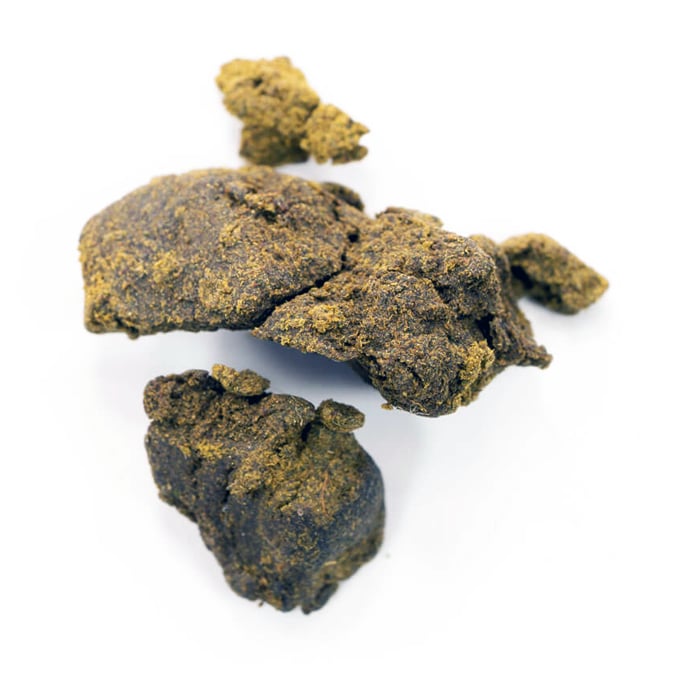
Moroccan Ketama Gold Hash is a name associated with Moroccan-style cannabis resin and the historic hash-producing region around Ketama in northern Morocco’s Rif Mountains.
Hashish is different from ordinary dried marijuana flower. The U.S. Drug Enforcement Administration describes hashish as THC-rich resinous material collected from the cannabis plant, dried and compressed into forms such as blocks, balls or sheets.
The name Ketama Gold should not be interpreted as an internationally standardized cannabis grade. Commercial products carrying this name vary considerably in cannabinoid content, genetics, texture and country of production. Contemporary sellers use “Gold” for everything from traditional-style Moroccan resin to CBD or hemp-derived products.
That makes batch testing more useful than the name alone.
For any Moroccan Ketama Gold Hash product, useful information includes:
- total THC and THCA;
- CBD and other cannabinoids;
- batch-specific laboratory testing;
- producer and origin information;
- contaminant-screening results;
- product date and traceability.
For more educational information about resin products, explore the Cannabistopgrade hash and concentrates category, read the Cannabistopgrade cannabis concentrates guide, or visit Cannabistopgrade.com for broader cannabis education.
Moroccan Ketama Gold Hash Quick Facts
| Topic | Educational overview |
|---|---|
| Product | Moroccan Ketama Gold Hash |
| Product type | Cannabis resin / hash |
| Historical association | Ketama and Morocco’s Rif region |
| “Gold” standardized grade? | No |
| Exact THC | Batch-specific |
| Ganja | Common term for cannabis/marijuana |
| THC | Main intoxicating cannabinoid in marijuana |
| Cannabis psychoactive? | Yes |
| Classic hallucinogen? | Not usually classified with LSD or psilocybin |
| Smoking cannabis | Exposes lungs to combustion smoke |
| Health risks | Depend on potency, frequency, age and individual factors |
What Is Ganja?
Ganja is a widely used term for cannabis or marijuana.
In modern English usage, ganja generally refers to dried cannabis flower or marijuana, although the term has a longer linguistic and cultural history in South Asia and the Caribbean.
The DEA includes ganja among common street names for marijuana. Its current cannabis material describes marijuana as a mind-altering psychoactive drug in which delta-9 THC is the principal compound responsible for psychoactive effects.
Other common words referring to cannabis include:
- weed;
- pot;
- marijuana;
- bud;
- herb;
- Mary Jane.
These informal terms do not necessarily describe different drugs.
Ganja Side Effects
The phrase ganja side effects covers both short-term cannabis effects and risks associated with frequent or higher-potency use.
How cannabis affects a person depends on numerous factors, including the amount used, THC concentration, frequency of use, prior experience, biology, method of consumption and use of alcohol or other substances at the same time.
Possible short-term THC-related effects can include:
- intoxication;
- altered perception;
- impaired attention;
- impaired short-term memory;
- slower reaction time;
- reduced coordination;
- changes in mood;
- increased heart rate;
- anxiety or paranoia in some people.
CDC states that cannabis use can affect brain functions involving memory, learning, attention, decision-making, coordination, emotions and reaction time.
Effects become particularly unpredictable with products containing high concentrations of THC.
Higher-Potency Cannabis
Hash is a concentrated resin product rather than ordinary flower.
That distinction matters because concentrated THC products can deliver considerably more THC than some conventional flower products.
CDC notes that high-THC cannabis products can produce stronger intoxicating effects and may increase the risk of overconsumption. High-concentration products are also associated with concern about more severe symptoms of cannabis use disorder.
Therefore, the potency of Moroccan Ketama Gold Hash should not be assumed from the name.
Smoking Pot
Smoking pot means smoking marijuana or cannabis.
When cannabis plant material or hash is burned, the user inhales both cannabinoids and products of combustion.
Smoking can expose the respiratory system to substances that are separate from the psychoactive effects of THC.
CDC states that smoking cannabis can expose people to harmful chemicals and notes that cannabis smoke contains many of the same types of toxic and cancer-causing chemicals found in tobacco smoke.
Possible respiratory effects associated with cannabis smoking include:
- coughing;
- airway irritation;
- increased mucus;
- bronchitis-type symptoms.
Smoking cannabis can also expose other people through secondhand smoke.
CDC reports that secondhand cannabis smoke contains THC as well as toxic and cancer-causing compounds.
This means the health question is broader than whether cannabis itself is legal or naturally derived.
Is Weed a Hallucinogen?
Cannabis can produce perceptual changes and, particularly at high THC exposure, can sometimes cause hallucination-like or psychosis-related experiences. However, it is not usually grouped with classic hallucinogens such as LSD, peyote or psilocybin in modern drug classifications.
The DEA currently categorizes marijuana separately as a cannabis psychoactive drug, while it lists LSD, psilocybin and peyote under its hallucinogen category.
That distinction is useful.
THC can alter:
- perception;
- time awareness;
- mood;
- sensory processing;
- thought patterns.
CDC also notes that cannabis can cause disorientation and, for some people, anxiety or paranoia. Cannabis use is associated with increased risk of psychosis, particularly with earlier and more frequent use, although individual risk varies.
So the most accurate answer is:
Cannabis is a psychoactive drug with perceptual and sometimes hallucinatory effects, but it is not normally considered a classic psychedelic hallucinogen like LSD or psilocybin.
Marijuana Definition
A practical marijuana definition is cannabis plant material used for its biologically active cannabinoids, particularly THC.
CDC defines cannabis—also called marijuana, weed, pot or bud—as material from the cannabis plant containing more than 100 cannabinoids. These include THC, which is mind-altering, and CBD, which by itself does not produce the classic cannabis high.
Marijuana is therefore not one single chemical.
It is plant material containing a complex mixture that can include:
- THC;
- THCA;
- CBD;
- CBDA;
- CBG;
- other cannabinoids;
- terpenes.
Different cannabis products can contain radically different concentrations.
Marijuana vs. Hash
| Feature | Marijuana Flower | Hash |
|---|---|---|
| Main material | Dried cannabis flower | Concentrated cannabis resin |
| THC | Batch-specific | Often more concentrated, but variable |
| Physical form | Buds/flower | Pressed resin |
| Cannabinoids | Naturally present in flower | Concentrated resin composition |
| Same potency? | No | No |
| Laboratory testing useful? | Yes | Yes |
The DEA specifically distinguishes hashish as collected and compressed resinous cannabis material.
Some THC Side Effects
THC side effects depend strongly on amount and individual sensitivity.
THC is the main intoxicating cannabinoid associated with cannabis.
Possible short-term effects can include:
Impaired attention and memory
CDC states that THC-containing cannabis can affect attention, decision-making and memory.
Slower reaction time and coordination
These effects are particularly important in activities such as driving.
Anxiety or paranoia
CDC notes that cannabis can cause anxiety, paranoia and disorientation in some individuals.
Increased heart rate
Cannabis can temporarily increase heart rate and may raise blood pressure immediately after use.
Altered perception
THC changes sensory and cognitive processing and produces the cannabis “high.”
Cannabis use disorder
Repeated cannabis use can develop into problematic use for some people. CDC notes that risk is higher among those who begin using cannabis younger and among frequent users.
Do Stronger THC Products Have More Side Effects?
Not every person reacts identically, but greater THC exposure can increase intoxication.
CDC explains that higher THC concentration can produce stronger effects and increase the risk of consuming too much.
That is particularly relevant when comparing flower with concentrates such as hash, wax, budder and live resin.
Is Weed Bad for U?
The query “is weed bad for u” is better answered with context than with a simple slogan.
Cannabis is not risk-free, but risks vary substantially according to:
- THC concentration;
- age;
- frequency of use;
- route of administration;
- individual susceptibility;
- pregnancy status;
- underlying health conditions;
- mixing cannabis with other substances.
CDC identifies risks involving brain function, cannabis use disorder, lung health, cardiovascular effects and mental health.
Brain Effects
Cannabis directly affects brain regions involved in memory, learning, attention, coordination and decision-making.
Lung Effects
Smoking cannabis exposes the respiratory system to combustion products.
Heart Effects
Cannabis can increase heart rate and blood pressure immediately after use. Research continues into its longer-term cardiovascular effects.
Mental Health
Cannabis can cause anxiety, paranoia and disorientation, and frequent use—particularly beginning at younger ages—is associated with increased risk of psychosis and schizophrenia.
Dependence and Cannabis Use Disorder
Some people develop cannabis use disorder, meaning they have difficulty stopping or controlling cannabis consumption despite negative consequences.
Therefore, the evidence-based answer is:
Cannabis has documented potential harms, but risk is not identical for every person, product or pattern of use.
Is Marijuana Natural, and Does Natural Mean Safe?
Cannabis is a naturally occurring plant.
That does not automatically make every cannabis product harmless.
Many naturally occurring substances can have strong pharmacological effects.
THC affects the brain and body regardless of whether it originated naturally in cannabis.
Likewise, a concentrated natural resin such as hash can expose a user to substantially more cannabinoids than a small amount of lower-potency flower.
“Natural” describes origin.
It does not establish safety.
What Makes Moroccan Hash Different?
The term Moroccan hash traditionally refers to cannabis resin associated with Morocco, particularly the Rif region.
Ketama has long been closely associated with Morocco’s hash culture, which is why many resin products use geographic names such as:
- Ketama;
- Moroccan;
- Rif;
- Ketama Gold.
However, modern commercial naming complicates the picture.
Products sold today as Ketama Gold can include conventional THC-dominant hash, CBD-rich resin, hemp-derived products or Moroccan-style hash manufactured outside Morocco.
Therefore, neither the word Moroccan nor Gold proves:
- geographic origin;
- THC percentage;
- quality;
- purity;
- cannabinoid profile.
A batch-specific laboratory report and transparent producer information provide stronger evidence.
Moroccan Ketama Gold Hash and THC
Traditional hashish contains concentrated cannabis resin and can therefore be THC-rich.
The DEA states that hashish contains THC-rich resinous cannabis material and describes hash and hash oil as products similar to marijuana but potentially stronger.
However, there is no single valid THC percentage for all Moroccan Ketama Gold Hash.
Commercial products using the name vary too much.
A responsible product description should therefore say:
Exact THC: batch-specific
rather than assigning a universal figure.
The same applies to CBD and terpene concentration.
Smoking Hash vs. Smoking Cannabis Flower
Both can create combustion smoke when burned.
| Factor | Cannabis Flower | Hash |
|---|---|---|
| Plant material | Primarily flower | Concentrated resin |
| THC concentration | Variable | Often higher, but variable |
| Smoke exposure if burned | Yes | Yes |
| Impairment possible | Yes | Yes |
| Exact effect | Individual and batch-specific | Individual and batch-specific |
| Risk-free? | No | No |
CDC states that THC-containing cannabis products have health risks regardless of how they are used, while smoking additionally exposes users and people nearby to harmful chemicals.
Frequently Asked Questions
1. What is Moroccan Ketama Gold Hash?
Moroccan Ketama Gold Hash is a commercial name associated with Moroccan-style cannabis resin and the Ketama/Rif hash tradition. “Gold” is not a standardized international potency or quality grade, so individual products should be evaluated through their actual origin and laboratory testing.
2. What is ganja?
Ganja is a common term for cannabis or marijuana. The DEA includes ganja among common marijuana street names.
3. Is weed a hallucinogen?
Cannabis is primarily described as a psychoactive drug. THC can alter perception and, particularly at high exposure, can contribute to hallucination-like or psychotic experiences in some people, but cannabis is generally categorized separately from classic hallucinogens such as LSD and psilocybin.
4. What are the side effects of THC?
Possible THC effects include intoxication, impaired memory and attention, altered perception, reduced coordination, increased heart rate and, in some people, anxiety or paranoia. Higher THC concentrations can produce stronger intoxication.
5. Is weed bad for you?
Cannabis is not risk-free. Potential risks include impaired brain function during intoxication, respiratory effects when smoked, cannabis use disorder and mental-health effects in susceptible people. Risk varies according to age, frequency, potency and individual health factors.
Authoritative Outbound Links
| Quantity | 1/8 oz(3.5g), 1/4 oz (7g), 1/2 oz (14g), 1 oz (28g) |
|---|
Be the first to review “Moroccan Ketama Gold Hash for Sale Online”
Related products
Buy Budder Online
Buy THC Extracts Online
Buy Budder Online
Buy THC Extracts Online
Buy THC Extracts Online
Buy THC Extracts Online
Buy Budder Online
Buy THC Extracts Online
Reviews
There are no reviews yet.