
Blue Dream Strain
Blue Dream Strain is one of the most recognizable cannabis cultivars in the United States. Closely associated with California cannabis culture, Blue Dream is generally described as a sativa-dominant hybrid created from Blueberry and Haze genetics.
Current Leafly strain-reference information lists Blue Dream at approximately 21% THC and describes its most frequently reported effects as creative, euphoric, and happy. Common flavors include berry, blueberry, and sweet notes, while its listed dominant terpene family includes myrcene, pinene, and caryophyllene.
Weedmaps currently presents a wider approximate THC range of 15% to 27% and notes an important complication: more than one genetic package has circulated commercially under the Blue Dream name.
That makes Blue Dream a useful example of a broader cannabis principle:
a famous strain name does not guarantee identical genetics or chemistry in every package.
The actual cannabinoid profile depends on the producer, phenotype, cultivation environment, harvest, storage, and laboratory results.
This guide explores Blue Dream while also explaining the search terms chronic strain, chronic weed, colorful strains, colourful weed, and colorful weed strains.
For additional U.S.-focused cannabis strain education, explore Cannabistopgrade.com.
Blue Dream Strain Quick Profile
| Characteristic | Blue Dream Strain |
|---|---|
| General classification | Hybrid / commonly sativa-dominant |
| Common genetics | Blueberry × Haze |
| Leafly reference THC | About 21% |
| Weedmaps reference range | About 15–27% THC |
| CBD | Generally low in standard Blue Dream |
| Common reported effects | Creative, euphoric, happy |
| Common flavors | Blueberry, berry, sweet |
| Listed terpenes | Myrcene, pinene, caryophyllene |
| Historical association | California |
| Standardized nationally? | No |
| Best potency reference | Product-specific lab results |
Blue Dream’s popularity makes it familiar, but familiarity should never be confused with chemical standardization.
What Is Blue Dream Strain?
Blue Dream is a hybrid marijuana strain that became particularly prominent in California before spreading throughout legal and medical cannabis markets across the United States.
The best-known lineage is:
Blueberry × Haze
Leafly identifies the cultivar as sativa-dominant, while Weedmaps classifies it broadly as a hybrid.
Its enduring reputation comes from the combination of:
- berry-forward aroma;
- substantial THC potential;
- balanced consumer-reported effects;
- widespread market availability.
Blue Dream became so widespread that the name eventually began appearing on products from many different cultivators.
Where Did Blue Dream Originate?
Blue Dream is strongly associated with California, particularly Northern California and Santa Cruz cannabis culture.
Its exact creator remains uncertain.
Historical reporting from Leafly describes the original Blue Dream as a clone-only cultivar that likely emerged around Santa Cruz during California’s medical-marijuana era, with no single breeder universally recognized as its creator.
That uncertain history has contributed to multiple commercial versions of Blue Dream.
Blue Dream Genetics
The most commonly accepted lineage is:
Blueberry × Haze
Some historical accounts specify DJ Short’s Blueberry combined with a Santa Cruz Haze.
Other commercial seed lines have used different genetic combinations while retaining the Blue Dream name.
This is why two products called Blue Dream may not always be genetically identical.
Blue Dream and Blueberry
Blueberry is one of the most influential cannabis cultivars associated with sweet fruit aromas.
Its genetic contribution helps explain Blue Dream’s reputation for:
- blueberry;
- berry;
- sweet fruit notes.
However, aroma still varies considerably between batches.
Blue Dream and Haze
Haze genetics have strongly influenced many sativa-associated cannabis varieties.
They are often connected with:
- herbal aromas;
- spice;
- citrus;
- uplifting consumer reports.
The Blueberry-Haze combination helped create Blue Dream’s recognizable hybrid profile.
Is Blue Dream Indica or Sativa?
Blue Dream is generally described as a sativa-dominant hybrid.
However, different commercial Blue Dream lines can show different traits.
Weedmaps notes that multiple genetic versions have existed under the same name.
Therefore, classifying every Blue Dream product using one exact indica-to-sativa percentage can be misleading.
Blue Dream THC Percentage
Leafly currently lists Blue Dream at approximately:
21% THC
Weedmaps presents a broader range of approximately:
15% to 27% THC.
Both should be treated as reference values.
The actual product label should determine expectations about a specific batch.
Why Blue Dream THC Varies
THC concentration can change according to:
- phenotype;
- growing conditions;
- harvest timing;
- drying;
- curing;
- moisture level;
- storage;
- laboratory methodology.
A Blue Dream batch testing at 18% THC and another testing at 25% THC can both legitimately carry the same strain name.
Is Blue Dream Strong?
Blue Dream is generally considered a moderate-to-high THC cultivar.
At around 21% THC on Leafly’s current reference profile, it contains more THC than many older cannabis varieties.
However, THC percentage alone does not determine quality.
Other useful considerations include:
- freshness;
- terpene preservation;
- contaminant testing;
- cannabinoid balance;
- accurate labeling.
Higher THC does not automatically mean better cannabis.
Blue Dream Effects
Leafly currently lists the most common consumer-reported Blue Dream effects as:
- creative;
- euphoric;
- happy.
Weedmaps reports:
- relaxed;
- happy;
- uplifted.
These are consumer experiences rather than guaranteed physiological outcomes.
Does Blue Dream Feel Uplifting?
Uplifting and happy effects are commonly reported.
However, response to THC varies substantially.
Factors include:
- individual sensitivity;
- tolerance;
- cannabinoid concentration;
- other medications or substances;
- personal physiology.
A strain that one person describes as uplifting may feel uncomfortable to another.
Blue Dream and Creativity
Creative is one of Blue Dream’s most frequently reported effects.
That does not prove that cannabis objectively improves creativity.
THC may also impair:
- short-term memory;
- attention;
- coordination;
- reaction time.
Subjective creativity and measurable cognitive performance are separate concepts.
Blue Dream and Euphoria
Euphoria is another common consumer description.
THC influences brain systems involved in mood, reward, memory, and perception.
The strength of the experience can vary considerably by product potency and individual sensitivity.
Blue Dream Negative Effects
Leafly consumer reports list common unwanted experiences including:
- dry mouth;
- dry eyes;
- dizziness.
Some cannabis consumers may also experience anxiety or paranoia, particularly with higher THC exposure.
Blue Dream Flavor
Blue Dream is especially famous for its sweet berry character.
Common flavor descriptions include:
- blueberry;
- berry;
- sweet fruit.
Some batches can also exhibit:
- earthy;
- herbal;
- pine-like notes.
Blue Dream Aroma
The cultivar often combines fruit and herbal characteristics.
The Blueberry side contributes sweet fruit associations, while Haze-related characteristics can introduce more herbal, spicy, or earthy complexity.
Storage conditions can significantly affect aroma.
Blue Dream Terpenes
Leafly currently lists the principal terpene profile as:
- myrcene;
- pinene;
- caryophyllene.
The exact concentrations vary by product.
A laboratory terpene panel provides more reliable information than a generic strain description.
Myrcene in Blue Dream
Myrcene contributes earthy, herbal, and musky aromas.
It is one of the most common terpenes found in cannabis.
Its presence alone does not determine whether a cannabis product will feel energizing or sedating.
Pinene in Blue Dream
Pinene produces pine-like aromatic characteristics.
It occurs naturally in many plants.
Blue Dream batches with noticeable pinene can develop stronger pine or herbal aromas alongside their characteristic berry profile.
Caryophyllene in Blue Dream
Caryophyllene contributes peppery and spicy characteristics.
It is also found naturally in black pepper and numerous culinary herbs.
Like other terpenes, it should not be treated as proof of a particular therapeutic effect.
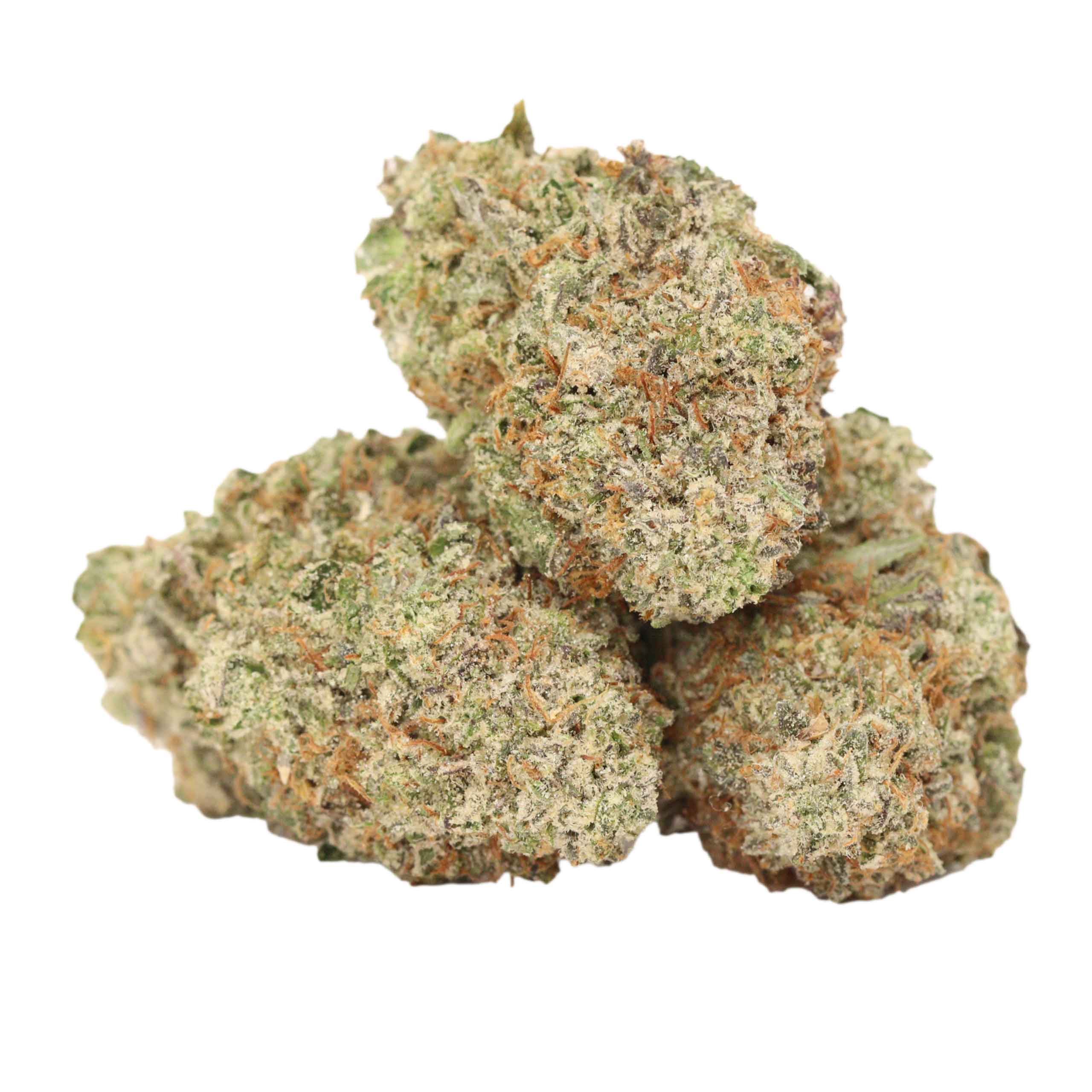
Blue Dream Appearance
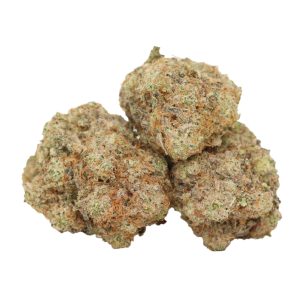
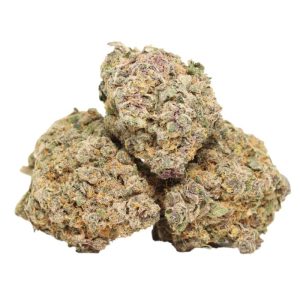
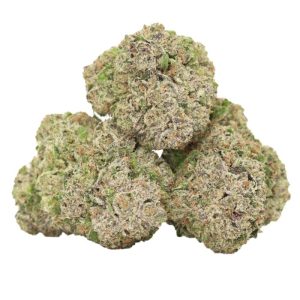
Blue Dream flowers commonly display:
- medium-to-bright green coloration;
- orange pistils;
- visible trichomes;
- compact-to-moderately airy flower structure.
Some phenotypes can develop blue, lavender, or purple coloration.
However, the word “Blue” in Blue Dream does not mean every batch must physically appear blue.
Is Blue Dream Actually Blue?
Not necessarily.
Blue Dream’s name reflects its Blueberry ancestry and overall strain identity rather than a requirement that every bud appear blue.
Some plants may display:
- purple;
- blue-purple;
- lavender;
- dark green tones.
Others remain primarily green.
Colorful Strains
The phrase colorful strains usually describes cannabis cultivars whose flowers or leaves display colors beyond ordinary green.
Cannabis can express:
- purple;
- red;
- pink;
- blue-purple;
- orange;
- yellow;
- nearly black coloration.
These colors arise from plant genetics, pigments, maturity, and environmental conditions.
Colorful Weed Strains
Popular colorful weed strains often attract attention because their appearance is visually distinctive.
Examples of strain families commonly associated with colorful phenotypes include:
- Purple Kush;
- Granddaddy Purple;
- Purple Urkle;
- Blackberry Kush;
- certain Blueberry descendants;
- some Runtz hybrids.
Not every plant from those genetic families will express identical coloration.
Colourful Weed
Colourful weed is simply the British spelling variation of colorful weed.
The underlying biology remains the same.
Cannabis coloration can come from pigments including:
- chlorophyll;
- anthocyanins;
- carotenoids.
Different pigment combinations produce different visual effects.
Why Cannabis Turns Purple
Purple cannabis coloration is strongly associated with anthocyanins.
Anthocyanins are naturally occurring plant pigments.
Scientific research has identified anthocyanins in Cannabis sativa vegetative and flower tissues, including cyanidin-derived compounds.
These pigments can create:
- purple;
- red;
- blue-purple coloration.
Cannabis Anthocyanins
Anthocyanins belong to the flavonoid family of plant compounds.
They also occur in foods such as:
- blueberries;
- blackberries;
- red cabbage;
- grapes.
Their presence in cannabis contributes primarily to pigmentation.
Color should not automatically be interpreted as evidence of stronger intoxication.
Does Purple Weed Have More THC?
Not necessarily.
A purple or blue-looking flower is not automatically more potent than a green flower.
Color is influenced heavily by pigment chemistry.
THC concentration depends on cannabinoid production.
These are different plant characteristics.
A bright purple strain can test lower in THC than a green strain.
Does Blue Weed Mean Better Weed?
No.
Color alone does not establish:
- potency;
- purity;
- freshness;
- contaminant status;
- genetics.
A visually striking product still requires proper testing and labeling.
Environmental Effects on Cannabis Color
Cannabis pigmentation can respond to environmental conditions.
Research on Cannabis sativa shows that environmental signals can influence anthocyanin synthesis and accumulation.
However, genetics strongly influence whether a particular plant has the biological potential to express those colors.
Color and Cannabis Quality
Consumers sometimes associate deep purple flowers with premium quality.
That association is partly driven by appearance and marketing.
More objective quality indicators include:
- cannabinoid testing;
- terpene preservation;
- absence of contaminants;
- freshness;
- curing.
Blue Dream as a Colorful Strain
Blue Dream can occasionally produce visually colorful phenotypes.
Depending on genetics and cultivation, flowers can display:
- green;
- blue-green;
- lavender;
- purple accents;
- bright orange pistils.
The most recognizable characteristic, however, remains its sweet blueberry-associated aroma rather than one required flower color.
Dark Blue Dream
Dark Blue Dream is a separate hybrid strain rather than simply a darker batch of standard Blue Dream.
Leafly currently lists Dark Blue Dream at approximately:
19% THC
with happy, focused, and giggly among its commonly reported effects.
Its common flavors include blueberry, sweet, and berry.
Blue Dream CBD
Blue Dream CBD is also distinct from standard Blue Dream.
Leafly describes it as a cross involving Blue Dream and California Orange CBD.
The name therefore should not be used interchangeably with ordinary Blue Dream.
Super Blue Dream
Super Blue Dream is another separate cultivar.
Leafly describes it as a hybrid created from:
Super Silver Haze × Blue Dream
Its current reference profile is approximately 16% THC.
This demonstrates how the Blue Dream name has expanded into an entire family of related strains.
Platinum Blue Dream
Platinum Blue Dream is another commercial hybrid using Blue Dream-related genetics.
Leafly currently lists it around 19% THC, with some products reportedly ranging higher.
It should not be assumed to be identical to original Blue Dream.
Blue Dream Flower
Flower remains one of the most common Blue Dream formats.
A regulated label may provide:
- THC;
- THCA;
- CBD;
- net weight;
- batch information;
- testing information.
Those figures are more important than a generic strain average.
Blue Dream Pre-Rolls
Blue Dream can also appear in pre-rolls.
A standard pre-roll generally contains prepared flower.
An infused pre-roll may additionally contain:
- kief;
- hash;
- concentrate.
Infusion can significantly increase cannabinoid concentration.
Blue Dream Vape Products
Blue Dream is widely used as a flavor or strain identity for vape products.
Some products inspired by Blue Dream may test at extremely high THC concentrations because they contain concentrated cannabis oil rather than flower.
For example, current Leafly product listings include Blue Dream-inspired vape products above 80% THC.
That does not mean Blue Dream flower naturally contains 80–90% THC.
Blue Dream Flower vs. Vape
| Product type | Typical interpretation |
|---|---|
| Blue Dream flower | Raw cannabis flower |
| Blue Dream pre-roll | Prepared flower, sometimes infused |
| Blue Dream vape | Concentrated cannabis oil |
| Blue Dream concentrate | High-cannabinoid extract |
| THC levels | Must be compared by product type |
Product format is crucial when interpreting potency.
Chronic Strain
The phrase chronic strain can refer to two different concepts.
First, “chronic” has historically been used as slang for marijuana, particularly strong or high-quality cannabis.
Second, Chronic is also the name of an established cannabis cultivar associated with Serious Seeds.
These meanings should not be confused.
Chronic Weed Meaning
In popular cannabis slang, chronic weed generally refers to cannabis perceived as potent or high quality.
The word does not describe a scientific cannabis classification.
It does not establish:
- THC percentage;
- genetics;
- terpene profile;
- purity.
A product can be called “chronic” informally without belonging to the specific Chronic cultivar.
Chronic as a Cannabis Strain
Chronic is also a documented cannabis strain associated with Serious Seeds.
SeedFinder currently identifies Serious Seeds’ Chronic as an indica/sativa hybrid.
The cultivar has also contributed genetics to numerous later crosses.
Therefore:
chronic weed as slang and Chronic Strain as a named cultivar are different concepts.
Blue Dream vs. Chronic Strain
Blue Dream and Chronic are separate cannabis cultivars.
| Feature | Blue Dream | Chronic |
|---|---|---|
| Common lineage | Blueberry × Haze | Separate Serious Seeds lineage |
| Identity | California-associated hybrid | Serious Seeds cultivar |
| Same strain? | No | No |
| “Chronic” slang applicable? | Informally possible | Also an actual strain name |
Calling Blue Dream “chronic weed” informally does not transform it genetically into Chronic Strain.
Is Blue Dream Chronic Weed?
If someone uses “chronic” simply as slang for strong cannabis, they may describe a potent Blue Dream batch that way.
Scientifically and genetically, however, Blue Dream and Chronic are not the same cultivar.
Accurate strain terminology matters.
Blue Dream Laboratory Testing
Testing can provide objective measurements for:
- THC;
- THCA;
- CBD;
- CBG;
- other cannabinoids.
Depending on state regulations, cannabis laboratories may also examine:
- pesticides;
- heavy metals;
- microbial contaminants;
- residual solvents.
Why Batch Testing Matters
Blue Dream has circulated for decades through different producers and genetic selections.
As a result, two packages labeled Blue Dream can differ in:
- potency;
- aroma;
- appearance;
- effects;
- terpene profile.
Testing gives consumers product-specific information.
Blue Dream and Medical Claims
Leafly users frequently report using Blue Dream in connection with stress, anxiety, and depression.
These are consumer reports and should not be interpreted as proof that Blue Dream treats those conditions.
Cannabis strain reviews are not substitutes for professional medical care.
Blue Dream and Anxiety
Although some consumers report perceived relief from anxiety, THC can also worsen anxiety in some people.
Higher THC exposure may increase the likelihood of:
- anxious feelings;
- panic;
- paranoia.
Individual response varies.
Blue Dream and Driving
THC can impair abilities required for safe driving.
Potential effects include changes in:
- reaction time;
- coordination;
- attention;
- judgment.
People should not drive while impaired by Blue Dream or another intoxicating cannabis product.
Blue Dream and Cannabis Use Disorder
Cannabis use can develop into cannabis use disorder in some individuals.
Possible signs include:
- craving;
- increasing tolerance;
- difficulty reducing use;
- continued use despite problems.
High-potency products and frequent cannabis use can increase certain risks.
Blue Dream and U.S. Cannabis Laws
Blue Dream’s legal status depends on where a person is located.
Cannabis laws vary substantially across the United States.
Some states permit:
- medical cannabis;
- adult-use cannabis;
- both.
Other states maintain substantially stricter marijuana laws.
A popular strain name does not change the applicable law.
Blue Dream and Licensed Dispensaries
Where adult-use or medical marijuana sales are legal, Blue Dream may appear in licensed dispensaries.
Consumers should rely on the applicable state regulatory system to identify licensed businesses.
Availability and possession limits depend on jurisdiction.
Blue Dream and State Borders
Legal possession inside one state does not automatically authorize taking marijuana into another state.
State cannabis programs operate under their own legal frameworks.
Consumers should not assume that buying Blue Dream legally in one jurisdiction makes interstate transportation lawful.
Why Blue Dream Remains Popular
Blue Dream has maintained unusual longevity in U.S. cannabis culture.
Many strains rise and disappear rapidly, but Blue Dream remains widely recognized.
Its continued popularity is associated with:
- established California history;
- recognizable berry aroma;
- Blueberry-Haze genetics;
- balanced hybrid reputation;
- widespread cultivation.
Blue Dream and Modern Cannabis Genetics
Blue Dream also demonstrates how strain names evolve.
The original cultivar inspired later strains including:
- Dark Blue Dream;
- Super Blue Dream;
- Platinum Blue Dream;
- Blue Dream CBD.
These descendants and similarly named cultivars should not automatically be treated as identical.
Blue Dream and Colorful Cannabis
Blue Dream is particularly relevant to discussions about colorful cannabis because the name encourages people to associate the strain with blue-colored flowers.
In reality, plant pigmentation depends on biology.
A genuine Blue Dream phenotype may be primarily green.
Another may express purple or blue-purple shades.
Color alone cannot confirm authenticity.
Educational Resources
For more U.S.-focused cannabis strain, cannabinoid, and marijuana education, explore Cannabistopgrade.com.
Regarding current Blue Dream genetics, THC, terpenes, flavors, and consumer-reported effects, review the Leafly Blue Dream Strain Guide.
For another current Blue Dream profile covering its reported 15–27% THC range and the existence of multiple Blue Dream genetic versions, see the Weedmaps Blue Dream Guide.
For scientific information about purple cannabis and anthocyanin pigmentation, review the PubMed study on anthocyanins in Cannabis sativa.
Continue exploring cannabis strains, cannabinoid profiles, terpene information, and U.S. marijuana education through Cannabistopgrade.com.
Frequently Asked Questions
1. What is Blue Dream Strain?
Blue Dream Strain is a famous hybrid cannabis cultivar generally associated with Blueberry and Haze genetics. Leafly currently lists approximately 21% THC and identifies creative, euphoric, and happy as its most commonly reported effects.
2. Is Blue Dream indica or sativa?
Blue Dream is usually described as a sativa-dominant hybrid. However, several genetic versions have circulated under the Blue Dream name, so exact characteristics can differ by producer and phenotype.
3. What does chronic weed mean?
Chronic weed is commonly used as cannabis slang referring to marijuana perceived as potent or high quality. Chronic is also the name of a separate cannabis cultivar associated with Serious Seeds, so the slang term and named strain should not be confused.
4. Is Blue Dream the same as Chronic Strain?
No. Blue Dream and Chronic are different cultivars. Blue Dream is commonly associated with Blueberry × Haze genetics, while Chronic is a separate strain associated with Serious Seeds.
5. Why do some colorful weed strains turn purple or blue?
Cannabis can develop purple, red, or blue-purple coloration partly because of plant pigments called anthocyanins. Genetics and environmental conditions influence pigment expression. Color does not automatically indicate greater THC potency.
6. Is colorful weed stronger than green weed?
Not necessarily. Purple, blue, red, or other colorful cannabis can be visually distinctive without containing more THC. Laboratory testing provides better information about potency than flower color.
| weight | Oz, Qp, Hp, P |
|---|
Be the first to review “Blue Dream Strain”
Related products
Indica strains
Indica strains
Indica strains
Indica strains
Indica strains
Indica strains
Indica strains
Indica strains
Reviews
There are no reviews yet.