
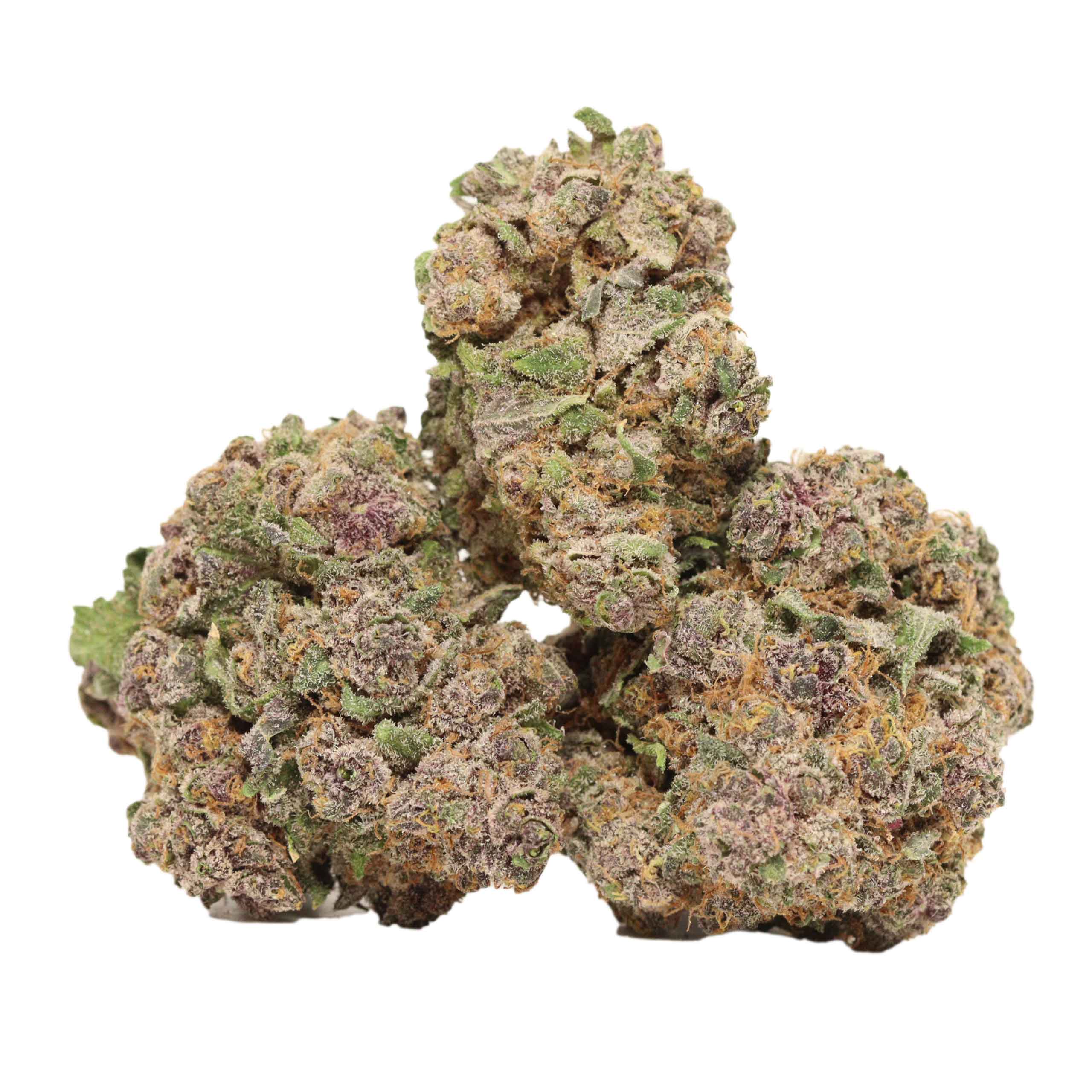
Bruce Banner Strain
Bruce Banner Strain is one of the most recognizable modern American hybrid cannabis cultivars. Named after the alter ego of the Incredible Hulk, this strain became known for relatively high THC potential, strong diesel-and-fruit aromas, and genetics created from OG Kush and Strawberry Diesel.
Current Leafly strain-reference information lists Bruce Banner at approximately 21% THC and 1% CBG. Consumer reports most frequently associate it with euphoric, creative, and focused effects, while commonly listed flavors include flower, tea, and diesel.
Weedmaps describes Bruce Banner with a broader 21% to 29% THC range and identifies relaxation, euphoria, and focus among common consumer reports.
Those differences illustrate an important cannabis principle:
Bruce Banner does not have one guaranteed THC percentage.
Actual chemistry can vary by phenotype, grower, harvest, processing, storage, product format, and laboratory methodology.
This guide examines Bruce Banner Strain while naturally covering medical marijuanas shop, cannabis retail, best online dispensary, online cannabis store, medical pot dispensary, pot sales online, and THC website from a lawful U.S. cannabis-market perspective.
For more U.S.-focused strain, cannabinoid, and marijuana-law education, explore Cannabistopgrade.com.
Bruce Banner Strain Quick Profile
| Characteristic | Bruce Banner Strain |
|---|---|
| General classification | Hybrid / sativa-leaning hybrid |
| Common alternate names | Banner, OG Banner, Bruce |
| Breeder | Dark Horse Genetics |
| Genetics | OG Kush × Strawberry Diesel |
| Leafly reference THC | About 21% |
| Weedmaps THC range | About 21–29% |
| Reference CBG | About 1% |
| Common reported effects | Euphoric, creative, focused |
| Common flavors | Diesel, floral, tea, berry |
| Prominent listed terpenes | Caryophyllene, myrcene, limonene |
| Best potency source | Batch-specific laboratory results |
Bruce Banner is often considered a potent cultivar, but the label alone does not guarantee one exact cannabinoid concentration.
What Is Bruce Banner Strain?
Bruce Banner is a hybrid cannabis strain created by Dark Horse Genetics.
The cultivar originated from a cross between:
OG Kush × Strawberry Diesel
This combination brought together the fuel-heavy character associated with OG Kush and the sweeter fruit characteristics associated with Strawberry Diesel.
Bruce Banner became especially well known during the late 2000s and early 2010s, when high-THC cannabis cultivars were receiving increasing attention in U.S. cannabis culture.
Who Created Bruce Banner?
Bruce Banner was created by breeder Jason Holck of Dark Horse Genetics.
Historical accounts describe the breeding work as developing in Colorado after Holck obtained Strawberry Diesel genetics in the mid-2000s.
The original cross produced several phenotypes.
Among them, Bruce Banner #3 became particularly famous.
Bruce Banner Genetics
Bruce Banner’s commonly accepted parentage is:
OG Kush × Strawberry Diesel
Both parents have strong reputations within modern cannabis breeding.
OG Kush contributed to a large family of American hybrids, while Strawberry Diesel brought together sweet fruit and fuel-like characteristics.
Bruce Banner and OG Kush
OG Kush is one of Bruce Banner’s documented parents.
OG Kush is historically associated with:
- earthy aromas;
- fuel characteristics;
- citrus notes;
- strong hybrid genetics.
Its influence can be detected in many later U.S. cannabis strains.
Bruce Banner and Strawberry Diesel
Strawberry Diesel is the second documented parent.
Its name reflects the combination of:
- sweet berry aromas;
- fuel-like diesel characteristics.
These characteristics help explain Bruce Banner’s frequently described berry-and-diesel sensory profile.
Is Bruce Banner Indica or Sativa?
Bruce Banner is generally classified as a hybrid.
Leafly describes it as a hybrid with sativa-leaning characteristics.
Different sources may describe the balance somewhat differently.
This is common with heavily hybridized modern cannabis.
Rather than relying entirely on indica-versus-sativa labels, consumers can examine:
- THC;
- CBD;
- CBG;
- terpene profile;
- batch laboratory results.
Bruce Banner THC Percentage
Leafly currently lists Bruce Banner at approximately:
21% THC
while Weedmaps presents a broader typical range of:
21% to 29% THC.
These values are useful references, not guarantees.
An individual batch can test differently.
Why Bruce Banner THC Varies
Cannabis potency can be influenced by:
- phenotype;
- environmental conditions;
- plant maturity;
- harvest timing;
- curing;
- storage;
- laboratory methodology.
A Bruce Banner flower product testing at 24% THC does not prove that all Bruce Banner flower should test at 24%.
Is Bruce Banner Strong?
Bruce Banner has a reputation as a relatively potent cannabis strain.
At approximately 21% THC or higher in some batches, it can produce substantial intoxication.
However, potency and quality are not the same thing.
Cannabis quality may also depend on:
- freshness;
- terpene preservation;
- contaminant compliance;
- curing;
- accurate labeling.
A very high THC number does not automatically indicate a better product.
Bruce Banner Effects
Leafly currently lists the most frequently reported effects as:
- euphoric;
- creative;
- focused.
Weedmaps reports a combination of:
- relaxation;
- euphoria;
- focus.
Consumer reports should be treated as subjective experiences rather than guaranteed outcomes.
Does Bruce Banner Increase Creativity?
Creative is among the commonly reported subjective effects.
That does not establish Bruce Banner as a scientifically proven creativity enhancer.
THC can also impair:
- memory;
- attention;
- reaction time;
- judgment.
Feeling creative is different from demonstrating objectively improved cognitive performance.
Does Bruce Banner Improve Focus?
Some consumers report feeling focused.
This should not be interpreted as evidence that Bruce Banner treats attention disorders or reliably improves concentration.
THC can impair attention and working memory, particularly at higher exposure levels.
Bruce Banner and Euphoria
Euphoria is one of Bruce Banner’s best-known consumer-reported effects.
The experience varies according to:
- dose;
- individual sensitivity;
- tolerance;
- product potency;
- environment.
Not everyone will experience the same response.
Bruce Banner Negative Effects
Leafly consumer reports include possible negative effects such as:
- dry mouth;
- anxiety;
- dry eyes.
High-THC cannabis can also contribute to:
- dizziness;
- paranoia;
- impaired coordination.
Individual sensitivity varies considerably.
Bruce Banner Flavor
Bruce Banner commonly combines sweet and fuel-like sensory characteristics.
Descriptions include:
- diesel;
- berry;
- strawberry;
- earth;
- spice;
- floral notes.
Different phenotypes can express different aromas.
Bruce Banner Aroma
The cultivar is particularly well known for diesel characteristics inherited from its Strawberry Diesel ancestry.
OG Kush genetics may contribute additional:
- earth;
- fuel;
- citrus;
- herbal characteristics.
Storage and freshness influence how strongly these aromas are expressed.
Bruce Banner Terpenes
Leafly currently identifies prominent Bruce Banner terpenes including:
- caryophyllene;
- myrcene;
- limonene.
The precise concentration of each terpene varies by batch.
Caryophyllene in Bruce Banner
Caryophyllene can contribute spicy and pepper-like characteristics.
It also occurs naturally in many culinary plants, including black pepper.
Its presence in cannabis does not guarantee a specific medical effect.
Myrcene in Bruce Banner
Myrcene can contribute earthy, musky, and herbal aromas.
It is common in many cannabis cultivars.
Consumers should not assume that myrcene alone determines whether a strain feels stimulating or sedating.
Limonene in Bruce Banner
Limonene contributes citrus-associated aromas.
It is also found naturally in citrus peels.
Cannabis effects arise from complex interactions rather than one terpene alone.
Bruce Banner #3
Bruce Banner #3, commonly abbreviated BB3, is the best-known phenotype associated with the original Bruce Banner breeding project.
Leafly currently lists Bruce Banner #3 at approximately:
- 20% THC;
- 1% CBG.
It is separately associated with euphoric, creative, and tingly consumer reports.
Bruce Banner vs. Bruce Banner #3
| Feature | Bruce Banner | Bruce Banner #3 |
|---|---|---|
| Classification | Hybrid | Hybrid |
| Parentage | OG Kush × Strawberry Diesel | OG Kush × Strawberry Diesel |
| Leafly THC reference | About 21% | About 20% |
| CBG reference | About 1% | About 1% |
| Reported effects | Euphoric, creative, focused | Euphoric, creative, tingly |
| Same profile? | Not necessarily | Distinct phenotype |
Phenotype names matter because plants from the same parent cross can still express different traits.
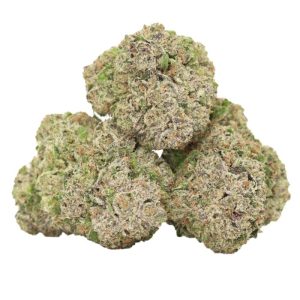
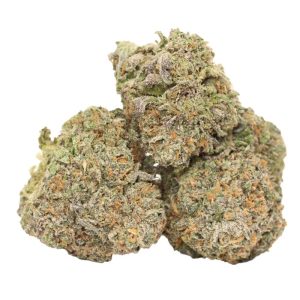
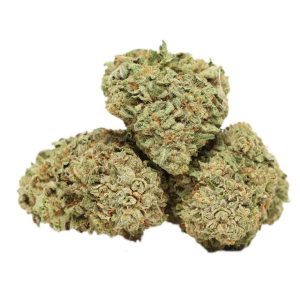
Bruce Banner Appearance
Bruce Banner is commonly associated with:
- dense flowers;
- substantial trichome coverage;
- green coloration;
- orange pistils.
Some batches may show darker coloration.
Appearance varies by phenotype and cultivation conditions.
Bruce Banner Trichomes
Trichomes are glandular structures found on cannabis flowers.
They contain many:
- cannabinoids;
- terpenes;
- aromatic compounds.
Heavy trichome coverage can create a frosted appearance.
It cannot accurately reveal THC percentage by sight alone.
Bruce Banner Flower
Flower is one of the most common Bruce Banner formats.
Regulated cannabis labels may display:
- THC;
- THCA;
- CBD;
- CBG;
- net weight;
- batch number.
Consumers should prioritize those values over generic strain descriptions.
Bruce Banner Pre-Rolls
Bruce Banner may also appear as conventional or infused pre-rolls.
A conventional pre-roll usually contains prepared cannabis flower.
Infused products may additionally contain:
- kief;
- hash;
- cannabis concentrate.
This can substantially change potency.
Bruce Banner Vape Products
The Bruce Banner name can also appear on vapor products.
Depending on the manufacturer, these may contain:
- distillate;
- live resin;
- rosin-derived oil;
- terpene formulations.
A Bruce Banner vape should not automatically be assumed to have the same chemistry as Bruce Banner flower.
Bruce Banner Concentrates
Bruce Banner may also be processed into concentrates such as:
- live resin;
- rosin;
- wax;
- shatter.
Concentrates can contain substantially more THC by weight than flower.
Bruce Banner and Laboratory Testing
Laboratory testing can provide measurable information about:
- THC;
- THCA;
- CBD;
- minor cannabinoids;
- regulated contaminants.
This makes testing considerably more informative than a strain name alone.
Bruce Banner and Medical Claims
Consumer reviews sometimes associate Bruce Banner with perceived relief from:
- stress;
- anxiety;
- depression.
These reports are not clinical proof that Bruce Banner treats those conditions.
Leafly explicitly characterizes its condition-related information as consumer-reported rather than medical advice.
Medical Marijuanas Shop
The phrase medical marijuanas shop generally refers to a medical marijuana dispensary.
More standard U.S. terminology includes:
- medical marijuana dispensary;
- medical cannabis dispensary;
- medical cannabis retailer.
These businesses operate under state medical-cannabis laws.
Medical Pot Dispensary
A medical pot dispensary serves patients who meet applicable state medical-marijuana requirements.
Depending on the jurisdiction, requirements may involve:
- physician certification;
- patient registration;
- medical marijuana cards;
- purchase limits.
Medical cannabis law is not uniform nationwide.
Medical Marijuana Programs Vary by State
U.S. medical cannabis rules can differ in:
- qualifying conditions;
- possession limits;
- product categories;
- patient registration;
- cultivation rights;
- dispensary licensing.
NCSL maintains a current state cannabis legislation database tracking these differences.
Cannabis Retail
Cannabis retail describes the consumer-facing part of the regulated cannabis industry.
Retail businesses can include:
- adult-use marijuana stores;
- medical dispensaries;
- licensed delivery operations;
- dual-use retailers.
The exact license terminology differs by state.
Cannabis Retail Licensing
A legal cannabis retailer generally operates under authorization from a state regulatory agency.
Licensing requirements can involve:
- ownership disclosure;
- security;
- inventory tracking;
- product testing;
- packaging rules.
Local governments may impose additional requirements.
Cannabis Retail vs. Unlicensed Sales
Legalization does not mean anyone may operate a marijuana store.
Licensed cannabis retail is different from unregulated marijuana selling.
A legitimate retailer should be verifiable through the relevant state regulator.
Online Cannabis Store
An online cannabis store can refer to the digital menu or ordering interface of a licensed marijuana retailer.
Where state and local rules permit, users may be able to:
- browse products;
- reserve items;
- arrange pickup;
- request licensed local delivery.
Online ordering does not create nationwide marijuana-shipping rights.
Best Online Dispensary
There is no official nationwide designation for the best online dispensary.
The U.S. marijuana market is regulated largely through separate state systems.
A more useful evaluation considers:
- valid licensing;
- accurate business identity;
- product testing;
- compliant labeling;
- transparent pricing;
- lawful delivery or pickup.
How to Evaluate an Online Cannabis Store
Consumers should independently verify the actual seller.
Useful information includes:
- legal business name;
- physical location;
- state license status;
- regulator listing;
- product laboratory information.
A polished website alone does not establish legitimacy.
Pot Sales Online
Pot sales online commonly refers to marijuana transactions initiated through a website.
In regulated markets, an online transaction might involve:
- preorder for pickup;
- curbside pickup where authorized;
- local licensed delivery.
It should not automatically be interpreted as interstate marijuana shipping.
Online Cannabis Menus
Online dispensary menus can provide product information such as:
- strain name;
- THC percentage;
- product format;
- quantity;
- package size.
Inventory can change rapidly.
Online Pickup
One common form of online cannabis retail involves placing an order online and completing pickup through a licensed store.
This model allows consumers to browse inventory digitally without converting marijuana into an unrestricted mail-order product.
Cannabis Delivery
Some jurisdictions permit regulated cannabis delivery.
Rules may govern:
- age verification;
- customer identification;
- geographic service areas;
- delivery records;
- possession limits.
Requirements vary by state and municipality.
Pot Sales Online and Interstate Shipping
State-licensed cannabis retail should not be confused with unrestricted interstate marijuana commerce.
A license issued by one state generally governs activity within that regulated system.
Consumers should be skeptical of claims that ordinary marijuana can simply be shipped everywhere because a website accepts online orders.
THC Website
A THC website can describe many different types of online resources.
Examples include:
- cannabis education sites;
- licensed dispensary websites;
- strain databases;
- regulatory agencies;
- cannabis brands.
The phrase does not indicate whether a website is licensed to sell marijuana.
Educational THC Websites
Educational THC resources can help explain:
- cannabinoids;
- potency;
- cannabis laws;
- product categories;
- health considerations.
Most Educational sites are not necessarily retailers.
This distinction matters when evaluating online search results.
THC Retail Websites
A THC-focused retail website operating in a legal marijuana market should correspond to a properly licensed business where required.
Consumers should verify the seller through official state databases.
Cannabis Websites and License Verification
Important checks can include:
- matching business name;
- matching physical address;
- active license status;
- correct license category.
A number printed in a website footer should not automatically be trusted without independent verification.
Online Dispensary Red Flags
Potential warning signs include:
- unverifiable licensing;
- no physical business location;
- unrealistic nationwide marijuana-shipping promises;
- inconsistent contact details;
- unusually aggressive payment demands.
One sign alone may not prove fraud, but several together justify caution.
Cannabis Retail and Laboratory Testing
Legal markets commonly impose laboratory-testing requirements.
Depending on jurisdiction and product, testing can cover:
- cannabinoids;
- pesticides;
- residual solvents;
- microbes;
- heavy metals.
Standards vary by state.
Bruce Banner Testing
For Bruce Banner, batch testing is especially important because the strain can be associated with a wide potency range.
Leafly lists approximately 21% THC while Weedmaps describes a 21–29% range.
A specific retail batch can fall outside generic expectations.
Bruce Banner Product Labels
A compliant label can provide information such as:
- total THC;
- THCA;
- CBD;
- serving information;
- product weight;
- batch number.
Those details provide more actionable information than simply seeing “Bruce Banner” on a menu.
Medical Dispensary Labels
Medical cannabis products may also include:
- cannabinoid concentration;
- ingredients;
- testing information;
- patient-related warnings.
Requirements depend on the medical program.
Medical Cannabis vs. Adult-Use Cannabis
| Feature | Medical Cannabis | Adult-Use Cannabis |
|---|---|---|
| Typical customer | Qualified patient | Eligible adult |
| Medical certification | Often required | Usually not |
| Program | State medical system | State adult-use system |
| Online menu | Often available | Often available |
| Local delivery | Jurisdiction dependent | Jurisdiction dependent |
| Interstate shipping | Not automatically authorized | Not automatically authorized |
The two systems should not be treated as interchangeable.
Medical Pot Dispensary Online Ordering
Where permitted, medical patients may use online systems to:
- check inventory;
- reserve products;
- arrange pickup;
- request legal local delivery.
Patient verification requirements remain applicable.
Is Bruce Banner Medical Marijuana?
Bruce Banner can be sold through a medical marijuana program where permitted.
However, the strain itself is not automatically an FDA-approved treatment.
A product being available at a medical dispensary does not prove that the cultivar treats a particular disease.
Bruce Banner at Adult-Use Retailers
Bruce Banner can also appear in recreational cannabis markets.
Its legal availability depends on:
- state law;
- retailer licensing;
- current inventory.
The strain name itself does not determine legality.
Cannabis Retail Prices
Retail prices can vary because of:
- taxation;
- cultivation costs;
- local competition;
- product quality;
- supply.
Price alone does not establish product safety or authenticity.
Online Cannabis Discounts
Licensed retailers may advertise discounts where local regulations permit.
A discounted product should still meet applicable:
- testing;
- labeling;
- packaging;
- licensing requirements.
A low price should not replace regulatory verification.
Marijuana Websites and Advertising
Cannabis advertising rules differ across states.
Restrictions can address:
- audiences;
- health claims;
- youth appeal;
- promotional practices.
Online cannabis marketing therefore operates under more complex rules than many ordinary retail categories.
Cannabis Retail and Local Control
State legalization can coexist with local restrictions.
Cities or counties may regulate:
- zoning;
- operating hours;
- dispensary locations;
- delivery.
Consumers should therefore consider both state and local rules.
Why NCSL Matters for Cannabis Retail Research
The National Conference of State Legislatures maintains a database covering enacted cannabis legislation.
As of its August 31, 2026 update, the database tracks areas including:
- medical programs;
- nonmedical programs;
- licensing;
- business practices;
- local control;
- product regulation;
- public health;
- taxation.
This demonstrates why there is no single nationwide marijuana retail rule.
Cannabis and Driving
THC can impair abilities needed for safe driving.
Possible effects involve:
- reaction time;
- coordination;
- judgment;
- perception.
People should not drive while impaired.
Cannabis and Developing Brains
THC exposure raises particular concerns for adolescents and young adults because brain development continues into young adulthood.
Legal adult-use markets therefore impose age restrictions.
Cannabis and Children
Cannabis products should be stored securely away from children.
This is especially important for products resembling ordinary foods, including:
- gummies;
- chocolates;
- beverages.
Cannabis Use Disorder
Cannabis use can develop into cannabis use disorder in some individuals.
Possible signs include:
- craving;
- difficulty cutting down;
- increasing tolerance;
- continued use despite harmful consequences.
Higher-potency products can increase some risks.
Why Bruce Banner Remains Important
Bruce Banner demonstrates several important characteristics of the modern U.S. cannabis market:
- established breeder history;
- recognizable parent genetics;
- multiple phenotypes;
- high-potency reputation;
- strong consumer familiarity.
It also illustrates why laboratory testing is more useful than assuming every sample bearing a famous strain name is identical.
Educational Resources
For additional U.S.-focused cannabis strain, cannabinoid, and legal-market education, explore Cannabistopgrade.com.
For current Bruce Banner strain-reference information, genetics, reported effects, and cannabinoid data, see the Leafly Bruce Banner Strain Guide.
Regarding another current reference covering Bruce Banner genetics and reported THC ranges, review the Weedmaps Bruce Banner Strain Guide.
For current state medical marijuana, adult-use, business-licensing, product, and local-control legislation, consult the NCSL State Cannabis Policy Enactment Database.
Continue exploring cannabis strains, cannabinoids, medical programs, cannabis retail, and marijuana laws through Cannabistopgrade.com.
Additional educational information about U.S. cannabis products and terminology is available through Cannabistopgrade.com.
Frequently Asked Questions
1. What is Bruce Banner Strain?
Bruce Banner Strain is a hybrid cannabis cultivar created by Dark Horse Genetics from OG Kush and Strawberry Diesel. Current Leafly reference information lists approximately 21% THC and 1% CBG, while Weedmaps reports a broader 21–29% THC range.
2. Is Bruce Banner indica or sativa?
Bruce Banner is generally classified as a hybrid, often described as sativa-leaning. Modern hybrid cannabis is highly mixed genetically, so cannabinoid and terpene testing provides more specific information than the indica-versus-sativa label alone.
3. What is a medical marijuanas shop?
“Medical marijuanas shop” usually means a licensed medical marijuana dispensary. Depending on the state, customers may need physician certification, patient registration, or a valid medical cannabis card before purchasing.
4. What makes the best online dispensary trustworthy?
There is no official nationwide “best online dispensary.” Strong indicators include an independently verifiable state license, legitimate business address, compliant product testing, accurate labels, and legal pickup or local delivery practices.
5. How do pot sales online work legally?
In regulated markets, pot sales online can involve browsing a licensed dispensary menu, reserving cannabis for pickup, or arranging authorized local delivery. Online ordering does not create unrestricted authorization to ship marijuana between states.
6. Can a THC website be trusted because it sells popular strains like Bruce Banner?
Not automatically. A recognizable strain name does not prove a website is licensed. Consumers should independently verify the retailer’s legal business name, physical location, license status, and product testing through the applicable state regulator.
Be the first to review “Bruce Banner Strain”
Related products
Indica strains
Indica strains
Indica strains
Indica strains
Indica strains
Indica strains
Indica strains
Indica strains
Reviews
There are no reviews yet.