
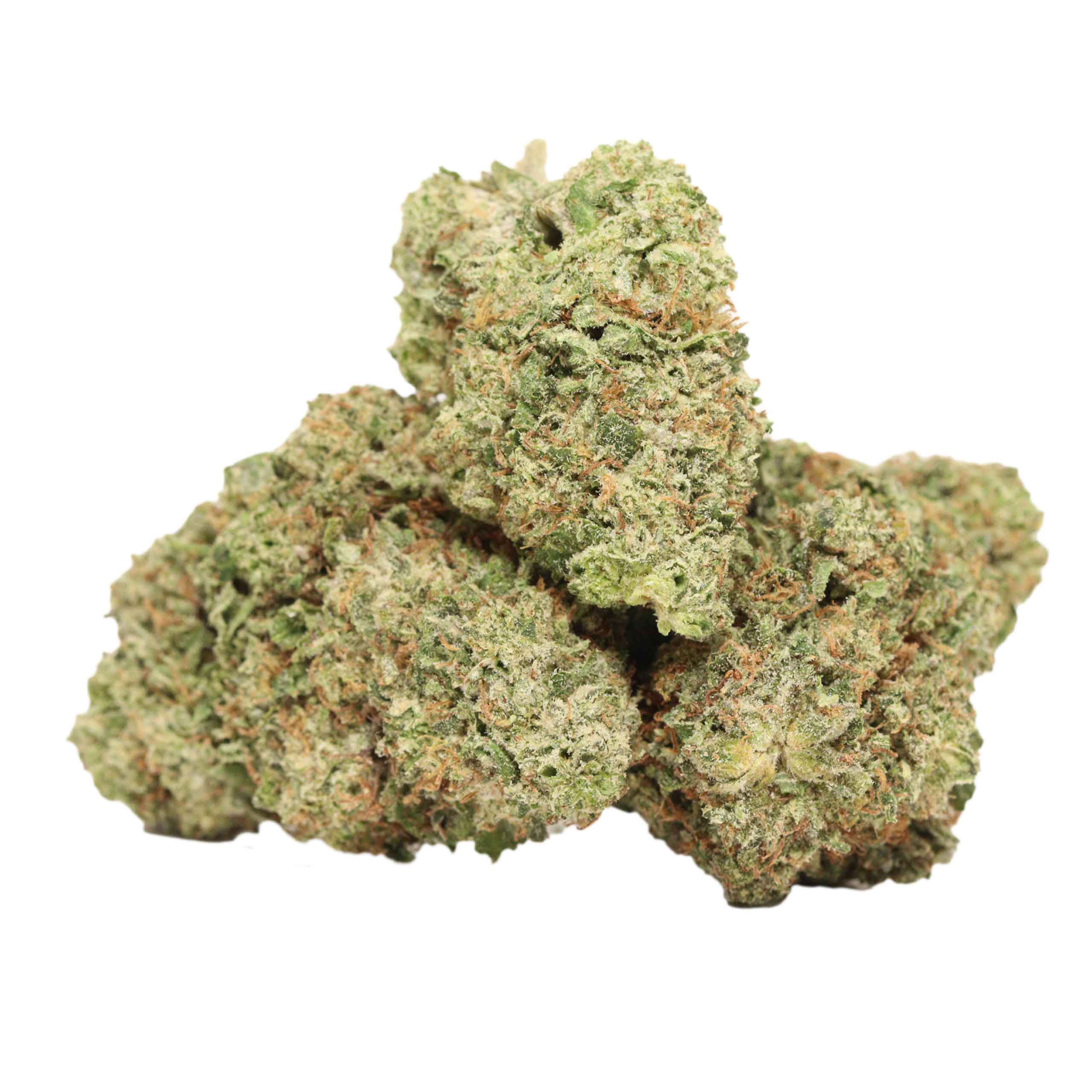
Blueberry Muffin Strain
Blueberry Muffin Strain is a popular indica-dominant hybrid cannabis cultivar associated with Humboldt Seed Company, sweet blueberry-and-vanilla aromas, purple-tinted flowers, and a relaxing consumer-reported effect profile.
Leafly currently describes Blueberry Muffin, also called Blueberry Muffins, as a hybrid produced from Blueberry × Purple Panty Dropper genetics. Its current reference profile lists approximately 20% THC and 1% CBG, with relaxed, tingly, and happy among the most frequently reported effects.
Weedmaps presents a broader estimated THC range of approximately 18% to 28% and describes Blueberry Muffin as one of Humboldt Seed Company’s signature strains.
Those differences illustrate an important principle:
strain names do not guarantee identical cannabinoid concentrations or even perfectly identical commercial genetic descriptions.
Actual Blueberry Muffin products can differ according to:
- phenotype;
- cultivation conditions;
- harvest timing;
- curing;
- storage;
- laboratory methodology;
- product format.
This guide explores Blueberry Muffin Strain while also explaining different names for weed, dagga names, names for weed, names for ganja, words for weed, slang terms for weed, weed nicknames, names for pot, and slang for marijuana.
For more U.S.-focused cannabis strain and terminology education, explore Cannabistopgrade.com.
Blueberry Muffin Strain Quick Profile
| Characteristic | Blueberry Muffin Strain |
|---|---|
| Alternate name | Blueberry Muffins |
| Classification | Indica-dominant hybrid |
| Breeder | Humboldt Seed Company |
| Common Leafly genetics | Blueberry × Purple Panty Dropper |
| Leafly THC reference | About 20% |
| Weedmaps THC range | About 18–28% |
| CBG reference | About 1% |
| Common reported effects | Relaxed, tingly, happy |
| Common flavors | Blueberry, butter, vanilla |
| Common terpenes | Caryophyllene, myrcene, limonene |
| Flower appearance | Often purple-tinted and frosty |
| Standardized nationwide? | No |
The actual laboratory label on a specific batch remains more useful than any generic strain average.
What Is Blueberry Muffin Strain?
Blueberry Muffin is an indica-dominant hybrid cannabis strain associated strongly with Humboldt Seed Company.
Its name comes from its distinctive bakery-like aroma.
Consumers commonly describe the flower as smelling like:
- fresh blueberries;
- vanilla;
- baked pastry;
- butter;
- sweet cream.
The strain’s dessert-style aroma helped make it recognizable in a market crowded with fruit-named cannabis varieties.
Blueberry Muffin Genetics
Leafly identifies Blueberry Muffin as:
Blueberry × Purple Panty Dropper
This is the most commonly cited lineage in current mainstream strain-reference information.
Weedmaps currently describes the strain using Purple Panty Dropper and Razzleberry terminology in its parent fields, showing that strain databases do not always present identical lineage histories.
That is one reason cannabis genetics should be discussed carefully.
Blueberry Muffin and Blueberry
Blueberry is itself an influential cannabis cultivar.
Leafly currently describes Blueberry, also known as Berry Blue, as an indica strain associated with:
- approximately 17% THC;
- sleepy effects;
- relaxation;
- happiness;
- blueberry and berry flavors.
Blueberry genetics have been used in many later fruit-forward cannabis crosses.
Blueberry Muffin and Purple Panty Dropper
Purple Panty Dropper contributes to Blueberry Muffin’s purple coloration and hybrid background.
The combination helped produce a cultivar recognized for relatively uniform bud structure and a strong blueberry-bakery aroma.
Is Blueberry Muffin Indica or Sativa?
Blueberry Muffin is generally described as an indica-dominant hybrid.
That means it contains hybridized genetics but is marketed as expressing more characteristics historically associated with indica-type cannabis.
Still, modern cannabis has been hybridized extensively.
The indica label does not guarantee:
- sedation;
- sleepiness;
- relaxation;
- specific THC potency.
Individual responses vary substantially.
Blueberry Muffin THC Percentage
Leafly currently lists Blueberry Muffin at approximately:
20% THC
with around:
1% CBG.
Weedmaps provides a wider estimated range of:
18% to 28% THC.
Individual commercial products can test outside those averages.
Why Blueberry Muffin THC Varies
THC concentration can vary because of:
- genetics;
- phenotype;
- light exposure;
- cultivation environment;
- harvest timing;
- curing;
- moisture content;
- testing method.
A Blueberry Muffin product testing at 19% THC and another testing at 25% THC can both legitimately carry the same strain name.
Is Blueberry Muffin Strong?
Blueberry Muffin is generally considered a moderate-to-high THC cultivar.
Its reference potency is higher than many older traditional cannabis varieties.
However, THC is only one component of the cannabis experience.
Other relevant factors include:
- terpene profile;
- minor cannabinoids;
- freshness;
- tolerance;
- individual sensitivity.
Higher THC does not automatically indicate higher quality.
Blueberry Muffin Effects
Leafly currently lists the most commonly reported Blueberry Muffin effects as:
- relaxed;
- tingly;
- happy.
Weedmaps reports:
- relaxed;
- happy;
- uplifted.
These descriptions come from consumer reports rather than controlled clinical research.
They should not be interpreted as guaranteed outcomes.
Does Blueberry Muffin Feel Relaxing?
Relaxation is the most consistently reported characteristic across major strain-reference databases.
However, cannabis affects people differently.
Possible unwanted effects can include:
- dizziness;
- headache;
- dry mouth;
- anxiety.
The intensity depends partly on THC exposure and individual sensitivity.
Blueberry Muffin Flavor
Blueberry Muffin has one of the more descriptive names in cannabis culture.
Its commonly reported flavors include:
- blueberry;
- vanilla;
- butter;
- sweet fruit;
- pastry-like notes.
These aromas come from plant compounds rather than actual blueberry muffin ingredients.
Blueberry Muffin Aroma
Aroma descriptions frequently compare the strain with a tray of freshly baked blueberry muffins.
Common notes include:
- ripe blueberry;
- vanilla;
- warm pastry;
- earth.
Its smell is one of the strain’s strongest identifying characteristics.
Blueberry Muffin Terpenes
Leafly currently lists prominent terpenes including:
- caryophyllene;
- myrcene;
- limonene.
Actual terpene concentrations vary by batch.
Caryophyllene in Blueberry Muffin
Caryophyllene contributes:
- spicy;
- peppery;
- woody characteristics.
It also occurs naturally in black pepper and many other plants.
Its presence does not prove a particular medical effect.
Myrcene in Blueberry Muffin
Myrcene contributes:
- earthy;
- herbal;
- musky aromas.
It is common in many cannabis cultivars.
Myrcene alone cannot reliably predict whether a strain will feel sedating.
Limonene in Blueberry Muffin
Limonene contributes citrus-associated aromas.
It is also naturally present in citrus fruit peels.
Its concentration can differ greatly between cannabis batches.
Blueberry Muffin Appearance
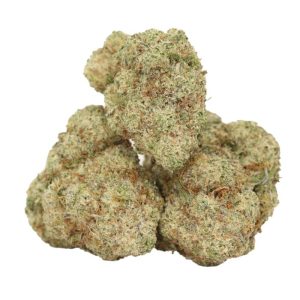
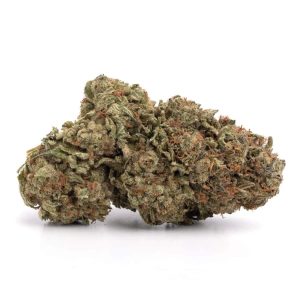
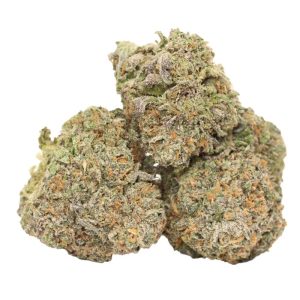
Blueberry Muffin is known for visually distinctive flowers.
Common descriptions include:
- purple-tinted buds;
- dense flower structure;
- heavy trichome coverage;
- orange pistils;
- dark green coloration.
This visual appeal contributes to the strain’s popularity.
Does Blueberry Muffin Always Turn Purple?
No.
Genetics influence the ability of cannabis to express purple pigmentation, but environment and phenotype also matter.
One Blueberry Muffin plant may display substantial purple coloration while another appears mostly green.
Color does not determine THC potency.
Blueberry Muffin #4
Blueberry Muffin #4 is a separately listed cultivar.
Leafly currently lists Blueberry Muffin #4 at approximately:
- 23% THC;
- 1% CBG.
It is associated with blueberry, berry, and vanilla flavors.
However, its listed genetics differ from the main Blueberry Muffin profile.
Therefore, Blueberry Muffin #4 should not automatically be treated as identical to standard Blueberry Muffin.
Blueberry Muffin Flower
Blueberry Muffin is commonly sold as flower where state law permits.
A regulated flower label may show:
- THC;
- THCA;
- CBD;
- CBG;
- net weight;
- batch number;
- laboratory information.
Those numbers are more useful than generic online strain averages.
Blueberry Muffin Pre-Rolls
Blueberry Muffin can also appear in pre-roll products.
A conventional pre-roll generally contains ground or prepared cannabis flower.
Infused pre-rolls may additionally contain:
- kief;
- hash;
- cannabis concentrate.
That can substantially increase cannabinoid concentration.
Blueberry Muffin Vape Products
The name may also appear on vape products.
Depending on the manufacturer, a Blueberry Muffin vape may contain:
- distillate;
- live resin;
- rosin-derived oil;
- added terpene formulations.
A vape product should not be assumed to have the same chemistry as Blueberry Muffin flower.
Blueberry Muffin and Laboratory Testing
Laboratory testing can measure:
- THC;
- THCA;
- CBD;
- CBG;
- other cannabinoids.
Depending on the state, testing can also examine contaminants.
This makes batch-specific testing more informative than strain reputation.
Blueberry Muffin and Medical Claims
Consumer reports sometimes associate Blueberry Muffin with perceived relief from:
- stress;
- anxiety;
- depression.
Leafly explicitly states that these reports are user-generated and are not substitutes for professional medical advice.
Blueberry Muffin should not be presented as a proven treatment for these conditions.
Different Names for Weed
Cannabis has accumulated a huge vocabulary across different countries, cultures, generations, and subcultures.
Some of the most familiar different names for weed include:
- cannabis;
- marijuana;
- weed;
- pot;
- ganja;
- herb;
- bud;
- grass;
- reefer;
- Mary Jane.
These terms do not always mean exactly the same thing historically, but in everyday speech many are used for marijuana or cannabis.
Names for Weed
Common names for weed include formal, informal, historical, and cultural terms.
Cannabis is the broad botanical and legal term.
Marijuana commonly refers to psychoactive cannabis flower and related preparations.
Weed is one of the most widespread informal names.
Pot is another long-established American slang term.
Ganja has South Asian linguistic roots and later became strongly associated with Jamaican culture.
Cannabis vs. Marijuana
Cannabis is the broader botanical term.
Marijuana generally refers to cannabis material containing significant concentrations of intoxicating THC.
However, legal definitions vary.
Some laws distinguish:
- marijuana;
- hemp;
- cannabis;
- cannabinoid products.
Terminology therefore depends partly on context.
Why Is Marijuana Called Weed?
“Weed” became a common informal term for marijuana in English-language culture.
The word is slang rather than a scientific botanical classification.
Today, “weed” is one of the most widely recognized casual names for cannabis in the United States.
Names for Pot
Common names for pot include:
- marijuana;
- weed;
- cannabis;
- ganja;
- herb;
- grass;
- bud;
- reefer.
Merriam-Webster explicitly recognizes pot as a noun meaning marijuana.
The term has been used in this sense in American English since at least the twentieth century.
Words for Weed
The vocabulary around cannabis changes constantly.
Common words for weed may describe:
- the plant;
- dried flower;
- high-quality cannabis;
- low-quality cannabis;
- specific products;
- cultural identities.
Examples include:
Bud – cannabis flower.
Herb – a casual term used for cannabis.
Flower – common modern dispensary terminology for dried cannabis buds.
Grass – older slang.
Reefer – older twentieth-century slang.
Ganja – historically rooted South Asian terminology widely adopted elsewhere.
Slang Terms for Weed
Common slang terms for weed include:
- bud;
- herb;
- grass;
- pot;
- ganja;
- reefer;
- Mary Jane;
- green;
- chronic;
- trees.
Slang changes by:
- generation;
- geography;
- music culture;
- social group.
Some expressions common in the 1970s sound dated today, while others remain widely used.
Weed Nicknames
Weed nicknames can be divided into several broad groups.
Some refer to marijuana generally.
Others describe flower quality or appearance.
Examples include:
- bud;
- green;
- trees;
- herb;
- chronic;
- loud;
- dank.
Not every nickname has a fixed scientific meaning.
For example, “loud” often describes cannabis with a particularly strong aroma.
“Dank” is often used informally for potent or desirable cannabis.
Neither is a laboratory classification.
Slang for Marijuana
Common slang for marijuana includes terms from multiple generations.
Older American terms include:
- reefer;
- grass;
- pot.
More contemporary expressions include:
- weed;
- bud;
- tree;
- loud;
- chronic.
Regional vocabulary can differ considerably.
Ganja Meaning
Ganja is a long-established word for marijuana.
Merriam-Webster defines ganja broadly as marijuana and traces the word through Hindi and Urdu gānjā, ultimately connected with Sanskrit terminology for hemp.
That makes ganja far older than many modern American marijuana slang terms.
Names for Ganja
Because ganja itself is another word for cannabis, names for ganja overlap heavily with general cannabis terminology.
Common equivalents include:
- marijuana;
- cannabis;
- weed;
- pot;
- herb;
- bud.
However, cultural context matters.
Ganja carries historical associations with South Asia and later Caribbean cannabis culture.
Jamaica and Ganja
Ganja became especially visible globally through Jamaican culture and reggae.
The term was not originally Jamaican.
Its linguistic history traces back to South Asian languages.
The word traveled through migration and colonial history before becoming firmly embedded in Caribbean vocabulary.
Dagga Names
Dagga is another culturally specific term for cannabis.
Merriam-Webster identifies dagga as a chiefly South African term meaning marijuana.
The term is widely recognized in Southern African cannabis vocabulary.
What Does Dagga Mean?
In South African usage, dagga commonly means cannabis or marijuana.
However, Merriam-Webster also notes that the word can refer to Leonotis leonurus, a separate South African plant sometimes called wild dagga.
That means context matters.
“Dagga” can refer to cannabis in common South African speech, but the word also appears in the names of other plants.
Ganja Vs. Dagga
Dagga and ganja come from different linguistic and cultural traditions.
| Term | General meaning | Strong association |
|---|---|---|
| Dagga | Cannabis / marijuana | Southern Africa |
| Ganja | Cannabis / marijuana | South Asia and Caribbean usage |
| Weed | Cannabis / marijuana | Modern English slang |
| Pot | Marijuana | U.S. slang |
| Cannabis | Botanical/legal term | International |
| Marijuana | Psychoactive cannabis | North American legal/cultural usage |
These words may refer to similar plant material while carrying very different cultural histories.
Mary Jane Meaning
Mary Jane is classic American slang for marijuana.
The phrase is sometimes described as a playful English rendering inspired by “marijuana,” although slang histories are often difficult to document precisely.
Today it is recognized primarily as an informal nickname.
Reefer Meaning
Reefer is an older slang term for marijuana, particularly associated with early-to-mid twentieth-century U.S. culture.
It became especially famous through:
- jazz culture;
- newspaper language;
- anti-marijuana campaigns;
- films such as Reefer Madness.
It remains recognizable but is less common in everyday modern speech.
Grass Meaning
“Grass” became a widespread cannabis nickname during the twentieth century.
The term reflects the green, dried plant material.
It became strongly associated with counterculture during the 1960s and 1970s.
Bud Meaning
“Bud” refers specifically to cannabis flower.
This is one of the more descriptive slang terms because the commercial marijuana product is largely composed of mature flowering material.
Modern dispensaries commonly use the more formal word:
Flower Meaning in Cannabis
“Flower” refers to dried cannabis buds sold for consumption in regulated cannabis markets.
It is now one of the standard retail terms.
Compared with “weed” or “pot,” flower is more product-specific.
Herb as a Cannabis Name
“Herb” is another common informal name for cannabis.
Its popularity reflects cannabis’s identity as a plant-based material.
The word also appears frequently in music and cultural references.
Green as a Weed Nickname
“Green” is sometimes used as slang for marijuana.
The nickname comes from the plant’s common green appearance.
However, cannabis flowers can also show:
- purple;
- blue;
- red;
- orange;
- pinkish coloration.
Trees as Weed Slang
“Trees” is a more modern slang term for cannabis.
It likely refers broadly to the plant’s branching appearance and green coloration.
The term is common in casual conversation but has no legal or botanical definition.
Chronic as Weed Slang
“Chronic” became particularly prominent in American cannabis slang during the 1990s.
It is often used to mean:
- strong cannabis;
- high-quality cannabis.
Chronic is also the name of an actual cannabis cultivar.
Therefore, context matters.
Loud as Marijuana Slang
“Loud” generally refers to cannabis with a very powerful aroma.
The term reflects how noticeable the smell can be.
It does not define:
- genetics;
- THC percentage;
- quality.
A very aromatic cultivar may still have moderate THC.
Dank as Weed Slang
“Dank” is commonly used as a positive descriptor for cannabis perceived as strong-smelling, fresh, potent, or desirable.
It is subjective.
There is no laboratory threshold that makes cannabis officially “dank.”
Dope as Marijuana Slang
“Dope” has historically been used for marijuana, but the word can also refer broadly to other drugs.
Because of that ambiguity, it is less precise than terms such as cannabis or marijuana.
Cannabis Terminology Changes Over Time
Words for marijuana evolve along with culture.
Terms that were common decades ago may become less frequent.
New slang emerges through:
- music;
- social media;
- regional communities;
- cannabis retail culture.
This is why there is no permanent master list of every cannabis nickname.
Weed Slang in the United States
In contemporary American English, some of the most familiar terms include:
- weed;
- cannabis;
- marijuana;
- pot;
- bud;
- flower.
Words such as reefer and grass remain recognizable but can sound more historical.
Weed Slang Outside the United States
Cannabis terminology differs internationally.
Examples include:
Dagga – strongly associated with Southern Africa.
Ganja – historically South Asian and widely used in Jamaica and elsewhere.
Cannabis – widely used internationally in legal and scientific contexts.
Regional usage changes substantially.
Scientific Terms vs. Slang Terms
Scientific and legal terminology tends to be more precise than slang.
For example:
Cannabis sativa refers to a botanical species designation.
THC refers to tetrahydrocannabinol.
CBD refers to cannabidiol.
Terms such as weed, pot, and ganja are cultural vocabulary.
They do not identify cannabinoid concentrations.
Does Calling Cannabis Something Different Change Its Effects?
No.
Calling Blueberry Muffin:
- weed;
- pot;
- ganja;
- bud;
- flower;
does not change its chemistry.
The important factors are the actual cannabinoids and other compounds present in the product.
Slang Does Not Indicate Potency
Terms such as:
- loud;
- dank;
- chronic;
- fire;
can imply perceived quality in casual speech.
They are not validated potency measurements.
THC concentration requires laboratory analysis.
Blueberry Muffin and Weed Nicknames
Blueberry Muffin itself is an example of another cannabis naming tradition:
strain names based on flavor or aroma.
Other cannabis names often reference:
- fruit;
- desserts;
- fuel;
- colors;
- animals;
- places.
The name Blueberry Muffin communicates aroma expectations rather than botanical classification.
Why Cannabis Strains Have Creative Names
Strain names help breeders and consumers differentiate cultivars.
Names may reflect:
- genetics;
- flavor;
- aroma;
- breeder branding;
- appearance;
- cultural references.
However, names are not standardized scientific taxonomy.
Blueberry Muffin vs. Blueberry
Blueberry Muffin and Blueberry are related in common lineage descriptions but are separate cultivars.
Leafly currently lists Blueberry at approximately:
- 17% THC;
- 1% CBG.
Blueberry Muffin is listed around:
- 20% THC;
- 1% CBG.
Actual batches still vary.
Blueberry Muffin vs. Blueberry Muffin #4
Blueberry Muffin #4 is separately listed with approximately 23% THC on Leafly.
It also has a different documented lineage in that database.
Therefore, consumers should not assume that every product using “Blueberry Muffin” in its name represents the same genetics.
Blueberry Muffin and U.S. Cannabis Laws
The legality of Blueberry Muffin depends on jurisdiction.
Some U.S. states permit:
- adult-use marijuana;
- medical marijuana;
- both.
Other states maintain stricter cannabis laws.
The strain name does not alter the applicable law.
Cannabis Terminology in Legal Markets
Legal cannabis regulations increasingly use formal terminology such as:
- cannabis;
- marijuana;
- flower;
- concentrate;
- edible;
- cannabinoid product.
Informal words such as pot or weed may still be used culturally but may not appear in statutory definitions.
Blueberry Muffin and Driving
THC can impair abilities required for safe driving.
Potential effects include changes in:
- reaction time;
- judgment;
- coordination;
- attention.
People should not drive while impaired by Blueberry Muffin or another intoxicating cannabis product.
Blueberry Muffin and Cannabis Use Disorder
Cannabis use can develop into cannabis use disorder in some people.
Possible signs include:
- craving;
- increasing tolerance;
- difficulty reducing use;
- continuing despite negative consequences.
Higher THC exposure and frequent use can increase certain risks.
Why Blueberry Muffin Is Useful for Cannabis Education
Blueberry Muffin demonstrates several important ideas about modern cannabis.
The name reflects flavor rather than scientific taxonomy.
Its published THC levels vary between databases.
Its lineage descriptions are not perfectly uniform.
And its popularity shows how cannabis culture continuously creates new terminology alongside older words such as weed, pot, ganja, and dagga.
Understanding both the plant and its language makes cannabis information clearer.
Educational Resources
For more U.S.-focused cannabis strain, cannabinoid, terminology, and marijuana-law education, explore Cannabistopgrade.com.
For current Blueberry Muffin strain information, including reference THC, effects, flavors, terpenes, and commonly cited genetics, review the Leafly Blueberry Muffin Strain Guide.
Regarding another current Blueberry Muffin profile and broader THC range, see the Weedmaps Blueberry Muffin Guide.
For dictionary information on ganja and its Hindi, Urdu, and Sanskrit roots, review the Merriam-Webster Ganja Definition.
Concerning the South African meaning of dagga, consult the Merriam-Webster Dagga Definition.
Continue exploring cannabis strains and terminology through Cannabistopgrade.com.
Frequently Asked Questions
1. What is Blueberry Muffin Strain?
Blueberry Muffin Strain is an indica-dominant hybrid associated with Humboldt Seed Company. Leafly currently lists it around 20% THC and 1% CBG, with relaxed, tingly, and happy among its most frequently reported effects.
2. What are some different names for weed?
Common names for weed include cannabis, marijuana, pot, ganja, bud, herb, grass, reefer, Mary Jane, green, chronic, and trees. Some are modern slang, while others have specific historical or regional origins.
3. What does dagga mean?
Dagga is chiefly a South African term for marijuana or cannabis. The word can also appear in reference to Leonotis leonurus, a different plant sometimes called wild dagga, so context matters.
4. What is another name for ganja?
Ganja itself broadly means marijuana. Related common terms include cannabis, marijuana, weed, pot, bud, and herb. Merriam-Webster traces the word ganja through Hindi and Urdu and ultimately to Sanskrit terminology for hemp.
5. Are slang terms such as chronic, loud, and dank scientific cannabis categories?
No. These are informal terms. Chronic may imply strong or high-quality cannabis, loud often describes strong aroma, and dank is a subjective quality descriptor. None provides a laboratory measurement of THC or product quality.
6. Why does cannabis have so many nicknames?
Cannabis has been used across many cultures and historical periods. Migration, music, regional dialects, prohibition-era culture, modern dispensary terminology, and social media have all contributed new names for cannabis over time.
Be the first to review “Blueberry Muffin”
Related products
Indica strains
Indica strains
Indica strains
Indica strains
Indica strains
Indica strains
Indica strains
Indica strains
Reviews
There are no reviews yet.