
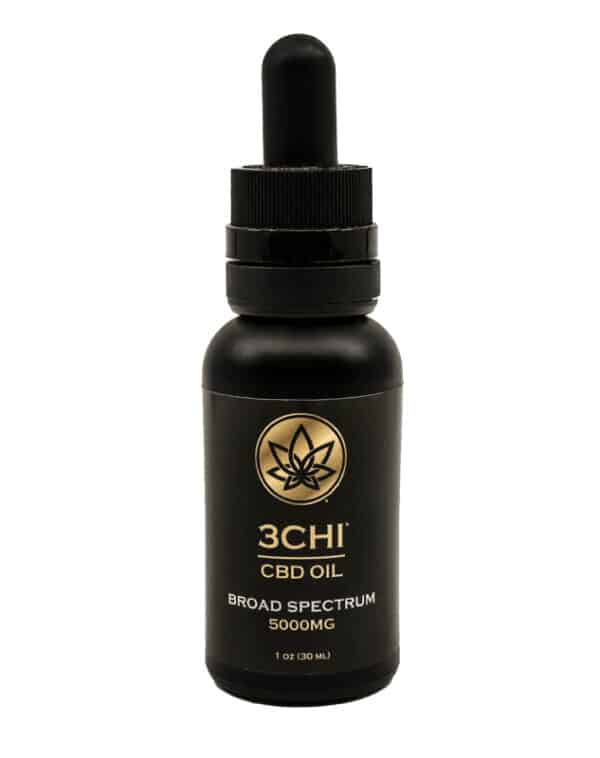
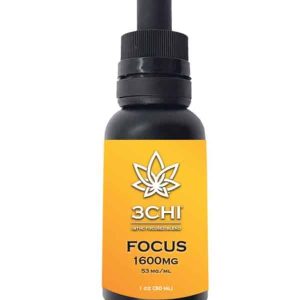
Natural CBD Oil is a broad-spectrum hemp-derived CBD tincture currently offered by 3CHI. The company’s current product page lists the bottle at 30 mL containing 5,000 mg of broad-spectrum CBD extract, equivalent to approximately 166.7 mg CBD per mL, with less than 0.3% delta-9 THC stated for the product. Its listed ingredients are hemp extract, medium-chain triglycerides and vitamin E. (3chi.com)
That is a substantial change from older 3CHI material that referenced a 1,000 mg Natural CBD Oil, so current product information should take priority over older articles or cached listings.
| Product detail | Current information |
|---|---|
| Product | Natural CBD Oil |
| Brand | 3CHI |
| Bottle size | 30 mL / 1 oz |
| Current listed CBD extract | 5,000 mg |
| Approximate concentration | 166.7 mg CBD/mL |
| Extract type | Broad-spectrum hemp oil |
| Delta-9 THC | Manufacturer lists less than 0.3% |
| Ingredients | Hemp extract, MCT oil, vitamin E |
| Product classification | CBD tincture / hemp extract |
| Intoxicating? | CBD itself is not impairing |
| FDA-approved medicine? | This retail product is not an FDA-approved drug |
CDC explains that CBD itself is not impairing and does not cause the classic cannabis high, although CBD products are not risk-free and can contain other ingredients or cannabinoids. (cdc.gov)
For further educational exploration, visit Cannabistopgrade Cannabis Education, Cannabistopgrade Hash and Concentrates and Cannabistopgrade Cannabis Concentrates and Dabbing.
Is Natural CBD Oil the Same as THC Oil?
No.
CBD and THC are different cannabinoids.
FDA describes cannabis as containing more than 80 biologically active chemical compounds, with CBD and delta-9 THC among the best known. THC produces the marijuana high, while CBD by itself does not produce that classic intoxicating effect. (fda.gov)
Therefore:
CBD oil ≠ THC oil
even though both can originate from Cannabis sativa.
Broad-spectrum Natural CBD Oil is also different from:
- marijuana flower;
- THC tinctures;
- delta-8 products;
- THCA flower;
- hash;
- cannabis concentrates.
Those products can contain very different cannabinoid concentrations.
THC Variants
The phrase THC variants is commonly used for different forms, isomers and closely related compounds associated with tetrahydrocannabinol.
However, online terminology often mixes true THC isomers with cannabinoid precursors and completely separate cannabinoids.
The most useful THC variants to understand are:
Delta-9 THC
Delta-9 THC is the form normally meant when someone simply says “THC.”
It is the principal intoxicating cannabinoid associated with conventional marijuana.
CDC describes THC as an impairing or mind-altering cannabinoid found in cannabis. (cdc.gov)
Delta-9 THC can affect:
- perception;
- attention;
- memory;
- coordination;
- reaction time.
Individual effects vary significantly.
Delta-8 THC
Delta-8 THC is closely related chemically to delta-9 THC and is also psychoactive.
It naturally occurs only in relatively small amounts in cannabis, and many commercial delta-8 products are produced by converting other cannabinoids such as hemp-derived CBD.
CDC notes that delta-8 THC is psychoactive and that its health effects are less well understood than those of conventional delta-9 THC. (cdc.gov)
Delta-8 therefore should not be confused with CBD simply because both may originate from hemp.
Delta-10 THC
Delta-10 THC is another THC isomer marketed in certain cannabinoid products.
Compared with delta-9 THC, there is considerably less high-quality human research on commercially available delta-10 products.
Marketing descriptions sometimes claim very precise effects for delta-10, but those claims should be treated cautiously because individual cannabinoid response varies.
THCA
THCA, or tetrahydrocannabinolic acid, is especially important.
It is not simply another intoxicating THC isomer in the same sense as delta-8 or delta-9.
THCA is the acidic precursor to delta-9 THC.
When cannabis is heated, THCA can convert to THC through decarboxylation.
This distinction explains why raw or dried cannabis flower can contain a large amount of THCA while showing relatively little delta-9 THC before heating.
THC Variants Compared
| Cannabinoid | Description | Classic intoxicating effect? |
|---|---|---|
| Delta-9 THC | Main conventional THC isomer | Yes |
| Delta-8 THC | Closely related THC isomer | Yes |
| Delta-10 THC | Less-studied THC isomer | Potentially |
| THCA | Acidic precursor to delta-9 THC | Not classically intoxicating before conversion |
| CBD | Separate cannabinoid | No classic THC high |
| CBN | Separate cannabinoid | Not equivalent to delta-9 THC |
| CBG | Separate cannabinoid | Not considered classic intoxicating THC |
THC Types and Effects
The phrase THC types and effects can sound straightforward, but effects are not determined by cannabinoid name alone.
How a THC-containing product affects someone can depend on:
- exact cannabinoid concentration;
- product format;
- previous cannabis experience;
- tolerance;
- individual biology;
- other cannabinoids;
- medications;
- alcohol or other substances.
A person may also react differently to the same cannabis product on different occasions.
That is why claims such as:
“Delta-8 always relaxes you”
or
“Delta-10 always increases energy”
are too absolute.
The chemistry may differ, but the human response remains individual.
Forms of Weed
There are many forms of weed, ranging from minimally processed cannabis flower to highly concentrated extracts.
CDC notes that cannabis can be used in numerous ways and that cannabis refers to plant materials including dried flowers, leaves, stems and seeds. (cdc.gov)
Modern cannabis markets expand far beyond flower.
Cannabis Flower
Flower is the dried flowering portion of the cannabis plant.
Depending on the cultivar and batch, it can contain:
- THCA;
- delta-9 THC;
- CBDA;
- CBD;
- CBG;
- terpenes.
Flower cannabinoid concentrations are normally expressed as percentages.
Pre-Rolls
Pre-rolls contain cannabis flower already rolled into paper.
Some consist only of flower, while others are infused with hash, kief or concentrates.
The product label matters because an infused pre-roll can have very different potency from an ordinary flower pre-roll.
Hash
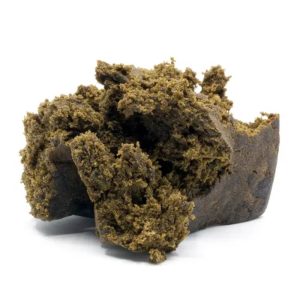
Hash is concentrated cannabis resin or trichome material.
It can contain a substantially higher concentration of cannabinoids than the starting flower.
Cannabis Concentrates
Concentrate forms include:
- live resin;
- rosin;
- wax;
- budder;
- crumble;
- shatter;
- oils.
Concentrate potency should always be treated as batch-specific.
Edibles
Cannabis edibles include:
- gummies;
- chocolates;
- beverages;
- baked goods;
- candies.
Unlike flower, edibles are commonly labeled in milligrams of THC per serving or package rather than percentage by weight.
Tinctures and Oils
Cannabinoid tinctures suspend cannabinoids in a liquid carrier.
Natural CBD Oil belongs in this category.
Tinctures can be predominantly CBD, THC, CBN, CBG or formulated with several cannabinoids.
Vape Products
Cannabis vape products contain concentrated cannabinoid formulations intended for vaporization.
These can have significantly greater cannabinoid concentration than flower.
Cannabis Topicals
Topicals include:
- creams;
- balms;
- lotions;
- salves.
Their cannabinoid formulations and intended uses differ from inhaled or orally ingested cannabis.
Forms of Weed Compared
| Form | Common potency measurement |
|---|---|
| Flower | Percentage |
| Hash | Percentage |
| Concentrates | Percentage |
| Vape oil | Percentage or mg |
| Gummies | mg per piece |
| Chocolates | mg per serving |
| Tinctures | mg per mL |
| CBD oils | mg per mL / bottle |
| Topicals | mg per container |
This distinction prevents misleading comparisons.
For example:
20% THC flower
does not mean the same thing as:
20 mg THC gummy
or
20 mg/mL tincture.
Types of Weed Strains
The traditional types of weed strains are usually grouped into:
- indica;
- sativa;
- hybrid.
This system remains extremely common on dispensary menus.
However, modern cannabis science shows that these labels are much less reliable for predicting chemistry and effects than many consumers assume.
A peer-reviewed analysis of commercial cannabis from six U.S. states found that industry labels did not consistently align with actual chemical diversity. Researchers found clearer chemical patterns when examining cannabinoids and terpenes directly. (pubmed.ncbi.nlm.nih.gov)
Leafly similarly notes that indica and sativa originally describe plant characteristics more than guaranteed psychological effects and increasingly favors cannabinoid and terpene profiles for understanding strains. (leafly.com)
Indica Strains
Traditionally, dispensary culture describes indica strains as more relaxing or physically heavy.
But an indica label cannot guarantee:
- sedation;
- sleep;
- anxiety relief;
- pain relief.
Different indica-labeled products can contain significantly different cannabinoids and terpenes.
Sativa Strains
Sativa-labeled marijuana strains are traditionally marketed as more uplifting or energetic.
Again, this is not a scientifically reliable guarantee.
A person’s experience depends more on the actual cannabis chemistry and individual response.
Hybrid Strains
Modern cannabis strains are frequently hybrids because breeders have crossed plants extensively over many generations.
Leafly notes that most cannabis available today contains mixed ancestry and that hybrid is now an extremely broad category. (leafly.com)
A hybrid can be:
- balanced;
- indica-leaning;
- sativa-leaning.
But those terms still do not replace laboratory chemistry.
A Better Way to Classify Cannabis Strains
A more chemically meaningful framework groups cannabis according to THC and CBD content.
Leafly summarizes three broad chemotypes:
Type I Cannabis
High THC and relatively low CBD.
Type II Cannabis
More balanced THC and CBD.
Type III Cannabis
High CBD and relatively low THC. (leafly.com)
This framework is especially useful when comparing cannabis strains with Natural CBD Oil.
Natural CBD Oil is CBD-dominant by formulation, while many traditional marijuana strains are Type I THC-dominant products.
Weed Strains
A weed strain is a named cannabis variety produced through breeding and selection.
Leafly defines strains as named variations bred for characteristics such as aroma, appearance, chemistry and consumer-reported effects. (leafly.com)
Examples of well-known weed strains include:
- OG Kush;
- Blue Dream;
- Sour Diesel;
- Northern Lights;
- GSC;
- Gelato;
- Granddaddy Purple;
- Runtz;
- Wedding Cake;
- GMO Cookies.
These names are useful commercially, but strain names should not be treated as exact chemical formulas.
Two products sold under the same strain name can differ in:
- THC;
- CBD;
- terpene profile;
- moisture;
- cultivation environment;
- phenotype.
Laboratory results therefore provide stronger chemical information than the strain name alone.
Cannabis Strains
The cannabis market now contains thousands of named cannabis strains.
Leafly’s current strain library covers thousands of indica-, sativa- and hybrid-labeled varieties, and its July 2026 editorial list of notable cannabis varieties reflects the enormous diversity produced by modern breeding. (leafly.com)
But cannabis genetics are not always perfectly standardized.
The same named cultivar sold by two different growers can vary in chemistry.
That is why modern cannabis classification increasingly emphasizes:
cannabinoids + terpenes + laboratory data
rather than relying entirely on:
strain name + indica/sativa label.
Marijuana Strains
The term marijuana strains generally refers to cannabis cultivars containing enough THC to be marketed within marijuana markets rather than low-THC hemp.
Examples of established marijuana-strain families include:
Kush varieties
such as OG Kush and Bubba Kush;
Cookies varieties
such as GSC and GMO Cookies;
Haze varieties
such as Super Silver Haze;
Diesel varieties
such as Sour Diesel;
Gelato varieties
derived from dessert-oriented breeding lines.
These families can contain numerous descendants.
However, being related genetically does not guarantee identical effects.
Different Varieties of Weed
There are several ways to understand different varieties of weed.
By Legacy Classification
- indica;
- sativa;
- hybrid.
By Chemical Profile
- THC-dominant;
- balanced THC/CBD;
- CBD-dominant.
And By Genetics
Examples include:
- Kush;
- Haze;
- Cookies;
- Diesel;
- Skunk;
- Afghan-derived lines.
By Product Format
Cannabis can also be divided into:
- flower;
- hash;
- concentrates;
- edibles;
- tinctures;
- vape products;
- topicals.
So “different varieties of weed” can mean either genetically different plants or physically different cannabis products.
Natural CBD Oil vs. Marijuana Flower
| Feature | Natural CBD Oil | Marijuana flower |
|---|---|---|
| Product type | Broad-spectrum hemp tincture | Dried cannabis flower |
| Main cannabinoid | CBD | Often THCA/THC |
| Current listed concentration | 5,000 mg CBD/bottle | Batch-specific percentage |
| Intoxicating | CBD itself is not impairing | Often intoxicating after THC exposure |
| Product form | Oil | Flower |
| Strain name | Not the main classification | Often cultivar-specific |
| THC | Manufacturer states <0.3% | Often much higher |
| Testing | Batch COA important | Batch COA important |
This explains why a CBD tincture and a named marijuana strain should not be treated as interchangeable products.
Is CBD Completely Risk-Free?
No.
CDC states that CBD is non-impairing but not risk-free. CBD can produce side effects and may interact with medications. (cdc.gov)
FDA also warns that CBD can cause potential problems including:
- liver injury;
- medication interactions;
- drowsiness or sedation;
- other side effects.
FDA has approved only one prescription CBD medication for specific seizure disorders. Ordinary retail Natural CBD Oil products should therefore not be presented as FDA-approved treatments for pain, anxiety, insomnia or other conditions. (fda.gov)
Does Natural CBD Oil Get You High?
CBD itself does not produce the classic THC high.
CDC explicitly describes CBD as not impairing. (cdc.gov)
However, consumers should still examine laboratory reports because retail CBD products can contain other cannabinoids.
The current 3CHI Natural CBD Oil page describes the product as broad-spectrum and reports less than 0.3% THC detected. (3chi.com)
That is more accurate than simply saying that every bottle of CBD oil everywhere is absolutely THC-free.
Frequently Asked Questions
1. What is Natural CBD Oil?
Natural CBD Oil is currently a 3CHI broad-spectrum hemp tincture containing 5,000 mg CBD extract in a 30 mL bottle, or approximately 166.7 mg CBD/mL. The manufacturer states that the product contains less than 0.3% THC. (3chi.com)
2. What are the main THC variants?
Commonly discussed THC-related compounds include delta-9 THC, delta-8 THC and delta-10 THC. THCA is slightly different because it is the acidic precursor that can convert into delta-9 THC when cannabis is heated.
3. What are the main types of weed strains?
Cannabis is traditionally grouped into indica, sativa and hybrid strains. However, modern research shows these labels do not consistently predict chemical composition. THC-dominant, balanced THC/CBD and CBD-dominant chemotypes provide another useful classification method. (pubmed.ncbi.nlm.nih.gov)
4. What are the common forms of weed?
Common forms include dried flower, pre-rolls, hash, concentrates, vape oils, gummies, chocolates, tinctures and topicals. Potency is measured differently across these formats.
5. Is Natural CBD Oil the same as marijuana?
No. CBD is one cannabinoid found in cannabis. Marijuana contains many compounds and is typically associated with higher THC concentrations. The current Natural CBD Oil product is marketed as a broad-spectrum hemp-derived CBD tincture rather than conventional marijuana. (fda.gov)
Be the first to review “Natural CBD Oil”
Related products
Cannabis Tincture
Buy THC Extracts Online
Cannabis Tincture
Buy THC Extracts Online
Buy THC Extracts Online
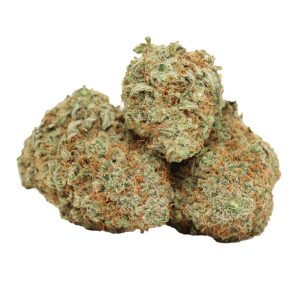
Sativa Strains
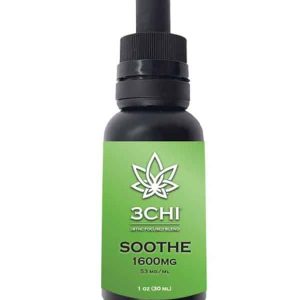
Cannabis Tincture
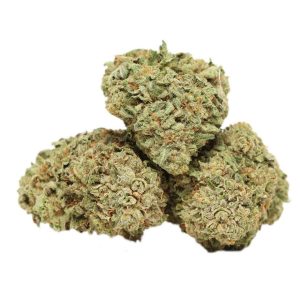
Indica strains
Reviews
There are no reviews yet.