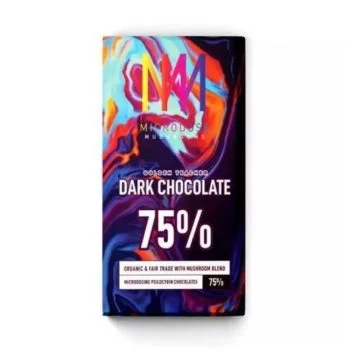
Dark Chocolate
Dark Chocolate has become a popular format for mushroom-infused wellness products and psychoactive-style edibles in the United States. A single chocolate bar can be marketed with lion’s mane, reishi, cordyceps, Amanita muscaria, proprietary mushroom blends, or claims suggesting psychedelic effects.
Those categories are not interchangeable.
Ordinary dark chocolate containing functional mushrooms is fundamentally different from a psilocybin product. A product containing Amanita muscaria compounds is different again. And some commercial mushroom chocolates investigated by U.S. health authorities have contained unexpected psychoactive or pharmaceutical compounds.
This is why searches for the best legal mushroom products, best shroom gummies, strongest mushroom gummies, and best psychedelic mushroom edibles require considerably more scrutiny than ordinary candy shopping.
CDC’s finalized investigation into Diamond Shruumz mushroom chocolates, gummies and cones reported 180 illnesses across 34 states, including 73 hospitalizations and two associated deaths.
FDA separately advises consumers to avoid foods containing Amanita muscaria, muscimol, ibotenic acid or muscarine because the agency concluded that these substances do not meet the safety standard for conventional foods and may be harmful.
For more educational mushroom and product-safety information, explore CannabisTopGrade educational resources.
Dark Chocolate and Mushroom Products
Mushroom-infused dark chocolate generally falls into several broad categories.
Functional mushroom chocolate may contain nonpsychoactive ingredients such as lion’s mane, reishi, cordyceps or turkey tail.
Psilocybin mushroom chocolate claims to contain material or active compounds from psilocybin-containing mushrooms.
Amanita mushroom chocolate may contain Amanita muscaria or constituents such as muscimol.
Proprietary psychoactive mushroom chocolate may use vague wording without clearly identifying every active ingredient.
The package may look almost identical across these categories.
That means words such as:
Magic.
Euphoric.
Microdose.
Mushroom blend.
Psychedelic.
Functional.
Nootropic.
do not establish what compounds are actually present.
Best Legal Mushroom Products
The phrase best legal mushroom products can create a misleading assumption that “legal” automatically means safe, clinically proven or federally approved.
It does not.
Ordinary functional mushroom foods containing recognized culinary mushrooms are generally very different from psychoactive products marketed as “legal psychedelics.”
Examples of nonpsychoactive mushroom categories include:
Lion’s mane.
Shiitake.
Maitake.
Oyster mushrooms.
Reishi.
Turkey tail.
Cordyceps-related products.
Chaga.
Whether a particular supplement or food is appropriate still depends on its formulation and claims.
Consumers should prioritize products that clearly disclose:
Exact mushroom species.
Mushroom part or extract.
Amount per serving.
Additional active ingredients.
Manufacturer identity.
Batch information.
Independent testing where available.
Allergen information.
The “best” product cannot be determined simply from the highest milligram number or most exciting package.
Legal Does Not Mean FDA Approved
FDA explains an important distinction in the psychoactive mushroom market.
In 2024, the agency specifically concluded that Amanita muscaria, its extracts, muscimol, ibotenic acid and muscarine are unapproved food additives and do not meet the Generally Recognized As Safe standard for conventional food use.
Yet consumers have encountered mushroom edibles marketed with phrases such as:
Legal psychedelic.
Legal mushroom.
Psychedelic gummy.
Euphoric mushroom.
The existence of a product on a website or smoke-shop shelf is not proof that FDA considers its ingredients safe for conventional food.
Psilocybin Products
Psilocybin products require a separate discussion.
A Psilocybin is the psychedelic compound found naturally in certain Psilocybe mushrooms.
DEA identifies psilocybin as a hallucinogen and notes that the body metabolizes it into the active compound psilocin.
NCCIH states that psilocybin remains a Schedule I controlled substance at the federal level in the United States, even though some states and local jurisdictions have adopted decriminalization or regulated-access policies.
Therefore, retail availability does not establish nationwide legality.
A website offering psilocybin chocolate for shipping throughout the United States is not evidence that the product is federally lawful.
Clinical Psilocybin Products Are Different
FDA finalized specific guidance for psychedelic-drug clinical investigations in July 2026.
The guidance addresses pharmaceutical development issues involved in studying psychedelic drugs for psychiatric, substance-use and other medical conditions.
That regulated research environment is fundamentally different from a commercial mushroom chocolate bar.
Clinical drug development can require controls involving:
Drug identity.
Purity.
Manufacturing quality.
Dose.
Clinical monitoring.
Adverse-event reporting.
Participant screening.
Study design.
A retail chocolate using psychedelic imagery should not be represented as equivalent to a clinical psilocybin product.
Magic Mushroom Products
The phrase magic mushroom products can include:
Dried mushrooms.
Chocolate bars.
Capsules.
Gummies.
Powders.
Drinks.
Extracts.
Tablets.
Commercial products using the term may not always contain actual psilocybin mushrooms.
This is one of the largest problems in the modern mushroom-edible market.
“Mushroom” describes an enormous biological category.
“Magic” is often marketing language.
Neither tells consumers what chemical compound is responsible for a psychoactive effect.
Mushroom Gummy Brands
There are now many mushroom gummy brands using colorful wellness, nootropic or psychedelic branding.
Some contain ordinary functional mushrooms.
Some market Amanita-related ingredients.
Others imply psychedelic effects without clearly specifying the responsible compound.
The current public-health evidence makes ingredient verification particularly important.
CDC’s 2026 report on mushroom-containing chocolates documented severe illnesses associated with this general market, and the agency warned that microdosing psychedelic products can cause severe illness or death.
Therefore, comparing mushroom gummy brands solely according to:
Popularity.
Flavor.
Number of milligrams.
Online reviews.
Strength.
Social-media reputation.
can miss the most important question:
What is actually inside the product?
Best Shroom Gummies
For best shroom gummies, there is no scientifically justified ranking of psychoactive mushroom gummies that could be called universally best.
The word “shroom” itself is ambiguous.
It can mean:
Functional mushroom products.
Psilocybin mushroom products.
Amanita products.
Synthetic psychedelic products sold with mushroom branding.
Mixed psychoactive products.
A consumer-focused evaluation should instead look for:
Transparent ingredients.
Quantified active compounds.
Independent laboratory documentation.
Lot-specific testing.
No unexplained proprietary psychoactive blend.
Clear manufacturer identification.
No unsupported medical claims.
Relevant FDA or state warnings.
This approach is more meaningful than rating products according to which produces the strongest intoxication.
Strongest Mushroom Gummies
Searches for strongest mushroom gummies or strong mushroom gummies focus on intensity.
Intensity is not a reliable measure of quality.
A stronger psychoactive effect can also mean:
More anxiety.
Greater confusion.
More severe impairment.
Vomiting.
Abnormal heart rate or blood pressure.
Loss of consciousness.
Seizures in severe poisoning scenarios.
CDC’s 2026 MMWR report found that outcomes in the investigated mushroom-chocolate outbreak worsened as larger amounts were consumed. Among cases with outcome information, substantial numbers required hospitalization, intensive-care treatment and even intubation.
The scientifically responsible conclusion is therefore not to rank gummies according to maximum strength.
Why “Strong” Can Be a Warning Sign
If two gummies contain different unidentified psychoactive compounds, the one producing a more intense experience is not necessarily delivering “better mushrooms.”
The difference could theoretically reflect:
More active compound.
Different psychoactive substances.
Uneven mixing.
Synthetic adulterants.
Medication contamination.
Different absorption.
Individual sensitivity.
This is why subjective strength cannot identify a product chemically.
A person cannot determine what they consumed simply because the experience felt psychedelic.
Euphoric Mushroom Gummies
Euphoric mushroom gummies are often marketed around desired subjective effects rather than specific pharmacology.
Advertising may use terms such as:
Euphoria.
Bliss.
Clarity.
Dreamy.
Trippy.
Psychedelic.
Elevated mood.
Those words do not identify an ingredient.
NCCIH notes that psilocybin itself can produce unpredictable experiences and adverse effects including increased blood pressure, increased heart rate, headache, nausea, dizziness, anxiety, paranoia and challenging psychological reactions.
Therefore, “euphoric” should not be interpreted as a safety classification.
Mushroom Edibles Smoke Shop
The keyword mushroom edibles smoke shop reflects the growing availability of mushroom-branded products in:
Smoke shops.
Vape shops.
CBD retailers.
Convenience stores.
Specialty wellness shops.
Online stores.
But shelf availability should not be mistaken for regulatory approval.
A smoke shop may sell:
Functional mushroom gummies.
Amanita-style edibles.
Hemp-derived products.
Products marketed as nootropics.
Psychoactive products.
The legal and safety status depends on the exact ingredients and jurisdiction.
A store employee, package design or retail receipt cannot substitute for an accurate ingredient analysis.
Smoke-Shop Availability Does Not Prove Safety
This distinction became particularly important after severe illnesses were linked to commercially distributed mushroom edibles.
CDC’s finalized investigation documented 180 illnesses and 73 hospitalizations associated with Diamond Shruumz products sold in the United States.
These were commercially packaged products.
That fact demonstrates why consumers should not equate retail availability with pharmaceutical quality.
Best Psychedelic Mushroom Edibles
For best psychedelic mushroom edibles, no unregulated commercial chocolate or gummy should be ranked as medically best based solely on potency, flavor or testimonials.
FDA’s current approach to psychedelic medicine centers on formal drug development and clinical investigation rather than ordinary retail edibles.
A pharmaceutical research product may have:
A verified molecule.
Known purity.
Measured dose.
Manufacturing controls.
Clinical oversight.
A commercial mushroom edible may not offer those protections.
Promising psychedelic research should therefore not be used as proof that retail mushroom chocolate is therapeutic.
Dark Chocolate vs Psychedelic Mushroom Chocolate
Ordinary dark chocolate is a familiar food made from cocoa ingredients.
Psychedelic mushroom chocolate introduces additional pharmacological questions.
A dark chocolate bar can be evaluated primarily for:
Cocoa percentage.
Sugar.
Fat.
Calories.
Allergens.
Flavor.
A psychoactive mushroom bar additionally requires questions about:
Drug identity.
Potency.
Uniformity.
Contamination.
Legal status.
Interactions.
Psychological effects.
Medical contraindications.
Those additional uncertainties fundamentally change the risk profile.
Is Dark Chocolate Itself Psychedelic?
No.
Dark chocolate is not a psychedelic drug.
Chocolate naturally contains compounds such as caffeine and theobromine, but ordinary dark chocolate does not produce a classic psilocybin psychedelic experience.
If a dark chocolate mushroom edible causes substantial hallucinations or psychedelic effects, another psychoactive ingredient is responsible.
That ingredient should be identified rather than attributing the effect to cocoa.
Amanita Mushroom Edibles
Some products marketed as mushroom edibles use Amanita muscaria instead of psilocybin mushrooms.
This difference is significant.
Amanita muscaria is associated with compounds such as muscimol and ibotenic acid, which have different pharmacology from psilocybin.
FDA reviewed more than 600 publications related to Amanita muscaria and its constituents and concluded there was insufficient evidence to show these ingredients were safe for conventional foods; available information instead indicated potential harm.
FDA advises consumers to avoid foods containing these ingredients.
“Legal Psychedelic” Marketing
The phrase legal psychedelic deserves skepticism when printed on an edible.
It could mean:
The seller believes the ingredient is uncontrolled.
The product contains a nonpsilocybin psychoactive compound.
The seller is using an ambiguous marketing term.
The product contains functional mushrooms but uses psychedelic-style branding.
None of those automatically establish federal food-law compliance or safety.
For more U.S. educational material about mushroom-product terminology, visit CannabisTopGrade mushroom safety resources.
How to Evaluate Mushroom Chocolate
Consumers evaluating a mushroom chocolate can look beyond the front of the package.
Useful questions include whether the package identifies the precise mushroom species, whether psychoactive compounds are listed by name, what each milligram number actually measures, whether a real manufacturer is identifiable, and whether credible batch-specific testing is available.
A QR code alone is not necessarily proof of authenticity.
The laboratory report should correspond to the exact product and lot.
Certificate of Analysis Limitations
A Certificate of Analysis can be valuable, but not all COAs provide the same information.
A useful report should ideally identify:
The product or batch.
Testing date.
Laboratory.
Analytes tested.
Measured concentrations.
Potential contaminants.
Relevant detection limits.
A generic laboratory report that cannot be matched to the product being sold offers far less assurance.
A COA also does not automatically prove clinical effectiveness.
Quality testing and therapeutic evidence are different questions.
Mushroom Gummy Reviews
Online reviews are especially unreliable for determining psychoactive-product composition.
A reviewer may say:
“Very strong.”
“Relaxing.”
“Euphoric.”
“Visual.”
“No effect.”
Those descriptions do not reveal what chemical was present.
Individual responses can also vary according to:
Medications.
Other substances.
Food intake.
Mental state.
Health.
Prior exposure.
Expectations.
Product batch.
Laboratory testing is far more useful than subjective reviews for establishing composition.
Why Different Gummies Can Have Different Effects
Even products with matching packaging may not always have identical composition.
Manufacturing quality matters.
Poorly mixed batches can potentially result in inconsistent concentrations among individual pieces.
Differences in ingredients can create even greater variation.
That is particularly important for gummies and chocolates divided into multiple servings, because printed serving lines may create an impression of dose precision that the manufacturing process may not support.
Can Mushroom Edibles Treat Depression or Anxiety?
Commercial mushroom edibles should not automatically be represented as treatments for depression, anxiety or other psychiatric conditions.
FDA is actively supporting psychedelic-drug research and finalized clinical guidance in July 2026, but formal research is distinct from the retail mushroom-edible market.
A chocolate bar saying:
Mood.
Euphoria.
Therapeutic.
Microdose.
Mental clarity.
does not become an approved psychiatric treatment because those words appear on the wrapper.
Psilocybin Side Effects
Psilocybin can cause both desired and unwanted effects.
NCCIH lists potential adverse effects including:
Nausea.
Headache.
Dizziness.
Increased heart rate.
Increased blood pressure.
Anxiety.
Paranoia.
Poor sleep.
Hallucinations.
Unpleasant experiences involving fear, panic or confusion can also occur.
DEA similarly describes nausea, vomiting, muscle weakness, impaired coordination, hallucinations and panic reactions among possible effects.
These risks do not disappear because psilocybin is incorporated into chocolate or candy.
Children and Mushroom Edibles
Chocolate and gummies create an obvious accidental-ingestion concern.
They can resemble conventional candy.
Products with:
Bright packages.
Fruit flavors.
Chocolate coatings.
Candy-like shapes.
sweeteners
can attract children who cannot distinguish a psychoactive product from normal food.
Psychoactive or uncertain mushroom edibles should therefore be kept inaccessible to children and pets.
What to Do After a Bad Reaction
Unexpected symptoms following a mushroom edible deserve attention, especially when the ingredient identity is uncertain.
Severe symptoms can require urgent medical evaluation.
Examples include:
Seizures.
Loss of consciousness.
Severe agitation.
Difficulty breathing.
Persistent vomiting.
Severe confusion.
Marked cardiovascular symptoms.
In the United States, Poison Control can provide poisoning guidance at 1-800-222-1222.
Immediately life-threatening symptoms warrant emergency services.
Are Functional Mushroom Chocolates Different?
Yes.
A dark chocolate containing lion’s mane or another nonpsychoactive mushroom is pharmacologically different from a psilocybin or muscimol product.
Functional mushroom products may be marketed for:
Focus.
Energy.
Immune support.
Stress.
General wellness.
These claims should still be evaluated carefully.
A functional mushroom ingredient does not automatically make a chocolate clinically proven to treat disease.
But it should not be confused with a classic psychedelic simply because both products use mushroom imagery.
Dark Chocolate and Functional Mushrooms
Dark chocolate is attractive for functional mushroom formulations because its flavor can mask the earthy taste of mushroom extracts.
Products may combine dark chocolate with:
Lion’s mane.
Reishi.
Cordyceps.
Turkey tail.
Chaga.
Maitake.
Consumers should evaluate the amount and type of mushroom ingredients rather than assuming that every “mushroom chocolate” is a psychoactive product.
Frequently Asked Questions
1. What are the best legal mushroom products?
There is no universal best product. For nonpsychoactive mushroom products, useful criteria include clear species identification, transparent ingredients, credible manufacturer information and meaningful quality testing. Products marketed as “legal psychedelics” require extra scrutiny because legality and safety are separate questions.
2. Are psilocybin products federally legal in the United States?
Psilocybin remains federally classified as a Schedule I controlled substance. Some states and local jurisdictions have adopted different policies, but those changes do not create nationwide legalization.
3. What are the best or strongest mushroom gummies?
There is no evidence-based ranking of psychoactive mushroom gummies by “best” or “strongest.” Strength does not establish ingredient accuracy or safety, and CDC has documented severe illnesses from commercially packaged mushroom edibles.
4. Are euphoric mushroom gummies safe?
A product marketed as “euphoric” is not automatically safe. The term does not identify its active ingredient. FDA specifically advises avoiding foods containing Amanita muscaria, muscimol, ibotenic acid or muscarine because of safety concerns.
5. Are psychedelic mushroom chocolates FDA-approved treatments?
Commercial mushroom chocolates should not be described as FDA-approved psychedelic treatments. FDA’s current psychedelic work involves formal clinical drug development with dedicated investigation guidance finalized in July 2026.
Final Thoughts on Dark Chocolate and Mushroom Edibles
Dark Chocolate is simply a food format until additional mushroom or psychoactive ingredients are added.
For best legal mushroom products, consumers should focus on ingredient identity, transparency, independent testing and regulatory status rather than words such as “legal” or “premium.”
For psilocybin products, federal law remains important: psilocybin is still federally Schedule I, despite evolving state and local policies.
Regarding mushroom gummy brands, product identity matters more than branding.
For best shroom gummies, strongest mushroom gummies, and strong mushroom gummies, there is no scientifically responsible potency ranking. CDC’s investigations demonstrate that mushroom edibles can produce severe illness and that stronger exposure can increase risk.
For mushroom edibles smoke shop, a product being openly displayed in a retail store does not establish FDA approval or nationwide legality.
Regarding euphoric mushroom gummies, marketing language does not disclose the active compound.
For best psychedelic mushroom edibles, commercial chocolate and gummies should not be confused with standardized psychedelic drugs used in clinical research.
And for magic mushroom products, the word “magic” is not a chemical specification. Products may contain psilocybin, Amanita-related compounds, functional mushrooms or other ingredients entirely.
The most important lesson from recent U.S. public-health investigations is straightforward:
Do not judge a mushroom chocolate or gummy by its flavor, packaging, milligram number or claimed strength. Exact ingredients and trustworthy testing matter far more.
For additional evidence-based educational reading, explore CannabisTopGrade mushroom and psychedelic research.
Recommended Outbound Resources
FDA — Amanita Muscaria Food Safety Alert
CDC — Mushroom-Containing Chocolate and Gummy Investigation
NCCIH — Psilocybin for Mental Health and Addiction
DEA — Psilocybin Drug Fact Sheet
FDA — Psychedelic Drugs: Considerations for Clinical Investigations
Be the first to review “EUPHORIA PSYCHEDELICS – Cookies and Cream (3000mg)”
Related products
Bulk Mushrooms
Bulk Mushrooms
Bulk Mushrooms
Bulk Mushrooms
Bulk Mushrooms
Bulk Mushrooms
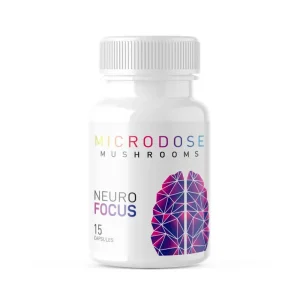
Bulk Mushrooms
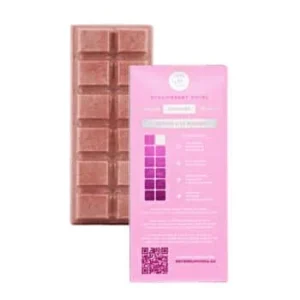
Bulk Mushrooms
Reviews
There are no reviews yet.