
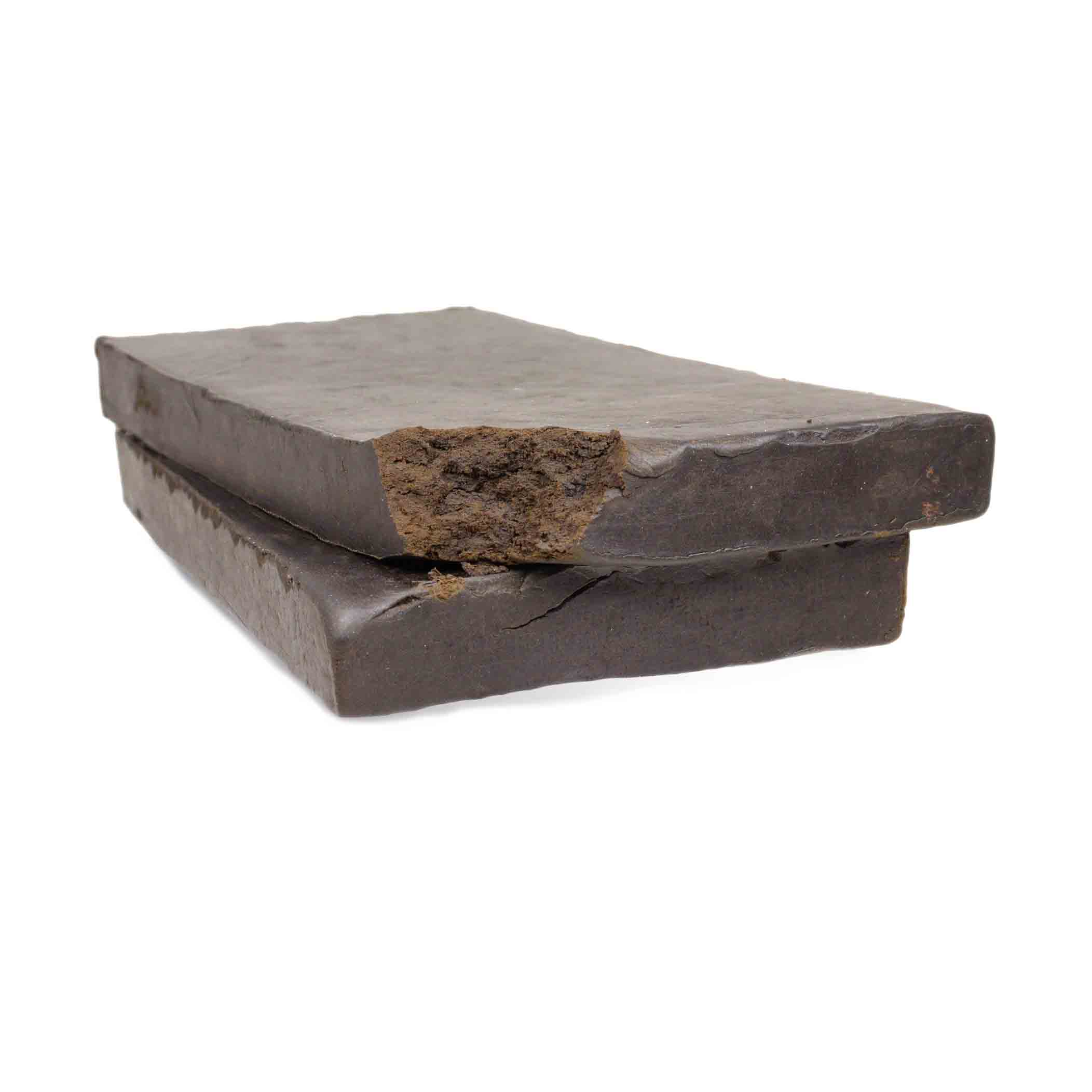
Blue Cheese Hash
Blue Cheese Hash is a cannabis-resin concentrate associated with the famous Blue Cheese cultivar, a strain commonly described as combining Blueberry and UK Cheese genetics. Instead of consisting primarily of dried cannabis flower, hash concentrates the resin-producing structures known as trichomes.
That distinction explains why people searching how to make hash, how can I make hash, how to make hashish, making hash and how to make hash weed repeatedly encounter terms such as resin, trichomes, dry sift, bubble hash, ice-water hash and pressing.
At the broadest level, traditional hash production involves separating resin-rich trichomes from cannabis plant material and concentrating the collected resin. Different hash traditions use different physical separation and refinement approaches.
This article explains those principles rather than providing a home-production recipe. Cannabis-concentrate manufacturing laws vary by state, and processing concentrated cannabis can introduce contamination, potency and legal risks.
For additional cannabis education, explore Cannabistopgrade.com.
Blue Cheese Hash Quick Facts
| Feature | Blue Cheese Hash |
|---|---|
| Product category | Cannabis concentrate |
| Concentrate family | Hash/hashish |
| Associated cultivar | Blue Cheese |
| Commonly reported lineage | Blueberry × UK Cheese |
| Primary material | Cannabis resin/trichomes |
| Common hash categories | Dry sift, pressed hash, bubble hash |
| THC | Batch-dependent |
| CBD | Usually batch-dependent |
| Aroma association | Cheese, berry, earth, sweetness |
| Same as flower? | No |
| Intoxicating potential | Yes when THC-rich |
| U.S. legality | Depends on jurisdiction |
What Is Blue Cheese Hash?
Blue Cheese Hash is concentrated cannabis resin associated with Blue Cheese plant material.
The basic distinction is:
Blue Cheese flower = dried cannabis flowers containing naturally distributed resin glands.
Blue Cheese Hash = a product containing a much greater proportion of collected resin glands.
Those glands contain much of the plant’s cannabinoid and terpene chemistry.
What Is the Blue Cheese Strain?
Blue Cheese is a well-known cannabis cultivar commonly associated with:
Blueberry × UK Cheese.
The cultivar became recognizable partly because of its unusual aromatic combination.
Reported aromas commonly include:
- cheese;
- berry;
- blueberry;
- earth;
- sweetness;
- pungent notes.
Individual products can vary considerably.
Blue Cheese Hash Genetics
The commonly reported lineage can be summarized as:
Blueberry × UK Cheese.
Blueberry is a historically influential cannabis genetic family associated with fruity aromas.
UK Cheese became famous for its unusually pungent cheese-like aromatic profile.
Their combination created the cultivar widely known as:
Blue Cheese.
Blue Cheese Hash THC
There is no universal THC percentage for Blue Cheese Hash.
Hash concentrates resin, so its cannabinoid concentration can differ significantly from the starting flower.
Actual potency depends on:
- plant genetics;
- starting material;
- resin concentration;
- refinement;
- batch;
- laboratory methodology.
A batch-specific laboratory result is therefore more useful than a generic strain percentage.
What Is Hash?
Hash, short for hashish, is concentrated cannabis resin.
Cannabis flowers produce microscopic glandular structures known as:
trichomes.
Hash production concentrates these structures while reducing the proportion of ordinary plant material.
Hash has existed for centuries and predates modern cannabis extracts such as:
- shatter;
- distillate;
- live resin;
- many contemporary vape concentrates.
What Is Hashish Made From?
Traditional hashish is primarily made from:
cannabis trichomes and their resin.
The resin can contain:
- THCA;
- THC;
- CBDA;
- CBD;
- CBG;
- minor cannabinoids;
- terpenes.
Exact chemistry depends on the cannabis used.
What Are Cannabis Trichomes?
Trichomes are microscopic structures found in particularly high concentrations on cannabis flowers.
Many glandular trichomes resemble tiny mushrooms under magnification.
Their resinous heads contain much of the chemistry sought when producing hash.
This is why trichome separation sits at the center of nearly every traditional hash-making concept.
How to Make Hash: Understanding the Principle
People searching how to make hash are generally asking how cannabis flower becomes concentrated resin.
At a conceptual level, hash production follows a broad progression:
resin separation → collection → refinement → controlled finishing → quality evaluation.
The objective is to increase the concentration of resinous trichome material relative to leaves and other botanical matter.
The exact equipment, processing parameters and manufacturing procedures vary substantially by hash type and commercial operation.
How Can I Make Hash?
The important educational concept is that hash is not created by manufacturing THC from scratch.
The cannabis plant has already produced cannabinoid-rich resin.
Hash processing attempts to:
collect and concentrate that naturally occurring resin.
Different approaches rely on physical properties of trichomes to separate them from ordinary plant material.
How to Make Hashish: Main Categories
Rather than one universal technique, several traditional and modern hash categories exist.
They include:
- dry-sift hash;
- pressed hash;
- ice-water hash;
- bubble hash;
- full-melt hash.
Each represents a different degree or style of resin separation and refinement.
Making Hash With Dry Separation
One major hash tradition involves separating resin from dried cannabis material without water.
This category is commonly known as:
dry sift.
Mechanical separation allows resinous particles to be collected independently from much of the flower.
The purity of dry sift can range dramatically.
What Is Dry Sift Hash?
Dry sift is a solventless cannabis-resin concentrate created through mechanical separation of trichomes from dry plant material.
Higher-quality dry sift contains a greater proportion of:
trichome heads
and fewer:
plant particles.
Exceptionally refined dry sift can display significant melt characteristics.
Making Hash With Cold-Water Separation
Another major category is:
ice-water hash.
Cold-water hash production uses physical separation principles to isolate resin glands from cannabis material.
It is commonly called:
bubble hash.
This method is considered solventless because it does not rely on hydrocarbon solvents to dissolve and extract cannabinoids.
What Is Bubble Hash?
Bubble hash consists primarily of mechanically separated cannabis resin collected using a cold-water environment and filtration.
The resulting material can vary from:
- plant-heavy hash;
- intermediate-grade hash;
- premium resin;
- full melt.
Therefore:
bubble hash is a category, not a guarantee of premium quality.
What Is Full Melt Hash?
Full melt represents the highly refined end of hash production.
It generally contains a large proportion of clean resin glands and comparatively little ordinary botanical contamination.
When sufficiently heated, resin-rich material can melt extensively.
This characteristic produced the term:
full melt.
Dry Sift vs. Bubble Hash
| Feature | Dry Sift | Bubble Hash |
|---|---|---|
| Cannabis resin | Yes | Yes |
| Water used | No | Yes |
| Mechanical separation | Yes | Yes |
| Hydrocarbon solvent | No | No |
| Trichomes concentrated | Yes | Yes |
| Quality range | Broad | Broad |
| Full-melt quality possible | Yes | Yes |
Traditional Hash vs. Full Melt
Traditional hash can contain varying proportions of resin and botanical material.
Full melt emphasizes:
exceptionally refined resin.
| Feature | Traditional Hash | Full Melt |
|---|---|---|
| Resin | Yes | High proportion |
| Plant material | Variable | Ideally minimal |
| Melt characteristics | Variable | Substantial |
| THC | Variable | Potentially concentrated |
| Quality | Broad range | Premium designation |
Making Hash vs. Making Rosin
Hash and rosin are not interchangeable.
Hash centers on concentrating cannabis resin structures.
Rosin is a mechanically extracted resinous concentrate produced using controlled heat and pressure.
Hash itself can be used as starting material for:
hash rosin.
Therefore:
hash → may become starting material → hash rosin.
Hash vs. Live Resin
These products are also different.
Traditional hash relies primarily on physical resin separation.
Live resin generally refers to a cannabis extract made from fresh-frozen plant material using extraction technology.
Despite both containing the word “resin,” they belong to different concentrate categories.
Hash vs. Kief
Kief is loose resinous material separated from cannabis flower.
It can contain:
- trichome heads;
- stalks;
- small botanical particles.
Hash generally involves further collection, concentration or processing of resin.
Premium hash can therefore be substantially cleaner than ordinary kief.
What Makes Good Hash?
Hash quality cannot be determined by THC alone.
Important characteristics can include:
- resin purity;
- cannabinoid profile;
- terpene preservation;
- absence of unwanted plant material;
- appropriate moisture control;
- contaminant testing.
A product with the highest THC percentage is not automatically the highest-quality hash.
Why Plant Contamination Matters
Hash aims to concentrate resin rather than ordinary leaf tissue.
Excess botanical contamination can introduce:
- chlorophyll-rich particles;
- fibers;
- unwanted residue.
Cleaner resin separation generally produces a more refined concentrate.
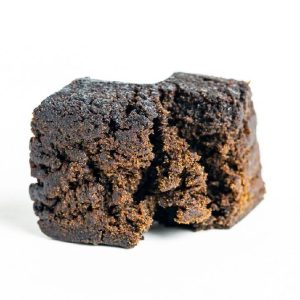
Hash Color
Blue Cheese Hash can potentially appear:
- cream;
- blonde;
- tan;
- golden;
- brown;
- darker brown.
Color depends on several variables.
These include:
- genetics;
- trichome maturity;
- oxidation;
- storage;
- refinement.
Color alone does not prove potency.
Is Blonde Hash Better?
Not necessarily.
Blonde hash is sometimes associated with clean resin, but visual appearance cannot establish:
- THC;
- CBD;
- pesticides;
- microbial contamination;
- purity.
Laboratory testing provides stronger evidence.
Does Blue Cheese Hash Smell Like Cheese?
Blue Cheese cannabis is known for a distinctive pungent aromatic reputation.
Properly preserved resin may retain compounds contributing to aromas consumers describe as:
- cheese;
- berries;
- fruit;
- earth;
- sweetness.
However, terpene composition varies by batch.
Terpenes in Blue Cheese Hash
Cannabis terpenes are aromatic compounds.
Common cannabis terpenes include:
- myrcene;
- caryophyllene;
- limonene;
- pinene;
- linalool.
A strain name alone cannot establish which terpene dominates a particular Blue Cheese Hash batch.
A terpene laboratory panel provides better information.
Is Hash Stronger Than Flower?
Hash can be stronger than ordinary cannabis flower because it concentrates cannabinoid-rich resin.
However, there is no universal ratio.
A particular flower might contain relatively high THC while a lower-grade hash could contain considerably less than premium concentrate.
Laboratory results are needed for accurate comparisons.
Blue Cheese Hash vs. Blue Cheese Flower
| Feature | Blue Cheese Hash | Blue Cheese Flower |
|---|---|---|
| Source | Cannabis resin | Cannabis flowers |
| Trichomes | Concentrated | Naturally distributed |
| Plant tissue | Reduced | Substantial |
| THC | Potentially concentrated | Batch-dependent |
| Aroma | Concentrated/variable | Cultivar-dependent |
| Product category | Concentrate | Flower |
Hash Potency and Safety
THC can affect:
- memory;
- attention;
- judgment;
- reaction time;
- coordination.
Concentrates can deliver substantial THC relative to their physical size.
Higher potency can also increase the likelihood of unpleasant experiences in some people.
These can include:
- anxiety;
- panic;
- dizziness;
- confusion.
Hash and Cannabis Use Disorder
Some people who consume cannabis develop cannabis use disorder.
Warning signs can include:
- cravings;
- tolerance;
- difficulty reducing consumption;
- continued consumption despite problems.
High-potency products deserve particular attention because they can deliver concentrated THC.
Hash and Driving
Cannabis impairment can interfere with driving-related abilities.
THC can affect:
- reaction time;
- coordination;
- attention;
- judgment.
People should not drive while impaired by hash or other cannabis products.
Does Solventless Mean Safe?
Not automatically.
“Solventless” describes a manufacturing category.
It does not mean:
- THC cannot impair;
- contamination is impossible;
- smoking is harmless;
- the product is appropriate for everyone.
A solventless concentrate can still be extremely potent.
Hash and Lung Health
Combusting cannabis products produces smoke.
Cannabis smoke contains toxins and irritants that can harm lung tissue.
Consequently, a hash product being:
natural
or:
solventless
does not make smoke exposure harmless.
Contamination Risks When Making Hash
Concentrate quality depends heavily on controlled handling.
Potential concerns can include:
- microbial contamination;
- foreign material;
- residual plant matter;
- improper storage;
- inaccurate potency assumptions.
Commercial cannabis processors operating in regulated markets may be subject to testing and manufacturing requirements that vary by state.
Why Home Hash Production Laws Matter
Cannabis laws differ significantly across the United States.
A state allowing possession or home cultivation does not necessarily mean every form of cannabis processing is permitted.
Rules can distinguish between:
- cultivation;
- possession;
- concentrate manufacturing;
- solvent-based extraction.
Anyone researching how to make hash weed should therefore check current state and local law before assuming that home concentrate production is permitted.
Cannabis Concentrate Laws Across the United States
Some states permit adult-use cannabis concentrates through licensed markets.
Others restrict cannabis to medical programs.
Others maintain substantial prohibitions.
Legal possession limits for concentrates can also differ from flower limits.
There is no single U.S. rule that applies to every state.
Laboratory Testing for Blue Cheese Hash
Useful regulated-market laboratory information can include:
- total THC;
- THCA;
- CBD;
- minor cannabinoids;
- pesticides;
- microbial contaminants;
- other state-required tests.
Consumers should match the laboratory information to the product’s batch number.
Educational Resources
For more cannabis concentrate education, explore Cannabistopgrade.com.
Regarding general cannabis health information, review CDC Cannabis and Public Health.
Regarding cannabis and lung-health information, review CDC Cannabis and Lung Health.
For current state cannabis legislation, review the NCSL State Cannabis Legislation Database.
For cannabis laboratory and measurement information, review the NIST Cannabis Laboratory Quality Assurance Program.
Continue exploring cannabis concentrates through Cannabistopgrade.com.
How Hash Is Made Explained Simply
The simplest educational answer to how to make hash is:
hash is made by separating and concentrating the resin-producing trichomes naturally present on cannabis.
Different traditions accomplish this through different physical separation approaches.
Dry-sift hash uses dry mechanical separation.
Bubble or ice-water hash uses cold-water mechanical separation.
Additional refinement can create very clean resin fractions commonly described as full melt.
The underlying goal remains similar:
increase resin concentration while reducing ordinary plant material.
That principle also explains why Blue Cheese Hash differs from Blue Cheese flower even when both originate from the same cultivar.
Blue Cheese Hash Quality and Authenticity
The Blue Cheese name alone cannot prove that a concentrate genuinely came from verified Blue Cheese genetics.
More meaningful information includes:
- producer identity;
- cultivar documentation;
- batch number;
- cannabinoid analysis;
- terpene analysis;
- contaminant testing.
This becomes particularly important in modern cannabis markets where strain names are not universally standardized.
1. What is Blue Cheese Hash?
Blue Cheese Hash is concentrated cannabis resin associated with the Blue Cheese cultivar, which is commonly described as Blueberry crossed with UK Cheese. Exact potency and chemistry vary by batch.
2. What is hash made from?
Traditional hash is primarily made from cannabis resin glands called trichomes. These structures contain cannabinoids and terpenes naturally produced by the cannabis plant.
3. How is hash made?
At a high level, hash is made by separating resin-rich trichomes from cannabis plant material, collecting the resin and refining it into a concentrated product. Different categories include dry sift, bubble hash, ice-water hash and full melt.
4. Is making hash the same as making cannabis oil?
No. Traditional hash concentrates cannabis resin structures, while cannabis oils can involve substantially different extraction and formulation processes.
5. Is Blue Cheese Hash stronger than Blue Cheese flower?
It can be because hash concentrates cannabinoid-rich resin. However, the exact comparison depends on laboratory-tested THC concentrations for the specific hash and flower batches.
6. Is homemade hash legal in the United States?
There is no single nationwide answer under state cannabis laws. Rules differ by jurisdiction, and some states distinguish home cultivation from concentrate processing. Current state and local regulations should be checked before any cannabis processing.
Be the first to review “Blue Cheese Hash”
Related products
Hash
Buy THC Extracts Online
Buy THC Extracts Online
Hash
Hash
Hash
Hash
Hash
Reviews
There are no reviews yet.