

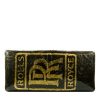
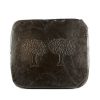
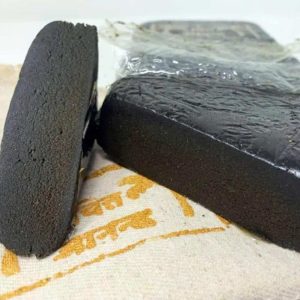
Superman Hash is a cannabis hash or concentrate associated with Superman-style cannabis genetics. The best-documented strain connected to the name is Superman OG, also known as Superman Kush or Scooperman.
Leafly identifies Superman OG as an indica bred from Tahoe OG × Bubba Kush genetics. Its current profile lists approximately 22% THC for the referenced flower profile, with caryophyllene, limonene and humulene among its identified terpenes. Consumer reviews most commonly report sleepy, relaxed and tingly experiences.
Those figures should not automatically be assigned to a finished Superman Hash product.
Hash concentrates resin-rich trichomes from cannabis, so an individual concentrate may have a very different THC, CBD and terpene profile from the flower used to produce it.
For a specific product, rely on:
- batch-specific cannabinoid testing;
- THC and CBD measurements;
- terpene analysis where provided;
- contaminant-screening results;
- batch or lot identification;
- manufacturer information;
- packaging date.
Consumer-reported strain effects are also not medical evidence. Leafly explicitly notes that its effect information comes from users and is not a substitute for professional medical advice.
For broader educational research, see Cannabistopgrade.com Cannabis Concentrates Guide, Cannabistopgrade.com Hash Resources, and Cannabistopgrade.com Cannabis Education.
Superman Hash Quick Facts
| Topic | Educational overview |
|---|---|
| Product | Superman Hash |
| Closely associated strain | Superman OG |
| Documented genetics | Tahoe OG × Bubba Kush |
| General strain type | Indica |
| Exact hash THC | Batch-specific |
| Medical marijuana card | State-specific patient credential |
| National U.S. marijuana card | None |
| Medical marijuana registry | Operated separately by participating states |
| Online applications | Available in many state programs |
| Healthcare certification | Required in many programs |
| “MMJ health” | General shorthand for medical-marijuana health/program information |
Medical Marijuana Card: What Is It?
A medical marijuana card is a patient credential issued or recognized through a state medical cannabis program.
There is no single medical cannabis card issued by the federal government that works throughout the United States.
Instead, states establish their own requirements involving matters such as:
- residency;
- qualifying medical conditions;
- healthcare-provider certification;
- patient registration;
- application fees;
- expiration dates;
- renewal procedures;
- dispensary access.
This means a person searching medical marijuana card, med card, medical weed card, marijuana card, or weed card should first determine which state’s medical cannabis program applies.
The terminology also varies.
Some states issue a physical identification card.
Others rely more heavily on electronic patient registration or a healthcare-provider certification.
Medical Marijuana Registry
A medical marijuana registry is generally the state database used to manage authorized patients, caregivers, healthcare practitioners and, in some jurisdictions, medical cannabis orders.
Florida provides a clear example.
The Florida Department of Health operates the Medical Marijuana Use Registry, or MMUR. A qualifying patient must be a permanent or seasonal Florida resident, have a qualifying medical condition diagnosed by a qualified physician, be entered into the registry and obtain an active MMUR identification card.
Florida Office of Medical Marijuana Use
Florida’s registry is not a nationwide registry.
Pennsylvania operates a separate Medical Marijuana Program patient and caregiver registry, while Massachusetts has its own Medical Use of Marijuana Program Online System.
Medical Marijuana Registry vs. Medical Card
These terms are related but not identical.
| Term | Meaning |
|---|---|
| Patient registry | State database containing qualifying patient information |
| Medical marijuana card | Physical/digital credential showing participation |
| Patient certification | Healthcare-provider determination required by a program |
| Physician order | State-specific authorization/order mechanism |
| Caregiver card | Credential allowing an approved caregiver to assist a patient |
A patient may therefore need both certification and registration before receiving a card.
How to Get a Med Card
The process varies, but a typical med card application follows several steps.
1. Check Your State Program
Start with the official health department or cannabis regulator.
Avoid assuming that a commercial website advertising instant cards represents the government program.
2. Determine Eligibility
Some states publish specific qualifying medical conditions.
Pennsylvania, for example, requires an approved serious medical condition and certification from a practitioner approved to participate in the program.
3. Register
Pennsylvania instructs patients to register in the state system before seeing an approved practitioner. Patients receive a patient ID number through the registry.
4. Obtain Healthcare Certification
A participating healthcare professional determines whether the patient qualifies under that state’s medical cannabis rules.
Pennsylvania describes its certification as confirmation from an approved practitioner that the patient has an eligible serious medical condition and that medical marijuana may benefit them.
5. Pay Applicable Fees
Fees vary substantially.
Pennsylvania currently charges $50 for a patient or caregiver medical marijuana ID card, while participants in specified government assistance programs may qualify for a no-cost card.
Massachusetts currently charges no state fee to obtain its patient Program registration card, although certifying healthcare professionals may charge their own certification fees.
Florida currently charges $75 to process an MMUR identification-card application.
6. Receive Your Credential
Depending on the jurisdiction, the patient may receive:
- a physical card;
- temporary card;
- digital registration;
- certification containing a patient/registry number.
Medical Weed Card: Pennsylvania Example
Pennsylvania’s current process has four main steps:
- register with the Medical Marijuana Program;
- obtain certification from an approved physician;
- pay for the medical marijuana ID card;
- use the card at an approved Pennsylvania dispensary.
Patients need proof of Pennsylvania residency, such as a Pennsylvania driver’s licence or state-issued identification card, plus a working email address.
The physician certification can last no longer than one year.
This illustrates why a weed card is not simply something purchased online without state participation.
Medical Marijuanas Card Online
People frequently search “medical marijuanas card online.”
The standard phrase is medical marijuana card online, and many states do allow at least part of the registration process to be completed electronically.
However, an online process does not mean there is a universal U.S. card.
Florida Online Application
Florida allows patients and caregivers to submit MMUR identification-card applications online or by mail.
Applicants access the card section of the Medical Marijuana Use Registry, submit required documentation and pay the current $75 processing fee.
Florida also requires annual card renewal, with applications permitted beginning 45 days before expiration.
Massachusetts Online Registration
Massachusetts describes online registration as the fastest and easiest way to enroll in its Medical Use of Marijuana Program.
A patient first receives certification from a registered healthcare provider, prepares identification and proof of Massachusetts residency and then completes state registration online.
A newly approved patient can print a temporary registration card while waiting for the physical card.
Pennsylvania Online Registry
Pennsylvania also allows patients to register through its online Medical Marijuana Program registry before receiving certification.
The important point is:
Online registration is still state-specific.
A website claiming to provide one medical marijuana card valid automatically in all 50 states should not be treated as an official national cannabis program.
MMJ Health: What Does It Mean?
MMJ is a common abbreviation for medical marijuana.
The search phrase MMJ health can refer broadly to:
- medical marijuana patient programs;
- cannabis-health consultations;
- physician certifications;
- state registries;
- renewal services;
- medical cannabis education.
It should not automatically be interpreted as the name of an official government agency.
If a commercial service uses “MMJ Health” in its branding, patients should distinguish that private service from the state regulator responsible for their actual medical marijuana registration.
The strongest sources remain official state health or cannabis agencies.
Medical Marijuana Card Requirements by State
Here are several examples showing why the rules cannot be generalized nationally:
| State | Healthcare certification? | State patient system | State card/registration fee |
|---|---|---|---|
| Pennsylvania | Yes | Patient/Caregiver Registry | $50, with some no-cost eligibility |
| Florida | Yes | Medical Marijuana Use Registry | $75 |
| Massachusetts | Yes | Medical Use of Marijuana Program | $0 state registration-card fee |
| New York | Yes | Certification/registry-ID system | Different model; no traditional permanent patient card required |
Pennsylvania requirements are set by its Department of Health, Florida by its Office of Medical Marijuana Use and Massachusetts by its Cannabis Control Commission.
New York Medical Cannabis Registration
New York is a useful example of why the keyword marijuana card can sometimes be outdated.
Under New York’s current medical cannabis process, an authorized practitioner issues the patient’s certification, including registry information that can be used for dispensary access. Current OCM practitioner instructions explain that an updated certification contains the registry ID barcode allowing the patient to go directly to a dispensing location.
That differs from Florida’s physical MMUR identification-card model.
Therefore, an SEO article should avoid saying that every U.S. medical cannabis patient receives the same kind of physical card.
Medical Marijuana Card Renewal
Medical cannabis credentials generally expire.
Renewal procedures differ by jurisdiction.
Florida requires patients and caregivers to submit an annual card-renewal application. The state allows renewal applications beginning 45 days before the card expires.
Massachusetts allows patients to renew their program registration up to 60 days before expiration. If the healthcare certification has expired, that certification must also be renewed.
Pennsylvania certification can last no longer than one year, so continuing participation generally requires updated practitioner certification and state-program compliance.
This demonstrates an important distinction:
Renewing a card is not always the same as renewing the healthcare certification.
Some programs require both.
How Much Does a Medical Marijuana Card Cost?
There is no national price.
Current examples include:
Pennsylvania: $50 state ID-card fee, with no-cost cards available to some qualifying public-benefit participants.
Florida: $75 processing fee for the MMUR card application.
Massachusetts: no state fee for the Program registration card, but certifying healthcare providers set their own consultation charges.
A patient’s actual cost can therefore include both:
- the state registration/card fee; and
- the healthcare-provider certification fee.
Superman Hash and Medical Cannabis Claims
The name Superman Hash does not establish that the product is an FDA-approved medicine or that it treats a particular health condition.
Superman OG consumer reviews commonly contain reports involving relaxation, sleepiness and other subjective experiences, but Leafly explicitly identifies these as user-generated reports rather than medical advice.
A product appearing in a medical cannabis dispensary also does not mean that the particular hash product has been individually approved as a treatment for insomnia, pain, anxiety or another medical condition.
Responsible cannabis content should distinguish:
- state medical cannabis eligibility;
- healthcare-provider certification;
- consumer-reported strain experiences;
- laboratory product information;
- proven clinical evidence.
Frequently Asked Questions
1. What is Superman Hash?
Superman Hash is a cannabis concentrate associated with Superman-style genetics. Superman OG is documented as a Tahoe OG × Bubba Kush indica, but the exact THC and terpene profile of any Superman Hash product depends on the individual batch.
2. How do I get a medical marijuana card?
Start with your state’s official medical cannabis program. A typical process involves checking eligibility, registering, obtaining certification from an authorized healthcare professional, completing the state application and paying applicable fees.
3. Can I get a medical marijuana card online?
Many states allow online registration. Florida, Pennsylvania and Massachusetts all provide electronic patient-registration systems, although healthcare certification and documentation requirements remain state-specific.
4. Is there one national medical marijuana registry?
No. Medical cannabis registries are operated individually by participating states. Florida’s Medical Marijuana Use Registry, Pennsylvania’s Medical Marijuana Program registry and Massachusetts’ Medical Use of Marijuana Program are separate systems.
5. How much does a medical weed card cost?
It depends on the state. Current examples include $50 in Pennsylvania, $75 in Florida, and no state registration-card fee in Massachusetts. Healthcare-provider consultation or certification costs can be separate.
Four Authoritative External Resources
Pennsylvania Department of Health – Medical Marijuana Patients
Florida Office of Medical Marijuana Use – Registry Identification Cards
Massachusetts Cannabis Control Commission – New Patient Registration
New York Office of Cannabis Management – Medical Cannabis Program
| Quantity | 7G, 14G |
|---|
Be the first to review “Superman Hash”
Related products

Hash
Buy THC Extracts Online
Buy THC Extracts Online
Buy THC Extracts Online
Hash
Buy THC Extracts Online

Hash
Reviews
There are no reviews yet.