
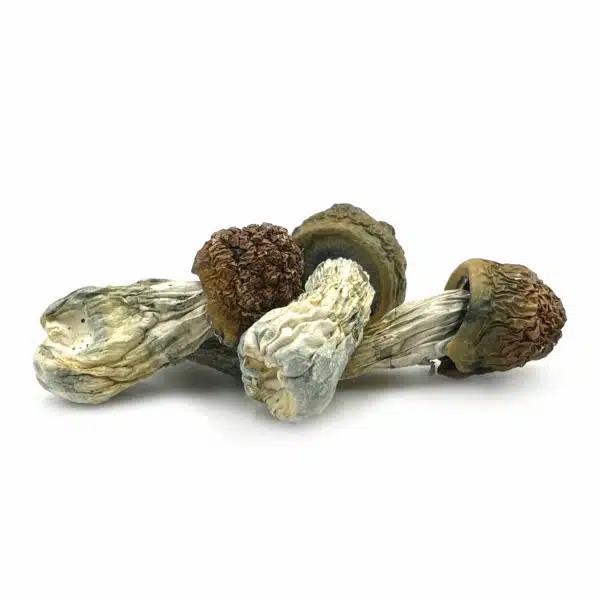
Penis Envy Mushrooms
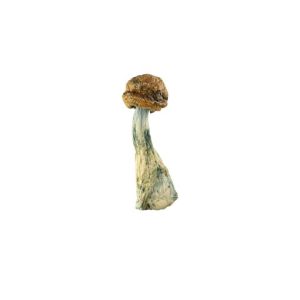
Penis Envy Mushrooms are an informal cultivated variety of Psilocybe cubensis known for unusually thick stems, relatively small caps and a distinctive mature shape. Modern community lineage records commonly trace the variety to material associated with Amazonian P. cubensis and later selection work, although parts of the historical origin story remain based on community accounts rather than formal taxonomic documentation.
Penis Envy is therefore not a separate mushroom species. It is a cultivated form within P. cubensis.
That distinction matters when discussing searches such as how can I tell if a mushroom is poisonous, poisonous white mushroom identification, deadly mushrooms, and poisonous wild mushroom identification pictures.
It can be tempting to compare an unknown wild mushroom with a picture of Penis Envy or another known mushroom and decide that it is safe. That is not a reliable identification method.
Poison Control warns that poisonous and harmless wild mushrooms can be extremely difficult to distinguish and that internet tricks or traditional rules for determining safety are unreliable. Only properly trained mushroom identifiers should make high-stakes identifications intended for consumption.
For broader U.S.-focused mushroom and substance education, explore CannabisTopGrade educational resources.
What Are Penis Envy Mushrooms?
Penis Envy is a community-recognized Psilocybe cubensis cultivar.
Community documentation typically describes mature specimens as having:
Thick stems.
Compact caps.
Dense fruiting bodies.
Reduced cap expansion compared with many ordinary P. cubensis varieties.
Lower spore production in some lines.
Community records also describe the lineage as historically associated with Amazonian P. cubensis.
A recent scientific review confirms that Penis Envy-related lines are part of the extensive informal strain diversity found within P. cubensis. The review also emphasizes that many psychedelic-mushroom strains remain incompletely characterized scientifically.
Therefore, the appearance of Penis Envy should not become an identification template for mushrooms found outdoors.
A mushroom with a thick stem or small cap is not automatically Penis Envy.
How Can I Tell If a Mushroom Is Poisonous?
For how can I tell if a mushroom is poisonous, there is no universal visual test.
This is probably the most important fact in the entire article.
You cannot reliably establish mushroom safety using rules such as:
“White mushrooms are poisonous.”
“Brown mushrooms are safe.”
“Animals eat it, so humans can.”
“Poisonous mushrooms turn silver black.”
“Cooking destroys mushroom toxins.”
“Blue bruising means it is safe.”
“If it smells good, it is edible.”
“If insects eat it, people can too.”
Poison Control specifically warns that folk methods and internet tricks used to distinguish safe from poisonous mushrooms are unproven and potentially dangerous.
Different poisonous species have very different appearances.
Some closely resemble edible species.
Why Mushroom Identification Is Difficult
Professional mushroom identification can involve evaluating multiple features simultaneously.
Poison Control notes that experts may consider:
Cap shape.
And Cap color.
Cap texture.
Gills or pores.
Spore color.
Stem characteristics.
The base of the stem.
Bruising or color changes.
Growth pattern.
Habitat.
The material the mushroom grows from.
Even these features may not always be enough.
Certain difficult groups require microscopy, specialist experience or molecular analysis.
This is why a single cellphone photograph rarely provides enough information to make a high-confidence eating decision.
Poisonous Wild Mushroom Identification Pictures
People frequently search for poisonous wild mushroom identification pictures hoping to compare a mushroom from their garden or woodland with an online gallery.
Pictures can be useful for learning.
They are much less reliable for deciding whether an unknown mushroom is safe to eat.
An extension expert responding to a mushroom-identification request in 2025 specifically explained that toxic and non-toxic mushrooms can look almost identical and declined to determine edibility from photographs alone.
Photos can fail to show:
The full stem base.
Gill attachment.
Veil structures.
Spore color.
Changes caused by age.
Microscopic features.
Substrate.
Odor.
Internal tissue.
Several angles.
These missing features can be critical.
Therefore, poisonous mushroom pictures should be educational references—not permission to eat a wild mushroom.
How to Spot Poisonous Mushrooms
For how to spot poisonous mushrooms, there is no checklist capable of separating every poisonous species from every edible species.
Some dangerous mushrooms do have recognizable characteristics for trained identifiers.
But turning those traits into a simple “safe versus poisonous” guide creates a dangerous problem: another toxic species may lack them.
For example, some dangerous Amanita mushrooms can have pale or white gills, rings on their stems, and structures around the stem base.
Yet not every mushroom displaying one of those characteristics is deadly.
Likewise, not every deadly mushroom looks like a stereotypical Amanita.
The safest principle is:
Identification must reach a confidently established species—not merely the conclusion that a mushroom “doesn’t look poisonous.”
What Do Bad Mushrooms Look Like?
For what do bad mushrooms look like, there is no single appearance.
Poisonous mushrooms can be:
White.
Brown.
Yellow.
Orange.
Red.
Small.
Large.
Smooth.
Warty.
Thin-stemmed.
Thick-stemmed.
Some look dramatic.
Others look completely ordinary.
The term “bad mushroom” can also mean different things.
It might refer to:
A poisonous wild species.
A spoiled culinary mushroom.
A psychoactive mushroom.
A contaminated cultivated mushroom.
A mushroom causing an allergy or intolerance.
Those situations require different forms of evaluation.
Poisonous White Mushroom Identification
Poisonous white mushroom identification is particularly important because several dangerous mushrooms can appear white or pale.
One well-known example is Amanita ocreata, often called a destroying angel species.
CDC’s 2026 investigation into serious Amanita poisoning in Northern California highlighted A. ocreata alongside Amanita phalloides because both contain dangerous amatoxins.
Other pale or white Amanita species can also contain highly toxic compounds.
However, “white mushroom = poisonous” is still incorrect.
Many harmless and edible mushrooms can also be white.
Color therefore cannot determine toxicity.
Why White Mushrooms Are Especially Confusing
A mushroom can appear white because of:
Species genetics.
Age.
Weather.
Lighting.
Pigment variation.
Developmental stage.
Photography.
An immature mushroom may also look substantially different when its cap is still closed.
Young Amanita fruiting bodies can appear egg-like before expanding, potentially making them easier to confuse with unrelated fungi.
This is why poisonous white mushroom identification requires more than matching a white cap to an image.
Poisonous Mushrooms
Poisonous mushrooms are mushrooms containing compounds capable of causing harmful effects after ingestion.
Different toxins attack different organ systems.
Effects can include:
Vomiting.
Diarrhea.
Abdominal pain.
Confusion.
Hallucinations.
Seizures.
Kidney injury.
Liver injury.
Coma.
Death.
North Carolina Poison Control specifically warns that serious wild-mushroom poisonings can progress to seizures, liver failure or death.
The severity and timing depend on the mushroom species and toxin involved.
Types of Poisonous Mushrooms
For types of poisonous mushrooms, several medically important categories exist.
Examples include mushroom species containing:
Amatoxins — associated particularly with deadly Amanita and certain other mushrooms.
Gyromitrin — found in some false morels.
Orellanine — associated with certain Cortinarius species and potentially severe kidney injury.
Muscarine — found in certain Inocybe and Clitocybe species.
Ibotenic acid and muscimol — associated with mushrooms such as Amanita muscaria and Amanita pantherina.
Gastrointestinal irritants — found in numerous unrelated mushroom species.
These toxins do not all produce the same symptoms.
That is one reason “poisonous mushroom” is a broad category rather than a single syndrome.
Deadly Mushrooms
A small number of mushroom species are responsible for particularly serious poisoning.
Important examples include:
Amanita phalloides — death cap.
Amanita ocreata — western destroying angel.
Other amatoxin-containing Amanita species.
Certain Galerina species.
Certain Lepiota species.
Some Cortinarius species can cause severe kidney toxicity through different toxins.
The common feature is not that they all look alike.
They do not.
The common feature is that eating them can produce severe organ injury.
Deadliest Mushroom
For deadliest mushroom, Amanita phalloides—the death cap—is generally regarded as the mushroom responsible for the greatest number of fatal mushroom poisonings.
CDC states that A. phalloides causes the most mushroom-poisoning deaths and contains amatoxins capable of producing fulminant liver failure.
CDC previously described the death cap as responsible for most deaths following ingestion of foraged mushrooms worldwide.
This does not mean every fatal poisoning involves a death cap.
Other amatoxin-producing mushrooms can be similarly dangerous.
Death Cap Mushroom
The death cap, Amanita phalloides, originated in Europe but has become established in parts of North America.
CDC reports that it is believed to have reached the United States through contaminated soil and is now found on the U.S. West Coast, including urban parks and coastal oak environments.
Death-cap poisoning is particularly dangerous because symptoms can be delayed.
A person may eat the mushroom and initially feel normal.
Hours later, severe gastrointestinal symptoms can begin.
Death Cap Poisoning Symptoms
CDC describes amatoxin poisoning as progressing in multiple phases.
The first phase commonly begins more than six hours after eating the mushroom and can involve:
Abdominal pain.
Nausea.
Vomiting.
Diarrhea.
The second phase can involve:
Liver injury.
Abnormal blood clotting.
Kidney injury.
A person may sometimes appear temporarily improved while internal organ damage continues.
Later disease can progress to:
Severe liver failure.
Kidney failure.
Need for liver transplantation.
Death.
That delayed progression is one reason waiting for symptoms after eating an unknown mushroom can be dangerous.
Does Cooking Destroy Death Cap Toxins?
No.
CDC states that amatoxins are not destroyed by cooking or other ordinary food-preparation methods.
North Carolina Poison Control likewise warns that cooking does not remove or neutralize all mushroom toxins.
Therefore, frying, boiling, drying or baking an unidentified mushroom does not guarantee safety.
This is one of the most dangerous myths in mushroom foraging.
Most Dangerous Mushroom
For most dangerous mushroom, the death cap is again one of the strongest candidates because:
It is highly toxic.
Symptoms can be delayed.
It can resemble edible mushrooms.
Its toxins attack the liver.
Cooking does not neutralize amatoxins.
Poisoning can require organ transplantation.
Deaths still occur despite modern intensive medical care.
During a 2025–2026 Northern California outbreak involving amatoxin-containing Amanita species, CDC reported severe poisonings associated with large seasonal mushroom blooms.
The lesson is not simply “memorize the death cap.”
Other poisonous mushrooms exist, so recognizing one dangerous species does not prove every other mushroom is safe.
Poisonous Mushroom Species
Several poisonous mushroom species are important in North American mushroom safety.
Amanita phalloides
Commonly called the death cap.
Associated with potentially fatal amatoxin poisoning.
Amanita ocreata
Often called the western destroying angel.
Also contains dangerous amatoxins.
Galerina marginata and related Galerina
Small brown mushrooms capable of containing amatoxins.
These can be especially dangerous because they may superficially resemble other small brown mushrooms.
Certain Lepiota species
Some small parasol-like species contain amatoxins.
Certain Cortinarius species
Some contain orellanine, a toxin capable of causing serious kidney injury.
Gyromitra species
Certain false morels contain gyromitrin-related toxins.
This is not an exhaustive list.
Hundreds of mushrooms can cause adverse reactions.
Little Brown Poisonous Mushrooms
Small brown mushrooms deserve special caution.
A deadly mushroom does not have to be large, white or dramatic.
Some Galerina species are relatively ordinary-looking brown mushrooms.
Their appearance demonstrates why searching for “what do poisonous mushrooms look like?” has limitations.
A harmless mushroom and a medically dangerous one can sometimes share:
Similar size.
Similar brown coloration.
And Similar cap shape.
Similar habitats.
This is why visual pattern matching is insufficient for safe consumption.
Penis Envy vs Poisonous Look-Alikes
Because Penis Envy is a cultivated P. cubensis variety, people may assume that any mushroom with a thick pale stem and compact brownish cap could be Penis Envy.
That is unsafe.
Cultivar appearance is affected by controlled selection and growing conditions, while wild fungi encompass thousands of species.
A wild specimen that vaguely resembles Penis Envy cannot be identified safely from:
Stem thickness.
Cap size.
Cap color.
Blue-green discoloration.
One photograph.
Where it was found.
Likewise, the fact that a mushroom does not look like a Penis Envy photo does not establish toxicity.
Does Blue Bruising Prove a Mushroom Is Psilocybin?
No.
Blue or blue-green discoloration is often discussed in connection with psilocybin-containing mushrooms, but it is not a universal safety test.
Other mushrooms can undergo color changes after damage.
And failure to observe a color change does not establish whether a mushroom is safe or toxic.
A single trait should never replace confident species identification.
For more mushroom-safety education, explore CannabisTopGrade mushroom research resources.
Can Animals Tell Which Mushrooms Are Poisonous?
No reliable human safety conclusion can be drawn from watching animals or insects eat a mushroom.
Different species metabolize toxins differently.
A compound tolerated by:
Slugs.
Insects.
Squirrels.
Deer.
Other animals
may still be harmful to humans.
Likewise, animal bite marks on a wild mushroom are not proof that it is edible.
Does Peeling a Mushroom Make It Safe?
No.
Poisonous compounds are not reliably limited to the cap skin.
Removing:
Skin.
Gills.
Stem.
Cap.
does not turn an unidentified poisonous mushroom into a safe food.
Different toxins can be distributed throughout fungal tissue.
Can You Taste a Mushroom to Test It?
Taste is not a safe universal toxicity test.
A dangerous mushroom does not necessarily taste bitter or unpleasant.
A death cap can be consumed without the immediate sensory warning someone might expect from a highly poisonous substance.
The safe principle remains:
Do not swallow an unidentified wild mushroom to test it.
Are All Amanita Mushrooms Deadly?
No.
Amanita is a large genus containing species with very different toxicological profiles.
Some are severely poisonous.
And Some produce psychoactive compounds.
Some have different degrees of edibility depending on region and preparation traditions.
But the presence of highly dangerous species within the genus means inexperienced identification carries considerable risk.
It is much safer to discuss individual species than to treat all Amanita mushrooms as identical.
Delayed Symptoms Are a Warning Sign
One dangerous misconception is that a person who feels fine several hours after eating a wild mushroom must be safe.
With amatoxin-containing mushrooms, delayed illness is actually a characteristic feature.
CDC reports that gastrointestinal symptoms can begin more than six hours after ingestion.
Poison Control similarly warns that toxic mushroom symptoms can be delayed for many hours.
Therefore, waiting for symptoms before asking for help is not a safe strategy after an unknown mushroom exposure.
What to Do After Eating an Unknown Wild Mushroom
If someone has swallowed an unidentified wild mushroom, they should not rely on an internet image comparison to decide whether medical help is necessary.
In the United States, Poison Control recommends contacting the poison center immediately rather than waiting for symptoms.
The national number is:
1-800-222-1222
Poison-control specialists can coordinate with mushroom-identification experts and medical professionals.
If severe symptoms are already present—such as seizures, loss of consciousness, severe confusion, breathing difficulty or other life-threatening symptoms—emergency medical services are appropriate.
Save the Mushroom for Identification
When an accidental exposure occurs, remaining mushroom material may help specialists determine what was eaten.
North Carolina Poison Control advises saving remaining pieces and storing them in a paper bag in a refrigerator, clearly labeled not to eat, rather than allowing the specimen to decompose in plastic.
This is fundamentally different from asking an online forum whether a mushroom looks edible.
In a suspected poisoning, identification supports medical decision-making.
Why “Poisonous Mushroom Identification Pictures” Are Not Enough
Image galleries can be valuable educational resources.
They can teach people what broad mushroom groups look like.
But images create a particular cognitive trap:
People naturally focus on similarities.
Two mushroom species may both have:
White gills.
Brown caps.
A ring.
Thin stems.
Large caps.
Small scales.
Yet subtle differences may separate a harmless species from a dangerous one.
Lighting and camera settings can also distort color.
For those reasons, experts may refuse to declare a mushroom edible solely from photographs.
Penis Envy Is Not a Wild-Mushroom Identification Standard
Penis Envy is especially inappropriate as a wild identification reference because it is a selected cultivation phenotype.
Its unusual form developed through human cultivation rather than functioning as a universal description of wild P. cubensis.
A mushroom discovered outdoors should therefore never be identified as Penis Envy simply because it looks unusually thick or phallic.
The same principle applies to cultivar names such as:
Golden Teacher.
B+.
Albino Penis Envy.
Tidal Wave.
Amazonian.
Cambodian.
These are not field-identification shortcuts.
Frequently Asked Questions
1. How can I tell if a mushroom is poisonous?
There is no universal visual test. Poison Control warns that toxic and harmless mushrooms can look very similar and that traditional tricks for distinguishing them are unreliable. Wild mushrooms intended for consumption should be identified confidently by appropriately trained experts.
2. What is the deadliest mushroom?
Amanita phalloides, the death cap, is responsible for the largest share of fatal mushroom poisonings worldwide. Its amatoxins can cause severe liver and kidney injury, and symptoms are often delayed.
3. Are all white mushrooms poisonous?
No. Some highly dangerous mushrooms are white or pale, but many harmless mushrooms are also white. Color alone cannot establish toxicity.
4. Can poisonous mushroom identification pictures tell me whether a mushroom is safe to eat?
Not reliably. Photos may omit critical identification characteristics, and poisonous and edible species can look nearly identical. An extension expert specifically cautions against determining mushroom edibility from photographs alone.
5. Does cooking make poisonous mushrooms safe?
Not necessarily. CDC reports that amatoxins found in death caps and related mushrooms are not destroyed by normal cooking or food preparation.
Final Thoughts on Penis Envy Mushrooms and Poisonous Mushroom Identification
Penis Envy Mushrooms are an informal Psilocybe cubensis cultivar, not a separate mushroom species. Community records describe the variety as having a distinctive thick-stemmed morphology, but cultivar appearance should never be used to identify unknown wild mushrooms.
For how can I tell if a mushroom is poisonous, there is no reliable universal visual rule.
For poisonous white mushroom identification, dangerous white or pale mushrooms exist—including amatoxin-containing Amanita species—but white color alone cannot establish whether a mushroom is poisonous.
Regarding poisonous wild mushroom identification pictures, photographs are useful educational tools but cannot reliably determine edibility. Poisonous and harmless mushrooms can have extremely similar appearances.
For how to spot poisonous mushrooms and what do bad mushrooms look like, there is no single combination of cap color, stem size or other easily observed feature that identifies every dangerous mushroom.
Regarding poisonous mushrooms, symptoms range from gastrointestinal illness to seizures, liver failure and death.
For deadly mushrooms, deadliest mushroom, and most dangerous mushroom, the death cap, Amanita phalloides, deserves particular attention because CDC identifies it as the species responsible for the greatest number of mushroom-poisoning deaths.
For poisonous mushroom species and types of poisonous mushrooms, dangerous fungi include certain species of Amanita, Galerina, Lepiota, Cortinarius, Gyromitra, and other genera.
The central safety principle is simple: never conclude that an unidentified wild mushroom is edible because it resembles Penis Envy, a grocery-store mushroom, or a photograph online.
For additional educational reading, explore CannabisTopGrade mushroom and substance-awareness guides.
Recommended Outbound Resources
CDC — 2026 Amanita Mushroom Poisonings
Poison Control — Wild Mushroom Warning
| Quantity | 1/4 oz (7g), 1/2 oz (14g), 1 oz (28g) |
|---|
Be the first to review “Penis Envy mushrooms”
Related products
Bulk Mushrooms
Bulk Mushrooms
Bulk Mushrooms
Bulk Mushrooms
Bulk Mushrooms
Bulk Mushrooms
Bulk Mushrooms
Bulk Mushrooms
Reviews
There are no reviews yet.