
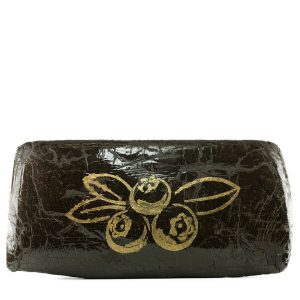


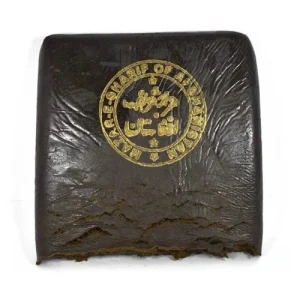
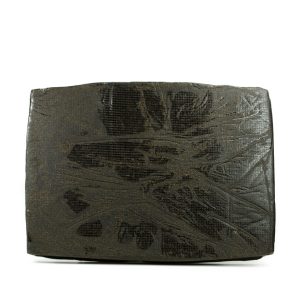
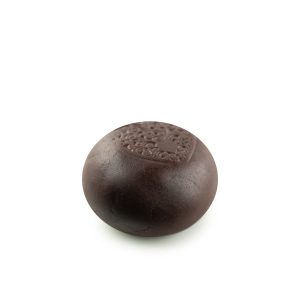
Hash Blueberry is a cannabis hash or concentrate associated with Blueberry-style cannabis genetics. Hash concentrates resin-rich trichomes from cannabis flower, so the resulting cannabinoid and terpene profile can differ significantly from ordinary dried flower.
Blueberry itself is a long-established cannabis cultivar. Leafly describes Blueberry, also known as Berry Blue, as an indica associated with Thai and Afghani ancestry. Blueberry, berry and sweet are among its commonly reported flavor characteristics, while myrcene, caryophyllene and pinene appear in its referenced terpene profile. Consumer-reported experiences should not be interpreted as guaranteed medical effects.
There are also documented varieties called Blue Hash, also known as Blueberry Hash, and Blueberry Hashplant. These should not automatically be considered identical to every commercial product called Hash Blueberry. Blue Hash is described as combining Blueberry with California Hash Plant, while Blueberry Hashplant is separately listed as a Blue Dream × Hash Plant cross.
For that reason, the exact THC, CBD and terpene composition of Hash Blueberry should come from the individual product’s batch-specific laboratory information.
Useful product information includes cannabinoid potency, terpene testing, batch identification, contaminant screening, manufacturing details and storage conditions.
For additional educational research, see Cannabistopgrade.com – Cannabis Concentrates and Dabbing, Cannabistopgrade.com – Hash and Cannabis Concentrates and Cannabistopgrade.com – Cannabis Education.
Hash Blueberry Quick Facts
| Topic | Educational Overview |
|---|---|
| Product | Hash Blueberry |
| Category | Hash / cannabis concentrate |
| Related cultivar | Blueberry |
| Related strain names | Blue Hash, Blueberry Hashplant |
| Exact THC | Batch dependent |
| Exact CBD | Batch dependent |
| “Exotic” cannabis | Informal marketing/slang term, not a regulated grade |
| New weed strains | Change continuously |
| Cannabis licence | Usually a state-issued business authorization |
| National U.S. cannabis business licence | No single nationwide licence |
| New York retail licensing | OCM-regulated |
| New NY retail applications open now? | No, not as of October 1, 2026 |
Top 50 Exotic Strains: What Does “Exotic Weed” Mean?
The phrase top 50 exotic strains is popular in cannabis search, but “exotic” is not a scientifically or legally defined cannabis category.
Leafly describes exotic as cannabis-industry slang frequently used for potent, unusual or top-shelf genetics that may be uncommon in a particular region. What qualifies as exotic can therefore change by market and location. A cultivar that seems unusual in one state can be commonplace in another.
It is more useful to think of exotic strains as distinctive modern genetics with unusual aromas, appearance, lineage or regional scarcity, rather than treating “exotic” as an objective quality certification.
50 Exotic and Modern Cannabis Strains for Research
The following 50-name reference combines newer 2026 trends with established contemporary genetics frequently encountered in modern strain databases and dispensary markets. It is not a potency or quality ranking:
Glitter Bomb, Dante’s Inferno, Black Maple, Scented Marker, Toad Venom, Blue Nerds, Horchata, Cadillac Rainbows, Baby Yoda, Moroccan Peaches, Sub Zero, Permanent Gas, Permanent Marker, Gary Payton, Lemon Cherry Gelato, Super Boof, Runtz, White Runtz, Rainbow Belts, Apples and Bananas, Gushers, GMO Cookies, Gelato, Wedding Cake, Cereal Milk, Jealousy, RS11, Zoap, Zkittlez, Blue Zushi, Biscotti, Sherbanger, Oreoz, Moonbow, Tropicana Cookies, Slurricane, Ice Cream Cake, Kush Mints, MAC 1, Animal Face, Motorbreath, Cap Junky, Georgia Pie, Jokerz, The Soap, Papaya, Chimera, Mule Fuel, Blueberry Caviar and Red Pop.
Leafly’s strain library currently contains thousands of documented strains, while its 2026 trend coverage shows that modern strain popularity changes rapidly.
For SEO purposes, a top 50 exotic strains article should therefore avoid suggesting these names have one standardized potency or that every product using a particular strain name has identical genetics.
Newest Strains of Weed in 2026
The keyword newest strains of weed can mean two different things:
Recently created genetics, or
strains newly becoming popular in dispensaries.
Those are not always the same.
A cultivar might have existed for several years before suddenly becoming widely available.
Leafly’s September 2026 trend coverage highlights several strains currently gaining substantial attention:
| 2026 Trending Strain | General Type in Leafly Coverage | Highlighted Consumer-Reported Effect |
|---|---|---|
| Glitter Bomb | Indica-hybrid | Tingly |
| Dante’s Inferno | Indica-hybrid | Relaxed |
| Black Maple | Indica-hybrid | Relaxed |
| Scented Marker | Hybrid | Euphoric |
| Toad Venom | Hybrid | Energetic |
| Blue Nerds | Hybrid | Focused |
| Horchata | Hybrid | Relaxed |
| Cadillac Rainbows | Hybrid | Relaxed |
| Baby Yoda | Indica-hybrid | Talkative |
| Moroccan Peaches | Sativa-hybrid | Energetic |
These are consumer-oriented database descriptions, not guaranteed individual outcomes.
Earlier 2026 trend coverage also identified Sub Zero and Permanent Gas among strains expected to receive greater market attention during the year.
New Strains vs. New Weed
The keywords new strains and new weed should be used carefully.
A newly named product does not necessarily represent completely new genetics.
Cannabis breeding frequently involves crossing established cultivars and selecting new phenotypes.
For example, modern strain development often combines genetics from families such as:
- Cookies;
- Runtz;
- Zkittlez;
- Gelato;
- Permanent Marker;
- Sour Diesel;
- Blueberry;
- OG Kush.
The resulting cultivar can have a new commercial name even though its parent genetics are well established.
Leafly maintains a dedicated new weed strains database that is continuously updated as additional cultivars are documented.
Blueberry Genetics Are Returning to Modern Cannabis
Blueberry is particularly relevant to Hash Blueberry because modern breeders have been revisiting Blueberry-related genetics.
Leafly previously highlighted newer Blueberry-influenced strains such as Blueberry Sugar and Blueberry Caviar, illustrating renewed breeder and market interest in Blueberry-style profiles.
This demonstrates how a decades-old cultivar can become relevant again through new crosses.
Cannabis Licence: What Does It Mean?
The terms cannabis licence and cannabis license generally refer to government authorization to operate a cannabis business.
The spelling licence is commonly used as a noun in British English, while license is the standard U.S. spelling.
A cannabis business licence can authorize activities such as:
- cultivation;
- processing;
- manufacturing;
- distribution;
- retail dispensary sales;
- delivery;
- testing laboratories;
- microbusiness operations.
There is no single federal cannabis business licence that automatically permits a company to sell marijuana throughout the United States.
Cannabis business licensing remains strongly state-specific.
How to Get a Weed Licence
For someone researching how to get a weed licence, the general process is:
Establish the business entity.
Most state licensing systems expect the applicant to have an established company or legal entity.
Choose the licence type.
A retail dispensary licence is different from cultivation, processing, distribution or testing authorization.
Check whether applications are open.
Cannabis states often accept applications only during designated windows.
Review ownership restrictions.
States can require disclosure of owners, investors and other people with financial interests.
Find a compliant location where required.
Zoning, school-distance requirements and local cannabis restrictions can determine whether a property qualifies.
Notify the municipality where applicable.
Submit financial and business documentation.
Pay application fees.
Complete background, ownership and compliance review.
Obtain final approval before operating.
Opening or selling cannabis before the required licence has been issued can expose the business to enforcement action.
Weed Licence vs. Medical Cannabis Card
A weed licence for a commercial company is completely different from a medical cannabis patient card.
| Credential | Purpose |
|---|---|
| Medical cannabis card | Patient participation in a state medical program |
| Retail dispensary licence | Cannabis retail business |
| Cultivator licence | Commercial cannabis production |
| Processor licence | Cannabis manufacturing or processing |
| Distributor licence | Regulated distribution |
| Delivery licence | Cannabis delivery where authorized |
Someone searching license to weed or pot license should therefore identify whether they mean a patient credential or business authorization.
For commercial dispensary operations, a state cannabis licence is usually required.
New York Dispensary License Application
New York’s adult-use cannabis industry is regulated by the New York State Office of Cannabis Management (OCM) and Cannabis Control Board.
An important current SEO update is that new adult-use retail dispensary applications are not open as of October 1, 2026.
OCM’s current licensing page states that the only adult-use applications currently available are Processor Type 3 Branding and Type 3 Flower licences. OCM continues processing previously submitted retail and microbusiness applications from earlier application queues.
Therefore, an article targeting New York dispensary license application should not tell readers they can simply submit a new retail application today.
New York OCM – Current Cannabis Licensing Information
How a New York Retail Dispensary Licence Works
When New York opens an applicable retail application window, prospective applicants should review OCM’s current requirements before submitting.
OCM’s 2026 adult-use retail guidance identifies several important requirements.
Applicants must generally be at least 21 years old and must form the business that will conduct the licensed cannabis activities before starting the application.
Applicants can potentially seek either a provisional licence or a final licence tied to a location.
A provisional applicant who does not yet control a property can potentially receive provisional approval and later submit a qualifying location, subject to OCM procedures.
New York Dispensary Location Rules
Current OCM retail guidance includes important location restrictions.
A cannabis retail storefront generally cannot be:
- within 500 feet of a school on the same street;
- within 200 feet of a building used exclusively as a house of worship;
- within 1,000 feet of another qualifying retail cannabis location in municipalities with more than 20,000 people;
- within 2,000 feet of another qualifying retail cannabis location in municipalities with fewer than 20,000 people.
OCM also maintains a Public Convenience and Advantage process for certain retail-dispensary proximity situations.
New York’s LOCAL map can help provisional applicants evaluate proposed locations and view existing or pending dispensary locations.
Municipal Notification
New York retail applicants must also account for municipal notification requirements.
OCM’s current retail guidance says the applicable municipality—or community board in New York City—must generally receive notice between 30 and 270 days before the final application is filed.
This makes property and local-government planning an important part of the licensing process.
How Much Is a New York Cannabis License?
Current OCM retail guidance lists:
| New York Adult-Use Retail Fee | Amount |
|---|---|
| Application fee | $1,000 |
| Retail dispensary licence fee | $7,000 |
| Limited Retail Consumption Facility add-on | $3,000 |
Qualified Social and Economic Equity (SEE) applicants can receive a 50% reduction in application and licensing fees.
The application fee and licence fee are separate.
The application fee is generally associated with submitting the application, while the licence fee is payable when the application is approved for licensure.
New York Social and Economic Equity Licensing
New York’s Cannabis Law established a goal of awarding 50% of adult-use licences to Social and Economic Equity applicants.
Eligible categories can include individuals from communities disproportionately impacted by cannabis prohibition and qualifying minority-owned businesses, women-owned businesses, distressed farmers and service-disabled veterans.
SEE applicants also receive reduced application and licensing fees and may have access to additional state assistance programs.
Can I Apply for a New York Dispensary Licence Right Now?
Not for a new adult-use retail dispensary application as of October 1, 2026.
OCM’s current licensing page explicitly states that the only applications presently available are Processor Type 3 licences.
Previously submitted retail applicants remain in processing queues, and provisional adult-use and CAURD licences were extended through December 31, 2026 under OCM’s published guidance.
Prospective retail applicants should therefore monitor OCM for the announcement of a future application window rather than paying an outside service that claims it can currently submit a retail licence application when the state window is closed.
Hash Blueberry and Product Quality
A product called Hash Blueberry should be evaluated through objective batch information.
Cannabinoid Testing
Laboratory analysis can identify measured THC, CBD and other cannabinoid concentrations.
Terpene Information
Blueberry cannabis is commonly associated with myrcene, caryophyllene and pinene in Leafly’s referenced profile, but the terpene composition of a finished hash product can differ.
Batch Traceability
A lot or batch number helps connect the physical product with its test results.
Storage
Heat, oxygen, moisture and light can alter cannabis concentrates over time.
Avoid Potency Assumptions
A strong Blueberry aroma does not establish THC concentration.
Likewise, terms such as exotic, premium, top shelf or AAA are not regulated scientific grades.
Frequently Asked Questions
1. What is Hash Blueberry?
Hash Blueberry is a cannabis concentrate associated with Blueberry-style genetics. Blueberry is a long-established cannabis cultivar associated with sweet blueberry and berry characteristics, but the exact cannabinoid and terpene composition of a finished hash product depends on its individual batch.
2. What are the top 50 exotic strains?
There is no official scientific top-50 ranking because exotic weed is an informal term. Modern strains commonly discussed as exotic or premium include genetics such as Glitter Bomb, Dante’s Inferno, Black Maple, Scented Marker, Permanent Marker, Super Boof, Runtz, Zkittlez, RS11, Zoap, Lemon Cherry Gelato and many others. “Exotic” varies by market and region.
3. What are some of the newest weed strains in 2026?
Current September 2026 trend coverage highlights Glitter Bomb, Dante’s Inferno, Black Maple, Scented Marker, Toad Venom, Blue Nerds, Cadillac Rainbows, Baby Yoda and Moroccan Peaches among notable contemporary strains.
4. How do I get a cannabis licence?
Cannabis business licensing is state-specific. Applicants generally need to form a business entity, choose the correct licence type, meet ownership and location requirements, submit required disclosures and documentation, pay fees and receive approval from the appropriate state regulator before operating.
5. Can I submit a New York dispensary license application now?
Not for a new adult-use retail dispensary as of October 1, 2026. New York OCM currently lists only Processor Type 3 Branding and Type 3 Flower applications as available. Prospective retailers should monitor OCM for a future retail application window.
Four Authoritative External Resources
New York Office of Cannabis Management – Licensing
New York OCM – Adult-Use Retail Dispensary Guidance
| Quantity | 7G, 14G, 28G |
|---|
Be the first to review “Hash Blueberry”
Related products
Hash
Buy THC Extracts Online
Hash
Buy THC Extracts Online
Hash

Hash
Reviews
There are no reviews yet.