
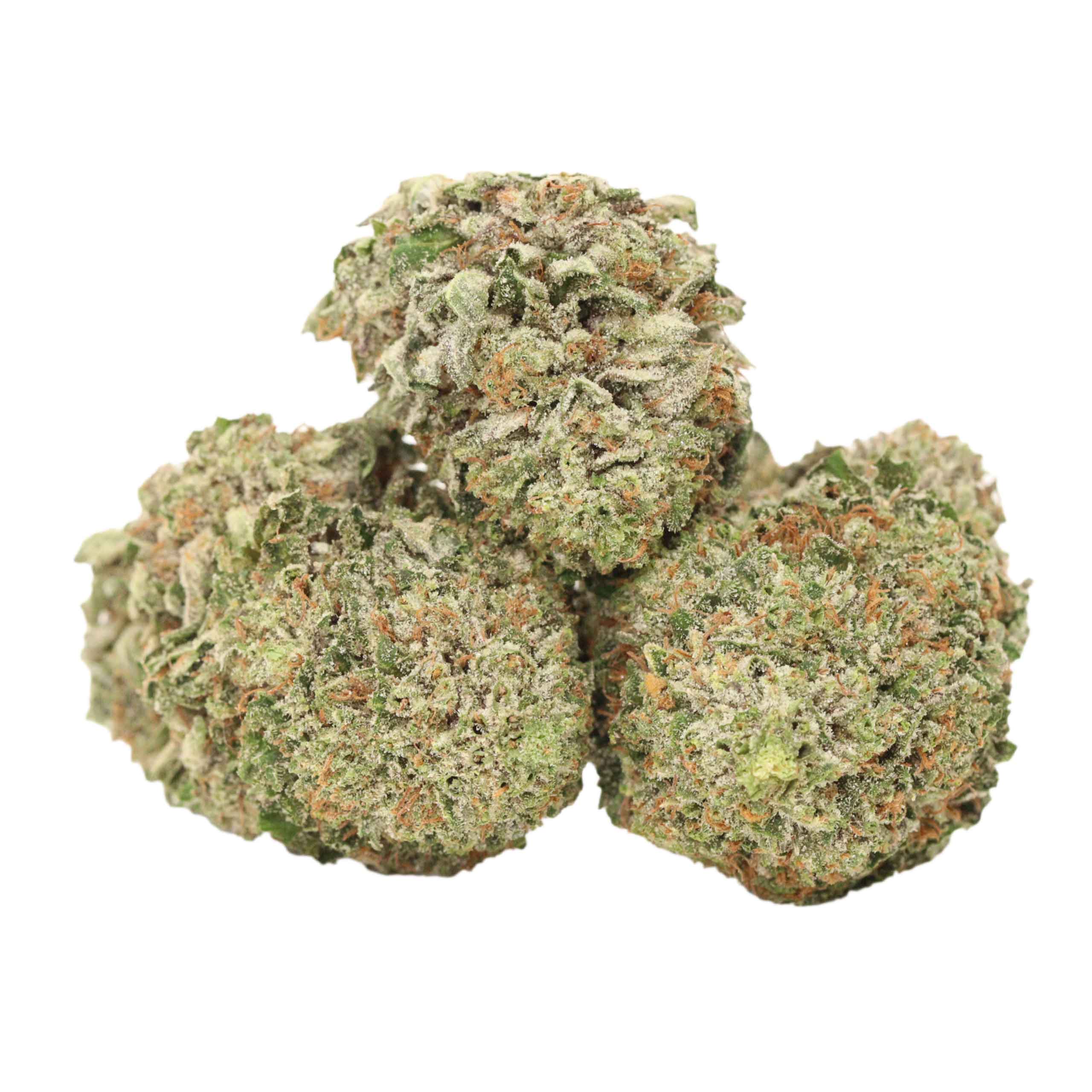
Berry Kush Strain
Berry Kush Strain is a cannabis search term that can refer to several closely related berry-and-Kush cultivars rather than one universally standardized genetic profile.
That distinction is important for accuracy.
Major strain databases document several similar names, including:
- Kushberry, also called Kush Berry;
- Berry OG, also called Berry OG Kush;
- Wild Berry Kush;
- Blackberry Kush;
- Raspberry Kush;
- Purple Berry Kush.
Among those, Kushberry is one of the clearest matches to the phrase Berry Kush. Leafly currently classifies Kushberry as an indica with about 21% THC on its reference profile and describes its lineage as Blueberry × OG Kush. Its most commonly reported effects include sleepiness, relaxation, and hunger, while its listed terpenes include limonene, caryophyllene, and linalool.
Berry OG is another closely related name. Leafly currently lists Berry OG as an indica-dominant hybrid made from Blueberry × OG Kush, with approximately 23% THC and 1% CBG on its reference profile.
Because producers can use similar names differently, consumers should not assume every product labeled Berry Kush has identical genetics, THC, terpenes, or effects.
This article also addresses related searches such as where can I find pot, where to buy cannabis near me, weed flower, marijuana flower, weed for sale cheap, cheap weed online, and weed leaf strictly within lawful, licensed U.S. cannabis markets.
For additional cannabis education, explore Cannabistopgrade.com.
What Is Berry Kush Strain?
Berry Kush generally refers to cannabis cultivars combining berry-oriented genetics or aromas with Kush-family characteristics.
The name can suggest:
- berry flavors;
- sweet aromas;
- earthy Kush notes;
- THC-dominant flower;
- relaxing consumer reports.
However, the phrase is not standardized enough to justify one universal pedigree.
A product labeled Berry Kush in one state may not be genetically identical to a product carrying the same name elsewhere.
Berry Kush Strain Quick Profile
| Characteristic | Berry Kush |
|---|---|
| Broad category | Indica or indica-dominant hybrid |
| Closest documented profiles | Kushberry, Berry OG |
| Common genetic theme | Blueberry × OG Kush |
| Reference THC range | Roughly 21–23% in related Leafly profiles |
| Common aromas | Berry, blueberry, sweet, earthy |
| Common effects | Relaxed, sleepy, happy, euphoric |
| Typical product type | Weed flower / marijuana flower |
| Exact chemistry fixed? | No |
The actual regulated product label is more useful than a generic strain description.
Kushberry as a Berry Kush Reference
Leafly currently documents Kushberry, also called Kush Berry, as an indica strain.
Its reported lineage is:
Blueberry × OG Kush
Its current reference profile lists:
- THC: about 21%;
- CBD: 0%;
- common effects: sleepy, relaxed, hungry;
- flavors: berry, earthy, blueberry;
- terpenes: limonene, caryophyllene, linalool.
This makes Kushberry one of the strongest standardized references for the broader Berry Kush search term.
Berry OG as Another Close Match
Berry OG is another prominent berry-and-Kush cultivar.
Leafly describes Berry OG as an indica-dominant hybrid made by crossing:
Blueberry × OG Kush
Its current reference profile lists approximately:
- 23% THC;
- 1% CBG.
Commonly reported effects include:
- relaxation;
- euphoria;
- happiness.
Its dominant terpenes are listed as myrcene, limonene, and caryophyllene.
Is Berry Kush Indica or Sativa?
Most closely related Berry Kush cultivars lean toward the indica or indica-dominant hybrid category.
Kushberry is listed as indica.
Berry OG is described as an indica-dominant hybrid.
Blackberry Kush is also an indica-dominant hybrid.
That does not mean every product carrying the Berry Kush name will have the same classification.
Indica Does Not Guarantee One Effect
Indica and sativa remain broad commercial categories.
A person’s cannabis experience also depends on:
- THC concentration;
- CBD;
- minor cannabinoids;
- terpene profile;
- tolerance;
- individual physiology;
- product format.
For that reason, the word indica should not be treated as a guarantee of sleepiness or relaxation.
Berry Kush Genetics
The most common genetic theme among closely related Berry Kush profiles is:
Blueberry × OG Kush
This pairing appears in both Kushberry and Berry OG documentation.
Blueberry contributes the berry-oriented genetic and aromatic association.
OG Kush contributes classic Kush-family characteristics.
Blueberry Influence
Blueberry is one of the most recognizable fruit-associated cannabis lineages.
Its descendants frequently display aromas described as:
- blueberry;
- berry;
- sweet fruit.
This helps explain the naming of many berry-themed Kush cultivars.
OG Kush Influence
OG Kush is one of the most influential cannabis cultivars in U.S. breeding.
Its descendants are often associated with:
- earthy aromas;
- pine;
- fuel;
- Kush characteristics.
Combining Blueberry with OG Kush naturally produces strain families associated with both fruit and earth.
Berry Kush THC
There is no universal Berry Kush THC percentage.
Closely related documented strains illustrate the variation.
Kushberry currently appears around 21% THC on Leafly.
Berry OG appears around 23% THC.
Blackberry Kush appears around 17% THC.
Different products can fall above or below these reference values.
Why THC Levels Vary
Cannabis potency varies according to:
- genetics;
- phenotype;
- cultivation;
- harvest;
- drying;
- curing;
- storage;
- laboratory methodology.
The cannabinoid report for the actual product is more useful than an average found online.
Is Berry Kush Strong?
Many Berry Kush-related cultivars are THC-dominant.
That can make them feel strong to some consumers.
However, strength is subjective.
Higher THC does not automatically mean:
- better cannabis;
- better flavor;
- better effects;
- better value.
Very high THC can also increase unwanted effects for some users.
Berry Kush Effects
Related Berry Kush cultivars are commonly associated with consumer reports involving:
- relaxation;
- sleepiness;
- happiness;
- euphoria;
- hunger.
These effects are not guaranteed.
They should also not be treated as proof that Berry Kush medically treats sleep disorders, anxiety, pain, or other conditions.
Berry Kush and Relaxation
Relaxation appears frequently across closely related cultivars.
Kushberry and Berry OG are both described as mostly calming on Leafly.
This helps explain the popularity of Berry Kush-related strains in evening-oriented cannabis discussions.
Does Berry Kush Make You Sleepy?
Some Berry Kush variants are commonly associated with sleepiness.
Kushberry lists sleepy among its top consumer-reported effects.
That does not establish Berry Kush as a clinically proven sleep treatment.
Cannabis and sleep research remains mixed.
Berry Kush and Euphoria
Berry OG users commonly report euphoric effects.
Euphoria is also reported across many THC-dominant cannabis cultivars.
Individual response can vary substantially.
Berry Kush and Appetite
Increased appetite is commonly associated with THC.
Kushberry users frequently report hunger.
This is not unique to Berry Kush.
Berry Kush and Anxiety
Some people report feeling relaxed after cannabis.
Others may experience:
- anxiety;
- panic;
- paranoia;
- racing thoughts.
Higher THC exposure can increase uncomfortable psychological effects in some individuals.
Berry Kush Aroma
Berry Kush-related cultivars are strongly associated with fruit-oriented aromas.
Common descriptions include:
- berry;
- blueberry;
- sweet;
- earthy;
- grape.
The actual aromatic profile depends on the terpenes present in the specific product.
Berry Kush Flavor
Common flavor descriptions include:
- blueberry;
- berry;
- sweet fruit;
- earth;
- Kush-like spice.
Flavor is subjective and can change with freshness and storage.
Berry Kush Terpenes
Because Berry Kush is not one perfectly standardized cultivar, its terpene profile varies.
Related strains commonly contain terpenes such as:
- limonene;
- caryophyllene;
- myrcene;
- linalool.
The actual batch laboratory report provides the strongest evidence.
Limonene
Limonene contributes citrus-like aromas.
It occurs naturally in citrus fruits and many cannabis cultivars.
Its presence should not be interpreted as proof of a specific therapeutic effect.
Caryophyllene
Beta-caryophyllene contributes spicy and peppery aromas.
It occurs naturally in cannabis and black pepper.
Myrcene
Myrcene contributes earthy, herbal, and musky aromas.
It is common across many cannabis strains.
Linalool
Linalool contributes floral and lavender-like aromatic notes.
It occurs in lavender and several other plants.
Berry Kush vs. Blackberry Kush
Blackberry Kush is a better-standardized strain.
Leafly currently lists Blackberry Kush as an indica with about 17% THC and describes it as:
Afghani × Blackberry
Its common flavors include berry, sweet, and earthy.
Berry Kush and Blackberry Kush should not automatically be treated as the same cultivar.
Berry Kush vs. Raspberry Kush
Raspberry Kush is another separate indica cultivar.
Leafly currently lists it around 20% THC, with common reports of relaxed, sleepy, and euphoric effects.
Its berry-oriented identity makes it easy to confuse with broader Berry Kush terminology.
Berry Kush vs. Purple Berry Kush
Purple Berry, also called Purple Berry Kush, is another distinct strain.
Leafly currently describes it as an indica-dominant cultivar associated with:
Granddaddy Purple × Blueberry
It is not genetically identical to Kushberry or Berry OG.
Berry Kush vs. Wild Berry Kush
Wild Berry Kush is documented separately as a hybrid.
Leafly lists common flavor descriptions such as:
- blueberry;
- sweet;
- earthy.
Its strain identity should remain separate from the broader Berry Kush term.
What Is Weed Flower?
Weed flower is a common informal term for dried cannabis blossoms.
Flower is generally the part of the cannabis plant harvested, dried, cured, and packaged for regulated retail.
A flower label may include:
- THC;
- CBD;
- weight;
- producer;
- batch information;
- package date;
- laboratory testing.
What Is Marijuana Flower?
Marijuana flower generally refers to cannabis flower that falls under marijuana law rather than a separately regulated hemp category.
Terminology and legal definitions can vary.
In legal adult-use or medical markets, flower can be sold through licensed cannabis businesses under state regulations.
Weed Flower vs. Marijuana Flower
In everyday conversation, these terms often mean essentially the same thing.
However, legal definitions can matter.
A regulated marijuana product may be subject to different rules from hemp products involving:
- THC thresholds;
- licensing;
- retail;
- labeling;
- taxation.
What Does a Weed Leaf Look Like?
The classic weed leaf usually has several narrow or broad serrated leaflets radiating from a central point.
Cannabis leaves are visually distinctive.
However, the leaf itself is different from the resin-rich flower commonly associated with commercial cannabis products.
Cannabis Leaf vs. Cannabis Flower
Cannabis flowers contain much higher concentrations of glandular trichomes.
These trichomes can contain:
- cannabinoids;
- terpenes;
- other plant compounds.
That is why cannabis flower is generally more significant in regulated consumer markets.
Where Can I Find Pot?
“Pot” is a longstanding slang term for marijuana.
In jurisdictions where marijuana retail is legal, consumers should look for licensed cannabis retailers rather than unverified sellers.
Official state cannabis regulators often provide license lookup tools.
Where to Buy Cannabis Near Me Legally
The phrase where to buy cannabis near me is strongly location-dependent.
Where adult-use cannabis retail is permitted, eligible adults may have access to licensed dispensaries.
Medical-only states can impose patient eligibility requirements.
Some jurisdictions prohibit retail marijuana sales entirely.
Why Local Cannabis Laws Matter
Cannabis laws vary by:
- state;
- city;
- county;
- program type.
A product that is legal to purchase from a licensed retailer in one jurisdiction may not be legally available in another.
Weed for Sale Cheap
The phrase weed for sale cheap often reflects price-sensitive shopping intent.
Price should not be the only consideration.
In regulated markets, consumers should also consider:
- retailer licensing;
- laboratory testing;
- package date;
- product type;
- cannabinoid information.
Extremely low pricing from unverified sources can be a warning sign rather than a benefit.
Cheap Weed Online
The phrase cheap weed online requires careful legal interpretation.
Some legal cannabis markets allow consumers to browse licensed retailer menus online and arrange permitted local pickup or delivery.
That is different from unrestricted nationwide marijuana shipping.
A low-priced online listing does not establish that:
- the seller is licensed;
- the product is tested;
- shipping is lawful.
Online Cannabis Menus
Many licensed dispensaries provide online menus.
These can help consumers compare:
- flower;
- pre-rolls;
- edibles;
- concentrates;
- vapes;
- tinctures.
The digital menu is simply part of the retailer’s regulated local sales system.
Cheap Cannabis vs. Cannabis Value
The lowest price does not always represent the best value.
Useful considerations include:
- freshness;
- potency;
- testing;
- producer reputation;
- package weight;
- cannabinoid profile.
A discounted product can still be legitimate, but consumers should evaluate why it is discounted.
Licensed Cannabis Retailers
Licensed cannabis retailers operate under applicable state and local regulations.
Requirements may cover:
- age verification;
- inventory tracking;
- product testing;
- packaging;
- purchase limits;
- security.
Requirements differ significantly by jurisdiction.
How to Verify a Cannabis Dispensary
Where available, official state cannabis agencies maintain retailer license databases.
Consumers can use these resources to verify:
- business identity;
- address;
- license type;
- current status.
This provides stronger evidence than advertising or search ranking alone.
Medical vs. Recreational Cannabis Stores
Medical cannabis retailers serve eligible patients under state medical programs.
Recreational dispensaries serve eligible adults in states allowing adult-use sales.
Some businesses operate under both regulatory systems.
Cannabis Product Testing
Regulated cannabis programs may require testing for:
- THC;
- CBD;
- pesticides;
- microbial contaminants;
- heavy metals;
- residual solvents.
Testing rules vary by state.
Berry Kush at a Dispensary
Where legal cannabis retail exists, Berry Kush-related products may appear on licensed menus.
Because the name is not perfectly standardized, consumers should check:
- complete strain name;
- producer;
- THC;
- CBD;
- terpene profile;
- testing information.
Cannabis Delivery
Some states permit licensed local cannabis delivery.
Others restrict or prohibit it.
The existence of an online menu does not automatically mean a dispensary can legally deliver everywhere.
Marijuana Shipping Across State Lines
State legalization should not be interpreted as unrestricted permission to ship marijuana nationwide.
Online ordering and interstate shipping are separate legal issues.
Cannabis Purchase Limits
States can regulate:
- purchase amounts;
- possession limits;
- concentrate quantities;
- edible THC limits.
Rules differ from one jurisdiction to another.
Berry Kush and Driving
THC can impair:
- reaction time;
- judgment;
- coordination;
- perception.
People should not drive while impaired by Berry Kush or another THC-containing cannabis product.
Berry Kush and Alcohol
Combining cannabis and alcohol can increase impairment.
The fact that a strain is described as relaxing does not make the combination safer.
Cannabis Use Disorder
Repeated cannabis use can contribute to cannabis use disorder in some individuals.
Possible signs can include:
- craving;
- tolerance;
- difficulty reducing use;
- continued use despite negative consequences.
Potency can influence total THC exposure.
Berry Kush and U.S. Cannabis Laws
Berry Kush does not receive special legal treatment because of its strain name.
Its legal status depends on the marijuana laws applicable to the jurisdiction.
The National Conference of State Legislatures’ cannabis policy database, updated August 31, 2026, continues to track state measures involving:
- adult-use cannabis;
- medical cannabis;
- dispensary licensing;
- delivery;
- product regulations;
- local control;
- public health.
Educational Resources
For more U.S.-focused cannabis strain education, explore Cannabistopgrade.com.
Regarding information on the closely related Kushberry profile, see Leafly’s Kushberry strain guide.
For another closely related berry-and-Kush cultivar, see Leafly’s Berry OG profile.
Regarding current U.S. state cannabis legislation, consult the NCSL State Cannabis Policy Enactment Database.
Continue researching cannabis flower, indica strains, cannabinoids, and legal dispensary systems through Cannabistopgrade.com.
Frequently Asked Questions
1. What is Berry Kush Strain?
Berry Kush is a broad strain name associated with berry-flavored, Kush-influenced cannabis. Closely documented matches include Kushberry and Berry OG, both of which are associated with Blueberry and OG Kush genetics.
2. How much THC does Berry Kush contain?
There is no single universal percentage. Leafly currently lists Kushberry around 21% THC and Berry OG around 23% THC, but actual products can test higher or lower.
3. Where can I find pot legally?
Where marijuana retail is legal, consumers should use licensed cannabis dispensaries and official state regulatory resources to verify retailers. Laws vary considerably by state and locality.
4. What is the difference between weed flower and marijuana flower?
In everyday usage, both usually refer to dried cannabis flower. Legal terminology can differ depending on state marijuana laws and hemp definitions.
5. Is cheap weed online always legal?
No. A low-priced online cannabis listing does not establish that the seller is licensed or that delivery or shipping is lawful. In regulated markets, online ordering generally operates through licensed local cannabis retailers under state rules.
6. Is the weed leaf the same part as marijuana flower?
No. Cannabis leaves mainly support photosynthesis, while female flowers generally contain the highest concentrations of cannabinoid- and terpene-rich trichomes used in commercial cannabis flower products.
Be the first to review “Berry Kush Strain”
Related products
Indica strains
Indica strains
Indica strains
Indica strains
Indica strains
Indica strains
Indica strains
Indica strains
Reviews
There are no reviews yet.