
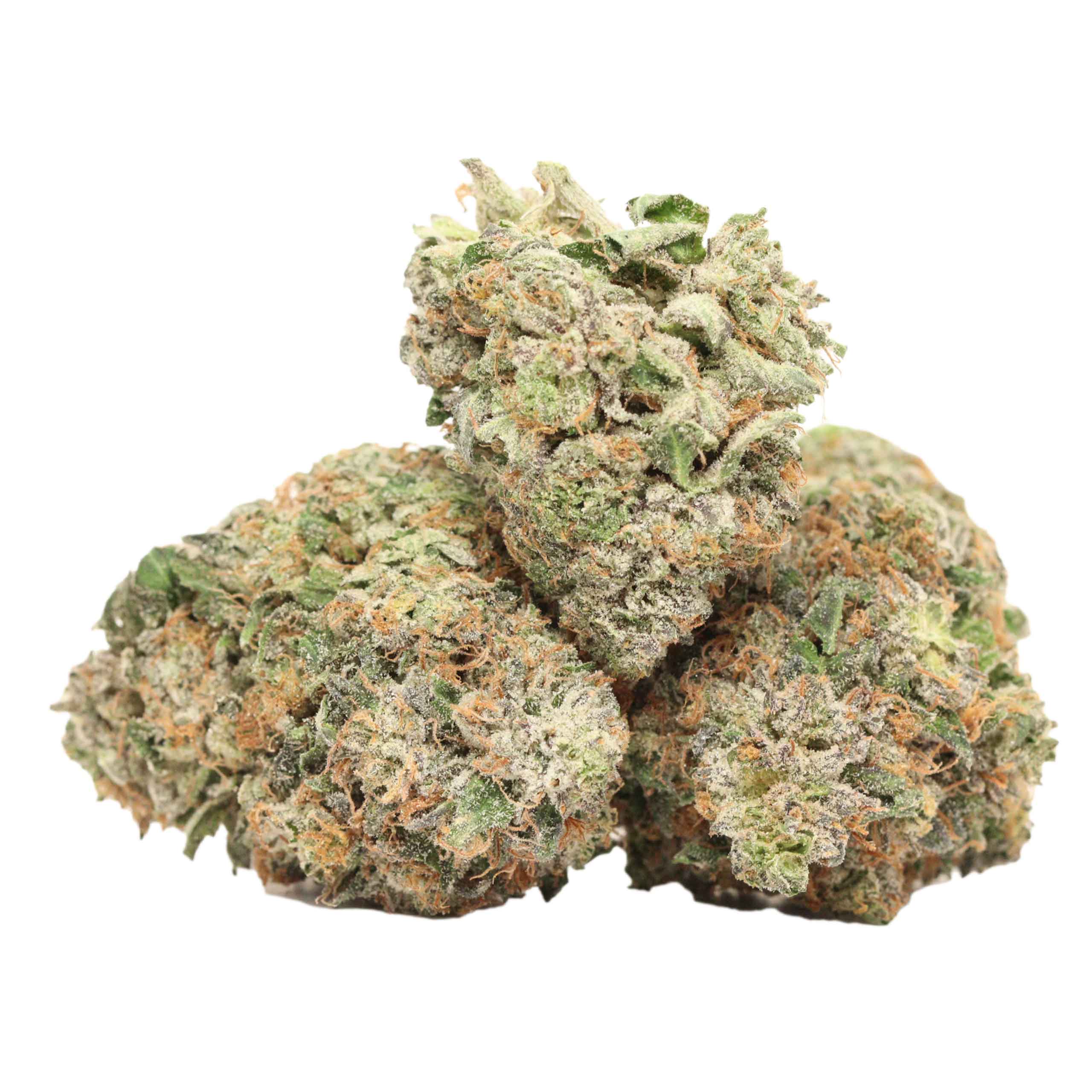
Watermelon Jam Strain
Watermelon Jam Strain is a comparatively uncommon cannabis cultivar name that should be approached more carefully than highly standardized names such as Blue Dream, OG Kush, Purple Kush, or Wedding Cake.
Cannabis strain names do not guarantee one universal chemical formula. With less extensively documented cultivars such as Watermelon Jam, genetics, THC concentration, terpene composition, and even indica-versus-sativa classification can vary among producers and markets.
For that reason, consumers and researchers should rely on the actual producer information and batch-specific laboratory analysis rather than assuming every Watermelon Jam product has identical characteristics.
The name itself suggests a sweet, fruit-oriented cannabis identity, but a name such as “Watermelon” does not prove the presence of a particular terpene, cannabinoid, flavor, or genetic lineage.
This guide also explores an important part of cannabis botany through related terms including pot leaf, leaves of cannabis, marijuana leaf, leaf ganja, cannabis leaf, and marijuana leaves.
Understanding the cannabis leaf helps explain plant identification, photosynthesis, indica and sativa morphology, plant health, and the major differences between cannabis leaves and cannabinoid-rich flowers.
For additional cannabis education, explore Cannabistopgrade.com.
What Is Watermelon Jam Strain?
Watermelon Jam is a cannabis strain name encountered in parts of the modern cannabis market.
Unlike famous cultivars with extensively repeated profiles across major databases, Watermelon Jam does not have enough consistent documentation to justify assigning one definitive:
- genetic lineage;
- THC percentage;
- CBD percentage;
- terpene profile;
- indica/sativa ratio.
This does not mean products carrying the name do not exist.
It means the strain name alone provides insufficient evidence to establish their chemistry.
Watermelon Jam Strain Quick Profile
| Characteristic | Watermelon Jam Strain |
|---|---|
| Cannabis type | Producer dependent |
| Exact lineage | Not universally standardized |
| THC | Batch dependent |
| CBD | Batch dependent |
| Terpenes | Batch dependent |
| Name association | Watermelon / fruit-oriented |
| Flower appearance | Phenotype dependent |
| Leaf type | Cannabis palmate leaf |
| Best source for chemistry | Batch laboratory report |
This approach prevents unsupported strain claims while giving readers useful cannabis information.
Is Watermelon Jam Indica or Sativa?
Watermelon Jam should not be assigned one universal indica or sativa classification without knowing the specific producer or genetic line.
Modern cannabis can be classified commercially as:
- indica;
- sativa;
- hybrid;
- indica-dominant hybrid;
- sativa-dominant hybrid.
However, these categories do not completely describe cannabinoid or terpene chemistry.
Why Cannabis Strain Names Can Be Confusing
Cannabis naming developed largely through breeder and consumer culture rather than through one universal botanical registry.
Consequently, identical or similar names can sometimes appear on genetically different products.
Variation can result from:
- different breeders;
- different phenotypes;
- regional naming;
- producer-specific genetics;
- informal renaming.
This is especially important when researching uncommon strains.
Watermelon Jam Genetics
There is not enough consistent authoritative documentation to assign one universal genetic pedigree to every Watermelon Jam product.
A retailer or producer may provide a lineage for its specific version.
That lineage should be treated as producer-specific information unless independent genetic documentation supports broader use.
Watermelon Jam THC
There is no responsible universal THC percentage that can be assigned to Watermelon Jam Strain.
THC varies naturally among cannabis plants and batches.
Important influences include:
- genetics;
- cultivation environment;
- harvest timing;
- processing;
- storage;
- testing methodology.
A laboratory result for the actual regulated product provides better information.
Is Watermelon Jam Strong?
Strength cannot be determined from the strain name.
A Watermelon Jam flower testing at a relatively high THC concentration could produce substantial intoxication, while another phenotype could have different cannabinoid levels.
“Strong” can also refer to:
- THC;
- aroma;
- flavor;
- subjective effects;
- concentrate potency.
These should not be treated as identical measurements.
Watermelon Jam Effects
Effects should not be predicted confidently without reliable information about the actual product.
THC-containing cannabis can generally produce experiences involving:
- altered perception;
- mood changes;
- relaxation;
- euphoria;
- appetite changes;
- impaired reaction time.
Individual responses vary considerably.
Watermelon Jam Aroma
The name Watermelon Jam suggests a sweet, fruit-focused marketing identity.
However, a strain name does not scientifically establish flavor.
A real aroma profile depends largely on volatile compounds such as terpenes.
Does Watermelon Jam Taste Like Watermelon?
Not necessarily.
Cannabis strain names frequently reference:
- fruit;
- desserts;
- candy;
- fuel;
- animals;
- colors.
These names can reflect aroma, breeding history, appearance, or simply branding.
A cultivar called Watermelon Jam therefore does not necessarily taste exactly like watermelon.
Watermelon Jam Terpenes
Without consistent batch-specific data, it is inappropriate to assign one dominant terpene to every Watermelon Jam product.
Common cannabis terpenes generally include:
- myrcene;
- limonene;
- caryophyllene;
- pinene;
- linalool;
- terpinolene.
The actual laboratory report should determine which ones dominate a particular batch.
What Is a Pot Leaf?
Pot leaf is an informal term for a cannabis leaf.
The cannabis leaf is one of the most recognizable plant symbols in the world.
A mature leaf typically has several leaflets radiating outward from a central point.
This arrangement is described as palmately compound.
What Does a Cannabis Leaf Look Like?
Cannabis leaves generally have:
- multiple leaflets;
- serrated edges;
- pointed tips;
- prominent veins;
- a palmate arrangement.
Leaf appearance varies according to:
- genetics;
- plant age;
- environmental conditions;
- plant health.
Not every cannabis leaf has exactly the same number of leaflets.
Leaves of Cannabis
The leaves of cannabis perform essential biological functions.
Their primary responsibilities include:
- photosynthesis;
- gas exchange;
- transpiration;
- supporting plant growth.
Leaves capture light energy and help the plant convert it into chemical energy.
They are therefore essential to cannabis plant development.
Marijuana Leaf
A marijuana leaf is simply a leaf from a cannabis plant classified as marijuana under the applicable legal framework.
Botanically, the plant does not change its leaf structure simply because a law categorizes it as marijuana rather than hemp.
Legal classification and botanical morphology are different concepts.
Cannabis Leaf vs. Marijuana Leaf
In ordinary language, cannabis leaf and marijuana leaf are frequently used interchangeably.
Cannabis is the broader plant term.
Marijuana is a legal and cultural term commonly used for cannabis products that fall outside applicable hemp definitions.
The leaves can look extremely similar.
What Does Leaf Ganja Mean?
Ganja is a longstanding term for cannabis.
Therefore, the phrase leaf ganja generally refers to cannabis leaves or leafy cannabis material.
The term has historical and cultural roots and is widely recognized in cannabis-related language.
It should not be confused with a scientific botanical classification.
Marijuana Leaves vs. Cannabis Flower
Cannabis leaves and cannabis flowers are different plant structures.
Leaves primarily support photosynthesis and plant growth.
Female cannabis flowers typically contain far greater concentrations of glandular trichomes associated with cannabinoids and terpenes.
That distinction is central to understanding the cannabis plant.
Cannabis Leaf vs. Weed Flower
| Feature | Cannabis Leaf | Cannabis Flower |
|---|---|---|
| Main biological role | Photosynthesis | Reproduction |
| Trichome density | Generally lower | Generally much higher |
| Cannabinoid concentration | Generally lower | Typically higher |
| Common commercial focus | Limited | Major cannabis product |
| Appearance | Flat leaflets | Dense floral structures |
The iconic marijuana leaf therefore should not be confused with the part commonly sold as cannabis flower.
What Are Cannabis Fan Leaves?
Large cannabis leaves are commonly called fan leaves.
They are recognizable because of their broad palmate shape.
Fan leaves are important for:
- capturing light;
- photosynthesis;
- gas exchange;
- plant metabolism.
They can become quite large on mature plants.
What Are Sugar Leaves?
Sugar leaves are smaller leaves located around cannabis flowers.
They are called sugar leaves because glandular trichomes can give them a frosted appearance resembling sugar crystals.
Sugar leaves generally have more trichome coverage than large fan leaves.
Fan Leaves vs. Sugar Leaves
Sugar leaves and Fan Leaves serve somewhat different roles.
Fan leaves are major photosynthetic structures.
Sugar leaves grow much closer to the flower and can carry more visible trichomes.
Neither should automatically be treated as equivalent to mature cannabis flower.
Why Do Marijuana Leaves Have Multiple Fingers?
The “fingers” of a cannabis leaf are botanically called leaflets.
A single cannabis leaf can contain multiple leaflets.
The number can change according to:
- genetics;
- maturity;
- growing conditions.
Young plants may produce fewer leaflets than mature plants.
How Many Leaflets Does Cannabis Have?
Cannabis leaves are commonly illustrated with seven leaflets.
However, seven is not a universal rule.
Plants can display different numbers depending on:
- age;
- genetics;
- health;
- growing stage.
Therefore, counting leaflets alone is not a perfect identification method.
Indica Cannabis Leaves
Traditional broadleaf cannabis types associated with indica classifications tend to have:
- broader leaflets;
- shorter overall proportions;
- darker green appearance in some plants.
These are broad morphological tendencies rather than absolute rules.
Sativa Cannabis Leaves
Traditional narrowleaf types associated with sativa classifications tend to display:
- narrower leaflets;
- longer leaflets;
- more slender overall appearance.
Modern hybridization makes these distinctions less reliable for predicting a flower’s effects.
Hybrid Cannabis Leaves
Modern commercial cannabis is extensively hybridized.
Hybrid plants can therefore show characteristics between traditional broadleaf and narrowleaf forms.
Leaf appearance alone cannot reliably determine:
- THC;
- CBD;
- terpenes;
- psychoactive effects.
Can You Identify a Strain From Its Leaves?
Usually not with confidence.
A cannabis leaf can provide clues about plant morphology, but it generally cannot establish that a plant is specifically:
- Watermelon Jam;
- OG Kush;
- Purple Kush;
- Blue Dream;
- Skywalker OG.
Reliable strain identification requires stronger genetic and provenance information.
Can You Determine THC From a Marijuana Leaf?
No.
Looking at a cannabis leaf cannot reveal its exact THC percentage.
THC concentration requires chemical analysis.
The same principle applies to cannabis flower.
Appearance alone is not a laboratory test.
What Are Trichomes?
Trichomes are tiny structures found on cannabis plants.
The glandular trichomes concentrated around female flowers are especially important because they contain substantial amounts of:
- cannabinoids;
- terpenes;
- other plant compounds.
Under magnification, dense trichome coverage can create a crystalline appearance.
Do Cannabis Leaves Have Trichomes?
Yes, some cannabis leaves can have trichomes.
Sugar leaves near flowers often show considerably more visible trichomes than large fan leaves.
However, cannabis flower generally remains the more trichome-rich commercial material.
Why Are Cannabis Leaves Green?
Cannabis leaves appear green largely because of chlorophyll.
Chlorophyll plays a central role in photosynthesis.
It absorbs light energy that the plant uses to produce chemical energy.
Can Cannabis Leaves Turn Purple?
Yes.
Some cannabis genetics can express purple, red, or darker coloration.
Plant pigments such as anthocyanins can contribute to these colors.
Purple leaves do not automatically indicate greater THC potency.
Why Do Cannabis Leaves Turn Yellow?
Yellow leaves can occur for many reasons.
Potential factors include:
- natural plant aging;
- environmental stress;
- root-zone problems;
- nutrient imbalance;
- watering issues;
- disease.
A yellow leaf alone does not establish one specific diagnosis.
Why Cannabis Leaves Matter for Plant Health
Leaves can provide visible information about overall plant condition.
Changes in:
- color;
- shape;
- texture;
- spotting;
- curling
can indicate that the plant is responding to environmental or biological conditions.
Interpretation requires context rather than relying on one symptom.
Cannabis Leaf Symbolism
The marijuana leaf became a widely recognized cultural symbol during the twentieth century.
Today it can represent:
- cannabis culture;
- legalization advocacy;
- marijuana businesses;
- cannabis education.
However, displaying a cannabis leaf symbol does not establish that a business is licensed to sell marijuana.
Marijuana Leaf and Legal Cannabis
A cannabis leaf itself is botanical material.
Legal rules usually focus more broadly on matters such as:
- plant classification;
- cannabinoid concentration;
- possession;
- cultivation;
- processing;
- commercial distribution.
These rules vary considerably across U.S. jurisdictions.
Watermelon Jam Flower
If Watermelon Jam appears in a regulated cannabis market, flower is one possible product format.
A regulated label may identify:
- THC;
- CBD;
- producer;
- batch;
- package date;
- testing information.
Those details provide more useful information than the strain name alone.
Watermelon Jam Pre-Rolls
A producer could also use Watermelon Jam flower in pre-roll products.
Standard pre-rolls typically contain prepared cannabis flower.
Infused products can contain additional concentrates and therefore differ substantially in cannabinoid concentration.
Watermelon Jam Vape Products
A Watermelon Jam name could also appear on a vape product.
Strain-branded vapes can contain different formulations, including:
- distillate;
- live resin;
- rosin;
- terpene blends.
A vape carrying the same name as a flower product is not necessarily chemically identical.
Watermelon Jam Concentrates
Cannabis concentrates can contain substantially more THC than conventional flower.
Examples include:
- live resin;
- rosin;
- wax;
- crumble.
Product format therefore matters when interpreting potency.
Watermelon Jam and Brain Health
THC-containing cannabis can temporarily affect important brain functions.
Potentially affected functions include:
- memory;
- learning;
- attention;
- decision-making;
- coordination;
- reaction time.
These effects are particularly relevant when evaluating high-THC products.
Cannabis and Developing Brains
Adolescence and young adulthood are important periods of brain development.
Public-health authorities caution that cannabis exposure during development can have different implications than adult exposure.
Cannabis products should also be kept securely away from children.
Watermelon Jam and Driving
Cannabis can impair abilities necessary for driving.
THC can affect:
- coordination;
- reaction time;
- judgment;
- perception.
People should not drive while impaired by cannabis.
Cannabis and Alcohol
Combining alcohol with cannabis can increase impairment.
This applies regardless of whether the cannabis product is marketed as indica, sativa, or hybrid.
Cannabis Use Disorder
Some people who use cannabis develop cannabis use disorder.
Potential signs can include:
- craving;
- tolerance;
- using more than intended;
- difficulty reducing use;
- continued use despite negative consequences.
Higher THC exposure can be relevant to risk.
Watermelon Jam and U.S. Cannabis Laws
Watermelon Jam does not receive unique legal treatment because of its strain name.
Its legal status depends on the laws governing the cannabis product and jurisdiction.
U.S. state rules can differ regarding:
- possession;
- adult-use cannabis;
- medical marijuana;
- dispensary sales;
- cultivation;
- delivery;
- transportation.
Current state-specific regulations should be checked rather than assuming one national rule applies everywhere.
Hemp Leaves vs. Marijuana Leaves
A hemp plant and a marijuana plant can look remarkably similar.
Visual examination of a leaf cannot reliably establish the plant’s legal cannabinoid classification.
Legal distinctions can depend on chemical composition and applicable statutory definitions.
That is another reason the iconic weed leaf is not enough to determine legal status.
Why Laboratory Testing Matters
Laboratory analysis can provide information unavailable from visual inspection.
Depending on the jurisdiction and test, results can include:
- THC;
- THCA;
- CBD;
- other cannabinoids;
- terpene composition;
- contaminant screening.
For an uncommon cultivar such as Watermelon Jam, these results are especially valuable.
How to Evaluate Watermelon Jam Strain
If encountering a regulated product carrying this name, evaluate the actual product rather than relying on generic strain descriptions.
Useful information includes:
- producer;
- stated genetics;
- THC;
- CBD;
- cannabinoid profile;
- terpene analysis;
- batch number;
- testing information;
- package date.
This approach provides a more accurate understanding of what is actually inside the package.
Educational Resources
For more U.S.-focused cannabis and strain education, explore Cannabistopgrade.com.
Regarding public-health information about cannabis and its effects, consult CDC Cannabis and Public Health.
For information about cannabis and brain function, visit CDC Cannabis and Brain Health.
Regarding current state cannabis legislation and regulatory differences, consult the NCSL State Cannabis Policy Enactment Database.
Continue researching cannabis strains, plant anatomy, marijuana leaves, cannabinoids, and U.S. cannabis policy through Cannabistopgrade.com.
Frequently Asked Questions
1. What is Watermelon Jam Strain?
Watermelon Jam Strain is a comparatively uncommon cannabis cultivar name without one strongly standardized profile across major strain references. Genetics, THC, terpenes, and classification should therefore be verified from the producer and actual batch information.
2. What does a cannabis leaf look like?
A typical cannabis leaf has several pointed, serrated leaflets extending from a central point in a palmate arrangement. Leaf width and shape can vary according to genetics, age, and growing conditions.
3. Is a marijuana leaf the same as marijuana flower?
No. Leaves primarily support photosynthesis and plant growth. Female cannabis flowers generally contain much greater concentrations of glandular trichomes associated with cannabinoids and terpenes.
4. Can you identify THC levels by looking at a pot leaf?
No. Leaf shape, size, and color cannot establish THC concentration. Chemical testing is required to determine cannabinoid levels reliably.
5. What is the difference between fan leaves and sugar leaves?
Fan leaves are the large, recognizable leaves responsible for much of the plant’s photosynthesis. Sugar leaves are smaller leaves surrounding cannabis flowers and generally have more visible trichome coverage.
6. Are cannabis leaves always green?
No. Green is common because cannabis leaves contain chlorophyll, but genetics, plant development, and environmental conditions can produce purple, red, yellow, or other coloration. Color alone does not reveal THC potency.
Be the first to review “Watermelon Jam Strain”
Related products
Indica strains
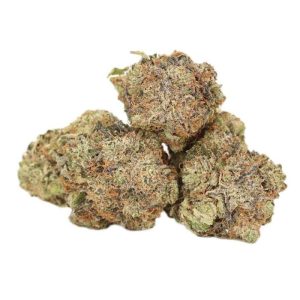
Indica strains
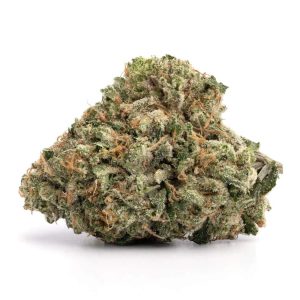
Indica strains
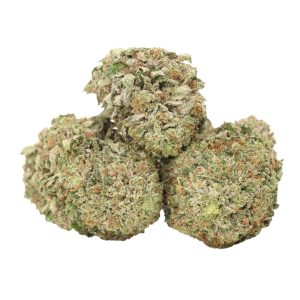
Indica strains
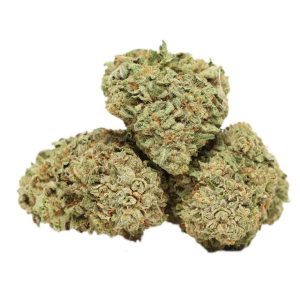
Indica strains
Indica strains
Indica strains
Indica strains
Reviews
There are no reviews yet.